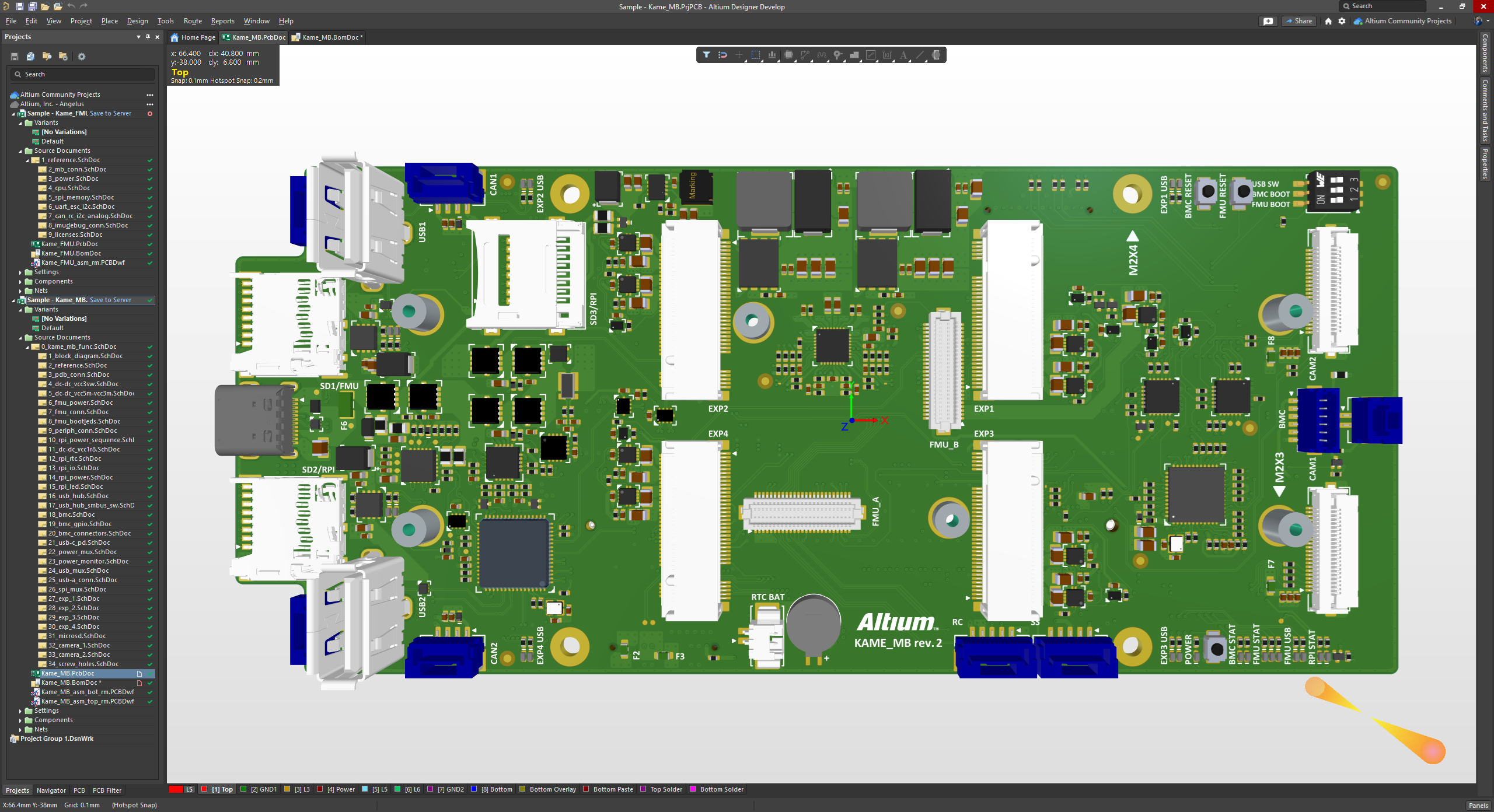
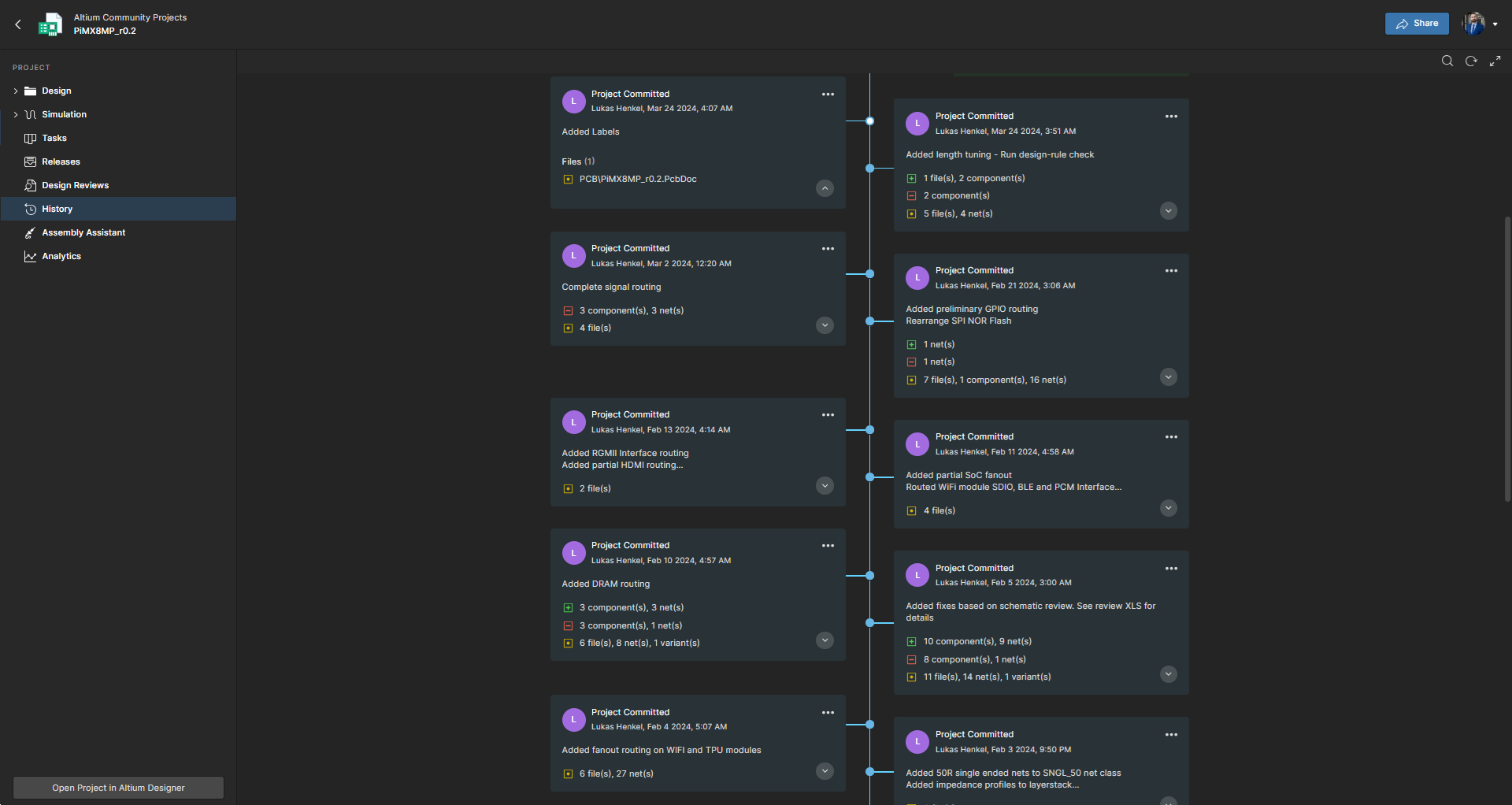
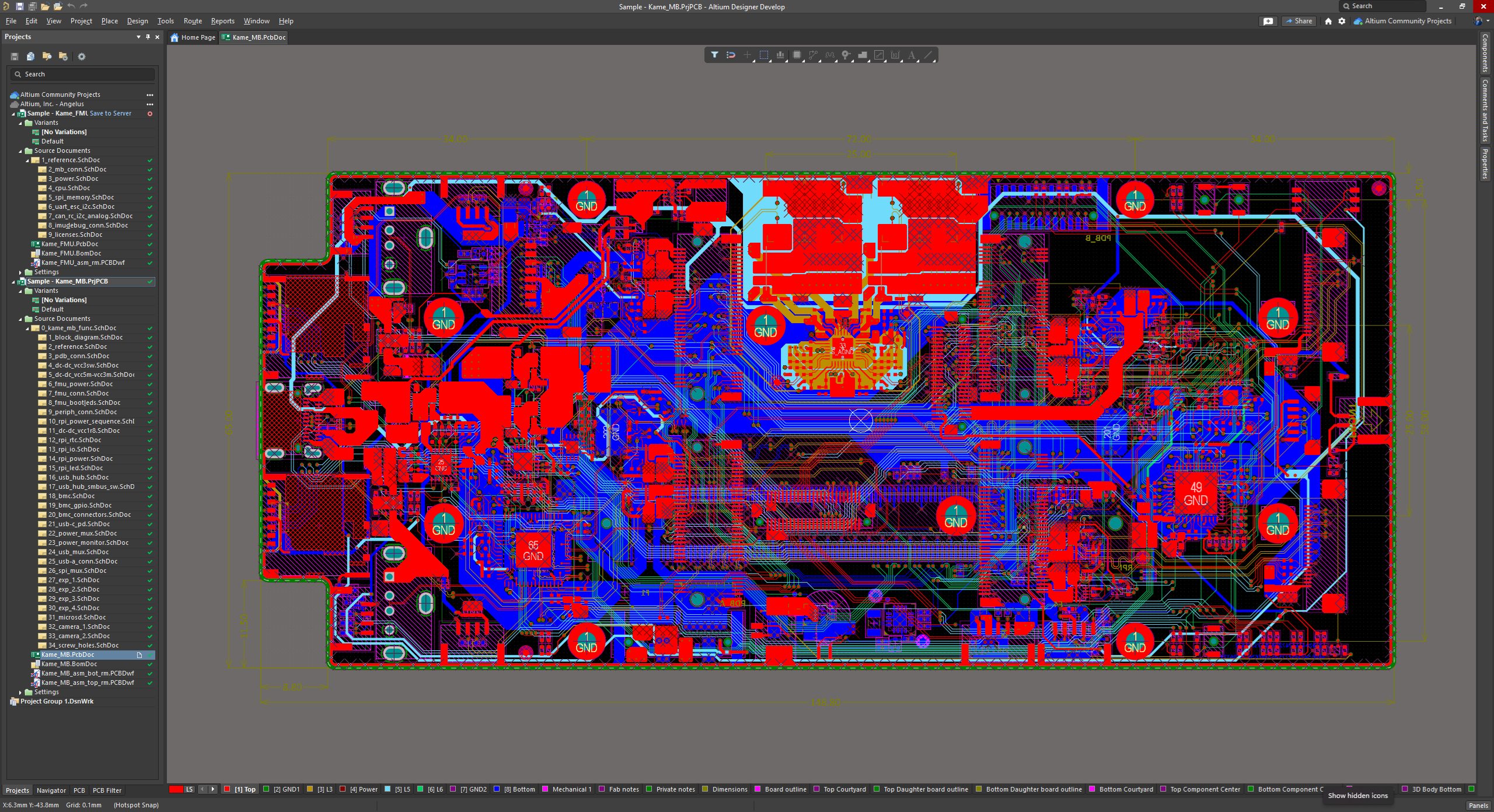
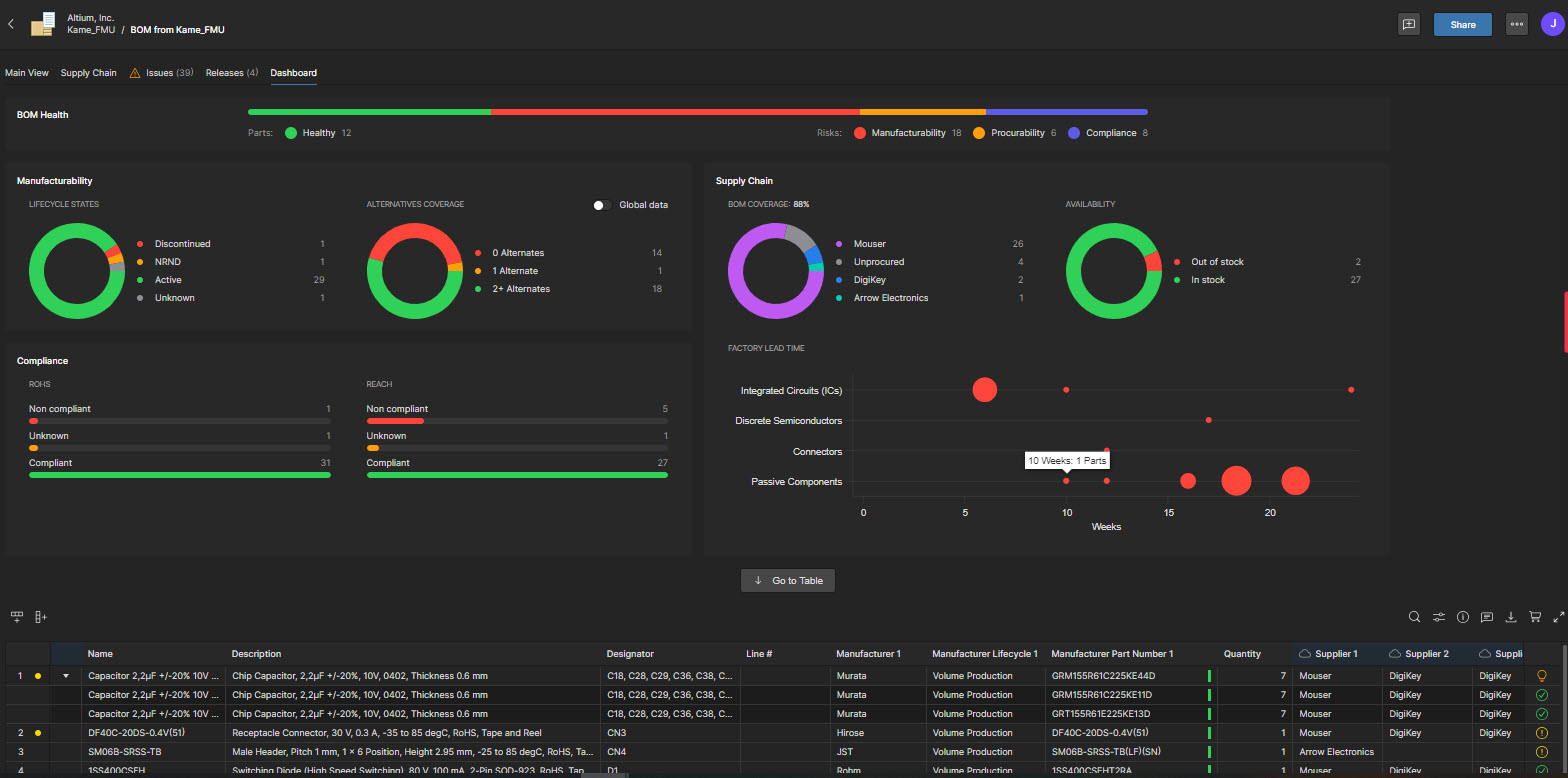
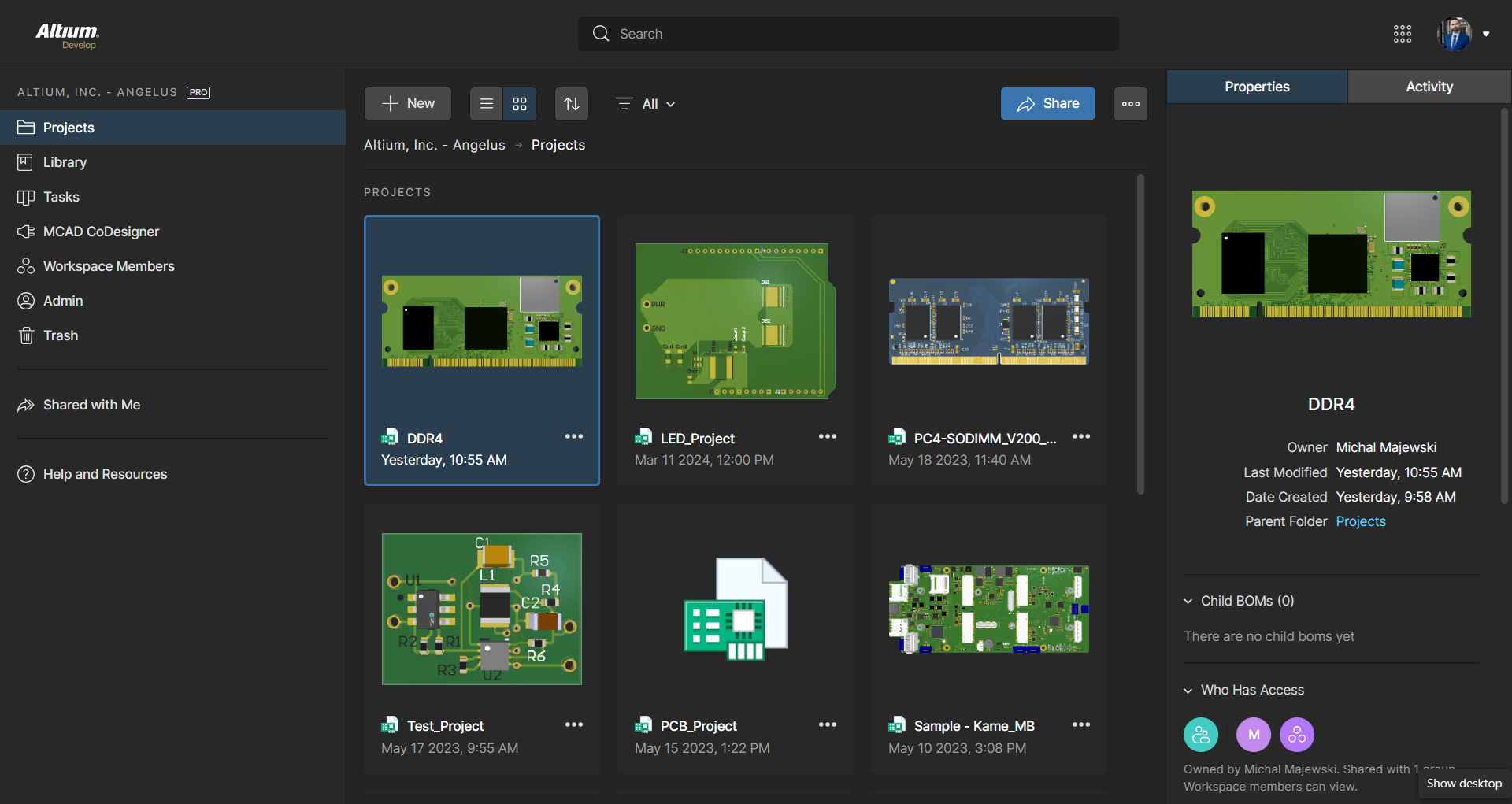
Altium Develop is a platform that unifies multidisciplinary teams across engineering, sourcing, and manufacturing to support seamless co-creation. It provides real-time visibility into designs, requirements, and supply chain data, enabling contributors to work together concurrently rather than in silos.
$995
per year per seat
AutoCAD
Score 8.0 out of 10
N/A
AutoCAD is a CAD product from Autodesk. It allows designers to work in 2D and 3D, and is available on Windows and Mac, but with extensive online collaboration tools.
$245
per month
Autodesk Inventor
Score 8.4 out of 10
N/A
Autodesk Inventor 3D CAD software offers professional-grade 3D mechanical design, documentation, and product simulation tools. These blend parametric, direct, freeform, and rules-based design capabilities. Inventor includes integrated tools for sheet metal, frame design, tube and pipe, cable & harness, presentations, rendering, simulation, and machine design. It also features TrustedDWG® compatibility and Model-Based Definition capabilities for embedding manufacturing information directly in…
$300
12 days over 1 year via Flex pricing 100 tokens
Pricing
Altium Develop
AutoCAD
Autodesk Inventor
Editions & Modules
No answers on this topic
Monthly Subscription
$245
per month per user
Yearly Subscription
$1975
per year per user
3-Year Subscription
$5925
3 years per user
Subscription - Monthly
$305
per month per user
Subscription - Yearly
$2440
per year per user
Subscription - 3 Years
$7320
3 years per user
Offerings
Pricing Offerings
Altium Develop
AutoCAD
Autodesk Inventor
Free Trial
Yes
Yes
Yes
Free/Freemium Version
No
No
No
Premium Consulting/Integration Services
No
No
No
Entry-level Setup Fee
No setup fee
No setup fee
No setup fee
Additional Details
—
—
Also available for limited use through tokens on a Flex plan.
Other tools are open source and free to use, which often means its easier to use but has limited abilities. With using Altium Designer compared to the other tools I have found the review process a lot better and its workspace environment a big plus because I can find …
Altium offers much better features and usability over Proteus. Proteus also has certain limitations in what it can achieve, so that leaves it behind. Same with KiCad, while it is easier to use, and quite an amazing software for a freeware, it lacks certain features which makes …
Altium Designer is far easier to use and has a simplified pricing model for use to forecast project costs. Altium Designer also has many value-added features such as Altium 365 and MCAD integration which we can use for no additional costs. Other vendors charge by feature. …
I prefer Altium Designer because it makes collaboration easy, and I have had a more enjoyable time using it. Altium Designer runs better on my computer than other software, and I have never run into a problem while using it. It allows me to really get into my work and focus on …
AutoCAD is improving day by day and update by update. Making their [features] smooth and more [efficient] with every update and it is very efficient in the things that it does. [The] functions that they provide are very useful and easy to use. [The] interface of AutoCAD is …
It's the best solution for a 2D drawing. Much easier to create 2D plans when you [don't] need to create 3D components. Stable and Functional. Easy to use and remember. All commands are located where they make the best sense. Various access [to] commands is awesome!!! You can …
AutoCAD has a more user-friendly approach to drawing, and the interface is easy to use and is understandable. BricsCAD is an exact replica of AutoCAD in terms of user commands, however, it is cheaper to license. The industry that we work in, though, expects a certain file type …
Inventor is a more detailed modeling software then Revit or Fabrication. AutoCAD of course has been around for many years and will continue to have a place because it seems to be the base for all of the modeling software using .dwg file types. Inventor has the ability using the …
I believe Autodesk Inventor is the easiest 3D modeling software to use, but it might not be the most cost effective though. The best thing about Inventor is the learning curve. It makes bringing new people up to speed much easier.
AutoCAD is difficult to use and adapt to while Inventor is easier to use. AutoCAD works based on designing and discovering new items while Inventor targets users who want to test something in motion.
Inventor and SOLIDWORKS compare nicely with it coming down to user preference. Both are great modeling tools, with Autodesk providing more flexibility through its subscription add-ons. Although AutoCAD exists in a different environment it is still used for design although less …
When it comes to solid modeling, the bad choices died out years ago. So we looked at the total ecosystem and chose Autodesk Inventor because of the integration with Nastran, HSM (machining), Autodesk CFD, MoldFlow, and AutoCAD. This means our legacy data (2D) is still a valid …
I used to work on SOLIDWORKS CAD modeling software. but now, I am working with Autodesk Inventor. Inventor in budget software for new start-up companies. and Inventor provide a product bundle in one. So, you will get the other beneficial software also. and we can also design …
As previously mentioned in an earlier question, Autodesk Inventor has found the happy middle ground for my 3D CAD needs. Autodesk is easy to pick up but complex enough to allow for all our CAD needs to be filled. I personally didn't select Autodesk Inventor (it was what the …
Inventor is more intuitive and directional when it comes to the creation of parts and assemblies. The commands are also simpler and easier to understand than SOLIDWORKS. Inventor also has the support and presence in the market that allows for it to be utilized for different …
I've listed SOLIDWORKS, SDRC Ideas and Pro/Engineer as alternative and comparable applications. SDRC Ideas is an extinct product, and Pro/E is available as it's descendent, PTC Creo, I think. Of the two alternatives, SOLIDWORKS is easier for me to use and I can do more with it, …
It's the most approachable "professional" package for small to medium-sized businesses, given the price point. It's fairly mature feature-wise and has improved stability enough over the last 5 years that it no longer constantly crashes. But it feels like there's a push to constantly increase prices until it's no longer an obvious choice. That, coupled with the insistence on subscription models and the terrible user experience when on poorly connected mobile data plans, means it's still my CAD package of choice, but I'm now a reluctant user rather than a fan.
AutoCAD is the Industry best and standardized software used industry wide. This comes with support of some free to use plugins which can be downloaded form AutoDesk Store. AutoDesk has already nurtured a strong community of Developers, Students and Architects this helps any one new with Forms which help them get integrated with the commiunity very quickly.
Autodesk Inventor is a great tool for students and faculty for engineering areas that don't require great precision or development of more thorough scientific results. Is you are conducting research, or deal with very intricate and complex systems I would recommend a more robust platform that complies more to industry standards.
The tools are easy to use and the learning curve is fairly minimal to be able to create blueprints.
The 3D application is very fun to use and it is nice to be able to see your product instead of having to imagine what it will look like.
The speed and accuracy in which students can create plans is a huge bonus. Students can plan their industrial art projects out and use their own set of plans to build them.
The program is very good at simplicity. Each of the buttons, menus, and options has an explanation of exactly what the feature does, and even a more advanced description if you desire to learn more about what each one does.
Autodesk Inventor is a very fast program. Everything renders extremely quickly and there are no delays when examining a 3D model, part, or assembly. This is especially useful when giving a presentation about a product or design, and you need to be able to show a concept to an audience in real time.
The software has an extremely accurate simulation feature that lets users do stress analysis on a 3D model. It can calculate precisely where the stress concentrations are going to be in a particular model and even give you an accurate depiction of where the part could likely fracture and/or fracture during loading.
It is difficult to create new components while reusing existing footprints/symbols. For example, reuse a 1206 package footprint, create a variant for resistors with an appropriate 3D model, and then a variant for capacitors with an appropriate 3D model.
The software's overall responsiveness seems slow, and it does not update properly in all instances. For example, clicking a component in the schematic will not always show its properties; it usually shows the properties of the last selected component. Clicking the blank space in the schematic first, then selecting the component, seems to load some of the correct data. But the 3D model in the properties view would still show the last EDITED part.
Saving components to the server would not always register correctly, requiring the component editor to be closed 'without saving' to close the part out, even though no changes were made since the last save to the server.
It is unclear where a list of footprints/symbols can be managed. For example, deleting a deprecated footprint so that it does not appear as a valid option in the future.
BOM part choice data has an NRFND component selected as in use, causing the status to be yellow. There is no apparent way to select a different manufacturer part as the 'in use' part to resolve the warning.
Updating from the library does not pull the most up-to-date symbol/footprint data for a given component. So far, there does not appear to be a way to do this, even though the component itself has been updated to use the correct references. This may be related to the general delays and consistency/reliability issues with the online link.
User Interface Customisation: AutoCAD's user interface could benefit from more robust customisation options. Allowing users to rearrange toolbars, menus, and panels according to their specific workflows and preferences would enhance productivity.
Enhanced 3D Modeling Tools: While AutoCAD is capable of 3D modeling, it's not as intuitive or feature-rich as dedicated 3D modeling software. Streamlining the process and adding more advanced modeling tools would be a welcome improvement.
Enhanced Collaboration and Version Control: AutoCAD could improve its collaboration tools, such as real-time editing and version tracking, to facilitate smoother teamwork, especially in multi-disciplinary projects.
Intelligent Object Libraries: AutoCAD could benefit from an expanded and more intelligent library of standard objects and components. This would save time for designers who often have to create custom components from scratch.
most if it still runs on a single core. Please fix this
Crashes. In our experience, too many crashes. We have high end machines and crashes are way too common.
Autosave. I think it is simply unacceptable that Autodesk Inventor combines common crashes with no autosave functionality. We feel this pain all the time.
ALTIUM DESIGNER is the reference tool in the electronic circuit design sector, its use is widespread worldwide. Although there are other alternatives, some of them free do not rival ALTIUM DESIGNER in terms of features and reliability. It is also very practical to request quotes with ALTIUM DESIGNER BOM reports since all suppliers are accustomed to using the tool.
Because rarely we [would] rather wait for a whole year to update, sometimes the new updates don't bring many new features and we are still ok with the current version. Also the change of interface is always something that takes time for every partner in the company to get comfortable with. So those are the main reasons we may want to keep the same version.
I originally chose Altium Develop for its superior usability. All operations being handled in one cohesive platform greatly improves efficiency. When handling many different designs, project setup and component creation eat into every project's productivity. Templates, defaults and design reuse all speed up design. I hold back from a higher rating because development focus on those usability features seems to have stagnated a bit. Simple missing features requested seem to remain missing. New collaboration features, simulation and sourcing features are released, but I just want to be able to draw dashed lines! I think this reflects a general focus on the 10% of datacenter/AI/smartphone customers over the 90% of 2-4 layer designs. The lack of information available during the platform transition gave me significant pause before buying in as well.
It is very usable once you understand the program. I believe there is room for improvement in the 2D to 3D modeling capability. We have to use other apps to 3D model and that can be time consuming and sometimes AutoCAD doesn't transfer work that well between apps. They can improve there.
It is quite user-friendly as long as you have the computing power to download and use it. However, this makes it quite inconvenient if you are trying to access files on different devices, as Inventor has to be loaded on all of those devices. While the program itself works just fine, it would be much better for my application if it, or a version, were web-based and allowed users to access and modify projects from anywhere.
AutoCAD has the issue of crashing or slowing down the design procedure once a heavy design that includes several disciplines or multiple families/blocks is involved. Customer services gets the feedback from the crash reports but this issue seems like it has never been addressed in the software updates past several years.
I think the support for Autodesk Inventor is very good. The staff at our reseller were very knowledgable and able to walk us through problems pretty easily. The training we received was very good also. I will say that there were a couple of times we reached out to support with a question or challenge we had, and the support agent was not able to resolve our problem, and after touching base back we found out that there was not a solution for the problems we were experiencing. One of them was just how Inventor represents colors inconsistently at times, all things being equal. Another was that Inventor would not let decals on parts transcend to the assembly level. they just would not show up.
the implementation was realy easy , to set up our workstation we pay for the licenses we are about to use , there was a little bit of delay to get the payment processed to receive the serial but after that the install runs without any problem , so you can fell secure there will be not issue with the implementation.
In terms of collaborative work, Altium 365 is the easiest to use since KiCad nor OrCAD have sophisticated infrastructure for team members to interact with each other. By allowing features such as organizations and version control, Altium 365 is by far the best product for collaborative work. Additionally, electronics parts management and creation is better in Altium 365 than the other products. Actions such as importing schematic libraries, creating bills of materials, and conducting simulations are simply better in Altium 365.
I use Revit far more than I use AutoCAD. AutoCAD is great for simple linework, but even then I will often create the lines in Revit and then export to AutoCAD for final touches and printing. AutoCAD is a bit easier for large-format prints, which is why I almost always end up using it after starting in Revit.
When it comes to solid modeling, the bad choices died out years ago. So we looked at the total ecosystem and chose Autodesk Inventor because of the integration with Nastran, HSM (machining), Autodesk CFD, MoldFlow, and AutoCAD. This means our legacy data (2D) is still a valid part of our design methodologies going forward, and we have the full breadth of engineering tools at our disposal. Other solutions in this space have similar offerings but not nearly as potent of a portfolio in total. It's worth saying that we do not consider Inventor in the same space as CATIA or NX, but that the entire Autodesk portfolio (e.g. Alias, PowerMill, etc) includes a total toolset that exceeds these industry giants.
AutoCAD has helped our smaller firm produce lots of finished products matching that of a much larger size firm. With its many features, we have been able to do so much more and meet deadlines that much faster.
Since we do use AutoCAD, we're able to work with many other engineering firms to collaborate together to complete various building projects.
We have many clients now who expect us to provide for them at the end of a project not just printed construction drawings but also the digital AutoCAD drawing so they can in turn use it for future modifications themselves.
Working on a project designed with Inventor provides a modular design platform that can quickly be configured or changed as required. This allows for the quick turn around time for the design and revision of drawings.
We've used Inventor over the years (since 2013) and the updates and newly released versions of Inventor do not require re-training or restrict use.
Autodesk follows an intuitive approach and users or designers who have worked on other design platforms like SolidWorks can transition easily to Inventor.