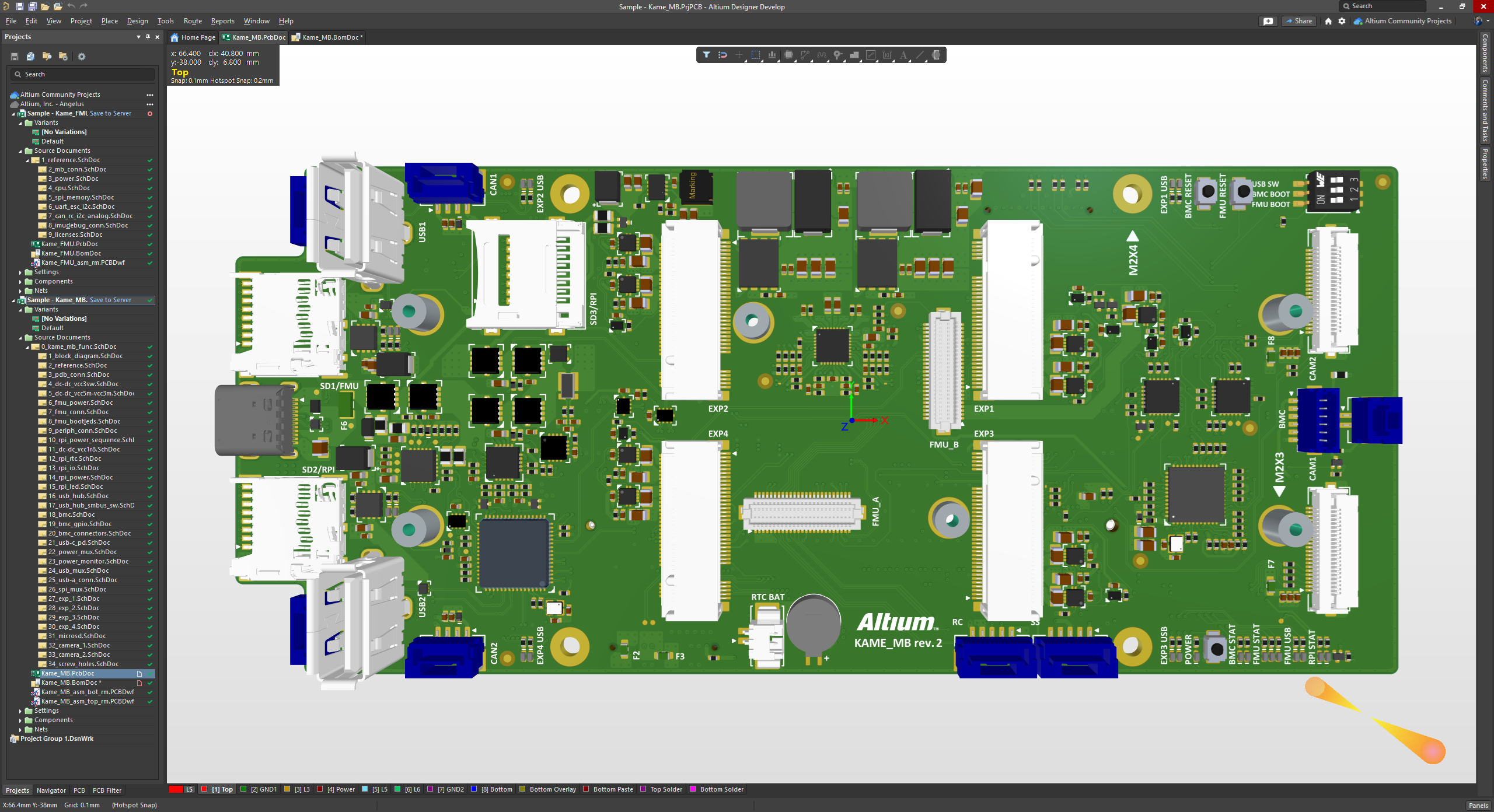
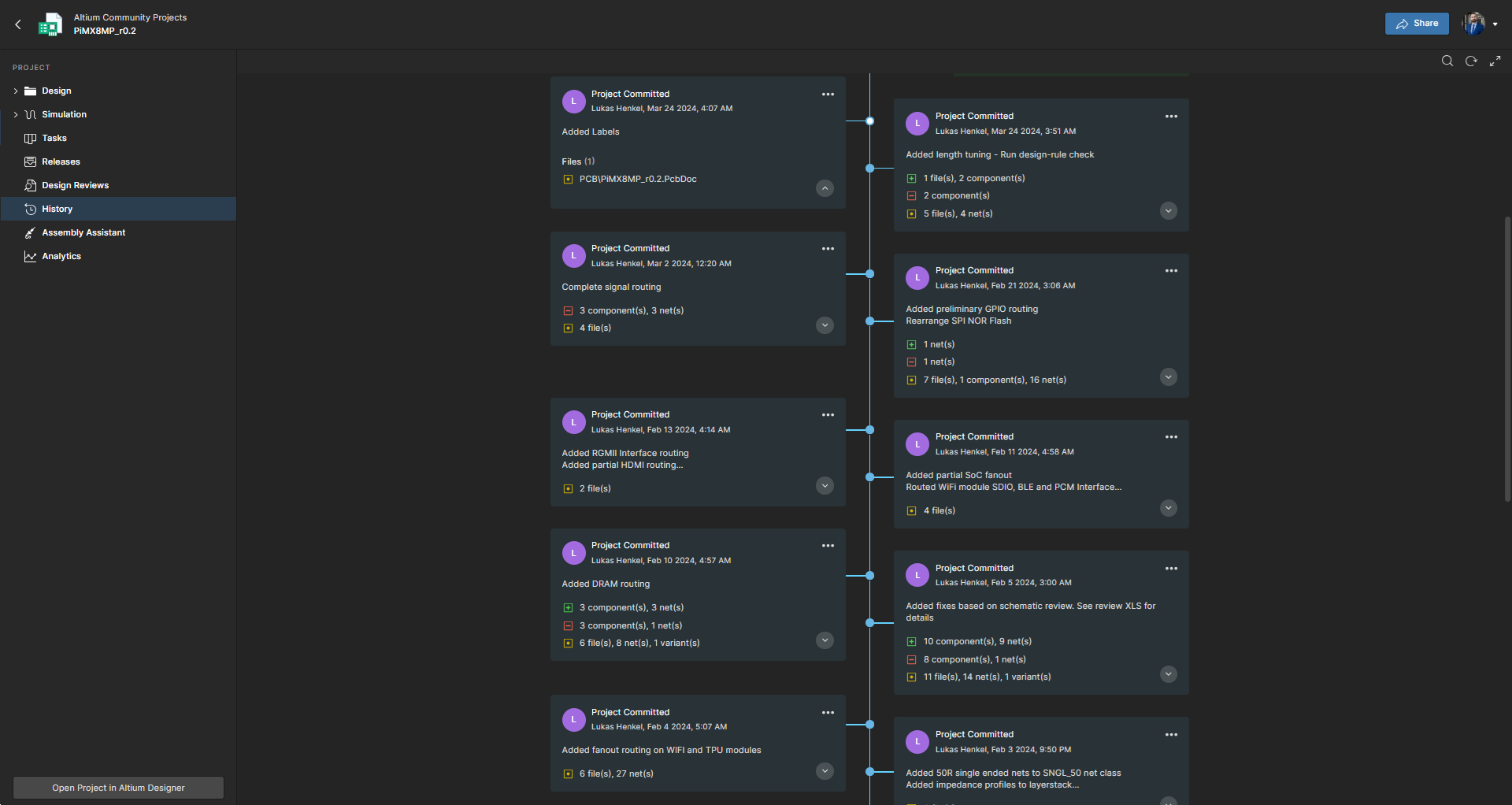
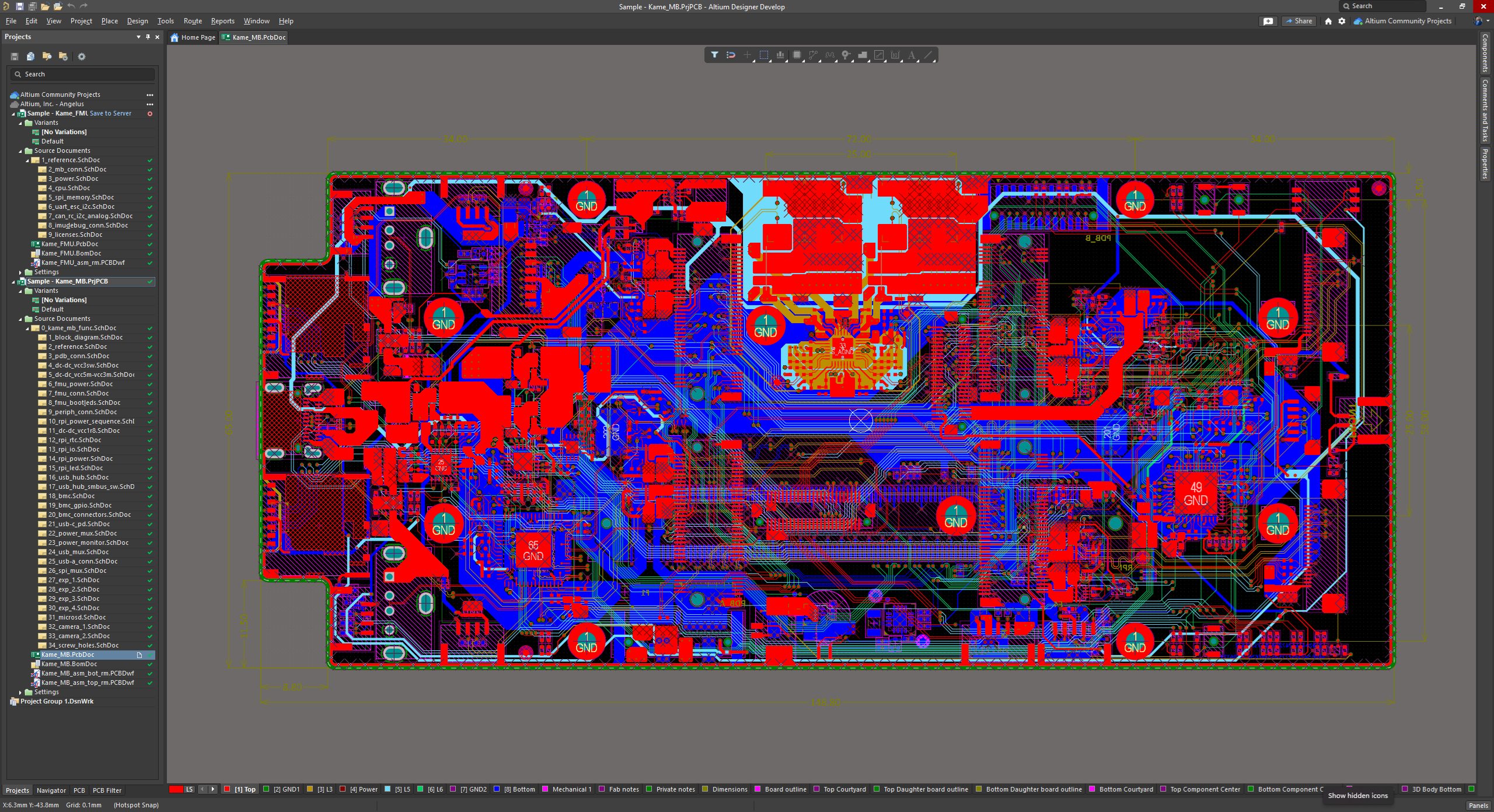
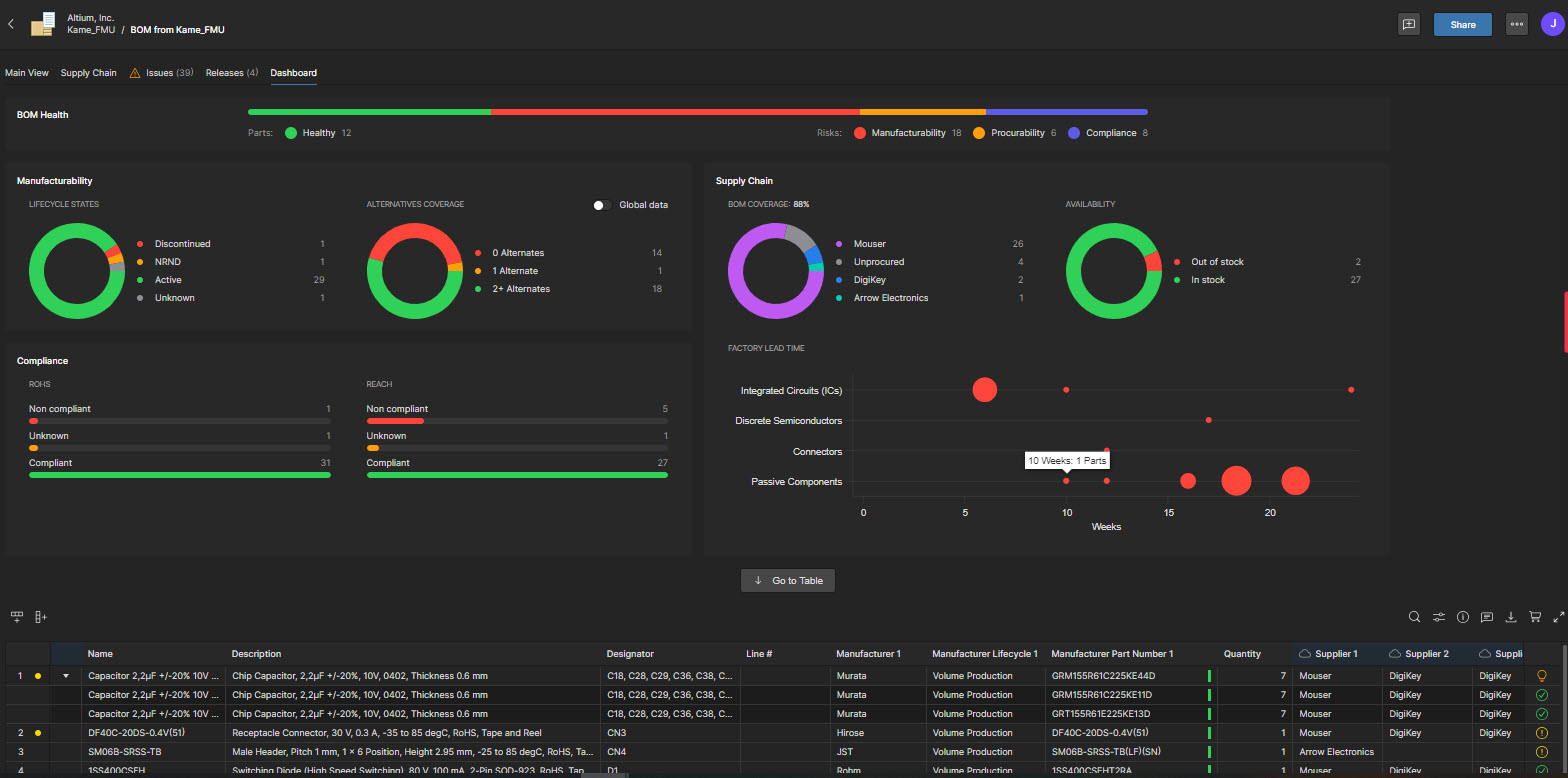
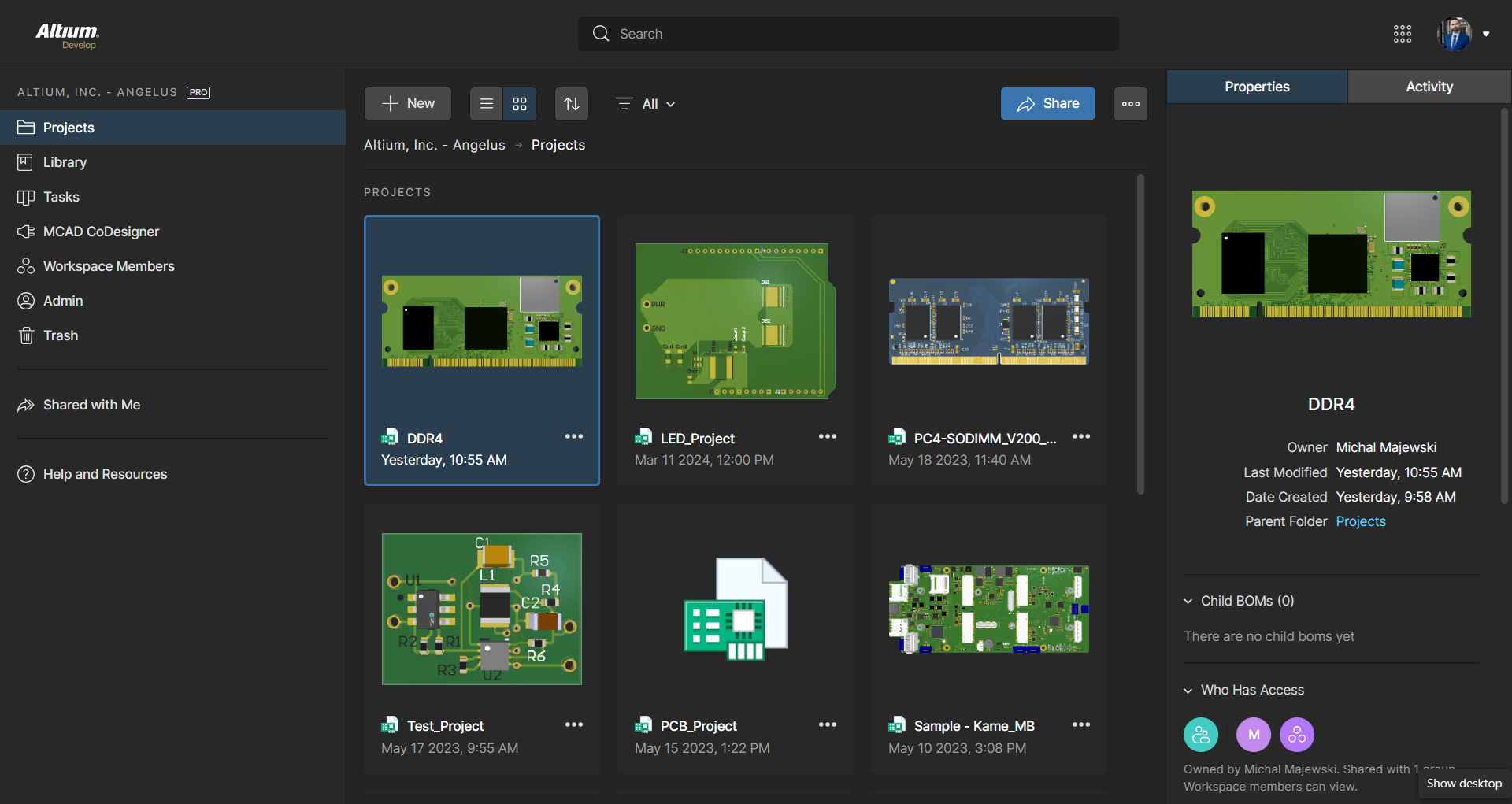
Altium Develop is a platform that unifies multidisciplinary teams across engineering, sourcing, and manufacturing to support seamless co-creation. It provides real-time visibility into designs, requirements, and supply chain data, enabling contributors to work together concurrently rather than in silos.
$995
per year per seat
AutoCAD
Score 8.0 out of 10
N/A
AutoCAD is a CAD product from Autodesk. It allows designers to work in 2D and 3D, and is available on Windows and Mac, but with extensive online collaboration tools.
$245
per month
Revit
Score 9.1 out of 10
N/A
Autodesk’s Revit is a Building Information Modelling (BIM) tool. It enables architectural, MEP, structural, and engineering design, and provides analysis to support iterative workflows
$350
per month
Pricing
Altium Develop
AutoCAD
Revit
Editions & Modules
No answers on this topic
Monthly Subscription
$245
per month per user
Yearly Subscription
$1975
per year per user
3-Year Subscription
$5925
3 years per user
Monthly
$350
per month
1-Year
$2805
per year
3-Year
$8415
per 3 years
Offerings
Pricing Offerings
Altium Develop
AutoCAD
Revit
Free Trial
Yes
Yes
Yes
Free/Freemium Version
No
No
No
Premium Consulting/Integration Services
No
No
No
Entry-level Setup Fee
No setup fee
No setup fee
No setup fee
Additional Details
—
—
Pricing available for monthly, annual, or 3-year subscriptions. Longer subscriptions offer greater discounts.
Other tools are open source and free to use, which often means its easier to use but has limited abilities. With using Altium Designer compared to the other tools I have found the review process a lot better and its workspace environment a big plus because I can find …
Altium offers much better features and usability over Proteus. Proteus also has certain limitations in what it can achieve, so that leaves it behind. Same with KiCad, while it is easier to use, and quite an amazing software for a freeware, it lacks certain features which makes …
Altium Designer is far easier to use and has a simplified pricing model for use to forecast project costs. Altium Designer also has many value-added features such as Altium 365 and MCAD integration which we can use for no additional costs. Other vendors charge by feature. …
I prefer Altium Designer because it makes collaboration easy, and I have had a more enjoyable time using it. Altium Designer runs better on my computer than other software, and I have never run into a problem while using it. It allows me to really get into my work and focus on …
Revit is another (separate) AutoCAD (AutoDesk) product that we also use. It is not as widely-used as AutoCAD and has some capabilities and different uses. As a result, it's like starting over again and while its possible for an existing AutoCAD user to get up to speed with it …
From my experience, AutoCAD is the premier software for CAD services. If you are required to use BIM products in combination with CAD it is easily interfaced with Revit where some of the other software companies do not offer both CAS and BIM. As a CAD software alone it is the …
When it comes to comparing AutoCAD to Revit, it's like trying to compare an apple to an Orange. While both are a design type of product, they are on different levels, with each having better strengths over the other. There is endless customizability for AutoCAD, while Revit is …
AutoCAD was designed to model anything from the tiniest screw to an entire factory and everything in between. It worked great in its day but Revit is made for construction and has many advantages over AutoCAD because of this.
AutoCAD is the old industry standard that likely will disappear from use someday but somehow manages relevancy in certain isolated use-cases. It is incredibly likely that Revit (BIM) will supplant it entirely in the long run.
The main difference is that AutoCAD is a general computer-aided design and drafting software used to create precise 2D and 3D drawings, and Revit is software for BIM with tools to create intelligent 3D models of buildings, which can then be used to produce construction …
I think that AutoCAD is much better than all 3 of these programs when outputting 2D drawings and constructions set drawings, but Rhino and Revit are both better for 3D outputs. Revit is a little bit more confined in what you are able to actually design and gives a less original …
AutoCAD is an industry-standard, and there are no alternatives. Revit is used more often for 3D modeling and document set production, Rhino and SketchUp are used more often for conceptual studies. AutoCAD still has a place in our workflow for drawing details, file conversion, …
AutoCAD & Revit are both sold from the same company Autodesk. Revit comes from the point of view of providing powerful tools to create a three-dimensional model where you can extract two-dimensional drawings. AutoCAD, on the other hand, focuses more on providing powerful tools …
I use Revit far more than I use AutoCAD. AutoCAD is great for simple linework, but even then I will often create the lines in Revit and then export to AutoCAD for final touches and printing. AutoCAD is a bit easier for large-format prints, which is why I almost always end up …
As we all know that AutoCAD is a basic Drafting software used to drawing all of 2D object so all above softwares mentioned as as used as 2nd one after developing the plan on AutoCAD. So I do prepare plans on AutoCAD and develops them on above software. So basically my first …
Verified User
Engineer
Chose AutoCAD
AutoCAD is the industry best and is well integrated with regular updates and fixes if required. Being very developer friendly and having a huge community of enthusiasts behind takes it miles ahead of the competition. Some might get an edge over price but due to this being an …
for the developing of 2d drawings AutoCAD is more suitable than other software due to its very easy and understandable user interface. besides that, due to the orientation of the software to 2d drawings, the library of commands is better structured and organized, making the …
This is the most primitive application in the field of design and drafting hence it has the simplest workflow system. It is quite easy to comprehend the processes for any user hence they can access the mistakes easily. Man-to-machine interaction of this software is best among …
It's the best solution for a 2D drawing. Much easier to create 2D plans when you [don't] need to create 3D components. Stable and Functional. Easy to use and remember. All commands are located where they make the best sense. Various access [to] commands is awesome!!! You can …
AutoCAD is more complete and offers more resources in general besides the great majority of professionals in the market using it, which facilitates the transfer of files between teams without any problem and the learning of the software that remains very similar in years. It …
We have always used AutoCAD for 2D drafting. AutoCAD LT is great for working on 2D projects, especially in the field. We do need full AutoCAD on the workstations to interface with point cloud and support 3D modeling programs.
AutoCAD is honestly inferior to these products, given their ability to model complex geometries and generate automatic drawings. AutoCAD is the older generation of drafting software, and while still useful, is becoming less and less the go-to software to begin an architectural …
AutoCAD has a more user-friendly approach to drawing, and the interface is easy to use and is understandable. BricsCAD is an exact replica of AutoCAD in terms of user commands, however, it is cheaper to license. The industry that we work in, though, expects a certain file type …
Modeling 2D structures in AutoCAD is more straight forward and easier to start with than other products above, and online tutorials of AutoCAD are everywhere.
AutoCAD is one of the original go-to programs for construction documents. It is great when you're using it in the right application. Our company does a lot of smaller tenant renovations in our city so using AutoCAD allows us to produce a high volume of quality drawings to be …
Revit is used primarily for creation of contract documents and documents that need to be used to build in the field. Sketch Up is great for a quick concept sketch, but lacks the details that Revit has which are needed to construct. AutoCAD is a great tool for details as well, …
AutoCAD, MicroStation. These are both good programs but they are limited to two dimensions for the most part and I choose to use Revit for its ease in working in 3D, annotation, and organization. If you are looking to have a consistent good-looking set of drawings in 2D or 3D, …
Revit brings collaboration to projects on a whole other level never seen in AutoCAD. Revit allows not only another live perspective of projects but also a huge advantage in simultaneous user production of drawings.
AutoCAD was great back in the day but had such a wide range of uses. Revit is based in construction and runs better for that function because of it. If I was to have to switch back to AutoCAD I cannot imagine how much more time I would have to spend in order to produce the …
There are really no competitors to Revit for large complex building projects. It is essentially an industry standard, and we would not be able to complete our work or collaborate with our consultants effectively if we did not use Revit. AutoCAD is still used in the office for …
Revit is easy to operate and involves various families for different disciplines. It also involves one single model where different users can open, work, and synchronize at the same time, making collaboration easy. Also, users can view other disciplines in the same model making …
Revit like AutoCAD can produce both a 3d model & 2 dimensional drawings such as plans, elevations & sections which are required for any design project to be communicated on paper for construction. But unlike AutoCAD, Revit's focus is to build a 3d model that contain smart …
Revit, like AutoCAD, is the most straight forward, intuitive of the BIM software available in today's market. It is widely excepted at a norm and is the most universally used in the engineering trades that we work with. As our clients start to demand that their projects are …
Revit is a more creative tool compared to others software like AutoCAD. More people can work simultaneously on Revit files but in AutoCAD only 1 person can work on 1 file. File management of Revit is good whereas in AutoCAD multiple AutoCAD files are created for the same 1 …
Revit has more features in compare to another software like AutoCAD. The more features get you more flexibility in your work and impact your time management. The more you do in less time and the more your quality with this software. So I think Revit is going in a good direction.
Verified User
Employee
Chose Revit
Revit is specifically for the design and documentation of buildings. As Revit's predecessor, AutoCAD has similar functionality for creating construction documents but Revit has the advantage of speed and simultaneously creating a 3D model when drawing walls, rooms, and floors …
TEKLA specializes in rebar clashes. Revit is an overall package. It perfoms almost everything you need in 3D modeling. TEKLA has limited itself in Rebar detailing. Revit also has rebar detailing family that is almost the same with TEKLA. You can incorporate plans in your Revit …
First and foremost, Revit is BIM-based software, which in itself offers significant advantages over 3D modelling programmes such as Rhino or SketchUp. Project management takes place on several levels as well as in different time phases (for example, it is also possible to …
Revit makes 3D modeling accessible and efficient, allowing users to create complex models without needing to navigate overly complicated systems. Its intuitive tools help streamline the modeling process, enabling designers to focus more on design intent. This ease of use is …
We select Revit when required for projects. If ARCHICAD or other BIM software is needed, we use those. I personally prefer ARCHICAD for architectural design, but it depends on clients and projects which tools are being used.
Revit is a decent product, although innovation has …
Fabrication is slow and takes more manpower to work because it has more manual work compare to Revit. Fabrication and Revit can be used for the same work but Revit will do it faster and real-time syncing method make it easy to work for multiple people and in Fabrication, areas …
Autodesk Revit is more user-friendly than the mentioned software and is easy to create a custom family within the software. Multiple users can work at the same time in Revit, as with the other software mentioned, each user has to work on a separate file. Faster workflow and …
Revit is one of the most powerful tools in the Architecture, Engineering and Construction Field. It is outmatched by none. There is definitely a learning curve, and it cannot be picked up by an average employee and learned without formal training. Revit can do more on the …
As I stated previously, it's hard to come up with a competitor for Revit. Revit was developed by Charles River Software back in 1997 and was bought by Autodesk in 2002. It's only real competition is with Bentley Systems or Tekla. Bently is just not used by the industry and …
It's the most approachable "professional" package for small to medium-sized businesses, given the price point. It's fairly mature feature-wise and has improved stability enough over the last 5 years that it no longer constantly crashes. But it feels like there's a push to constantly increase prices until it's no longer an obvious choice. That, coupled with the insistence on subscription models and the terrible user experience when on poorly connected mobile data plans, means it's still my CAD package of choice, but I'm now a reluctant user rather than a fan.
AutoCAD is the Industry best and standardized software used industry wide. This comes with support of some free to use plugins which can be downloaded form AutoDesk Store. AutoDesk has already nurtured a strong community of Developers, Students and Architects this helps any one new with Forms which help them get integrated with the commiunity very quickly.
Revit is very well suited to creating designs and construction documents for standard buildings. Buildings that need to utilize phasing in their construction process are also well suited to this software. Revit is not as well suited to buildings that have irregular shapes or components that need to be highly detailed.
The tools are easy to use and the learning curve is fairly minimal to be able to create blueprints.
The 3D application is very fun to use and it is nice to be able to see your product instead of having to imagine what it will look like.
The speed and accuracy in which students can create plans is a huge bonus. Students can plan their industrial art projects out and use their own set of plans to build them.
Revit allows users to create real buildings and is very much rooted in making functional buildings.
Revit allows users to collaborate both within their own firms and with other types of firms as well. This is particularly useful for coordinating buildings between architecture and engineering firms.
Revit integrates fairly well with other programs such as AutoCAD and Sketchup. This allows us to bring in elements modeled in other programs into our revit models.
It is difficult to create new components while reusing existing footprints/symbols. For example, reuse a 1206 package footprint, create a variant for resistors with an appropriate 3D model, and then a variant for capacitors with an appropriate 3D model.
The software's overall responsiveness seems slow, and it does not update properly in all instances. For example, clicking a component in the schematic will not always show its properties; it usually shows the properties of the last selected component. Clicking the blank space in the schematic first, then selecting the component, seems to load some of the correct data. But the 3D model in the properties view would still show the last EDITED part.
Saving components to the server would not always register correctly, requiring the component editor to be closed 'without saving' to close the part out, even though no changes were made since the last save to the server.
It is unclear where a list of footprints/symbols can be managed. For example, deleting a deprecated footprint so that it does not appear as a valid option in the future.
BOM part choice data has an NRFND component selected as in use, causing the status to be yellow. There is no apparent way to select a different manufacturer part as the 'in use' part to resolve the warning.
Updating from the library does not pull the most up-to-date symbol/footprint data for a given component. So far, there does not appear to be a way to do this, even though the component itself has been updated to use the correct references. This may be related to the general delays and consistency/reliability issues with the online link.
User Interface Customisation: AutoCAD's user interface could benefit from more robust customisation options. Allowing users to rearrange toolbars, menus, and panels according to their specific workflows and preferences would enhance productivity.
Enhanced 3D Modeling Tools: While AutoCAD is capable of 3D modeling, it's not as intuitive or feature-rich as dedicated 3D modeling software. Streamlining the process and adding more advanced modeling tools would be a welcome improvement.
Enhanced Collaboration and Version Control: AutoCAD could improve its collaboration tools, such as real-time editing and version tracking, to facilitate smoother teamwork, especially in multi-disciplinary projects.
Intelligent Object Libraries: AutoCAD could benefit from an expanded and more intelligent library of standard objects and components. This would save time for designers who often have to create custom components from scratch.
Versioning - Revit is not backwards compatible. This creates issues if you are working with people who are using older versions as you cannot save to a previous version. I understand why this is and I do not see this ever changing, however, Its very annoying.
Autodesk - They are the 800 pound gorilla in the industry. The lack of competition inhibits development and it seems Autodesk has put more effort into its BIM 360 platform and Revit development has suffered because of it. I would like to see better competition so Autodesk would step up its game.
ALTIUM DESIGNER is the reference tool in the electronic circuit design sector, its use is widespread worldwide. Although there are other alternatives, some of them free do not rival ALTIUM DESIGNER in terms of features and reliability. It is also very practical to request quotes with ALTIUM DESIGNER BOM reports since all suppliers are accustomed to using the tool.
Because rarely we [would] rather wait for a whole year to update, sometimes the new updates don't bring many new features and we are still ok with the current version. Also the change of interface is always something that takes time for every partner in the company to get comfortable with. So those are the main reasons we may want to keep the same version.
We will almost certainly be renewing all of our current seats of Revit and will likely be adding seats as we look to get more and more of our staff trained and using Revit. The software is starting to become the standard for our projects as we move forward as more and more of our clients are requesting or accepting use of it
I originally chose Altium Develop for its superior usability. All operations being handled in one cohesive platform greatly improves efficiency. When handling many different designs, project setup and component creation eat into every project's productivity. Templates, defaults and design reuse all speed up design. I hold back from a higher rating because development focus on those usability features seems to have stagnated a bit. Simple missing features requested seem to remain missing. New collaboration features, simulation and sourcing features are released, but I just want to be able to draw dashed lines! I think this reflects a general focus on the 10% of datacenter/AI/smartphone customers over the 90% of 2-4 layer designs. The lack of information available during the platform transition gave me significant pause before buying in as well.
It is very usable once you understand the program. I believe there is room for improvement in the 2D to 3D modeling capability. We have to use other apps to 3D model and that can be time consuming and sometimes AutoCAD doesn't transfer work that well between apps. They can improve there.
It is a professional environment, but far from easy and overly complex in many places. The system is often too deep in settings and overrides (see Visibility/Graphics in combination with linked files, filters, color overrides and view templates). I don't really like the dialog-in-dialog interface and its spartan looks. But it works well overall if you know what you are doing.
Revit seems to always be available when I need it. I have not experiences an outage. There are occasions where we need our internal IT department to trouble shoot a file on our Revit dedicated server and that sometimes causes a delay however that is not a software access issue
Revit is a fairly graphics heavy piece of software. It is powerful in its capabilities but as a result it takes a lot of the graphics card, the memory, etc. For all that it can do and the specs of my computer I find it pretty good from a performance standpoint
AutoCAD has the issue of crashing or slowing down the design procedure once a heavy design that includes several disciplines or multiple families/blocks is involved. Customer services gets the feedback from the crash reports but this issue seems like it has never been addressed in the software updates past several years.
Autodesk has always had a good support system in place. There is a massive user base for Revit, and there are thousands of forum threads and other discussions online about any and every problem that you could ever run into. For being such a large program with so many different options, there aren't many roadblocks or pitfalls that users can fall into.
The training was Revit Essentials and it was very beneficial. I would say that it is best to get the training right before you know you will be using Revit as learning the basis then applying what you learned immediately is the most effective and best value for your money.
The online training is hit or miss. I feel that its better to be live to be able to pace and ask questions to a live person as you are learning hwo to do things. Its not natural to learn Revit especially if you know AutoCAD so my suggestion is the live training
the implementation was realy easy , to set up our workstation we pay for the licenses we are about to use , there was a little bit of delay to get the payment processed to receive the serial but after that the install runs without any problem , so you can fell secure there will be not issue with the implementation.
Implementing Revit as your main drafting software (i.e. moving to BIM from CAD) may be a tough decision if you have learned drafting. It is a different way to approach and think about developing a project. However, if you are able to adapt to a new way of thinking and get used to it by working through a few projects than it is as efficient as CAD in most areas in general and will also be both better/worse in some areas
In terms of collaborative work, Altium 365 is the easiest to use since KiCad nor OrCAD have sophisticated infrastructure for team members to interact with each other. By allowing features such as organizations and version control, Altium 365 is by far the best product for collaborative work. Additionally, electronics parts management and creation is better in Altium 365 than the other products. Actions such as importing schematic libraries, creating bills of materials, and conducting simulations are simply better in Altium 365.
I use Revit far more than I use AutoCAD. AutoCAD is great for simple linework, but even then I will often create the lines in Revit and then export to AutoCAD for final touches and printing. AutoCAD is a bit easier for large-format prints, which is why I almost always end up using it after starting in Revit.
Revit is used primarily for creation of contract documents and documents that need to be used to build in the field. Sketch Up is great for a quick concept sketch, but lacks the details that Revit has which are needed to construct. AutoCAD is a great tool for details as well, but does not have as many building capabilities as Revit.
While I am not directly involved with the deployment of Revit, it seems that our internal IT department has appreciated the ability to increase or decrease the number of seats. I have never had an issue with the deployment if and when needed, especially regarding the availability of a set
AutoCAD has helped our smaller firm produce lots of finished products matching that of a much larger size firm. With its many features, we have been able to do so much more and meet deadlines that much faster.
Since we do use AutoCAD, we're able to work with many other engineering firms to collaborate together to complete various building projects.
We have many clients now who expect us to provide for them at the end of a project not just printed construction drawings but also the digital AutoCAD drawing so they can in turn use it for future modifications themselves.
Though implementation of Revit is usually front heavy which means a lot of effort is put in at the front end of the project, the return of investment towards the remainder of the project is really good. All the effort in decisions made at the beginning of the project pays off with Revit incorporating all the building information in the model so the team can glean from this throughout the life of the project is a major plus.
A major negative is the many false assumptions that comes with using Revit on a project. Just like any other computer application, Revit is only a tool. It's only as good as the operators who implement this tool. Revit is not a cureall for fixing all the problems that still can come out throughout the life of a design & construction project.
A major positive for our office involving the use of Revit is the ability for our staff from multiple offices to work on the same project central file. We don't need to maintain an expensive server. With the addition of Collaboration for Revit the entire project can be stored in the cloud for our staff to access and complete the project faster than ever.