Amazon Web Services (AWS) is a subsidiary of Amazon that provides on-demand cloud computing services. With over 165 services offered, AWS services can provide users with a comprehensive suite of infrastructure and computing building blocks and tools.
$0
per month
Microsoft Azure
Score 8.4 out of 10
N/A
Microsoft Azure is a cloud computing platform and infrastructure for building, deploying, and managing applications and services through a global network of Microsoft-managed datacenters.
$29
per month
Primavera Unifier
Score 8.4 out of 10
N/A
Facilities Asset Management Software Oracle Primavera Unifier aims to drive best practices that increase visibility and efficiency, allowing users to leverage extensive configurability along with prebuilt processes to automate any business process with custom forms and workflows.
Key Benefits:
- Configurability and governance—automate any process, from simple to complex, with total control and data ownership
- Cloud or on-premise deployment
- A comprehensive…
N/A
Pricing
Amazon Web Services
Microsoft Azure
Primavera Unifier
Editions & Modules
Free Tier
$0
per month
Basic Environment
$100 - $200
per month
Intermediate Environment
$250 - $600
per month
Advanced Environment
$600-$2500
per month
Developer
$29
per month
Standard
$100
per month
Professional Direct
$1000
per month
Basic
Free
per month
No answers on this topic
Offerings
Pricing Offerings
Amazon Web Services
Microsoft Azure
Primavera Unifier
Free Trial
Yes
Yes
No
Free/Freemium Version
Yes
Yes
No
Premium Consulting/Integration Services
No
No
No
Entry-level Setup Fee
No setup fee
No setup fee
No setup fee
Additional Details
AWS allows a “save when you commit” option that offers lower prices when you sign up for a 1- or 3- year term that includes an AWS service or category of services.
The free tier lets users have access to a variety of services free for 12 months with limited usage after making an Azure account.
In my personal experience, AWS is superior to both GCP and Azure in the majority of usable applications. GCP suffers from the near total misunderstanding of how support system is even supposed to work, and while _some_ services are pretty nifty and well-polished, some are …
AWS stands out in its ability to adapt technology more quickly. All the new features, first adapted by AWS, make it the market leader. The key metrics, such as MTTR, are among the best among all other cloud service providers. The AWS dashboard and analytics features are very …
Amazon Web Services Lambda supports more triggers, richer language/runtime support, and has tighter integrations with Amazon Web Services, as compared to Azure/Google Cloud functions.Amazon Web Services also has better global infrastructure, with 33 regions and 105 availability …
We tried various other cloud providers and features provided by them. Many of the cloud providers have similar features but there are few factors which make Amazon Web Services cloud as preferable choice of our bank are cost, location of Amazon Web Services datacenter where it …
Apart from Amazon Web Services, we use Microsoft Azure in some of our projects. I have some basic experience in Google Cloud Platform (GCP) as well. If given a choice, I would prefer using Amazon Web Services over Azure or GCP. I find provisioning of resources relatively faster …
Amazon Web Services is better among all of them due to its performance, stability, security and navigation. It effectively saves the cost and provides better facilities than the other competitors. It plays great role when it comes to user friendly interface. It also provided …
AWS has the largest market share and most established and over 200 services for diverse needs. AWS has a very power user interface and pay as you go work well that others. AWS has the by far largest network of data centers for low latency and high availability. The regular …
Better global availability and use across industries. AWS has a great ecosystem of experts, developers, solution architects and it helps to get to know them at various AWS events across the world
Amazon Web Services is much more mature than all of the cloud service providers out in the market. It has 300+ services that solve almost all of your cloud problems.
Compared to other providers like Google Cloud Platform(GCP) and Microsoft Azure, [Amazon Web Services] has a wider range of services, which help you easier implement the solution you want. Also, they have been in the market for more years than their competitors. Moreover, they …
Amazon SageMaker is being extensively used by our R&D department for machine learning models development and research purposes. We work in Jupyter notebooks hosted on SageMaker notebook instances rather than notebooks hosted in local machines by doing so most ML algorithms …
I feel AWS usage of services by global clients has been the most compared to Azure or Openshift. AWS service offering's and usage are economical and much more secured. Its has build an ecosystem of providing all the services capabilities under one umbrella . It provides …
The decision was made to go with AWS because of name recognition and familiarity by contractors we hired. I checked out Google Compute Engine a few years ago, and it did have similar option set, however Google in general was behind Amazon's offerings.
Amazon Web Services fits best for all levels of organisations like startup, mid level or enterprise. The services are easy to use and doesn't require a high level of understanding as you can learn via blogs or youtube videos. AWS is Reasonable in cost as the plan is pay as you …
Amazon Web Services is well suited when we have a huge amount of data to store, process, manipulate and get meaningful information out of. It is also suitable when we need very fast data retrieval from the database. They provide a superior product at a fair price which allows …
Both the services are in the field for quite sometime. And the biggest competitor of Amazon Web Services is Microsoft Azure. Though, Azure easily connects with Microsoft services like a jelly, even in AWS its so easy. And the best thing is due to its vast variety community …
Amazon Web Services has a much more seasoned and known set of tools. The learning resources and documentation is much more prevalent and applicable to more scenarios which definitely helps with implementation. Google cloud does offer comparable products, and the user interface …
We evaluated Google Cloud and Azure at the beginning of our cloud journey but at that time, AWS was so far ahead of the other public cloud providers that there was no question about whether or not to go with AWS. They have the broadest catalog of services and their support is …
We have investigated Azure as well, for this specific need it made the most sense to go with [Amazon Web Services], the design was much simpler to get going. We have also used Azure for some of the other deployments that we have done with SaaS systems. These are the two …
Our tech team was comfortable with Amazon Web Services and that is why we started with Amazon Web Services. In the meantime, we searched for other services like Amazon Web Services but it seems that facilities like Elastic Bean and the first year free made us stick to Amazon …
Obviously this is just based on the virtualisation part of the product, but VM's in Microsoft Azure are well managable and no need to invest in hardware, which gives it an edge in a time where the need for VM's is getting less and less.
I feel that Microsoft Azure typically outperforms Google Cloud Platform in hybrid cloud capabilities, integration aspects, and, primarily, security compliance features. Azure offered superior integration with Microsoft's enterprise software ecosystem, and it's second to none in …
Mostly due to the ecosystem. I don't think there is anything in AWS that we would be missing out when using Microsoft Azure. We use Microsoft products on on-premise servers and also M365 / Office services that are well supported in Microsoft Azure. The pricing between AWS and …
AWS is good for linux virtual machines and mac virtual machines, Microsoft Azure doesn't do mac VMs. However, in my opinion Microsoft Azure is better in every other aspect, easier to use and just as cost effective.
AWS takes the cake here just due to how simple it is to configure IAM roles, users, and policies. Microsoft Azure is nearly neck-and-neck and could probably overtake them in the near future. Splunk for logging isn't that great and Microsoft Azure does a solid job but they could …
Microsoft Azure is a comprehensive platform that offers almost all functionalities and can provide even more. Due to ongoing extensive developments, additional functionalities are continuously being added and improved. Many new functionalities are also being added that are …
AWS is the most stable cloud options but Azure has done well in last few years and provides good options specifically for Microsoft customers and who are more familiar with Microsoft technologies like WINDOWS, MS SQL SERVER, GITHUB, VISUAL STUDIO etc. Google cloud is more …
Azure is an ideal platform for disaster recovery and backup. It is very flexible because of its site regeneration capabilities and other features. All of our data can be backup, regardless of the language or operating system. Azure’s inherent flexibility comes from its status …
Remote accessibility for the mass people from the different places where both free and premium service is available that's why people choose Microsoft Azure. The main reason of switching from that to Microsoft Azure is the cost of operation and operating flexibility. The …
AWS and Azure are distinct classes, regardless of how we view them or which sub-areas. Their capabilities are the most comprehensive and sophisticated. Azure will benefit existing Microsoft customers, but AWS has a slight market share advantage. Microsoft Azure offers many …
Because Microsoft Azure has more integrations and possibilities. Also most of the biggest companies are using it, so it gives the security and the back up to trust and work with confidence.
As I continue to evaluate the "big three" cloud providers for our clients, I make the following distinctions, though this gap continues to close. AWS is more granular, and inherently powerful in the configuration options compared to [Microsoft] Azure. It is a "developer" …
We actually utilized multiple cloud stacks, depending upon the customer environment and need. Those that heavily used MS products (Office on-prem or 365), Teams, etc, found it a better fit, with easier integration, for their needs.
I would say that Azure stacks up pretty good and sometimes better in comparison to what Google Cloud Platform has to offer. I don't like GCP for its absurd licensing fees and it's expensive for just Using EC2 Instances. However, DigitalOcean and AWS can offer far better …
The most common alternatives are Amazon Web Services and Google Cloud Platform. AWS is known for its non-existent customer support and abysmal documentation - Azure is clearly better on both fronts. Google Cloud Platform is a solid product, but in my experience Azure Functions …
Integration with other Microsoft products makes Azure stand out quite a bit. However, if you need to use open source software and to integrate with Linux systems then AWS or Google Cloud might be better alternatives. Google did not even come close to Azure in terms of …
We have not tried any alternatives to Microsoft Azure. To cater to our needs, Microsoft Azure was our primary option and it goes well so far. Apart from the application that hosted in service fabric we use azure for other needs like virtual machines, databases. As all our …
SAP has similar capabilities (SAP EPPM) like Oracle Unifier for managing complex customer projects. Oracle Primavera Unifier was chosen for one of the legal entity within our organization which had Oracle as ERP tool, we introduced this for one of the biggest customer project …
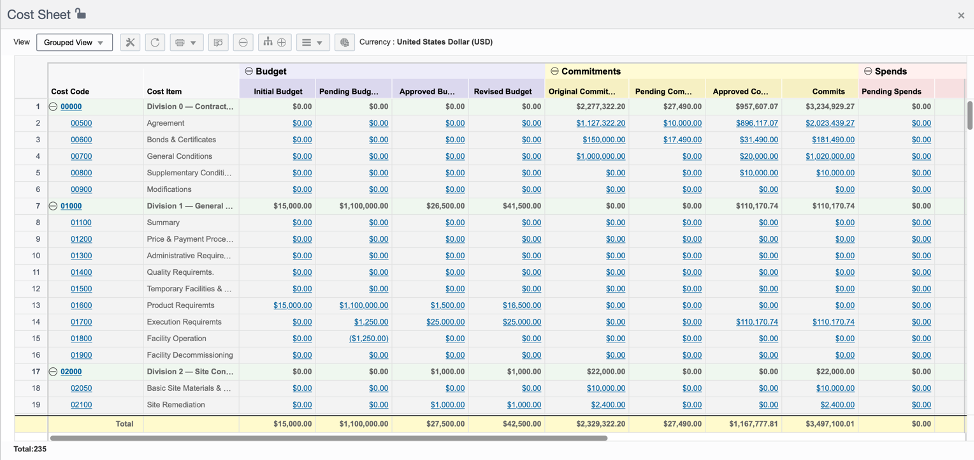
The cost sheet & cost management feature is best for tracking cost-related information. We can store document tracking Good by integrating with multiple external tools.
Prolog has been around almost as long as Primavera has. Prolog now belongs under the Trimble brand. The difference is that the Primavera product continues to improve and introduces features that benefit the Construction/Engineering community. At one point, Prolog had a very …
We are using RDS for the database services. With RDS, we don't have to manage much, as most of the DBA tasks are automated. For development purposes, we are using Kubernetes pods, which makes it easy to deploy applications and scale up as needed. AWS integration with in-house applications is seamless, making it easy to keep a data-sensitive application on-premises while still utilizing AWS services.
Actually, migrating to Microsoft Azure is a good solution for almost any situation, especially when all components of your network are ready to become cloud-based. The only drawback I personally encounter frequently is that older software packages cannot always be easily picked up and moved to Microsoft Azure in an optimal manner.
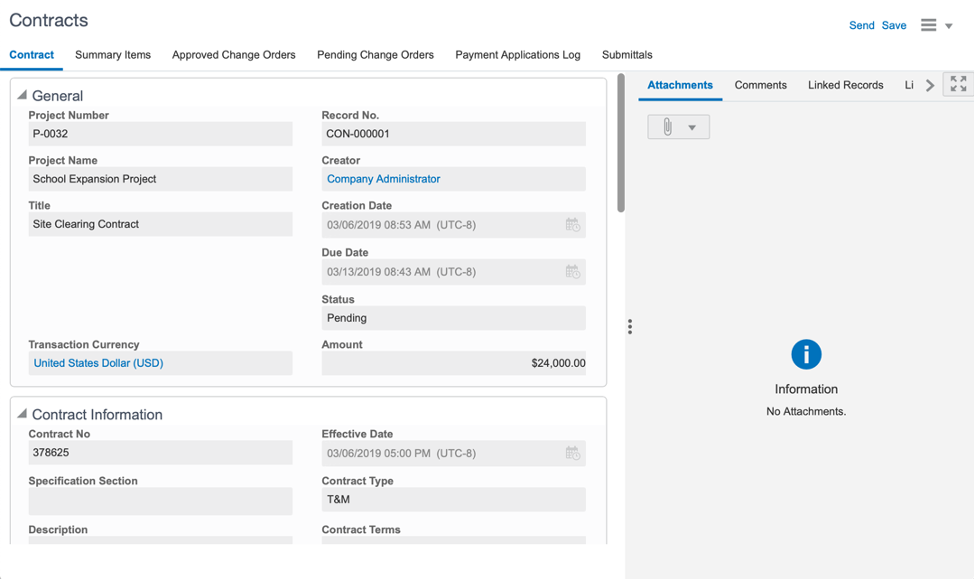
Primavera Unifier is well suited as a document management system for managing construction projects from all phases of the project (design through construction). Linking the application to other Oracle products like Oracle Financials is very straight forward and easy. Again, you build the framework of what you want the application to use. Not using Procurement, no problem, just throw it off. You have control of want you want and don't want. You are not forced to used everything.
Azure simply provides end to end life cycle. Starting from the development to automated deployment, you will find [a] bunch of options. Custom hook-points allow [integration] on-premise resources as well.
Excellent documentation around all the services make it really easy for any novice. Overall support by [the] community and Azure Technical team is exceptional.
BOT Services, Computer Vision services, ML frameworks provide excellent results as compare to similar services provided by other giants in the same space.
Azure data services provide excellent support to ingest data from different sources, ETL, and consumption of data for BI purpose.
In our experience, Azure Kubernetes Survice was difficult to set up, which is why we used Kubernetes on top of VMs.
Azure REST API is a bit difficult to use, which made it difficult for us to automate our interactions with Azure.
Azure's Web UI does a good job of showing metrics on individual VMs, but it would be great if there was a way to show certain metrics from multiple VMs on one dashboard. For example, hard drive usage on our database VMs.
I would gladly rely on AWS for any large-scale application deployment. For prototyping and small-scale applications, a more heavily managed environment on top of the 'bare metal' virtual infrastructure, such as Heroku or Elastic Bean Stalk, is probably a more productive approach in most cases
We have been very satisfied with Windows Azure and now a lot of our business depends on it as more teams are now deploying their applications into Azure. Our next step is to have our Infrastructure team move their resources to Azure. It will take awhile for that to happen but we are positive that it will.
Amazon Web Services is a great tool when it comes to middle size organizations like us. It provides multiple tools and functionalities in low costs. The best feature we have to pay as we go. No financial burden on company for the unused instances. It also comes with greater level of security such as two level authorization such as multi factor authorization.
Microsoft Azure's overall usability has been better than expected. Often times vendors promise the world, only to leave you with a run-down town. Not the case with our experience. From an implementation perspective, all went perfect, and from the user-facing experience we have had no technical issues, just some learning curve issues that are more about "why" than "how"
Primavera Unifier is right fit for construction-based or engineering based companies where there is a need to manage project costs, resources and deliverables to meet customer requirements. It is well suited for companies that run on Oracle ERP and companies that use Primavera P6 for scheduling. Primavera Unifier also has Accelerators which are pre-configured components that can be enhanced as per the business requirement. Overall, a good tool for managing complex customer projects
AWS does not provide the raw performance that you can get by building your own custom infrastructure. However, it is often the case that the benefits of specialized, high-performance hardware do not necessarily outweigh the significant extra cost and risk. Performance as perceived by the user is very different from raw throughput.
The customer support of Amazon Web Services are quick in their responses. I appreciate its entire team, which works amazingly, and provides professional support. AWS is a great tool, indeed, to provide customers a suitable way to immediately search for their compatible software's and also to guide them in a good direction. Moreover, this product is a good suggestion for every type of company because of its affordability and ease of use.
Support is easy with all the knowledge base articles available for free on the web. Plus, if you have a preferred status you can leverage their concierge support to get rapid response. Sometimes they’ll bounce you around a lot to get you to the right person, but they are quite responsive (especially when you are paying for the service). Many of the older Microsoft skills are also transferable from old-school on-prem to Azure-based virtual interfaces.
As I have mentioned before the issue with my Oracle Mismatch Version issues that have put a delay on moving one of my platforms will justify my 7 rating.
In my personal experience, AWS is superior to both GCP and Azure in the majority of usable applications. GCP suffers from the near total misunderstanding of how support system is even supposed to work, and while _some_ services are pretty nifty and well-polished, some are mindbogglingly designed black boxes with self-conflicting documentation. Some of it comes from having legacy systems, sure, but AWS somehow manages, even having a rather big lead start. Azure, from my limited experience, is limited to people somehow coerced into its usage by external constraints. That being said, IF you can design and implement something there, it will probably run fine.
I feel that Microsoft Azure typically outperforms Google Cloud Platform in hybrid cloud capabilities, integration aspects, and, primarily, security compliance features. Azure offered superior integration with Microsoft's enterprise software ecosystem, and it's second to none in my opinion. This made it the natural choice for most, especially if heavily invested in Windows, Office 365, or Active Directory deployments. We chose Azure over GCP because we simply needed Windows workload support as a strong driver, more access to global regions, and let's not forget that most tech teams in an organization are Microsoft Certified, which makes skillset transfer from on-prem to cloud a minimal learning curve over shifting to a different provider.
The cost sheet & cost management feature is best for tracking cost-related information. We can store document tracking Good by integrating with multiple external tools.
Provisioning resources like large database instances is really quick. We can easily scale our instances up or down as per need.
Storing files in S3 instead of onprem NAS drives is much more economical, especially for the files stored in glacier deep archive for compliance purposes.
Backup snapshots of EBS volumes and RDS instances may increase the cost of cloud if not cleaned up properly.
Times and growth went into it. By balancing on-premises maintenance with continuous cloud improvements, we’ve budgeted and planned endlessly increased capacity.
In today’s world of cyber-crime, clients can put even more faith in what they’ve heard. We built an innovative single-sign-on hub for all users. Also, other business platforms use Azure application gateways, reducing worker switching time and increasing productivity.
Its step can automate to improve the investment. In addition, we can integrate our organization’s credentials into an authorization for other systems.