Anaplan is a scenario planning and analysis platform designed to optimize decision-making in complex business environments so that enterprises can outpace their competition and the market. By building connections and collaboration across organizational silos, the Anaplan platform surfaces key insights.
N/A
SAP BPC (Business Planning and Consolidation)
Score8.3 out of 10
N/A
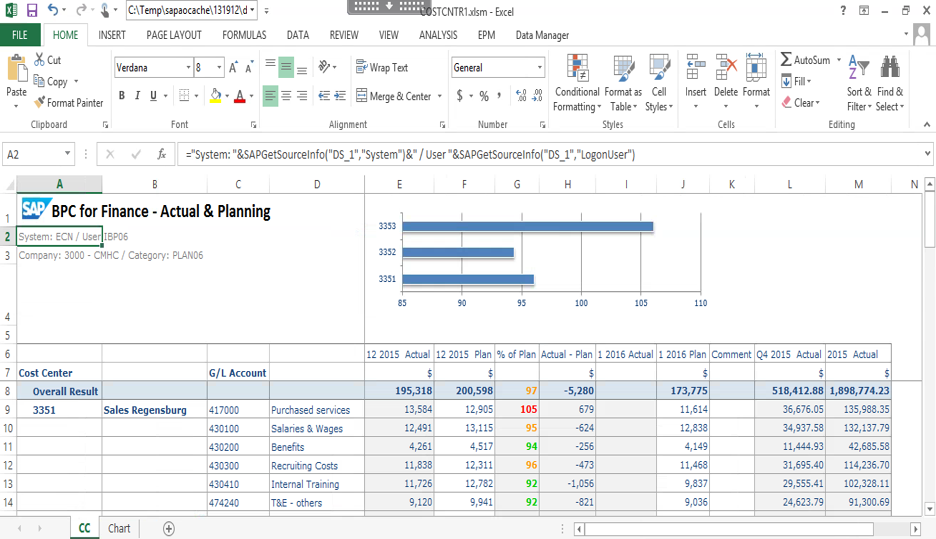
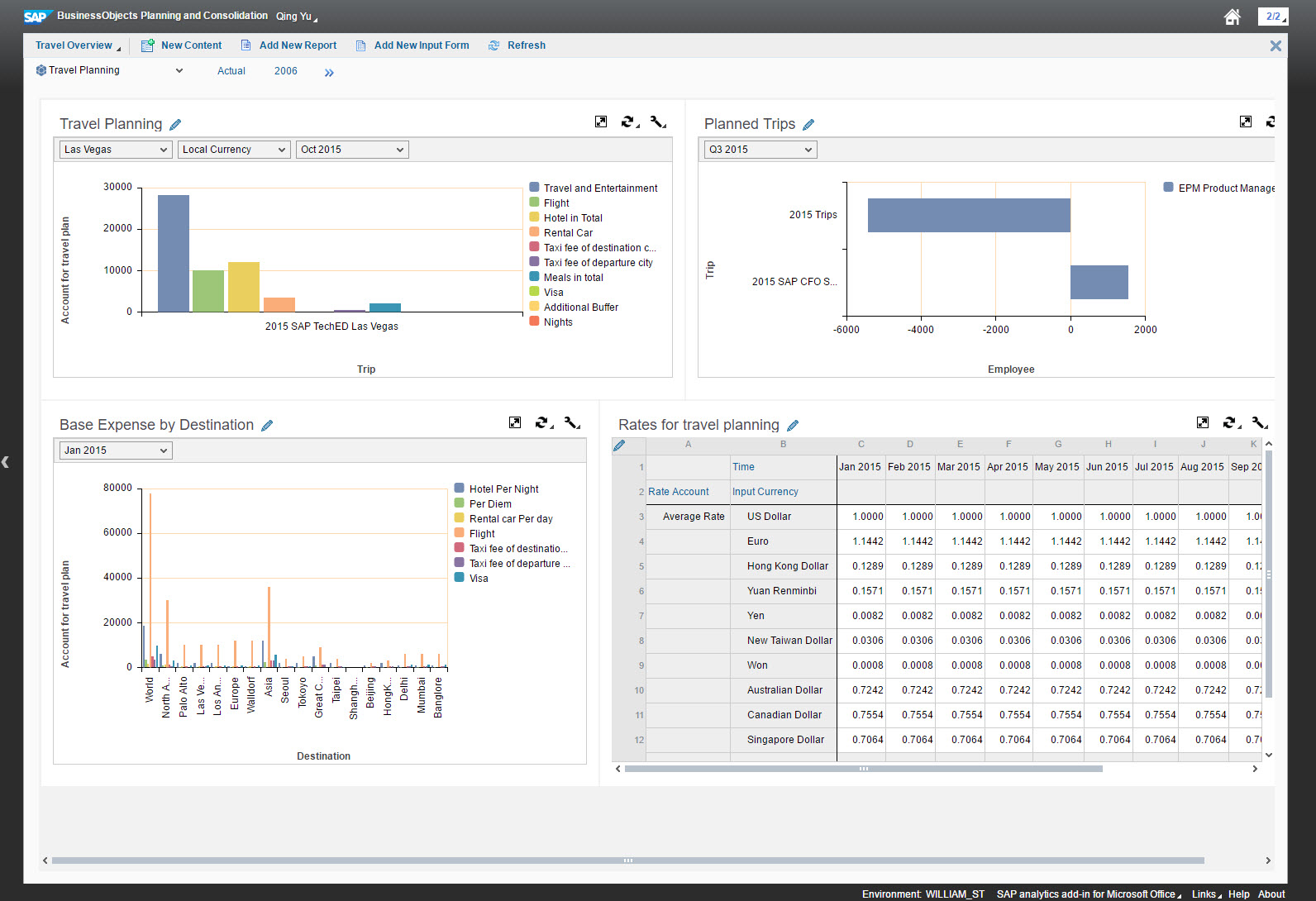
The SAP BPC software is designed to help users plan and achieve a faster, more accurate close. The SAP BPC software aims to help users spend more time growing their business and less time closing books. The vendor’s value proposition is that their software delivers planning, budgeting, forecasting, and financial consolidation capabilities in a single application. This, in turn, enables them to easily adjust plans and forecasts, speed up budget and closing cycles, and ensure compliance with…
N/A
Pricing
Anaplan
SAP BPC (Business Planning and Consolidation)
Editions & Modules
No answers on this topic
No answers on this topic
Offerings
Pricing Offerings
Anaplan
SAP BPC (Business Planning and Consolidation)
Free Trial
No
No
Free/Freemium Version
No
No
Premium Consulting/Integration Services
Yes
Yes
Entry-level Setup Fee
Optional
No setup fee
Additional Details
—
—
More Pricing Information
Community Pulse
Anaplan
SAP BPC (Business Planning and Consolidation)
Considered Both Products
Anaplan
Verified User
Chose Anaplan
Anaplan offers faster performance. The modelling tool is user oriented.
A de minimis incentive was given to thank the reviewer for their time. The incentive was not used to bias or drive a particular response, nor was the incentive contingent on a positive endorsement. More Info
A de minimis incentive was given to thank the reviewer for their time. The incentive was not used to bias or drive a particular response, nor was the incentive contingent on a positive endorsement. More Info
in Finance and Accounting at Hewlett Packard Enterprise (Information Technology & Services, 10,001+ employees)
Chose Anaplan
Anaplan is more flexible and can adapt to any business scenario. It is very cost effective compared to other platforms in the market. Time to implement a solution is very short depending on use case. Does not require dedicated IT team and can be managed by Technically sound …
A de minimis incentive was given to thank the reviewer for their time. The incentive was not used to bias or drive a particular response, nor was the incentive contingent on a positive endorsement. More Info
Verified User
Chose Anaplan
Anaplan has the advantage of multidimensionality and fast calculation engine which is lacking in most of the above. Scenario planning is easier using Anaplan. Anaplan is not an off the shelf tool like most softwares that have been prebuilt to address specific problems/ issues. …
A de minimis incentive was given to thank the reviewer for their time. The incentive was not used to bias or drive a particular response, nor was the incentive contingent on a positive endorsement. More Info
Verified User
Chose Anaplan
Anaplan provides the capability to do enhanced scenario modelling almost realtime and has wide range of integration options available to integrate the application with a wide variety of third-party systems. Anaplan UX is very intuitive which drives greater end user adoption. …
A de minimis incentive was given to thank the reviewer for their time. The incentive was not used to bias or drive a particular response, nor was the incentive contingent on a positive endorsement. More Info
Solution Architecty in Professional Services at Spaulding Ridge (Management Consulting, 501-1000 employees)
Chose Anaplan
Easy to implement Easy functions and scripting easy access to any plan more structured learning experience ( self-learning especially, good certification program ( also free unlike SAP ) Handling data inbox sizes is better in SAP No issues of size or data sparsity SAP is …
A de minimis incentive was given to thank the reviewer for their time. The incentive was not used to bias or drive a particular response, nor was the incentive contingent on a positive endorsement. More Info
Verified User
Chose Anaplan
Ease of use, intuitive design, business user friendly, quick implementation time
A de minimis incentive was given to thank the reviewer for their time. The incentive was not used to bias or drive a particular response, nor was the incentive contingent on a positive endorsement. More Info
Anaplan Solution Architect in Finance and Accounting at BI Smith (Computer Software, 1-10 employees)
Chose Anaplan
Anaplan is cheaper, more flexible, and easier to develop than BPC. In particular, the ability to plan different parts of the business at different levels of granularity (e.g. planning fixed staff costs at the company level, travel & expenses at the regional level and executive …
A de minimis incentive was given to thank the reviewer for their time. The incentive was not used to bias or drive a particular response, nor was the incentive contingent on a positive endorsement. More Info
Verified User
Chose Anaplan
Scalability, Performance and UX is key from above two tools versus Anaplan.
A de minimis incentive was given to thank the reviewer for their time. The incentive was not used to bias or drive a particular response, nor was the incentive contingent on a positive endorsement. More Info
Verified User
Chose Anaplan
I was an admin also in SAP BPC (Business Planning and Consolidation). But, I can say that it's somehow hard to implement. It is not as flexible as Anaplan. I am using Anaplan for years already. This is a game-changer i.e. for Finance people. We were able to easily implement it …
A de minimis incentive was given to thank the reviewer for their time. The incentive was not used to bias or drive a particular response, nor was the incentive contingent on a positive endorsement. More Info
Senior Manager - Anaplan in Information Technology at EY (Accounting, 10,001+ employees)
Chose Anaplan
Planful offers a great solution, however, they have significantly underperformed on their annual growth rate. The solution has a lot to offer, however, it is split across two solutions and is not True connected planning. OneStream is growing on a fast trajectory and has an …
A de minimis incentive was given to thank the reviewer for their time. The incentive was not used to bias or drive a particular response, nor was the incentive contingent on a positive endorsement. More Info
Senior Consultant in Finance and Accounting at TekLink International Inc. (Information Technology & Services, 51-200 employees)
Chose Anaplan
I have used SAP BPC and SAC. With relation to BPC, it is more user friendly and easier to maintain. For SAC, it similar but varies when it comes to utilizing the data and setting up for charts
A de minimis incentive was given to thank the reviewer for their time. The incentive was not used to bias or drive a particular response, nor was the incentive contingent on a positive endorsement. More Info
Verified User
Chose Anaplan
I've used other products in the past, but I came into this company knowing I would be using Anaplan specifically. Thus far I am still fine with that decision.
A de minimis incentive was given to thank the reviewer for their time. The incentive was not used to bias or drive a particular response, nor was the incentive contingent on a positive endorsement. More Info
SAP
Verified User
Chose SAP BPC (Business Planning and Consolidation)
SAP SAC ranks higher then SAP BPC due to its cloud offering nature. Anaplan has its own merits due to handling the complex planning scenarios.
A de minimis incentive was given to thank the reviewer for their time. The incentive was not used to bias or drive a particular response, nor was the incentive contingent on a positive endorsement. More Info
Verified User
Chose SAP BPC (Business Planning and Consolidation)
Anaplan UI is much better than SAP BPC. Anaplan is user-friendly and upgrades are handled automatically as it is in the cloud.
A de minimis incentive was given to thank the reviewer for their time. The incentive was not used to bias or drive a particular response, nor was the incentive contingent on a positive endorsement. More Info
Verified User
Chose SAP BPC (Business Planning and Consolidation)
SAP BPC was decided to be implemented into our company due to the added value compared to other competitors who offer the same systems. Although SAP BPC has room for improvement, the ease of use was the deciding factor that resulted in the company picking it. Organization, …
A de minimis incentive was given to thank the reviewer for their time. The incentive was not used to bias or drive a particular response, nor was the incentive contingent on a positive endorsement. More Info
With its versions and native time features Anaplan is well suited for all activities around planning in time and scenarios. Tasks involving calculating across multiple dimensions make Anaplan shine - the easiness to build complex calculation and present results on customizable pages. With its access restrictions it's well suited also for working with sensitive data (employee and customers personal data).
SAP BPC (Business Planning and Consolidation) overall is a good package and has helped improve our reporting a lot whilst also making it more efficient due to the reliability of data input / output. There are limitations like graphs being so limited in functionality and reports failing when too much data being processed however i would recommend to others.
A de minimis incentive was given to thank the reviewer for their time. The incentive was not used to bias or drive a particular response, nor was the incentive contingent on a positive endorsement. More Info
Anaplan removes the time consuming process of integrating the results of individual spreadsheets.
Anaplan facilitates the standardization of assumptions across all sub-processes
Anaplan provides full transparency of the calculations and source inputs
Anaplan allows us to automate certain planning processes that would have been impossible when relying on the computational capabilities of an individual computer.
SAP BPC is real time data. You can send information into the system and see it reflected in your reports immediately. Other systems may require a manual push into a reporting system.
SAP BPC is a shared reporting tool, so multiple users can be working in a model/environment at the same time, real time. This is especially helpful if your workbooks incorporated multiple processes requiring multiple users to get into the same model.
SAP BPC is a powerful tool designed to help all facets of the company, from cash flow to capital expenditures to headcount management to financial planning to consolidation.
A de minimis incentive was given to thank the reviewer for their time. The incentive was not used to bias or drive a particular response, nor was the incentive contingent on a positive endorsement. More Info
SAP should focus on delivering one single product for planning, consolidation and budgeting needs rather than providing a large list of options to choose from.
The product is not very user-friendly compared to other cloud competitors. There is a heavy dependency on IT teams.
A de minimis incentive was given to thank the reviewer for their time. The incentive was not used to bias or drive a particular response, nor was the incentive contingent on a positive endorsement. More Info
Anaplan is a very strong multi-dimensional modeling tool that provides a calculation engine to empower a complex planning process. It is fairly easy to learn for those with experience in similar tools, or excel. It forces structure and auditability that spread sheets do not have, along with extensive security capabilities
Anaplan's usability is dependent on who is implementing the project and how clear business processes are at the beginning of the implementation. Complex business processes with many inputs and reviews will still be complicated in Anaplan; however, the UX is very flexible in how to help people through the process and there are also other items such as Workflow that can help people move through the system.
A de minimis incentive was given to thank the reviewer for their time. The incentive was not used to bias or drive a particular response, nor was the incentive contingent on a positive endorsement. More Info
There are very few outages. Maintenance is scheduled on two or three Saturdays per month, so as not to affect businesses. When there is an outage, users are kept informed of progress to restore the platform and typically this takes no more than an hour. Anaplan customer support is very responsive if we ever have questions about platform issues
Everything is calculated in memory in the cloud. It's nearly instantaneous updates when you make changes. The only time things get a little slow is when you have a massive model with very intricate calculations...but "slow" for Anaplan is not what I would call "slow" for something like Hyperion. We used to have Hyperion calcs that ran for 60 mins before you could use data. The equivalent would be 60 seconds in Anaplan.
A de minimis incentive was given to thank the reviewer for their time. The incentive was not used to bias or drive a particular response, nor was the incentive contingent on a positive endorsement. More Info
Support quality has dropped since Thoma Bravo has taken over. I think some serious re-focus needs to happen here -- part of the beauty of being in the Anaplan community was how involved you felt in it before. Before I didn't dread sending a support ticket, now I am starting to.
A de minimis incentive was given to thank the reviewer for their time. The incentive was not used to bias or drive a particular response, nor was the incentive contingent on a positive endorsement. More Info
In my opinion, in-person training is always the best if you have the option to do so. This allows real-time interactions with the instructions, whereas the online training I took required me to write-down questions, email them, and wait for responses. This slows down the process, as you can imagine. That said, in-person training is an extra cost and it likely isn't needed for everyone. I would suggest selecting a small number of people to take in-person training and then having them act as mentors to the rest of your team. That way, as the rest of the team takes the online training, they have a resource to help them in real time.
SAP BPC training content and trainers are very good. The training is structured and provides a very good understanding of the product features and functionalities. I attended 6 separate training sessions of week-long or more. I had very good experience in all the sessions. The training is organized very well.
A de minimis incentive was given to thank the reviewer for their time. The incentive was not used to bias or drive a particular response, nor was the incentive contingent on a positive endorsement. More Info
Anaplan training materials are clear, simple, easy to understand and to follow. Visuals are excellent. The vendor is good at updating training materials in a timely manner and encouraging users and administrators to keep coming back to Academy site for refresher courses or new feature courses. I really like their interactive diagrams
A de minimis incentive was given to thank the reviewer for their time. The incentive was not used to bias or drive a particular response, nor was the incentive contingent on a positive endorsement. More Info
One key insight from implementing Anaplan is that success comes from focusing on designing the process, not just building the model. Anaplan is extremely flexible—there are very few planning scenarios it cannot support—but that flexibility means the project needs strong governance, clear ownership of requirements, and a well-defined data model. When those foundations are in place, implementations are fast, iterations are easy, and users can quickly see value. In our projects, both Financial Planning and Integrated Business Planning models were adopted smoothly because we involved business users early, kept the model design intuitive, and leveraged Anaplan’s Excel-like syntax and user-friendly dashboards. The result was more efficient day-to-day work, reduced manual tasks, and increased collaboration across teams. In short: when you combine Anaplan’s flexibility with a structured implementation approach, adoption and value realization happen quickly.
A de minimis incentive was given to thank the reviewer for their time. The incentive was not used to bias or drive a particular response, nor was the incentive contingent on a positive endorsement. More Info
Anaplan is more powerful than Pigment considering that it is an Enterprise class system and is able to manage bigger data sets. Anaplan allows for advanced scenario modeling and formula capabilities along with custom reporting functionalities. Anaplan has proven its capabilities and stability across various use cases and across bigger enterprises when compared to Pigment which is still in earlier phases of its development
With Hyperion we struggled as it didn’t have integrated planning and consolidation, whereas BPC does have it. BPC is easier for reporting as it is Excel-based. Also BPC has prepackaged business process flows that helped a lot. Hyperion on the other hand has a faster response time for user queries or report generation.
A de minimis incentive was given to thank the reviewer for their time. The incentive was not used to bias or drive a particular response, nor was the incentive contingent on a positive endorsement. TR verified that a representative sample of customers was invited. More Info
We have managed to leverage Anaplan for financial planning and forecasting across the business. It is now used by almost every department, with more than 50 users (but I know of companies that have hundreds of users) and still the platform is quick and reliable. It is easy to make changes to divisions and departments or add users and apply different user settings - the core part of the model is not affected and end users can continue their work without any disruption
Anaplan's implementation led to a significant reduction in planning cycle errors and bugs, streamlining processes and improving overall accuracy in data inputs
Standardizing the planning process and enabling cross-functional collaboration through Anaplan enhanced our ability to adapt swiftly to changing business needs, resulting in improved agility in decision-making
The platform's capabilities, especially in Demand Planning and Supply Chain, positively impacted our ROI by optimizing resource allocation and solving complex business problems efficiently across multiple functions
When originally implemented (as the predecessor product Outlooksoft) BPC took ASU from trying to budget and forecast for a 2B enterprise out of spreadsheets and into a far more consolidated tool. It has saved us considerable time over the years and paid for itself several times over.
BPC also allows us to present our budget in multiple different views to support management, board and departmental reporting.
A de minimis incentive was given to thank the reviewer for their time. The incentive was not used to bias or drive a particular response, nor was the incentive contingent on a positive endorsement. More Info