Appian is a low-code development and business process management platform. It features drag-and-drop design for app building, automated work processes, unified data management, and cloud-based deployment.
$0
Oracle APEX
Score 8.8 out of 10
N/A
Oracle APEX (or Oracle Application Express) is an online low-code application builder that allows users to develop a database-drive application, customize the application's UI, and then give their users access to the application via URL. Oracle APEX includes a suite of pre-built productivity applications and examples, such as a Survey Builder, Bug Tracking, P-Track project management, etc
$0.32
OCPU per hour
WEBCON BPS
Score 9.1 out of 10
Mid-Size Companies (51-1,000 employees)
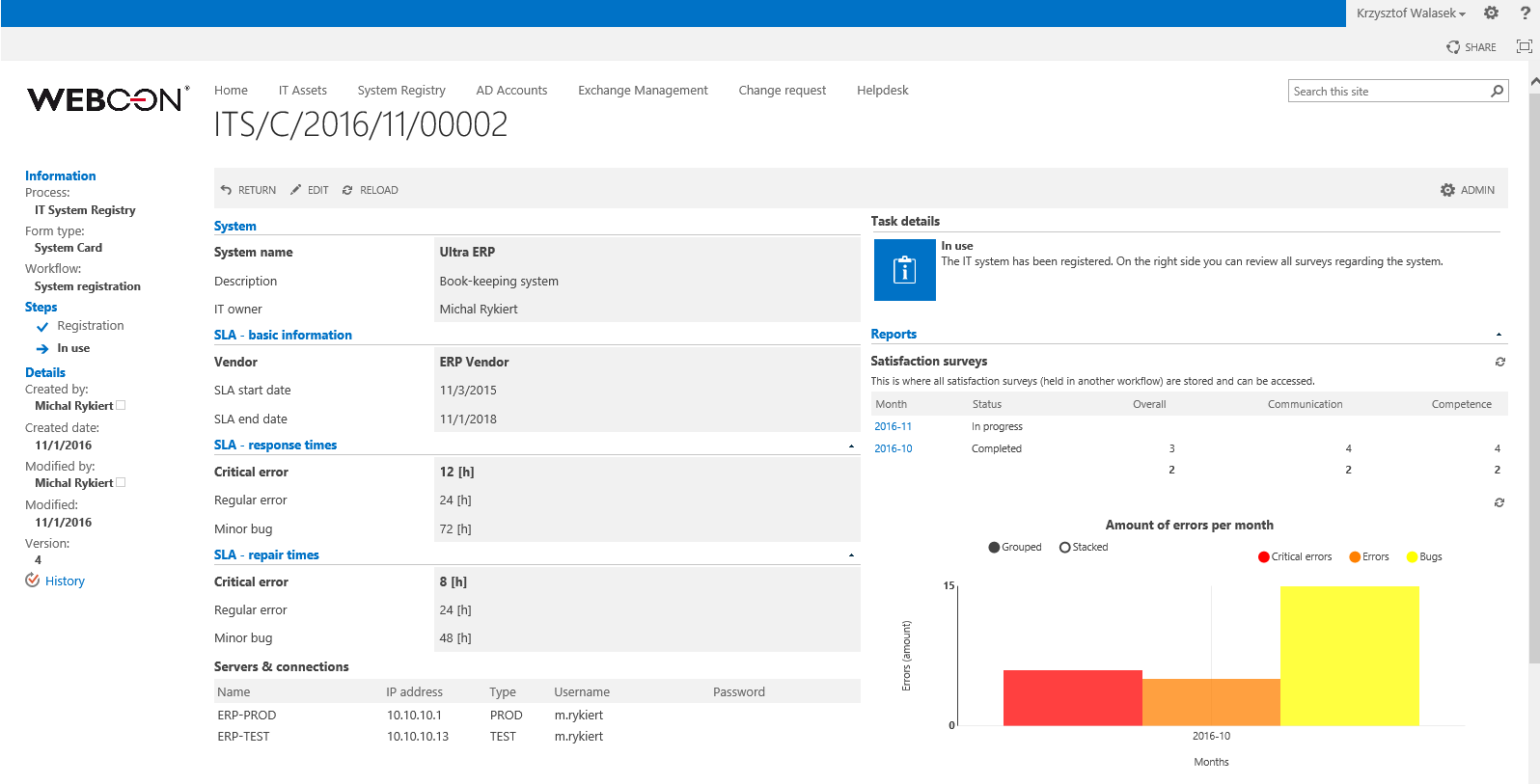
WEBCON Business Process Suite is a comprehensive solution for Microsoft SharePoint.
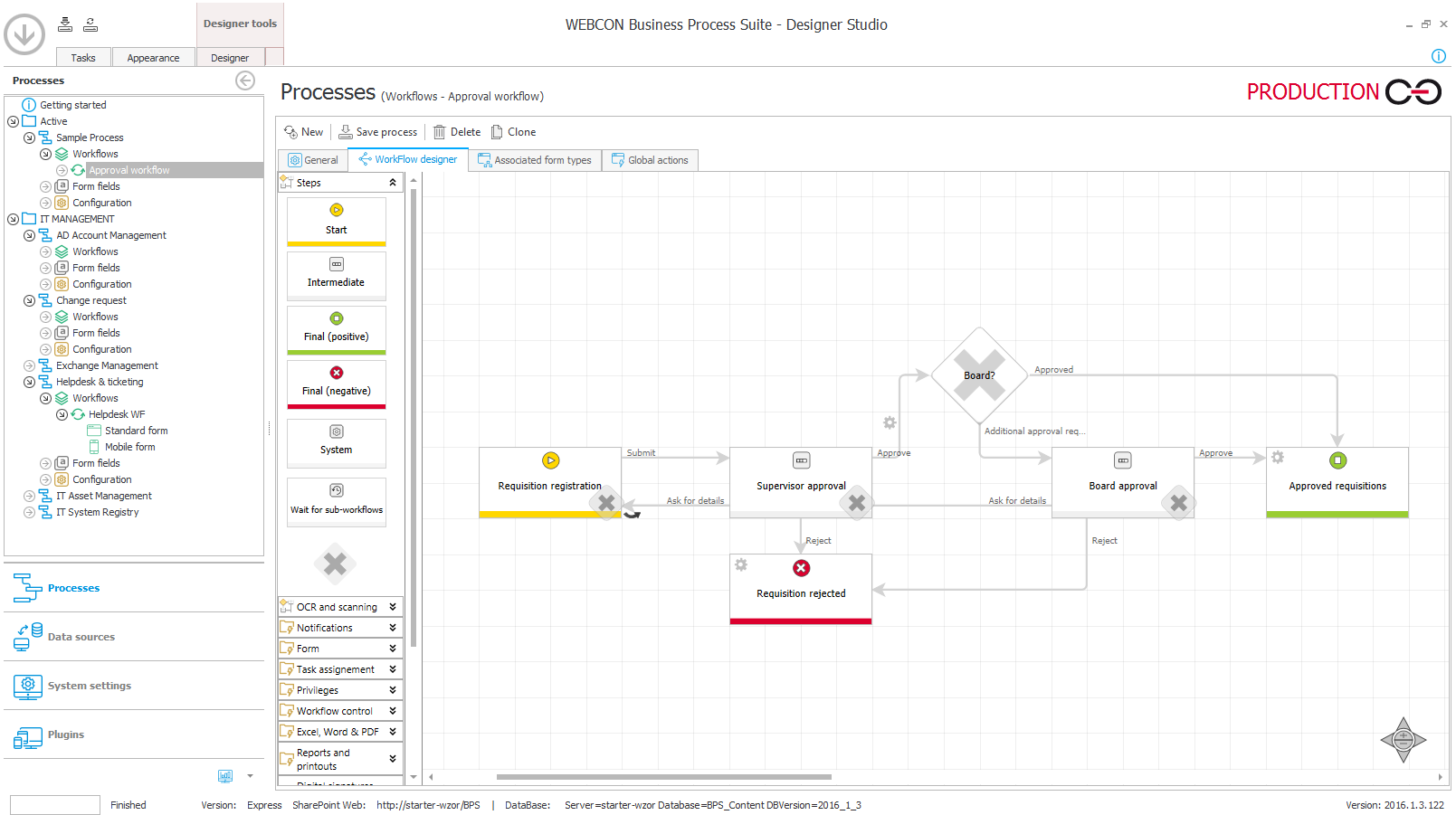
The solution offers a multilingual SharePoint based interface with dedicated mobile access to tasks and documents. Its graphic process designer helps the user configure and draw business process scenarios and supports simple creation of forms and workflow steps and paths.
$0
installation
Pricing
Appian
Oracle APEX
WEBCON BPS
Editions & Modules
Appian Community Edition
$0
Application - Input-Only
$2
per month per user
Application - Infrequent
$9
per month per user
Application - Standard
$75
per month per user
Platform
Custom Quote Priced per user with unlimited apps.
minimum 100 users, no maximum
Unlimited
Custom Quote Priced per development with unlimited apps.
unlimited
Platform
Custom Quote Priced per user with unlimited apps.
Minimum 100, no maximum
Unlimited
Custom Quote Priced per development with unlimited apps.
WEBCON BPS Express is a free edition for test and productive use up to 10 GB of database size (see starter.webcon.com)
WEBCON BPS Standard and Enterprise versions are available as perpetual, per user licenses. Pay per month model is also available.
More Pricing Information
Community Pulse
Appian
Oracle APEX
WEBCON BPS
Features
Appian
Oracle APEX
WEBCON BPS
Low-Code Development
Comparison of Low-Code Development features of Product A and Product B
Appian
9.1
75 Ratings
8% above category average
Oracle APEX
8.4
26 Ratings
0% below category average
WEBCON BPS
-
Ratings
Visual Modeling
8.873 Ratings
7.425 Ratings
00 Ratings
Drag-and-drop Interfaces
8.972 Ratings
8.226 Ratings
00 Ratings
Platform Security
9.271 Ratings
8.826 Ratings
00 Ratings
Platform User Management
8.872 Ratings
8.325 Ratings
00 Ratings
Reusability
9.575 Ratings
9.126 Ratings
00 Ratings
Platform Scalability
9.573 Ratings
8.526 Ratings
00 Ratings
Reporting & Analytics
Comparison of Reporting & Analytics features of Product A and Product B
Appian
-
Ratings
Oracle APEX
-
Ratings
WEBCON BPS
9.1
2 Ratings
16% above category average
Dashboards
00 Ratings
00 Ratings
9.12 Ratings
Standard reports
00 Ratings
00 Ratings
9.12 Ratings
Custom reports
00 Ratings
00 Ratings
9.12 Ratings
Process Engine
Comparison of Process Engine features of Product A and Product B
Appian
-
Ratings
Oracle APEX
-
Ratings
WEBCON BPS
8.9
2 Ratings
7% above category average
Process designer
00 Ratings
00 Ratings
9.12 Ratings
Process simulation
00 Ratings
00 Ratings
10.01 Ratings
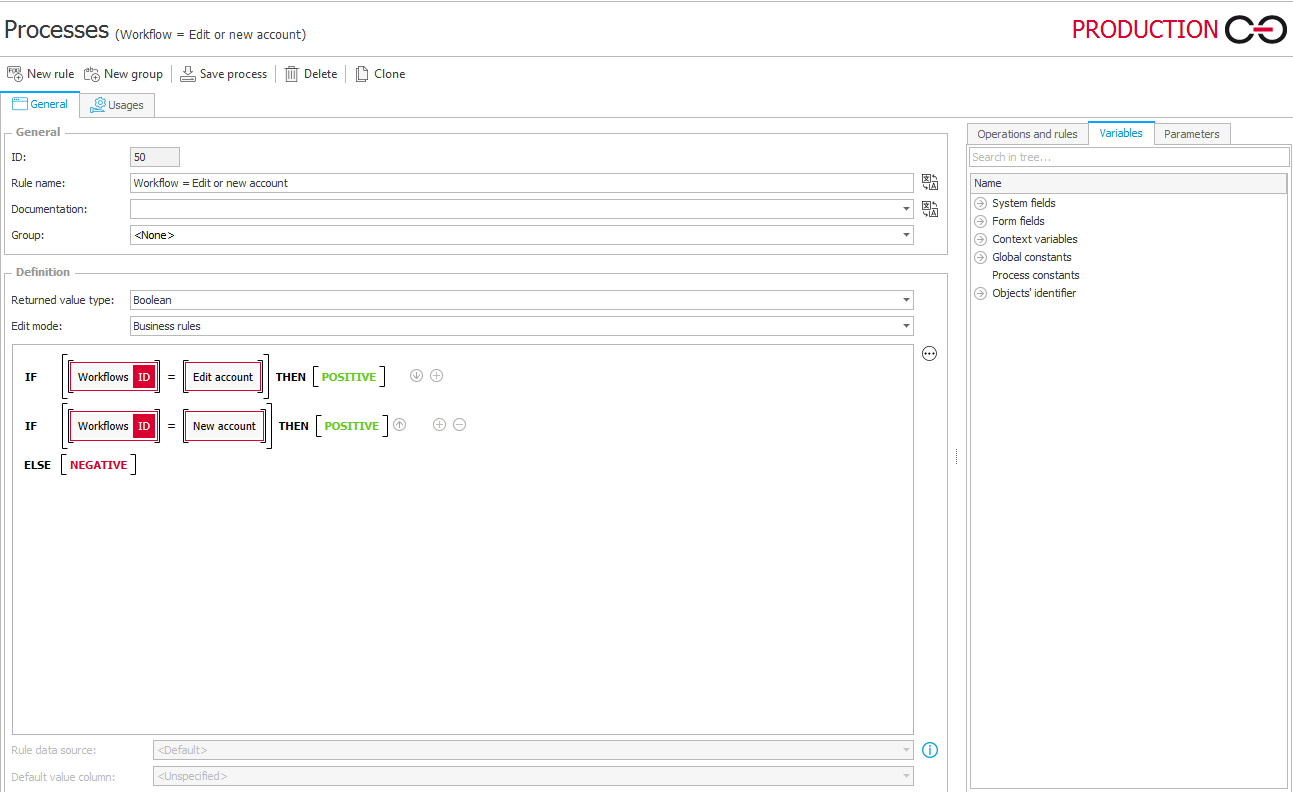
Business rules engine
00 Ratings
00 Ratings
8.22 Ratings
SOA support
00 Ratings
00 Ratings
9.11 Ratings
Form builder
00 Ratings
00 Ratings
8.22 Ratings
Model execution
00 Ratings
00 Ratings
9.12 Ratings
Content Management Capabilties
Comparison of Content Management Capabilties features of Product A and Product B
Appian works great for automating manual processes and integrating multiple systems through its toolset. It gives great flexibility for establishing rules for approvals, routings, escalations, and the like. Because of the low code toolset, it's very easy to deploy and make changes as needed as processes evolve and as the organization learns to utilize the system better. Minimal maintenance is required to support the applications build on the platform. Some of the automated testing integration with tools like Jenkins is limited so that may be an issue for some.
If you need to develop an application very quickly, without unnecessary lengthy specifications or business requirements, something you need right away, while utilizing all the capabilities of the Oracle database, APEX is the right choice. Thanks to the many components you use from the vast Oracle APEX library, working with this tool is exceptionally pleasant, fast, and effective.
Really well suited for processes which work with documents, seems less (but it is possible) appropriate for single/no data actions (e.g. just provide a quick update in SQL database without any process).
Allows at a glance workflow documentation which assists in the need we have for information readiation.
Drag and drop interface for workflow development greatly speeds our apps time to market.
Using the advanced features of Appian, we are able to create working sites in a fraction of the time it would take to do so using "traditional" development.
Search issues when type ahead and database search are used in the same field.
Buttons implementation where user is require[d] to click on the button description - if clicks on the button outside that text - button will not work.
Problems with using certain off-the-shelf performance tools like WebLoad or Neoload. That is because of different dynamic variables being used internally in Appian - which these tools are unable to correlate. We are still investigating using other tools like Jmeter to overcome dynamic correlation problem for performance testing.
Can't think of any - the Application Express development team does a fantastic job adopting and supporting emerging trends with each new release.
Requires Oracle RDBMS; i.e., is not portable to other RDBMS platforms. On the surface this may seem like a con but it is as it should be - Oracle database is best RDBMS available and tight integration with Oracle RDBMS promotes creation of reliable performant apps.
We recently renewed our license with Appian. We are convinced that its flexibility, relative ease of use, the support they provide, there mobile advancements and their general willingness and desire to see us succeed all contributed to our reason to renew our agreement with Appian
I felt very comfortable using Oracle Application Express from the start. I designed my data model and quickly developed the basic CRUD pages for master tables. Then I designed the main functionality and was able to test and deploy it in a couple of days work. I will probably share the app with other members of the team and continue adding some features in the short term.
Appian is a low code environment, because of this, a very good visual interface is required. Appian is providing a feature-rich dashboard [that] we can use for building the dashboards and other interfaces. Appian also provides patches and releases to enhance these features. A developer can start off development just by going through a basic course from the Appian learning community.
Oracle APEX is an ultra flexible, low code platform having a great easy of use, superior customization capabilities, scalable and provides a very good application and data security. It also has lot of AI capabilities as well as modern features such as GeoLocation maps, Automation capabilities, Workflow approval features and Mobile application capabilities using PWA like features.
Appian is one of the leading low code business automation platforms that support RPA, decision rules, case management, workflow automation, and machine learning all in a single bundle. But it is also harder to implement and replace the traditional business process.
Very active and knowledgeable community support includes quick and helpful responses from the Oracle employees on the product development team. I've never had to raise an official support request - everything is dealt with via forums and user groups - or via direct emails. The supposrt commuinty is one of the great things about Apex.
As analyst I participated in a developer boot camp. At times it was hard to keep up but most of the time it made sense. Trainer took the time to explain and slowed pace down to answer questions etc.
Using it on the cloud is really simple, the entire process of configuring and provisioning an Oracle Database takes only a few minutes (less than 10) and then Oracle APEX is already deployed on the database, so you just have to start using it. I would strongly recommend using APEX on Oracle Cloud Free Tier.
Appian has enormously transformed and keeps on updating the product every quarter to meet the latest needs of the world with new innovations & technologies being integrated within the platform. What gives more pleasure than a product that keeps on continuous[ly] improv[ing]?
If you are expert in SQL and PLSQL and use Oracle Database, then the best choice is Oracle Application Express. The functionality is already complete and very easy to use, so it's useless to find another tool if you are using Oracle. You don't use Oracle APEX only if: (1) you are using other database than Oracle, and (2) your application load is unpredictable.
I believe it has negatively impacted our release dates. There may have been a misunderstanding as to the learning curve, even though it is "low code."
The look and feel of the applications created using Appian have uniformity and it's easier to have "reuse" between applications.
There is less developer control when it comes to features. I think this mainly has to do with the amount of plugins available. I would think there should be many more available plugins. But again, our use case is probably different than most others.
In the mid-size organization, we had a BI tool that had a significant license cost involved. With Oracle back-end we were able to switch to APEX and move all reporting at literally zero cost.
For Oracle PL/SQL users the learning curve is very quick and easy, there are ready templates that you can start with and eventually create complex reports.
You can track authorization and authentication on data editing and usage. High performance as it is native oracle sql codes.
Centralized data capturing, makes your datawarehouse writable for lookup tables or reference tables.