
Asana vs. Delibr vs. Micro Focus Caliber (discontinued)
Asana vs. Delibr vs. Micro Focus Caliber (discontinued)
| Product | Rating | Most Used By | Product Summary | Starting Price |
|---|---|---|---|---|
 Asana | N/A | Asana is a web and mobile project management app. With tasks, projects, conversations, and dashboards, Asana lets an entire team know who's doing what by when, enabling workload balancing. Users can also add integrations for GANTT charts, time tracking and more. | $13.49 per month per user | |
 Delibr | N/A | Delibr is an outlining tool for feauture refinement created for Product Managers. With Delibr the user can easily visualize conversations about features, create and keep track of tasks, create Jira issues, make notes and turn them into presentations. | $50 per 10 users, 5$ for additional users | |
 Micro Focus Caliber (discontinued) | N/A | Caliber by Micro Focus (formerly Borland Caliber), is an application requirement management offering. It has been discontinued, but similar capabilities are supplied by Micro Focus by Dimensions RM. | N/A |
| Asana | Delibr | Micro Focus Caliber (discontinued) | ||||||||||||||||||||||
|---|---|---|---|---|---|---|---|---|---|---|---|---|---|---|---|---|---|---|---|---|---|---|---|---|
| Editions & Modules |
|
| No answers on this topic | |||||||||||||||||||||
| Offerings |
| |||||||||||||||||||||||
| Entry-level Setup Fee | Optional | No setup fee | No setup fee | |||||||||||||||||||||
| Additional Details | A discount is offered for annual billing. | — | — | |||||||||||||||||||||
| More Pricing Information | ||||||||||||||||||||||||
| Asana | Delibr | Micro Focus Caliber (discontinued) |
|---|
| Asana | Delibr | Micro Focus Caliber (discontinued) | |||||||||||||||||||||||||||||||||||||||||||||||||||||||||||
|---|---|---|---|---|---|---|---|---|---|---|---|---|---|---|---|---|---|---|---|---|---|---|---|---|---|---|---|---|---|---|---|---|---|---|---|---|---|---|---|---|---|---|---|---|---|---|---|---|---|---|---|---|---|---|---|---|---|---|---|---|---|
| Project Management |
| ||||||||||||||||||||||||||||||||||||||||||||||||||||||||||||
| Professional Services Automation |
|
| Asana | Delibr | Micro Focus Caliber (discontinued) | |
|---|---|---|---|
| Small Businesses |  Kintone Score 9.7 out of 10 |  MeisterTask Score 9.0 out of 10 |  Polarion ALM Score 9.9 out of 10 |
| Medium-sized Companies | Kintone Score 9.7 out of 10 |  ProductPlan Score 9.5 out of 10 | Polarion ALM Score 9.9 out of 10 |
| Enterprises |  Planview AgilePlace Score 7.8 out of 10 |  Roadmunk Score 5.3 out of 10 | Polarion ALM Score 9.9 out of 10 |
| All Alternatives | View all alternatives | View all alternatives | View all alternatives |
| Asana | Delibr | Micro Focus Caliber (discontinued) | |
|---|---|---|---|
| Likelihood to Recommend | 9.1 (209 ratings) | 9.0 (1 ratings) | 1.0 (1 ratings) |
| Likelihood to Renew | 9.6 (34 ratings) | - (0 ratings) | - (0 ratings) |
| Usability | 8.7 (37 ratings) | - (0 ratings) | - (0 ratings) |
| Availability | 8.4 (2 ratings) | - (0 ratings) | - (0 ratings) |
| Support Rating | 5.0 (42 ratings) | 10.0 (1 ratings) | - (0 ratings) |
| Product Scalability | 8.2 (1 ratings) | - (0 ratings) | - (0 ratings) |
| Asana | Delibr | Micro Focus Caliber (discontinued) | |
|---|---|---|---|
| Likelihood to Recommend |  Asana
 Marina Torttoli Marketing Director | Delibr
 Sarah Morgan Director, Product Management |  Discontinued Products
 Tiffany Seeman QC Analyst |
| Pros | Asana
 Ammar Aboalrub Freelancer | Delibr
Sarah Morgan Director, Product Management | Discontinued Products
Tiffany Seeman QC Analyst |
| Cons | Asana
| Delibr
Sarah Morgan Director, Product Management | Discontinued Products
Tiffany Seeman QC Analyst |
| Likelihood to Renew | Asana
 page V CEO (Chief Executive Officer) | Delibr No answers on this topic | Discontinued Products No answers on this topic |
| Usability | Asana
| Delibr No answers on this topic | Discontinued Products No answers on this topic |
| Reliability and Availability | Asana
 Ronen Soreq Project Manager | Delibr No answers on this topic | Discontinued Products No answers on this topic |
| Support Rating | Asana
 Adam Lumley Director of Marketing & Communications | Delibr
Sarah Morgan Director, Product Management | Discontinued Products No answers on this topic |
| Alternatives Considered | Asana
 Rafiqul Islam Full-stack Software Engineer | Delibr
Sarah Morgan Director, Product Management | Discontinued Products
Tiffany Seeman QC Analyst |
| Scalability | Asana
Ronen Soreq Project Manager | Delibr No answers on this topic | Discontinued Products No answers on this topic |
| Return on Investment | Asana
 Kristi Porter Chief Do-Gooder | Delibr
Sarah Morgan Director, Product Management | Discontinued Products
Tiffany Seeman QC Analyst |
| ScreenShots | Asana Screenshots 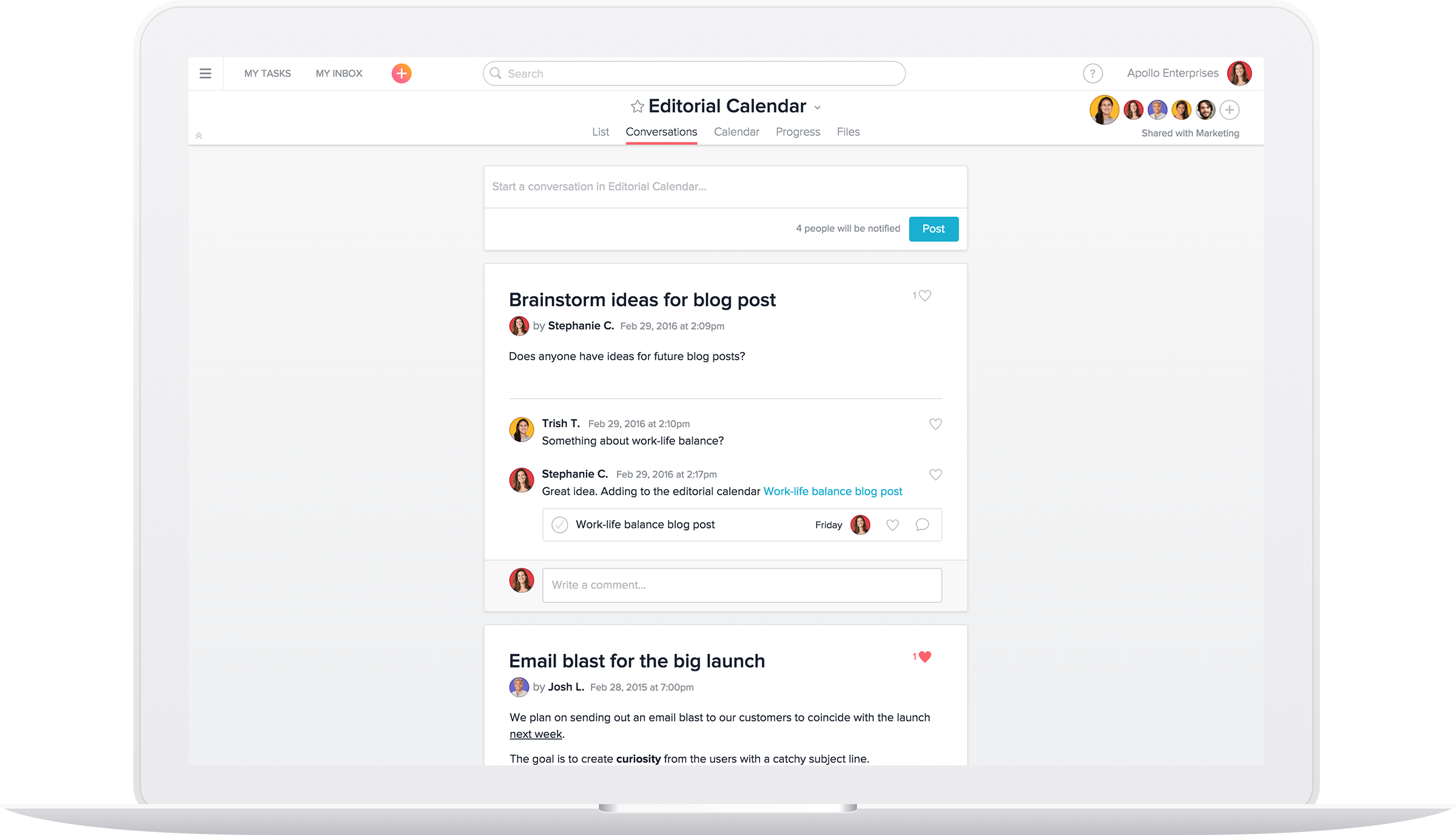     | Delibr Screenshots    |