
Christopher Penn
Chief Data Scientist
Chose Tableau Public
Tableau Public's primary advantage is its lack of cost. That's really what it excels at; otherwise, it's functionally just another Tableau Server.

| Product | Rating | Most Used By | Product Summary | Starting Price |
|---|---|---|---|---|
 Astrato Analytics | N/A | A self-service BI solution, Astrato puts analytics in the hands of every user, enabling them to build their own reports and answer data questions without IT help. Astrato accelerates adoption, speeds up decision-making, and unifies analytics, embedded analytics, data input, and data apps in one platform. With Astrato, Self-Service business users can see and understand data that resides in the Data Cloud (Snowflake, Databricks, BigQuery, Redshift, Dremio,… | $12 per month per user | |
 Tableau Public | N/A | Tableau Public is a free edition of the Desktop product. With this edition, data can only be published to the Tableau public website and does not allow work to be saved or exported locally. | $0 per month | |
 Tableau Server | N/A | Tableau Server allows Tableau Desktop users to publish dashboards to a central server to be shared across their organizations. The product is designed to facilitate collaboration across the organization. It can be deployed on a server in the data center, or it can be deployed on a public cloud. | $12 Per User Per Month |
| Astrato Analytics | Tableau Public | Tableau Server | ||||||||||||||||||||||
|---|---|---|---|---|---|---|---|---|---|---|---|---|---|---|---|---|---|---|---|---|---|---|---|---|
| Editions & Modules | No answers on this topic | No answers on this topic |
| |||||||||||||||||||||
| Offerings |
| |||||||||||||||||||||||
| Entry-level Setup Fee | Optional | No setup fee | No setup fee | |||||||||||||||||||||
| Additional Details | — | — | — | |||||||||||||||||||||
| More Pricing Information | ||||||||||||||||||||||||
| Astrato Analytics | Tableau Public | Tableau Server | |
|---|---|---|---|
| Considered Multiple Products | Astrato Analytics No answer on this topic |  Tableau Public Christopher Penn Chief Data Scientist Chose Tableau Public Tableau Public's primary advantage is its lack of cost. That's really what it excels at; otherwise, it's functionally just another Tableau Server.  Hiren Mistry Enterprise Data Architect Chose Tableau Public  Steven Bohlender Executive Vice President Chose Tableau Public We evaluated about 15 products when we selected Tableau 7 years ago, and periodically review products from other vendors (e.g. Microsoft, QlikView, Tibco Spotfire, Birst, Pentaho, etc.). To date, Tableau offers the widest variety of options and functionality at a reasonable … | Tableau Server |
| Astrato Analytics | Tableau Public | Tableau Server | |||||||||||||||||||||||||||
|---|---|---|---|---|---|---|---|---|---|---|---|---|---|---|---|---|---|---|---|---|---|---|---|---|---|---|---|---|---|
| BI Standard Reporting |
| ||||||||||||||||||||||||||||
| Ad-hoc Reporting |
| ||||||||||||||||||||||||||||
| Report Output and Scheduling |
| ||||||||||||||||||||||||||||
| Data Discovery and Visualization |
| ||||||||||||||||||||||||||||
| Access Control and Security |
| ||||||||||||||||||||||||||||
| Mobile Capabilities |
| ||||||||||||||||||||||||||||
| Application Program Interfaces (APIs) / Embedding |
|
| Astrato Analytics | Tableau Public | Tableau Server | |
|---|---|---|---|
| Small Businesses |  Yellowfin Score 8.7 out of 10 |  Supermetrics Score 9.7 out of 10 | Yellowfin Score 8.7 out of 10 |
| Medium-sized Companies |  Reveal Score 10.0 out of 10 | Supermetrics Score 9.7 out of 10 | Reveal Score 10.0 out of 10 |
| Enterprises |  Kyvos Semantic Layer Score 9.5 out of 10 |  IBM Analytics Engine Score 7.2 out of 10 | Kyvos Semantic Layer Score 9.5 out of 10 |
| All Alternatives | View all alternatives | View all alternatives | View all alternatives |
| Astrato Analytics | Tableau Public | Tableau Server | |
|---|---|---|---|
| Likelihood to Recommend | 8.5 (5 ratings) | 8.5 (14 ratings) | 8.0 (111 ratings) |
| Likelihood to Renew | - (0 ratings) | 9.1 (2 ratings) | 10.0 (20 ratings) |
| Usability | 8.0 (4 ratings) | 10.0 (5 ratings) | 8.0 (17 ratings) |
| Availability | - (0 ratings) | - (0 ratings) | 9.0 (9 ratings) |
| Performance | - (0 ratings) | - (0 ratings) | 8.1 (8 ratings) |
| Support Rating | 9.0 (1 ratings) | 9.6 (6 ratings) | 3.0 (18 ratings) |
| In-Person Training | - (0 ratings) | - (0 ratings) | 8.0 (4 ratings) |
| Online Training | - (0 ratings) | 9.0 (1 ratings) | 9.0 (9 ratings) |
| Implementation Rating | - (0 ratings) | 9.1 (2 ratings) | 9.1 (13 ratings) |
| Configurability | - (0 ratings) | - (0 ratings) | 8.0 (1 ratings) |
| Astrato Analytics | Tableau Public | Tableau Server | |
|---|---|---|---|
| Likelihood to Recommend | Astrato Analytics LTD.
| Tableau
| Tableau
|
| Pros | Astrato Analytics LTD.
 Christopher Adams Founder | Tableau
 Leah Jakaitis Senior Data Analyst | Tableau
|
| Cons | Astrato Analytics LTD.
 Beau Dobbs Director of Operations and Data Analytics | Tableau
Steven Bohlender Executive Vice President | Tableau
 Jacob Rasmussen Data Engineer |
| Likelihood to Renew | Astrato Analytics LTD. No answers on this topic | Tableau
 Bonnie Holub Honeywell Endowed Chair in Global Technology Management | Tableau
 Mathieu Gaouette Consultant BI senior/Administrateur - spécialité SAS |
| Usability | Astrato Analytics LTD.
 Christian Gesú De Andrade Trillo Freela de mídia e conteúdo | Tableau | Tableau
|
| Reliability and Availability | Astrato Analytics LTD. No answers on this topic | Tableau No answers on this topic | Tableau
|
| Performance | Astrato Analytics LTD. No answers on this topic | Tableau No answers on this topic | Tableau
 Jonathan Drummey Quality Management Data Analyst |
| Support Rating | Astrato Analytics LTD.
 Angel Monjarás Manager - Business Analytics | Tableau
| Tableau
 Henry Yennie Program Manager |
| In-Person Training | Astrato Analytics LTD. No answers on this topic | Tableau No answers on this topic | Tableau
 Mashhood Syed BI Analyst |
| Online Training | Astrato Analytics LTD. No answers on this topic | Tableau
Bonnie Holub Honeywell Endowed Chair in Global Technology Management | Tableau
|
| Implementation Rating | Astrato Analytics LTD. No answers on this topic | Tableau
Steven Bohlender Executive Vice President | Tableau
|
| Alternatives Considered | Astrato Analytics LTD.
| Tableau
| Tableau
|
| Return on Investment | Astrato Analytics LTD.
Christopher Adams Founder | Tableau
Christopher Penn Chief Data Scientist | Tableau
|
| ScreenShots | Astrato Analytics Screenshots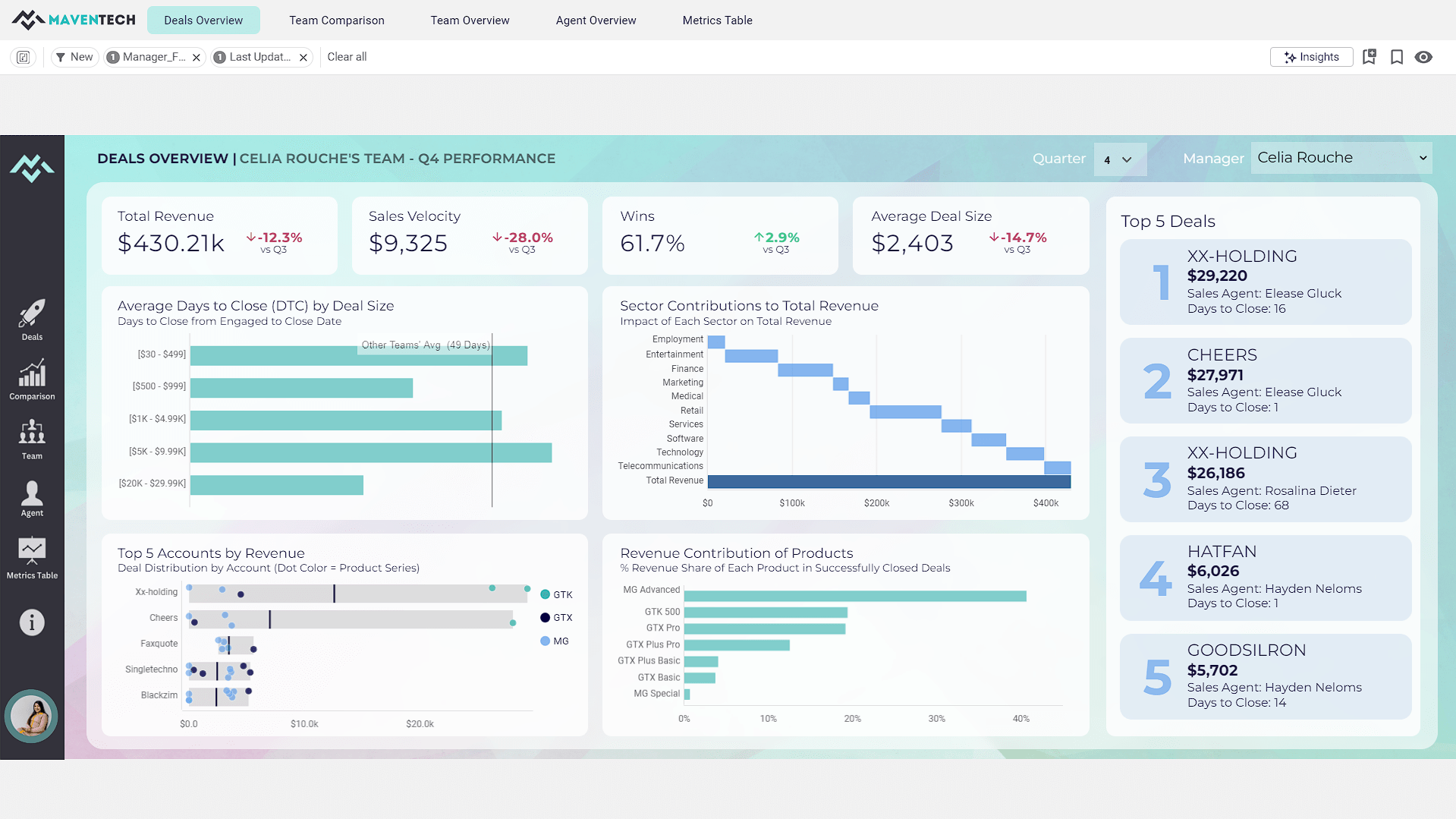  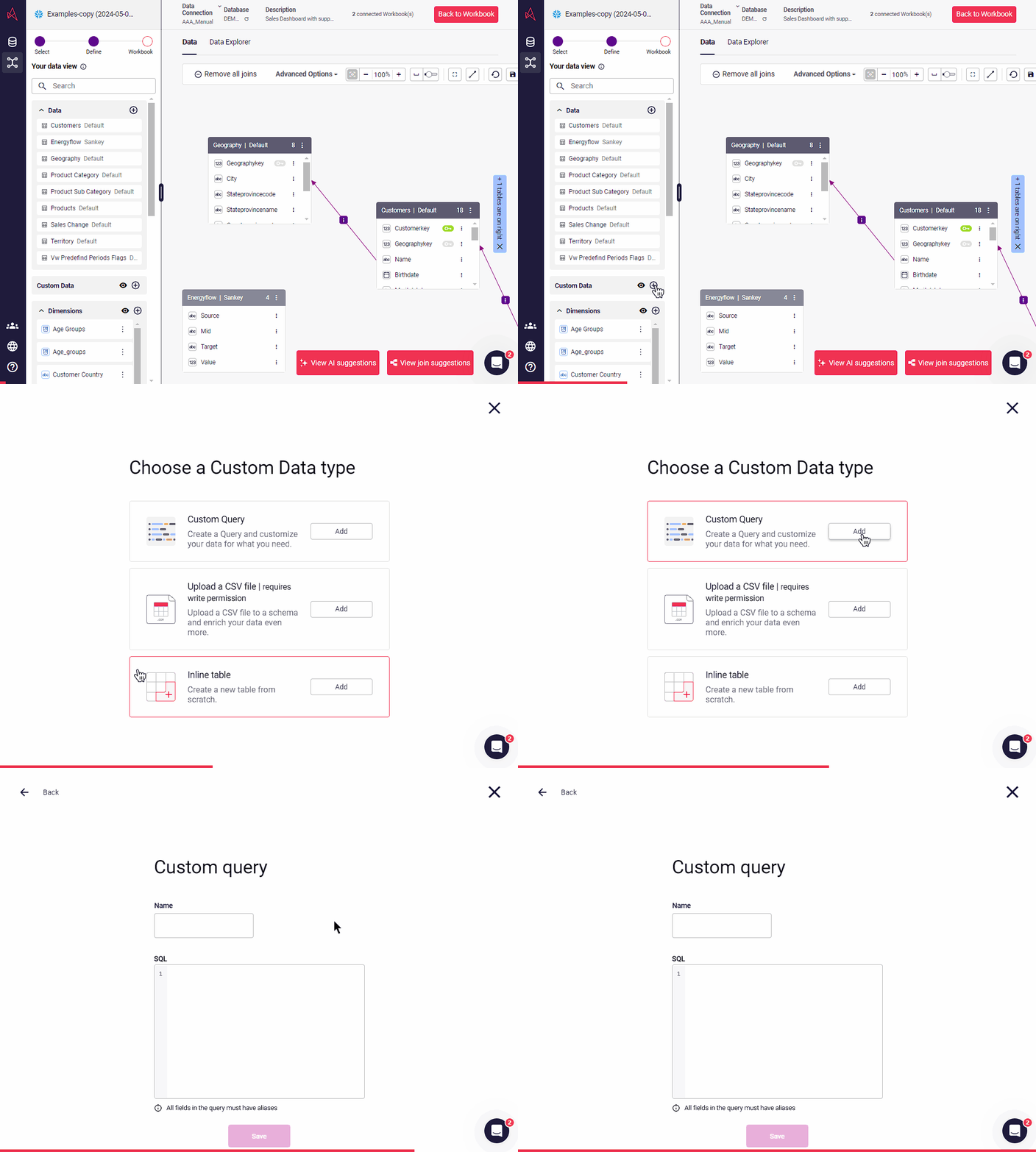 | Tableau Server Screenshots     |
