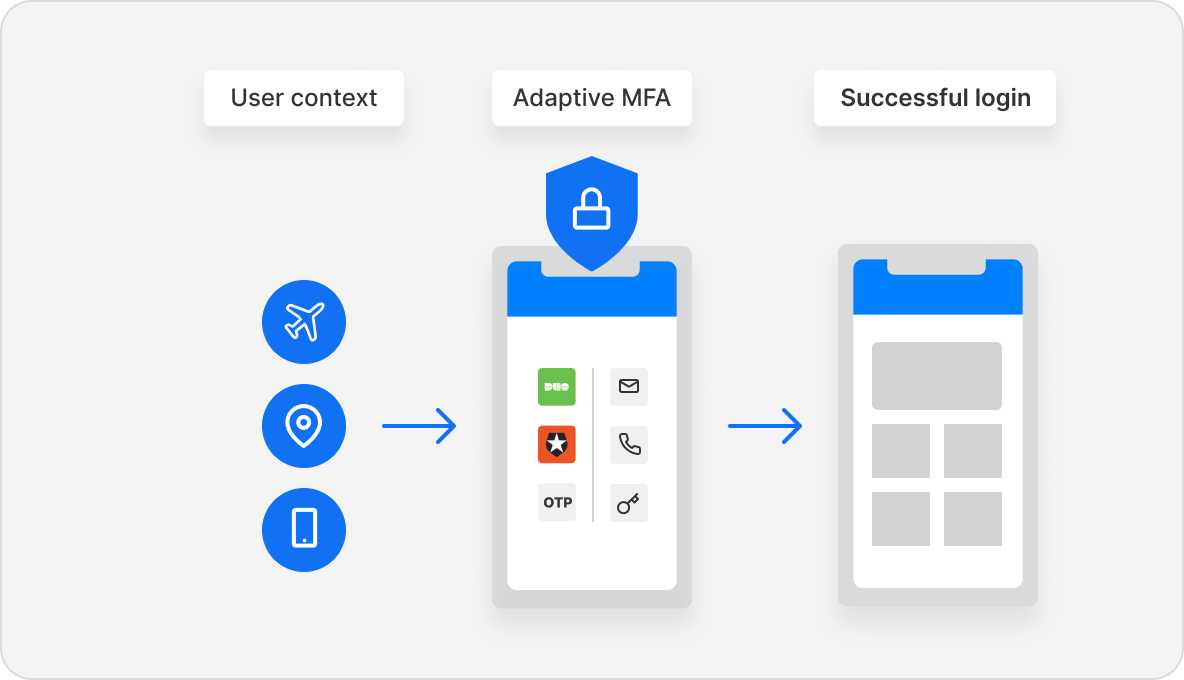
Auth0® is an identity solution that provides secure access to any application, for any user. Safeguarding, according to the vendor, billions of login transactions each month, Auth0 delivers convenience, privacy, and security so customers can focus on innovation. Auth0 lets users integrate authentication and authorization for web, mobile, and legacy applications, with new Fine Grained Authorization (FGA) that goes beyond role-based access control. It can authenticate users…
$0
per month
Microsoft Entra ID
Score8.8 out of 10
N/A
Microsoft Entra ID (formerly Microsoft Azure Active Directory or Azure AD) is a cloud-based identity and access management (IAM) solution supporting restricted access to applications with Azure Multi-Factor Authentication (MFA) built-in, single sign-on (SSO), B2B collaboration controls, self-service password, and integration with Microsoft productivity and cloud storage (Office 365, OneDrive, etc) as well as 3rd party services.
Founder & Director in Manufacturing at Nasa Industries (Building Materials, 11-50 employees)
Chose Auth0
We evaluated Okta as an alternative. While Okta is strong for large enterprises, we found Auth0 more flexible and easier to integrate for our use case. Auth0’s developer experience, customization options, and faster setup made it a better fit for our applications without adding …
A de minimis incentive was given to thank the reviewer for their time. The incentive was not used to bias or drive a particular response, nor was the incentive contingent on a positive endorsement. More Info
Verified User
Chose Auth0
These all solutions were costly and require more time to deploy in the production. The pingone solution have a very hard login flow and require re login for each solution which is quite hard to use. Entra ID requires a AD to run and doesn't works for our use case. We require …
A de minimis incentive was given to thank the reviewer for their time. The incentive was not used to bias or drive a particular response, nor was the incentive contingent on a positive endorsement. More Info
Verified User
Chose Auth0
Auth0 allows many other functionalities than the other products, such as customization of auth flows, emails, security options, etc. The Authentication & Management APIs also allow us to easily create and modify users, roles and permissions, by automating or integrating Auth0 …
A de minimis incentive was given to thank the reviewer for their time. The incentive was not used to bias or drive a particular response, nor was the incentive contingent on a positive endorsement. More Info
Microsoft
Verified User
Chose Microsoft Entra ID
Microsoft Entra ID is not as stand-alone product as competitors like Okta. It may lack some of the features that competing products have but on the other hand it integrates both technically and license wise with other Microsoft cloud services and is easy to deploy. It is also …
A de minimis incentive was given to thank the reviewer for their time. The incentive was not used to bias or drive a particular response, nor was the incentive contingent on a positive endorsement. TR verified that a representative sample of customers was invited. More Info
Verified User
Chose Microsoft Entra ID
Our company ecosystem is microsoft based and using Microsoft Entra ID is very easy, The integration is much easier for microsoft environment as compared to other.
A de minimis incentive was given to thank the reviewer for their time. The incentive was not used to bias or drive a particular response, nor was the incentive contingent on a positive endorsement. TR verified that a representative sample of customers was invited. More Info
Great for user authentication and access priviledge management. We are using it for both our commercial and financial clients and Auth0 meets all the regulations and due diligence required to close deals with these enterprise customers. Given their tiered pricing structure, we don't see a scenario where Auth0 would not be appropriate for the solution it provides.
A de minimis incentive was given to thank the reviewer for their time. The incentive was not used to bias or drive a particular response, nor was the incentive contingent on a positive endorsement. More Info
Overall, the Microsoft Entra ID platform is best utilized by people looking to have one platform that manages all interactions between other platforms. The Microsoft Entra ID platform allows for a seemless SSO integration, and can also integrate with Intune for MDM. Additionally, and probably the most easy to understand integration, is the integration with Active Directory, and controls associated with that.
A de minimis incentive was given to thank the reviewer for their time. The incentive was not used to bias or drive a particular response, nor was the incentive contingent on a positive endorsement. TR verified that a representative sample of customers was invited. More Info
A de minimis incentive was given to thank the reviewer for their time. The incentive was not used to bias or drive a particular response, nor was the incentive contingent on a positive endorsement. More Info
Application integration is really good for single sign-on and managing identity overall. The correlation with Active Directory on-prem is really good, so we can manage it in a single place. It's easy to manage the users and integrate other Microsoft products. It is the base of everything else.
A de minimis incentive was given to thank the reviewer for their time. The incentive was not used to bias or drive a particular response, nor was the incentive contingent on a positive endorsement. More Info
Price point for ALL features can get a bit pricey. But they have a startup plan which helps big time. Developer plans start at $23/mo and do not include all features.
Actions, rules, hooks, and email customization are great features, but the UI is a bit tough sometimes, not very responsive to screen size and code editors are cut off in a difficult place to maneuver.
A de minimis incentive was given to thank the reviewer for their time. The incentive was not used to bias or drive a particular response, nor was the incentive contingent on a positive endorsement. More Info
I would like more risk policy suggestions. I guess that situation where we had outsourced employees in a country where somehow their location was changing too often, that we would have room to go, “Hey, this needs to be a lower risk.” Or maybe having easier options to let people log in when they're deemed high risk. It’s tricky because I feel like it’s really easy to do that wrong, but it’s the main area that I think could be improved. I guess also a little bit tighter administrative integration with other Microsoft products.
A de minimis incentive was given to thank the reviewer for their time. The incentive was not used to bias or drive a particular response, nor was the incentive contingent on a positive endorsement. More Info
A de minimis incentive was given to thank the reviewer for their time. The incentive was not used to bias or drive a particular response, nor was the incentive contingent on a positive endorsement. More Info
MSFT Entra ID has been essential for managing our geographically dispersed team. We're confident that it will scale with us as grow, and we'll be able to take advantage of additional security and ID management features as they become necessary. Being able to centrally manage our user access from anywhere with a small support team is such a relief.
A de minimis incentive was given to thank the reviewer for their time. The incentive was not used to bias or drive a particular response, nor was the incentive contingent on a positive endorsement. More Info
Like in my case, it helps me build a better business by requiring authentication and better login features, as they are needed quickly. It helps me save time by not having to create it from scratch and provides better role-based login and access. One of my most helpful features is SSO (Single Sign On). If the user wants Microsoft-able SSO, Auth0 provides an all-in-one.
A de minimis incentive was given to thank the reviewer for their time. The incentive was not used to bias or drive a particular response, nor was the incentive contingent on a positive endorsement. More Info
From a user perspective, 10. From an admin perspective, 7 or 8. From the user perspective, it's very easy to use, but from the admin perspective, there's a lot of things that are not easily clear, testable, or verifiable without just trying a whole bunch of scenarios.
A de minimis incentive was given to thank the reviewer for their time. The incentive was not used to bias or drive a particular response, nor was the incentive contingent on a positive endorsement. More Info
A de minimis incentive was given to thank the reviewer for their time. The incentive was not used to bias or drive a particular response, nor was the incentive contingent on a positive endorsement. TR verified that a representative sample of customers was invited. More Info
A de minimis incentive was given to thank the reviewer for their time. The incentive was not used to bias or drive a particular response, nor was the incentive contingent on a positive endorsement. TR verified that a representative sample of customers was invited. More Info
There isn't a clear method to get a hold of support when trouble arises if you're on their standard plan. You can file a support ticket and they generally are responsive. I've often been able to find similar questions to the questions I've had when it comes to support in their ticket history, however, some have been closed without a satisfactory conclusion for the original poster.
A de minimis incentive was given to thank the reviewer for their time. The incentive was not used to bias or drive a particular response, nor was the incentive contingent on a positive endorsement. More Info
I have not needed to engage support for anything at this time. I have been able to find the answers either online or in a knowledgebase. I tried to skip the question but it would not let me, so I rated a 9 based on other interactions with Microsoft support I have had
A de minimis incentive was given to thank the reviewer for their time. The incentive was not used to bias or drive a particular response, nor was the incentive contingent on a positive endorsement. TR verified that a representative sample of customers was invited. More Info
A de minimis incentive was given to thank the reviewer for their time. The incentive was not used to bias or drive a particular response, nor was the incentive contingent on a positive endorsement. TR verified that a representative sample of customers was invited. More Info
Make sure you use a good partner. Our implementation was a bit longer and more problematic than we expected. Our partner got it done, but, in my opinion, some of their inexperience and staffing issues were evident.
A de minimis incentive was given to thank the reviewer for their time. The incentive was not used to bias or drive a particular response, nor was the incentive contingent on a positive endorsement. TR verified that a representative sample of customers was invited. More Info
We went with Auth0 over Okta due to price concerns and the overall simplicity of Auth0. We chose Auth0 over Amazon Cognito because Cognito has very poor documentation and client library support. Auth0 offers a service that hits the sweet spot for organizations with small development teams and limited finances.
A de minimis incentive was given to thank the reviewer for their time. The incentive was not used to bias or drive a particular response, nor was the incentive contingent on a positive endorsement. More Info
We've done stuff with Okta for Identity and Duo. Those would probably be the two big ones that I would say that people would recognize and stuff. There's some other smaller players we've talked to, but those are the two big ones that we play with. We're still using it. So, because it was integrated into everything we've already done, it just made it almost indispensable.
A de minimis incentive was given to thank the reviewer for their time. The incentive was not used to bias or drive a particular response, nor was the incentive contingent on a positive endorsement. More Info
A de minimis incentive was given to thank the reviewer for their time. The incentive was not used to bias or drive a particular response, nor was the incentive contingent on a positive endorsement. TR verified that a representative sample of customers was invited. More Info
Microsoft Professional Services' technical knowledge is appreciable as consultants design the solution as per customer requirements. Mapping of features per user specifications and assisting Customer IT engineers to implement so they can manage and administer the services.
A de minimis incentive was given to thank the reviewer for their time. The incentive was not used to bias or drive a particular response, nor was the incentive contingent on a positive endorsement. More Info
We are doing a lot of sign-ins and working on it, and it worked quite well. We do have Microsoft support, so yes, we can handle all of the small issues we are sometimes having. But if you want to define it, I would say yes, we like it. Overall positive.
A de minimis incentive was given to thank the reviewer for their time. The incentive was not used to bias or drive a particular response, nor was the incentive contingent on a positive endorsement. More Info