TrustRadius: an HG Insights company

Auth0

Score8 out of 10

115 Reviews and Ratings

What is Auth0?

Auth0® is an identity solution that provides secure access to any application, for any user. Safeguarding, according to the vendor, billions of login transactions each month, Auth0 delivers convenience, privacy, and security so customers can focus on innovation.


Auth0 lets users integrate authentication and authorization for web, mobile, and legacy applications, with new Fine Grained Authorization (FGA) that goes beyond role-based access control.


It can authenticate users across all applications with a customized, secure, and standards-based single login. Universal Login connects users to a central authorization server. Credentials aren’t transferred across sources, which boosts security and protects against phishing and credential stuffing attacks. OAuth 2.0 recommends that only external user agents (like the browser) be used by native applications for authentication flows. Auth0’s Universal Login achieves this while also enabling SSO.


Auth0 is part of Okta, Inc., The World’s Identity Company™.

Media

Screenshot of multi-factor authentication with Auth0
Screenshot of Auth0's user interface tools. These help administrators manage user identities including password resets, creating and provisioning, blocking and deleting users.
Screenshot of a view of the customer's digital experience; this includes smart recommendations based on previous behavior, an experience tailored specifically to their mobile device, and easy discovery of travel options.
Screenshot of the Auth0 Identity Access Management platform, built on AWS. It is designed to deliver a universal authentication and authorization as a service for web, mobile and legacy applications.to 7000+ customers worldwide.
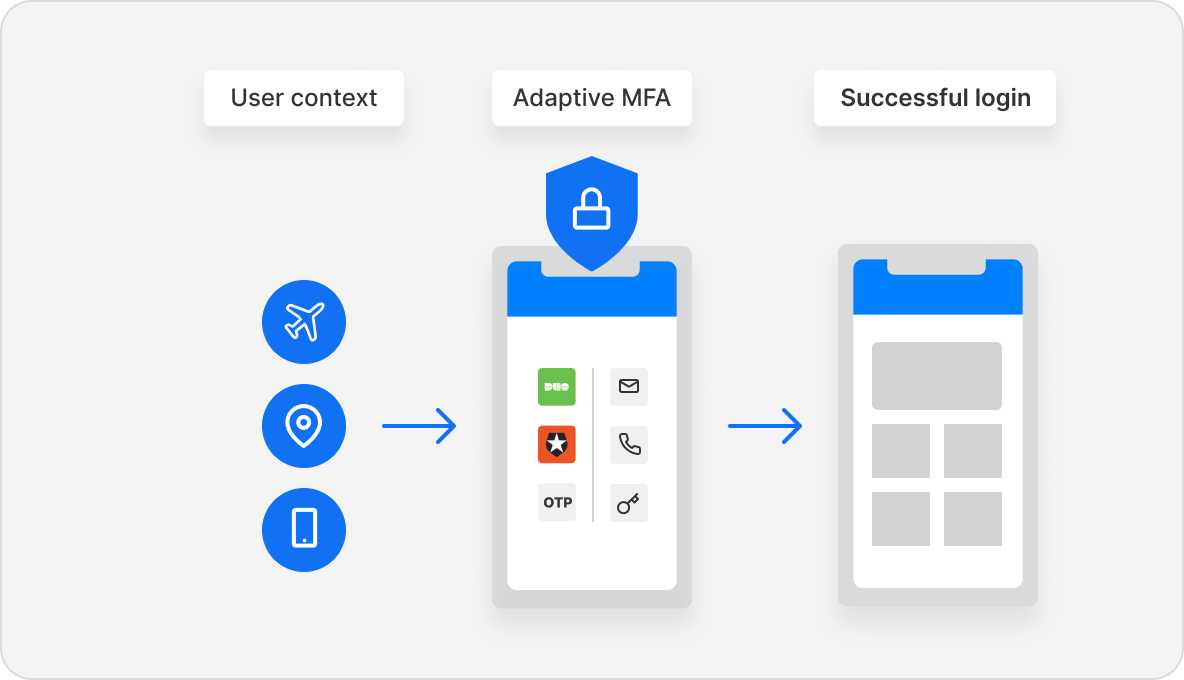
Screenshot of Auth0’s Adaptive MFA, which is based on various types of behavioral signals, meaning the MFA step is only presented when deemed risky. This preserves the experience for the majority of users, while maintaining a strong security posture.

1 / 5

Screenshot of multi-factor authentication with Auth0

Top Performing Features

  • Multi-Factor Authentication

    Using multiple, independent components to gain access

    Category average: 8.4

  • ID Management Single-Sign On (SSO)

    The ability to login to the system once, gaining access to all systems without the need for logging in again

    Category average: 8

  • ID-Management Access Control

    Authorization or restriction of access to information depending on role

    Category average: 7.9

Areas for Improvement

A Flexible Secure developer Friendly Authentication Platform with better login Features and security.

Use Cases and Deployment Scope

In my organization, we use Auth0 to handle Authentication. It helps create authentication for a web application without starting from scratch and provides more security features, including Multi-Factor Authentication and Single Sign-On (SSO). It also supports social login options, including Microsoft, GitHub, and Google. On top of that, Auth0 includes MFA and role-based access, which helps cover common security and access-control needs. The business problem it addresses is providing secure and reliable authentication for newly developed applications with advanced features and enhanced security. Auth0 makes authentication easier to implement and integrate into applications, helping developers save time by avoiding the need to build an authentication system from scratch. The scope is to deliver a robust application with improved authentication features, including social login support, role-based access for users, and Multi-Factor Authentication (MFA) to enhance security.

Pros

  • Single Sign On.
  • Role Based Access.
  • Multi Factor Authentication.
  • Social Logins.
  • Provides better login without building it from scratch.

Cons

  • If more advanced features and higher security requirements are needed, pricing can be expensive, and in some cases, it may not be cost-effective or sufficient for all business needs.
  • If the platforms need more users and more role-based access, it will also cost much more.

Return on Investment

  • Auth0 positively impacts business objectives by improving application security, reducing development time, and simplifying authentication management through features such as social login, MFA, and role-based access control. It also helped reduce the effort required to build and maintain authentication systems from scratch, allowing the development team to focus more on core business features.
  • On the negative side, pricing can increase significantly when advanced security features, higher user volumes, or additional enterprise-level functionality are required, which may affect cost efficiency in some business cases.

Usability

Alternatives Considered

Firebase and Amazon Cognito

Other Software Used

Amazon Cognito, Firebase, Microsoft Azure

Auth0 Platform An In Depth Review

Use Cases and Deployment Scope

I used Auth0 as a primary IDP for our Kong API Gateway and it solved these business problems -
1. It centralised the access system and removed the need of having a on Prem Directory.
2. It helped us in using Auth0 effectively and efficiently by allowing us to use its API's.
3. Its Auth0 actions helped us in scripting and extract the exact output we wanted.

Pros

  • It works exceptionally well in providing the RBAC also known as Role Based Access Control.
  • Its APIs works flawlessly and are so easy to integrate.
  • Its Actions features is a really great add on to extract the best of it.

Cons

  • Its UI can be improved and made something like Okta.
  • It should support more languages in Auth0 actions.

Return on Investment

  • It facilitated the business access requirements.
  • It reduced the business cost by 30 percent.

Usability

Alternatives Considered

Amazon Cognito and Okta

Other Software Used

Kong Konnect, Apigee Edge, Boomi

Good product for big and scalable project

Use Cases and Deployment Scope

In our company we start using Auth0 in the mobile development team to manage authentication. Then, due to good feedback from developers, we decided to adopt it on quite all of our projects

Pros

  • Signup
  • Signin
  • Database integrations

Cons

  • Easier mobile SDK integration with custom fields
  • More databases integration
  • Faster web UI

Return on Investment

  • Improved security with password constraints
  • Session management
  • Development time

Alternatives Considered

Firebase

Auth0 Makes Secure Authentication Simple

Use Cases and Deployment Scope

We use Auth0 to handle secure user authentication for our applications. It helps manage logins, role-based access, SSO, and MFA without heavy custom development. Auth0 simplifies identity management, improves security, and allows our team to focus more on building core product features instead of maintaining auth systems.

Pros

  • Secure authentication out of the box, including MFA, SSO, and social logins, without needing heavy custom development.
  • Easy integration with web and mobile apps using clear documentation and SDKs, which speeds up implementation.
  • Strong user management and role-based access control, making it simple to manage permissions as the product scales.

Cons

  • The dashboard and settings can feel complex at first, especially for non-technical users, and could be more intuitive.
  • Pricing and usage limits are not always easy to understand, especially as usage scales across environments.
  • Debugging authentication issues can take time, and clearer error messages or guided troubleshooting would help.

Return on Investment

  • Reduced authentication-related development effort significantly by using Auth0’s ready-made identity and security features instead of building in-house.
  • Improved application security and user trust with MFA and SSO, lowering access issues and security risks.
  • Faster onboarding and login experience led to better user adoption and fewer support tickets over time

Usability

Alternatives Considered

Okta

Other Software Used

Okta, Google Workspace, Microsoft Entra ID

Auth0 Review Simplifying Security and Access Management at Scale

Use Cases and Deployment Scope

We use Auth0 as a centralized IAM for authentication and authorization across multi-tenant, customer-facing, and for internal applications.
As it provides SSO using OIDC/SAML, it enforces MFA, RBAC, and conditional access. Also, it integrates easily with customer IdPs. Ans also helps to manage user lifecycle and tokens.
As it provides high availability, scalability, and compliance so we use it globally to secure applications for multiple customers with minimal operational overhead.

Pros

  • Easy integration with apps using OIDC, OAuth 2.0, and SAML
  • Risk-based policies using IP, device, and geo signals
  • Seamless integration with Azure AD, Okta, Google, and LDAP
  • API access control without custom auth code
  • Detailed authentication logs and events, and also integration with SIEM tool

Cons

  • Setting roles and permissions for many customers is tricky for new users
  • Custom login rules can be confusing to manage for the operational team
  • It provided limited analytics, so it's hard to see and find login trends or unusual activity.

Return on Investment

  • We have seen a faster boarding of new apps and customer setup 50% faster than earlier
  • The negative one will be like the setup can be complex for multi-customer environments.
  • Fewer support tickets for password and login issues

Usability

Alternatives Considered

Okta, Keycloak and PingOne from Ping Identity

Other Software Used

Radware Alteon
