Bonita is an open-source business process and workflow management platform created by the French National Institute for Research in Computer Science. It is available as a free community edition or as a commercial subscription product.
N/A
Oracle APEX
Score 8.5 out of 10
N/A
Oracle APEX (or Oracle Application Express) is an online low-code application builder that allows users to develop a database-drive application, customize the application's UI, and then give their users access to the application via URL. Oracle APEX includes a suite of pre-built productivity applications and examples, such as a Survey Builder, Bug Tracking, P-Track project management, etc
Well suited for low code/no code applications centered around approval flows. It has built-in task management for users to see their pending actions, comments, statuses, etc. It has a very nice design for process flows. Less appropriate may be for generic type applications with complex screens and logic within those screens that need a lot of data to process.
Based on our organization's experience, Oracle APEX is a versatile and powerful tool, but its suitability depends on specific business needs, technical requirements, and the nature of the application being developed. Scenarios where Oracle APEX fits well: Business Process Automation/Workflows Reporting and Dashboards for Data Analytics AI based systems such as Select AI Chatbots for data insights based on LLMs Native-like Mobile Applications using PWA feature of APEX Scenarios where Oracle APEX may be less appropriate: Very Complex and highly interactive applications Use cases based on a non-oracle Database
Bonita seems particularly suited for processes requiring a great deal of human interaction. Its user model allows you to control access to business processes in a fine-grained way. This allows for business processes to move smoothly between users and services as the process advances.
The definition and usage of custom forms from the latest version of Bonita seems particularly powerful. It allows for a thorough customization of the look-and-feel and does not require complex developments.
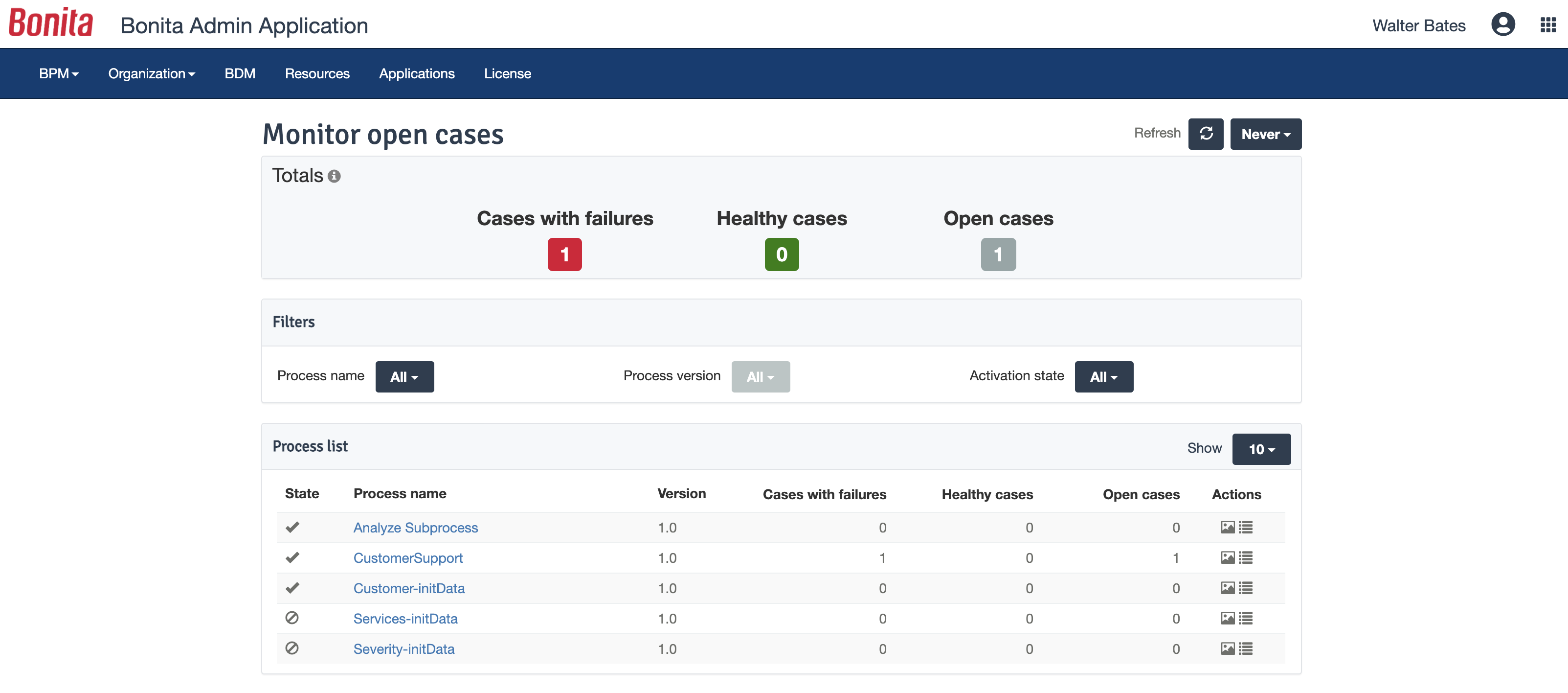
The web interface and administration section have greatly improved in the latest versions. Installation and configuration of processes has become more flexible and more structured. The administration section gives a good view on failed processes, allowing to analyse problems in an efficient way.
There is a learning curve beyond the boot camps that needs to be addressed with more structured curriculum.
The full stack technologies are industry standard, but these [are] challenging to learn and could use a learning path and orientation. There's probably opportunity for third-parties here to help with learning and adoption.
Can't think of any - the Application Express development team does a fantastic job adopting and supporting emerging trends with each new release.
Requires Oracle RDBMS; i.e., is not portable to other RDBMS platforms. On the surface this may seem like a con but it is as it should be - Oracle database is best RDBMS available and tight integration with Oracle RDBMS promotes creation of reliable performant apps.
I felt very comfortable using Oracle Application Express from the start. I designed my data model and quickly developed the basic CRUD pages for master tables. Then I designed the main functionality and was able to test and deploy it in a couple of days work. I will probably share the app with other members of the team and continue adding some features in the short term.
Bonita Platform has allowed us to develop GUI relatively fast using its UI Designer while being able to seamlessly integrate our business logic in Java in a BPMN2 process diagram. It gives a nice productivity boost but still requires programming know-how to be able to deliver the final solution to your business problems.
its easy to use as a developer and applications designed using apex are easy and intuitive to use as an end user. Even non-coders can build good applications, the more code you can write the more you can enhance the application but you can get up and running quickly with almost no technical know how.
Engine itself is efficient enough for most cases I dealt with. It can also be extended by clustering. I have done performance tests with JMeter and only managed to induce the crash of... JMeter. If there are efficiency issues they usually concern bad design/implementation of created apps or bottlenecks in integrated systems. Although I have met two cases with efficiency loss.
1. Java 7 related PermGen saturation caused by big number of installed apps (there is no jar dependency reusal between apps option).
2. Big number of waiting event handlers in processes stresses the database.
Very active and knowledgeable community support includes quick and helpful responses from the Oracle employees on the product development team. I've never had to raise an official support request - everything is dealt with via forums and user groups - or via direct emails. The supposrt commuinty is one of the great things about Apex.
Using it on the cloud is really simple, the entire process of configuring and provisioning an Oracle Database takes only a few minutes (less than 10) and then Oracle APEX is already deployed on the database, so you just have to start using it. I would strongly recommend using APEX on Oracle Cloud Free Tier.
If you are expert in SQL and PLSQL and use Oracle Database, then the best choice is Oracle Application Express. The functionality is already complete and very easy to use, so it's useless to find another tool if you are using Oracle. You don't use Oracle APEX only if: (1) you are using other database than Oracle, and (2) your application load is unpredictable.
Respect of BPMN standard over the long term. Good enhancements by Bonitasoft for new use cases, for example the introduction of a real form editor even if it has been technically difficult to manage. Once done though, we have far greater possibility of human interaction.
In the mid-size organization, we had a BI tool that had a significant license cost involved. With Oracle back-end we were able to switch to APEX and move all reporting at literally zero cost.
For Oracle PL/SQL users the learning curve is very quick and easy, there are ready templates that you can start with and eventually create complex reports.
You can track authorization and authentication on data editing and usage. High performance as it is native oracle sql codes.
Centralized data capturing, makes your datawarehouse writable for lookup tables or reference tables.