Cisco Duo is a two-factor authentication system (2FA), acquired by Cisco in October 2018. It provides single sign-on (SSO) and endpoint visibility, as well as access controls and policy controlled adaptive authentication.
$3
per month per user
IBM Verify
Score 8.9 out of 10
N/A
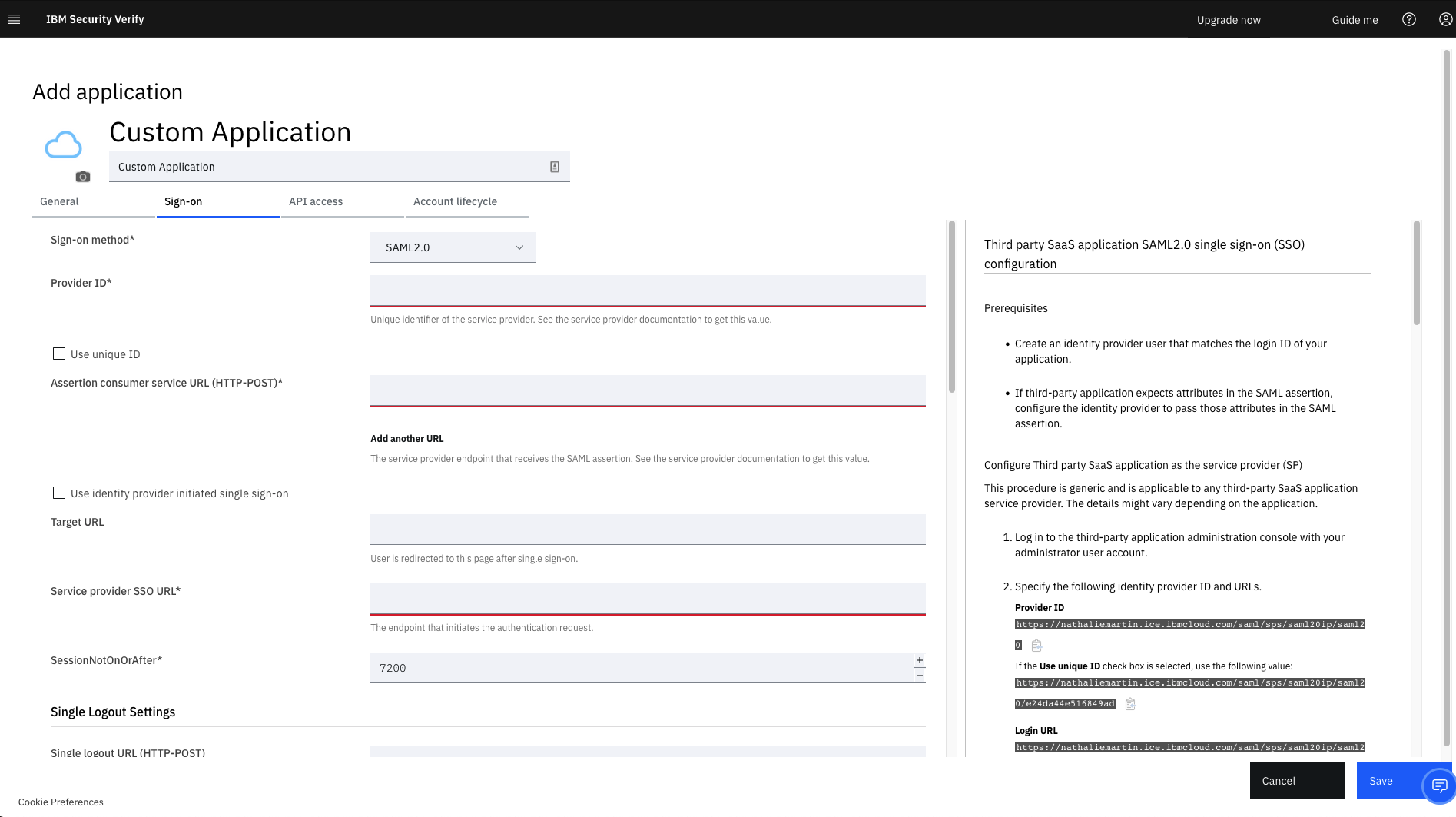
IBM Verify, formerly known as IBM Cloud Identity, is an identity-as-a-service (IDaaS) offering that aggregates dynamic user, device and environmental context to automate risk protection and continuously authenticate any user to any resource.
$1.81
per month per user
Pricing
Cisco Duo
IBM Verify
Editions & Modules
Duo Essentials
$3
per month per user
Duo Advantage
$6
per month per user
Duo Premier
$9
per month per user
No answers on this topic
Offerings
Pricing Offerings
Cisco Duo
IBM Verify
Free Trial
Yes
Yes
Free/Freemium Version
No
No
Premium Consulting/Integration Services
No
Yes
Entry-level Setup Fee
No setup fee
Optional
Additional Details
—
Sample Pricing Breakdown (NOTE: for competitive pricing per contract, please consult with your IBM Security Account Rep)
Users: 5,000
SSO* -- USD 1.71 per user per month
MFA* -- USD 1.71 per user per month
Adaptive Access* -- USD 1.71 per user per month
Lifecycle and provisioning** -- USD 2.01 per user per month
Identity analytics** -- USD 2.13 per user per month
* Single sign-on (SSO), multifactor authentication (MFA) and adaptive access pricing based on total active monthly users per use case. Costs decrease if users are active less than once per month.
** Lifecycle and provisioning and identity analytics pricing based on total users per use case.
As we were on Cisco VConnect mobility client, we felt the ROI of using a Cisco auth client would be much better even though when we took this decision, remote working wasn't in vogue. That's the main business reason for going with Duo / Cisco Secure Access, by Duo--a …
IBM Security Verify stacks up with Microsoft Entra ID better than SecurID due to categories in common such as, Self Service password resets, Multi-Factor Authentication, User Provision and Governance Tools, SSO, and IAM. SecurID not so much because it doesn't have that full …
For secure access to apps and business data, I recommend Cisco Duo. It offers SSO, MFA, and Passwordless access, ensuring teams can securely access business data. It is easy to customize and comes with top-tier security features. It protects business data, apps, and users.
The software is a unified identity verification platform with robust identity governance systems and multi-factor authentication tools. Effectiveness of the product in privileged access management and real-time activity monitoring. IBM Verify is very affordable and supports single sign-on in the cloud. It has a steep learning curve.
We use Cisco Duo with different type of device and application, but we never face any difficulties to integrate Cisco Duo with any of them.
We integrated Cisco Duo with some of our active directory and some of the OS are quite old but Cisco Duo works totally fine with them.
The end user application is very easy to use. We never had any complain from non tech team members of having trouble of using Cisco Duo.
There are several authentication methods available rather than passcode. I personally like the push notification which is always on time and quite fast.
Should have device to device connection ability whereas internet is not met.
Changes of device can be sorted and easily made using a second email address or any other identification method.
Troubleshooting should be easy to sort out. One time, a Duo admin deleted the authentication group, and some employees were not getting push notifications. It was very hard to find out the cause. Duo should have some troubleshooting finder.
Sometimes push notifications are delayed, and the code does not work. At that time, we need to enroll the device again. Not sure why it happens. Duo should give reasons for the error.
There are a lot of competing solutions on the market; however, Duo "just works", and there is little to no learning curve for the new members to be acclimated to it. As long as that continues I see it as the preferred option moving forward
It works flawlessly, i have never faced any major issues with this. It has all the features such as Iam and security management. I think its a good investment and the benefits we reap from this software are worth the price.
La interfaz es intuitiva y fácil de navegar, lo que permite a los usuarios administrar sus dispositivos y acceder a las políticas sin problemas. La integración con las aplicaciones SSO y SaaS facilita aún más el proceso de acceso, mejorando la experiencia del usuario.
While setup and implementation takes work and time, the flexibility and possibilities make up for that in the long run. This is not a product you can just install and run, but if you design and implement your ruleset well, it will save you a lot of work afterwards. Just make sure that the systems you want to use it for have an existing and proven connector.
In the last 5+ years we've been using Duo, there may have been 1 outage that impacted us. We do receive periodic notifications of issues but, for the most part, they impact carriers or functionality that we either don't use, or do not care about.
It has never let us down since its inception and installation. User credentials and secure access have always been guaranteed. Ironclad security (through single sign-on, MFA, etc.) has ensured that our user credential details are safe as is our information/data. The correct access is given to users, based on role-based access with segregation of duty and the principle of least privilege being deployed. The IBM support has also been first class and they have proactively resolved any minor issues we have encountered.
I have not needed direct support for Cisco Secure Access by Duo as I have not had a problem with it, but I have full confidence that the support is outstanding. It is now a core component of the corporate technology stack - a problem would mean a serious degradation in the ability of the company to function.
The support team has always been the primary consultation base when we are faced by performance problems. From the deployment stage the team has managed to monitor the operation lifecycle and give best insights based on their observation. It works 24/7 to enhance productive service delivery to clients. The IBM Security Verify Support team has been the main player in the successful performance of this software.
Documentation could have been better. I had to piece together different KB/admin guides to make certain things work and I also had to use third-party guides to get bits of information that were missing from Cisco Duo documentation. Support was also engaged multiple times to figure out an issue and after some back and forth it was usually determined that the information I needed was hidden somewhere else and had no direct correlation with the document that was linked from the platform.
Ultimately we ended up going with Cisco Duo because we are a Cisco shop. All of our networking infrastructure, our phones, our wireless environment is Cisco based. It made logical sense to stay with a product that we already have a line of support with. With a smaller support / tech group we depend on outside Cisco support. That support is already here for us, so we stayed with a Cisco product.
We conducted a comparison study between IBM Verify and Okta as well as Duo Security before making our selection. IBM Verify emerged as the perfect fit because its superior capability to integrate with our current system environment surpassed competitor security solutions. IBM Verify demonstrated superior reliability through its enterprise-class scalability and fully transparent auditing mechanisms.
The licensing terms were favourable due to their flexibility based on the size and purpose of implementation. The billing frequency is done on quarterly basis. The vendor team has enacted best user policies that gives the company the full control of this platform. It is cost-effective as compared to most security verification tools in the market.
In the case of adjustments, we were often able to carry them out completely on our own and only used professional services for new requirements. Particularly in the case of access management, it is very positive that we usually needed IBM for a task in less than an hour and then developed the solution further on our own.
It's one of those things that only costs money in the sense of you have to convince a leadership team to spend money to save money, right? Like a compromise is far more expensive than duo paying for duo. So specifically it's really just about trying to prevent problems. And so while it costs money and we don't have a direct return on investment that we can point out immediately, I would still always advocate for it just because it keeps security. Paying for security is cheaper than getting compromised essentially.