Cisco Intersight is an operations platform that helps IT operations teams control and automate Cisco UCS, converged, and hyperconverged infrastructure. Intersight consolidates and automates infrastructure lifecycle management from data centers to the edge in one solution delivered as-a-service.
N/A
Sage 100cloud
Score7.2 out of 10
Small Businesses (1-50 employees)
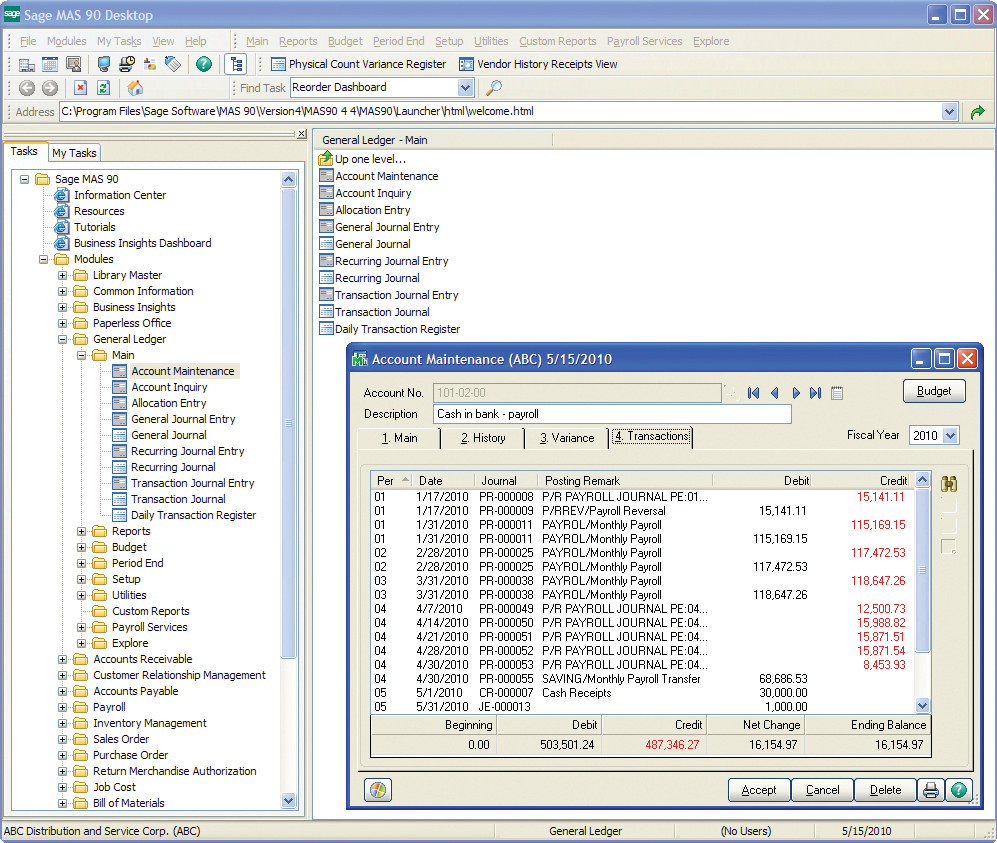
Sage 100 (or Sage 100cloud is a business management software offering a broad range of modules designed to meet the many needs of virtually any business. It encompasses financial operations and accounting, payroll, business intelligence, CRM, eBusiness, manufacturing and distribution.
It is highly suited for an organisation pushing for a standardised and centralised configuration of settings using policies, profiles and templates. It is highly suited for customers used to legacy UMM that need to refresh their environment, but instead of deploying them in UMM (which is still possible), to take the time and effort to learn Cisco Intersight Infrastructure Service and IMM as well as familiarise themselves with the differences between UMM and IMM, and the issues in UMM which IMM addresses and improves upon. We deployed in UMM initially then transitioned to IMM with the transition too. I cannot think of a scenario where Cisco Intersight Infrastructure Service would not be suited. Even for small-scale deployments, it provides significant benefits. Maybe if you come from another server vendor management environment, the learning curve may feel steep (e.g. many new concepts and constructs that one has to master).
A de minimis incentive was given to thank the reviewer for their time. The incentive was not used to bias or drive a particular response, nor was the incentive contingent on a positive endorsement. More Info
Sage 100 has been well suited for running the monthly accounts receivable and accounts payable aging reports. This helps us track our accounts that need to be collected and payments that need to be made. Our field operations team has been slow and unwanting to adopt the Sage Field Ops just because they're resistant to change and technology. It's less appropriate for really detailed accounting reports spanning for long periods of time with all accounts because it takes a very long time to run and process.
A de minimis incentive was given to thank the reviewer for their time. The incentive was not used to bias or drive a particular response, nor was the incentive contingent on a positive endorsement. More Info
A de minimis incentive was given to thank the reviewer for their time. The incentive was not used to bias or drive a particular response, nor was the incentive contingent on a positive endorsement. More Info
It would be great to not having to create EVERY profile within a deployment. since some items can be done be default, the defaults should be set and the deployment can be much faster.
When adding Rack servers, indicating that the CIMC interface should not being connected before powering on the system and they it will be managed by Cisco Intersight can reduce down times. We had to manually reset our CIMC after disconnecting from our OOBM switches.
A de minimis incentive was given to thank the reviewer for their time. The incentive was not used to bias or drive a particular response, nor was the incentive contingent on a positive endorsement. More Info
Sage 100 at times will simply not connect to our server, we get remote support & all is well but, that issue tends to happen 2-3X a year.
Other than the above, I really can't complain. Coming from a more custom U.V. type database that used a whole bunch of codes to navigate, I think Sage 100 is 10x easier to use.
A de minimis incentive was given to thank the reviewer for their time. The incentive was not used to bias or drive a particular response, nor was the incentive contingent on a positive endorsement. More Info
Been using Cisco Software as a service (SaaS) platform in a production environment for a large medical and health professionals that has critical healthcare and patients care dependency.
Support team is very helpful getting system updated as needed, and vendor support is fantastic. Also get a dedicated Cisco networking engine to review and advise system health and recommendations.
A de minimis incentive was given to thank the reviewer for their time. The incentive was not used to bias or drive a particular response, nor was the incentive contingent on a positive endorsement. More Info
I would put this out to bid, if I were at the same organization. There have been a lot of improvements and changes in enterprise software and my preference would be to find a good web-based or cloud-based tool. Lower overall cost of ownership and improved efficiency would be my target criteria for a rebid of this.
A de minimis incentive was given to thank the reviewer for their time. The incentive was not used to bias or drive a particular response, nor was the incentive contingent on a positive endorsement. More Info
Usability of Cisco Intersight is highly dependent on the licensing purchased. The default (free) license level provides a lot of value for the minimal amount of effort to implement. The paid license levels provide additional features (detailed inventory, configuration management and deployment, etc.)
A de minimis incentive was given to thank the reviewer for their time. The incentive was not used to bias or drive a particular response, nor was the incentive contingent on a positive endorsement. TR verified that a representative sample of customers was invited. More Info
Overall Sage 100 has been pretty user friendly. If we have a question on anything, we are able to contact our implementation rep who helps us right away. Some of the Sage Field Operations may not be as intuitive for our field personnel to use. I wish the reports ran faster so that we could run and put together many reports quickly at once.
A de minimis incentive was given to thank the reviewer for their time. The incentive was not used to bias or drive a particular response, nor was the incentive contingent on a positive endorsement. More Info
A de minimis incentive was given to thank the reviewer for their time. The incentive was not used to bias or drive a particular response, nor was the incentive contingent on a positive endorsement. More Info
A de minimis incentive was given to thank the reviewer for their time. The incentive was not used to bias or drive a particular response, nor was the incentive contingent on a positive endorsement. More Info
I have had servers TAC cases open for issues with Cisco Intersight. Some have yet to be resolved. One case that is still open is where the HCL status ( Hardware Compatibility List ) shows not validated when It should be. We have several servers that have the exact same hardware, OS, and the same firmware. One server will show the HCL is not validated but all others will
A de minimis incentive was given to thank the reviewer for their time. The incentive was not used to bias or drive a particular response, nor was the incentive contingent on a positive endorsement. More Info
A de minimis incentive was given to thank the reviewer for their time. The incentive was not used to bias or drive a particular response, nor was the incentive contingent on a positive endorsement. More Info
A de minimis incentive was given to thank the reviewer for their time. The incentive was not used to bias or drive a particular response, nor was the incentive contingent on a positive endorsement. More Info
A de minimis incentive was given to thank the reviewer for their time. The incentive was not used to bias or drive a particular response, nor was the incentive contingent on a positive endorsement. More Info
We had an advantage in implementing the tool in that our director of Ops had been part of the team implementing the ERP for other users so we knew what to expect and were able to avoid a lot of the challenges people sometimes face with implementations. However, the process still took far longer than desired.
A de minimis incentive was given to thank the reviewer for their time. The incentive was not used to bias or drive a particular response, nor was the incentive contingent on a positive endorsement. More Info
I personally think that Cisco Intersight Infrastructure Service is at the top of its class when it comes to managing data center hardware. The cloud-connected design feels very modern and easy to use. The mobile app is something I wouldn't expect to get in a server management tool. The way it can update, monitor, and manage our servers is very nice. Overall, we are very happy with it.
A de minimis incentive was given to thank the reviewer for their time. The incentive was not used to bias or drive a particular response, nor was the incentive contingent on a positive endorsement. TR verified that a representative sample of customers was invited. More Info
I didn't choose Sage 100 ERP -- it was already in use when I started at the organization over five years ago. It has the same types of pros and cons as other big hulking software suites meant to power the infrastructure of corporations. It's slow, tough to customize, and doesn't connect well with other software. It does bring all the information into one place, which is great
A de minimis incentive was given to thank the reviewer for their time. The incentive was not used to bias or drive a particular response, nor was the incentive contingent on a positive endorsement. More Info
Contract terms is similar to other Cisco subscription model, option from 1 year till 5 years. Billing frequency can be monthly, quarterly, annual or prepaid. I think I would not suggest anything regarding contract terms
A de minimis incentive was given to thank the reviewer for their time. The incentive was not used to bias or drive a particular response, nor was the incentive contingent on a positive endorsement. More Info
The negative thing is that we prefer to use the UCS Manager in our company because this bare metal is integrated into the FI and no extra appliance is required. SaaS is generally not viewed favorably in Germany.
Telling the user that they have to buy Intersight licenses even if they use UCS Manager annoys our customers.
A de minimis incentive was given to thank the reviewer for their time. The incentive was not used to bias or drive a particular response, nor was the incentive contingent on a positive endorsement. More Info
Sage 100 overall had a very positive overall ROI for the business. All users were making decisions based on the same information and valuable time was no longer spent trying to analyze data from a number of sources.
Moving the warehouses to using Sage 100 reduced the operating expense of the distribution side of the business by 5% on an annual basis (~$100K).
A de minimis incentive was given to thank the reviewer for their time. The incentive was not used to bias or drive a particular response, nor was the incentive contingent on a positive endorsement. More Info