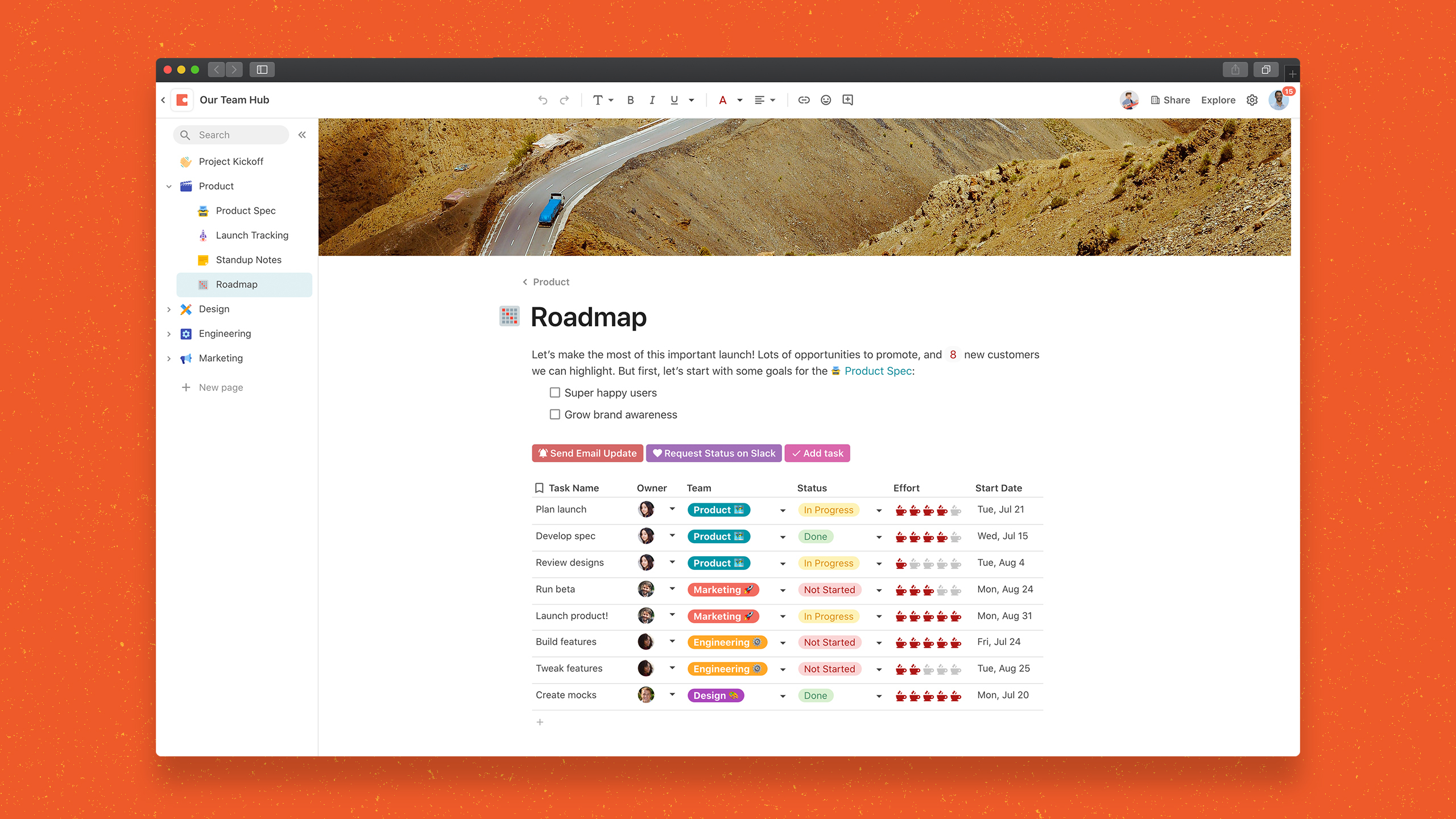
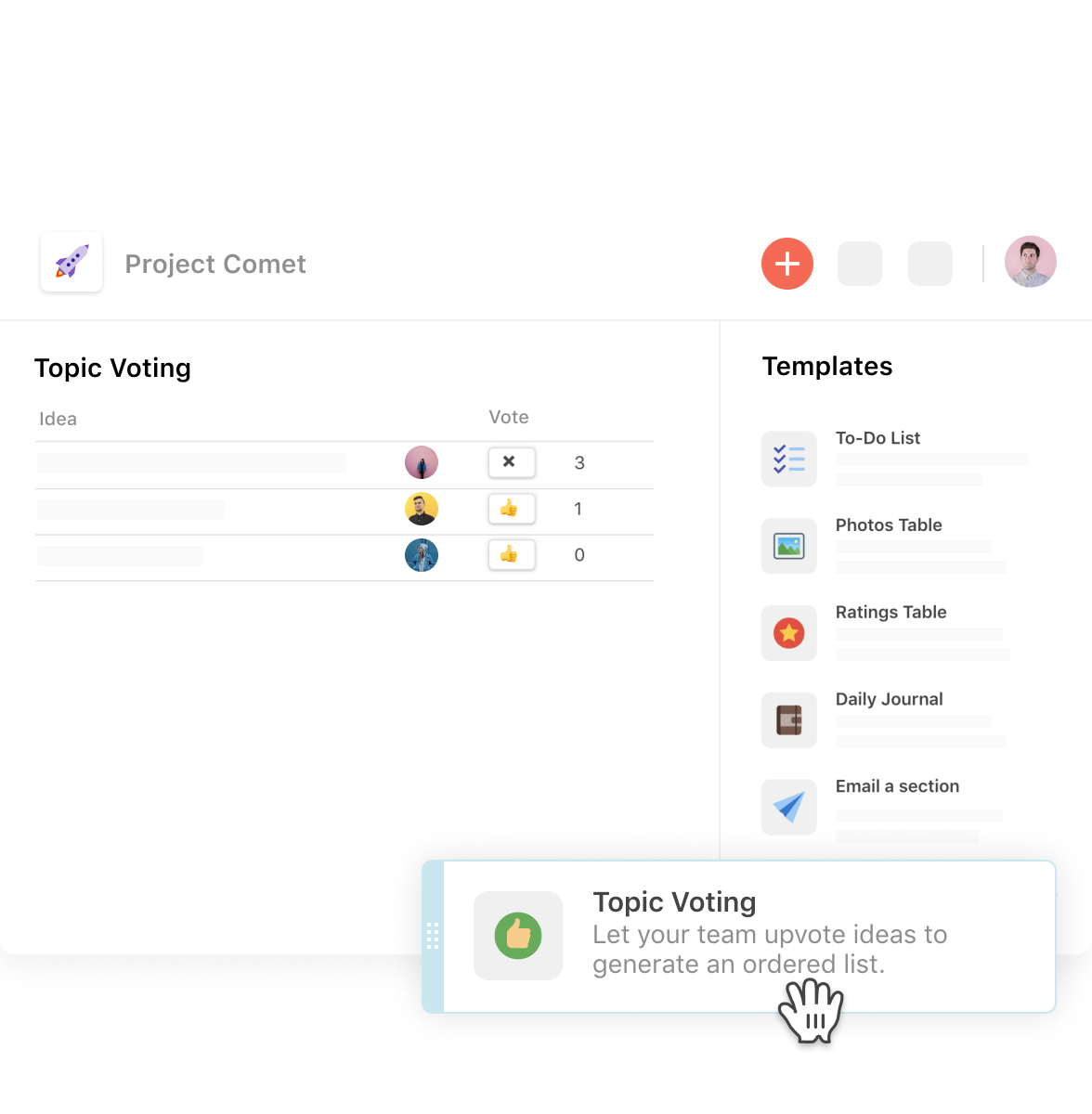
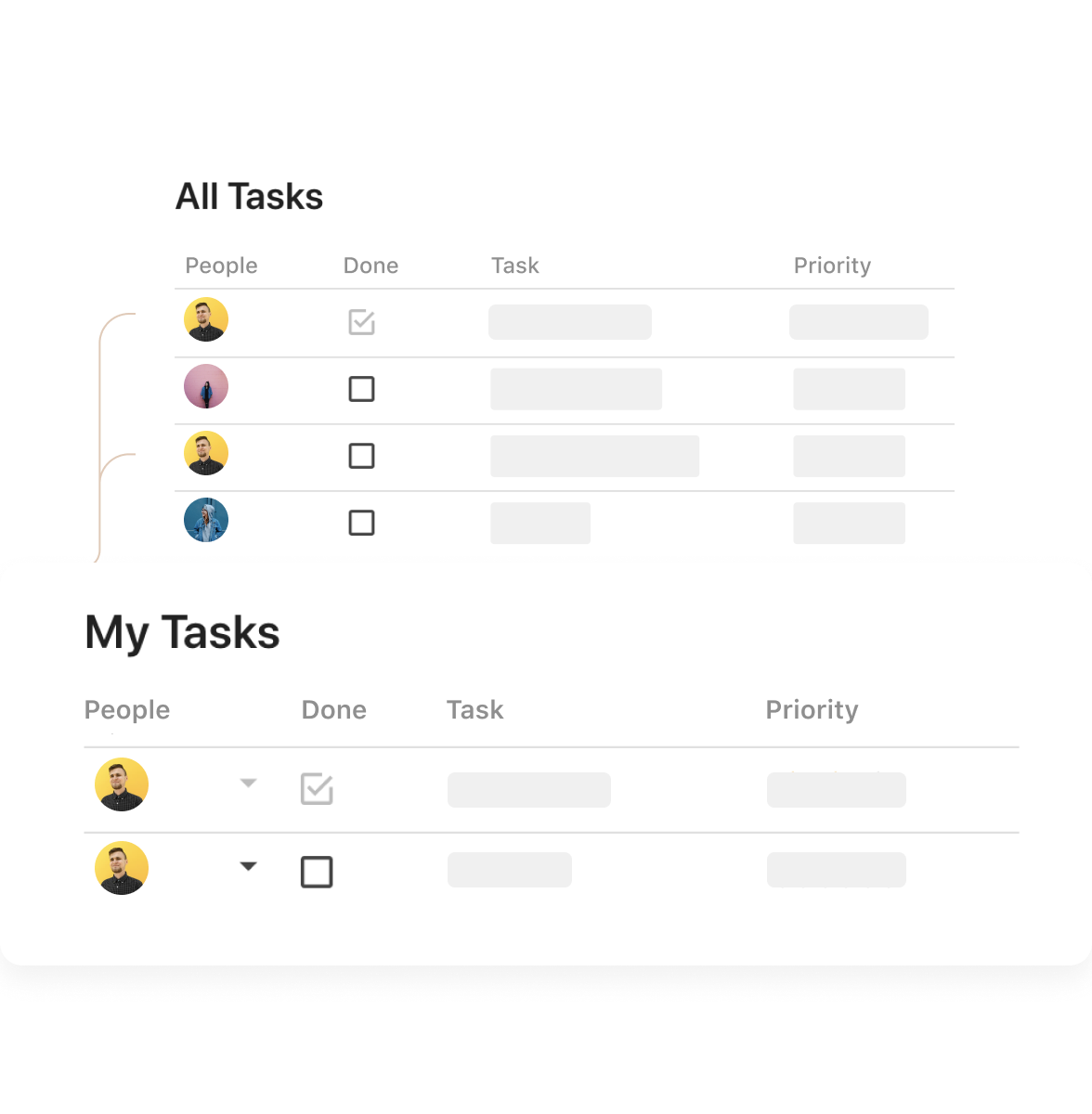
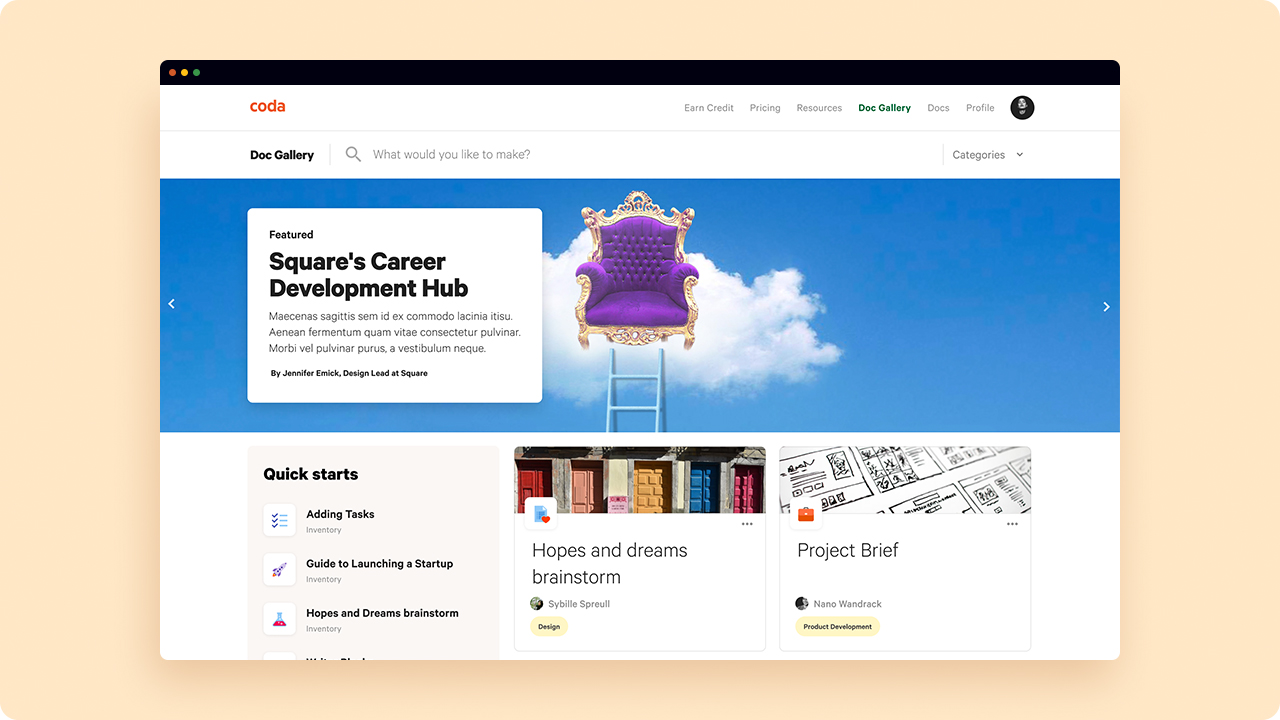
Coda is a unified workspace platform that transforms documents into interactive applications by combining documentation, spreadsheet functionality, relational databases, and AI-powered automation—enabling teams to consolidate multiple tools and automate complex workflows without writing code. The platform operates as a block-based document system where every page can contain interactive tables, buttons that trigger automations, live formulas, and conditional logic, all rendering from a shared…
$0
Oracle Aconex
Score 7.0 out of 10
N/A
Aconex is a cloud collaboration platform for the global construction industry which allows the user to quickly find what is needed with a single source of truth for communications, documents, processes, and models. Aconex was acquired and is now supported by Oracle since 2017.
N/A
Trello
Score 8.4 out of 10
N/A
Trello from Atlassian is a project management tool based on a Kanban framework. Trello is ideal for task-management in a to-do list format. It supports sharing boards and cards across users or teams. The product offers a free version, and paid versions add greater automation, collaboration, and administrative control.
$6
per month per user
Pricing
Coda
Oracle Aconex
Trello
Editions & Modules
Free
$0.00
Pro
$12
per month per Doc Maker
Team
$36
per month per Doc Maker
Enterprise
Custom
No answers on this topic
Standard
$6
per month per user
Premium
$12.50
per month per user
Enterprise
$17.50
per month per user
Free
Forever Free
Offerings
Pricing Offerings
Coda
Oracle Aconex
Trello
Free Trial
Yes
No
No
Free/Freemium Version
Yes
No
Yes
Premium Consulting/Integration Services
No
No
No
Entry-level Setup Fee
No setup fee
No setup fee
No setup fee
Additional Details
Discount available for annual billing.
—
A discount is offered for annual billing and for larger numbers of users.
More Pricing Information
Community Pulse
Coda
Oracle Aconex
Trello
Considered Multiple Products
Coda
Verified User
Anonymous
Chose Coda
Coda is a more complete package that is very robust and will meet the needs of almost any organization who wants to track project and meet desired timelines. By implementing project trackers the team can easily collaborate together and get the work done. Coda is much easier to …
We previously used airtable, and I'm not sure why we switched, but it seems like Coda has more flexibility and is a little more user friendly for generic users and not power users.
Coda is not as great as ClickUp or Notion in many ways, but it surely has a better user interface and pricing in my view and allows good collaboration. However, integrations work much better with other competitors as compared with Coda, and would prefer others if pricing was …
Trello seems to be more focused on IT oriented projects where as Coda has wide scale applications across all departments. Coda was selected because of the perception it was more dynamic and I believe it has proven to be more dynamic. Coda is a very easy to use and understand …
I don't know why leadership choose Coda over Google, but I do see the value in the organization as well as diversity of what you can do with pages designs and integrations
We used Airtable for a while and looked at Notion briefly. Airtable is good, yet a bit technical and doesn't come with rich text and formatting capabilities--so less suitable for publishing/sharing with the rest of the organization. We haven't used Notion for real; I did look …
Coda is very aesthetically appealing and fun to create docs. The benefit of Coda is that it makes a lot automated, but what is sacrificed is the flexibility that other tools can offer.
For general use cases, Google Docs or Airtable are often a better starting place. But if things get complex or you're constantly pairing the two together, consider graduating to Coda to save yourself long-term headaches.
Notion is great for personal use, but the powerful …
The tables within Coda are similar to lists in SharePoint or Google Tables, but the document portion of Coda is what sets it apart. Having the ability to summarize that table data in a document is unique to Coda.
Coda is the only tool with the ability to fully customize your views and the behavior within a given data table. They've put a LOT of thought into this and are miles above and beyond Smartsheet, Airtable, and Notion (I've evaluated all three extensively).
We were looking for many different things to improve our internal processes before we came across Coda. A large part of my work involves marketing, project management, service management and data analytics. For a company like ours, we find Coda the most cost-effective and …
I first tried Notion and, although it can be easier to work with for some simple tasks, when it comes to tables and linked data, Coda is more versatile and comprehensive.
For the use we needed in the company, Coda was a way easier and simpler solution. Jira and the Atlassian suite is more complete and structured, but it is was way too complicated.
Coda's automation and flexibility makes it much easier and more interactive than other tools like Airtable. With Airtable, we couldn't get as much traction or flexibility, so we stopped using it after a few months. Jira, on the other hand, has proven to be more helpful for task …
I primarily use Mavenlink for scheduling purposes but with Coda, I'm able to do that, plus have an open way to communicate with the rest of my team when we want to add certain artists to a specific job. Instead of using another software for communicating across all of our …
They are similar but I like that Coda has more templates that are suited for marketing (GTM timelines, pulse updates, etc). One pain point for us is getting the engineering team on Coda but they seem to prefer Jira and Aha!
While all of the products listed have great features and platforms, there was always one thing missing from them that I would need to get from another application. Coda was the first one we used that really combined some of the best parts of those products and allowed us to use …
The price point is most attractive, they have a dedicated team of support agents/doc makers that provide valuable templates, and it really was the best option to fit our current needs as a startup team who will be scaling and the product can scale with us in the long run.
Oracle Aconex has numerous tracking capabilities, from the licensing, the insurance part, among the budgetary or costs. More so, Oracle Aconex has the offline access, a form of back up, to ensure that all operations are meet on time. The program increases or improves the skills …
I have not come across a product with the same features as Oracle Aconex, in my work experience. It has great tools that fast-track the progress of projects in our organization. Data that is integrated into our organization enables our teams to make effective projects and …
Oracle Aconex team offers a free trial to the users, Cloud services are effective like document uploading, sharing, and scheduling on this platform is also good and easy. The tool provides a nice incident reporting ability and contracts management functions which earn Oracle …
Aconex's document control workflow allows for multiple versions of the same revision, enabling markups to be seen and document history as appropriate. This is on par with Solidworks EPDM, and is by far better than InEight's TeamBinder, as the originator and uploader of the …
I am currently using file sharing such as Egnyte and ShareFile which are useful but don't have much of a transmittal or inmail functionality so I can't really speak to other products in the same league as Aconex. I don't typically like proprietary contractor solutions due to …
I've tried using an agenda, making tasks in the Google Calendar, copy the Trello organization in Notion. But I can say confidently, that nothing beats how nicely and attractive Trello looks. It's not only visually appealing, but it's super easy to use and great to have a follow …
Our business ended up using Monday due to the holistic nature of the tool. It allows us to collaborate amongst teams and see the project as a whole easier. Trello is for personal usage and task management. I use Monday to organize my overarching needs, and then put specific …
I don't feel that Trello stacks up to these other tools as well. I used to use Trello much more in the past and, over the last 5 years, have consistently used it less and less because it is easier to stay within the workflow of the tools I listed above.
Okay, I have to say that at the organization where I work, we completely switched from Trello to Monday.com, and it wasn't an easy decision. As I've mentioned throughout this review, I think Trello works perfectly for small and medium-sized businesses and/or entrepreneurs …
We actually use both in our company. I personally prefer Slack just because I feel like it gives me more avenues of communication with my peers and coworkers then Trello does.
However, Slack would fail to meet our business requirements for what we need to succeed with new …
Trello is more visual than Todoist and MS To Do. For me, the major advantage of Trello is its functionality around creating Kanban Boards—there is not the same flexibility or options in either of the other two products. I was also able to seek advice from colleagues who were …
Asana is awesome but it comes with a price. For a startup pricing hurts. ClickUp is so vast and has a lot of areas to get lost in, if you don't set some standards there are many ways to do it wrong. Slack is just a communication platform, you can collaborate and stuff but not …
Trello is more simple and not as "robust" as the other tools, but it's easier to use and manage and understand and ACTUALLY get stuff done with. It's simplicity is part of the beauty of using it. You don't need a million options that nobody uses, you just need to get stuff done.
We found that those software, while they included Kanban boards, offered a lot more features. Our tickets tended to get lost and it was harder to navigate through. Our Product team didn't particularly like how they functioned as much.
Trello won becuase of the easy drag and drop feature that makes it simple for team members to jump on and use from day one. That said, Asans has way more features and for a tech-savvy person it would be the choice; it is still user-friendly. While it has a steeper learning …
Trello provides precise goal setting, targets, and activity tracking with minimal human intervention, while Trello provides tags and tasks to add users and communicate visual task organization. Trello also offers real-time updates, team collaboration, and project progress …
For our purposes and my role in the business, Trello is simpler and easier to use. I found Jira very hard to navigate to individual projects, and the process of creating a card was very time-consuming. That said, I think Jira performs a number of roles that Trello doesn't, and …
I have been able to use the free version of Trello for many years and for the free version, this platform offers incredible value. I have not yet found such value in other free versions of similar platforms. This platform is also very easy to use as a first time user.
Trello is more in-depth and task-driven, whereas 15Five is more accountable and has personal weekly goals and accomplishments. Trello can be divided up to allow others to do the listed task, and all employees work together to accomplish and complete each required ticket/card …
We are still transitioning into using Trello but used ActiveCollab in the past for our website management and projects. I do like the layout of Trello better and feel that the notifications work well.
I also use Whatsapp chat as a task management tool. Whatsapp group chat is very convenient for assigning tasks and making follow-ups. Trello currently lacks here. Whatsapp chat is also way more handy and user-friendly than Trello, because of its better interface and engagement. …
Trello is convenient for tasks management of the team, there are columns, additional tools, and integrations. Regular to-do lists are better to add routine tasks that you need to do daily. In Trello, It is convenient to add small projects or add smaller tasks for a big project …
Trello is better than Gitlab CI and other tools because it provides a very simple way of managing project with just lists and draggable components. Also, thanks to Mobile version, it is really easy for a team lead to manage his projects at anytime of a day. So I widely …
Coda is great to build a place for your users to go to and see information. It is easy to navigate through and the variety of content creation is great. However, it is not always easy to create what you want and there is a lot of playing around and learning. Coda also sometimes misses some functionality which is expected. For example, downloading a list of users that have access to the platform. Being able to send push notifications when a new page has been created etc. Overall it is a good tool to use just be prepared to invest time!
For outstanding project managing and operational assistance, Oracle Aconex is an incredible program. The budget that suits every project are met and followed. More so, Oracle Aconex takes the permits required, for instance, the insurance permit and the license tracking. The contractor management feature is also encoded on Oracle Aconex, making the investor and the contractor have the same objective.
Trello is great for cross-team communication and intra-team organization. It's simple to get setup, with flexible tools that give businesses control over how to make Trello work the best for them. It is an amazing platform for operations tracking, project management, and even organizing customer service requests for a smaller business.
One source of truth: It's incredibly easy to keep everything organized and easy to find.
Being able to show different views of the same information throughout your doc makes it really easy to customize the information.
In general, I love the "coding" aspect of it, and being able to do advanced functions has helped us create some really interesting automation and streamline our process.
File Sharing - unlimited storage, version control and access control on a neutral host - Aconex is significantly superior to ftp, SharePoint or a contractor hosted platform in that once onboarded, each user organization has equal privileges and can in turn onboard any number of members within the respective organizations.
Process and Workflow Management - while imperfect, Aconex offers the opportunity to customize process control and enforcement. Our team used these processes for RFI preparation and response, submittal tracking and other custom requirements.
Neutrality - while mentioned, the neutral host places all project participants on a equal basis. Typically, non-neutral platforms favor in-house participants to the detriment of the project. Until shared, files are 100% private to the respective organizations.
Mobile interface - good (not perfect) access to unlimited project file information from a mobile device.
Audit trail - no more "I didn't get that document". File sharing and file opening is tracked by user. Transmittals are a matter of record and there's no 'delete' function.
Coda is definitely something that has been proven to drive positive impact in our organization. We have many divisions that can benefit from this that we have yet to explore. It would definitely be worth renewing.
I am very likely to renew Trello, because it doesn't cost anything to do so. I am also very likely to use Trello's upgraded features in the future because a lot of my team's data is stored on there and they have already gotten used to the platform. Trello is very easy for new team members to pick up, making the onboarding and usability very streamlined.
There is a little bit of a learning curve on where to point and click to add in different elements and make edits. But it is still very manageable once you get the hang of it. I do still have some issues with some of my connected pages updating each other when I don't want them to sync. So I'll end up editing one page, and it will make the same edits on another page.
I am technology illiterate, it's my Achilles heel and this program is so easy to use. I have been utilizing it for a decade now. It makes organizing and prioritizing my life, my work, my business, my kids life, etc so much more manageable and without having to hold on to a bunch of into in my head. I can find it and locate it quickly and easily in Trello.
We haven't done any integrations - the initial part of our experience we found that for docs with complex formulas, the page tends to load slowly but in recent months, Coda has improved and optimized the loading times in general and we generally don't find any problems in terms of speed anymore.
Mainly due to timezone differences. I think Coda's support in general is well implemented and executed. They know their stuff and are helpful. But since I'm not in the same timezone, solution rates are slower for me, and that's not something I prefer. I work in customer service, too, and more often than not, time is important. Shortening the solution time would be a much greater experience.
I haven't had much need to contact their support because the product is easy to use and pretty bug-free. I did reach out to them about swimlanes and I was able to find the information I needed very quickly and it was thorough and accurate information about current functionality. I love that they use their own product. That's always a good sign.
I'm relatively inexperienced but this experience is meaningful. It would have been nice to have some guidance from Coda so that we understood more on Coda's purpose and potential.
For our small business, getting a few of us started well on Trello was the key, I think. As long as a couple of us were really comfortable with the interface, we could lead others and help them with any questions. From now on, anyone who works with us just naturally uses Trello for information sharing - it's just part of what we do.
For general use cases, Google Docs or Airtable are often a better starting place. But if things get complex or you're constantly pairing the two together, consider graduating to Coda to save yourself long-term headaches. Notion is great for personal use, but the powerful automation and collaboration features in Coda make it a better fit for teams in my experience so far.
Our business ended up using Monday due to the holistic nature of the tool. It allows us to collaborate amongst teams and see the project as a whole easier. Trello is for personal usage and task management. I use Monday to organize my overarching needs, and then put specific tasks into Trello to stay organized.
I think scalability is definitely good here since it's based on number of doc makers. Implementation into each dept becomes simpler. That being said, due to the nature of our work, we find it easier that we have a "super user" and then a team of other doc makers. This would make the doc creation and management more efficient.
It's been an essential tool for our onboarding team. We wouldn't be able to operate without it.
It's been a very affordable investment for our team as well since we still use the free version.
We have had a negative return in the fact that there aren't any reporting tools within the app. We have to spend time tracking certain elements manually.