Confluent Cloud is a cloud-native service for Apache Kafka used to connect and process data in real time with a fully managed data streaming platform. Confluent Platform is the self-managed version.
$385
per month
Databricks Data Intelligence Platform
Score 8.8 out of 10
N/A
Databricks offers the Databricks Lakehouse Platform (formerly the Unified Analytics Platform), a data science platform and Apache Spark cluster manager. The Databricks Unified Data Service provides a platform for data pipelines, data lakes, and data platforms.
$0.07
Per DBU
OpenText Magellan
Score 9.0 out of 10
N/A
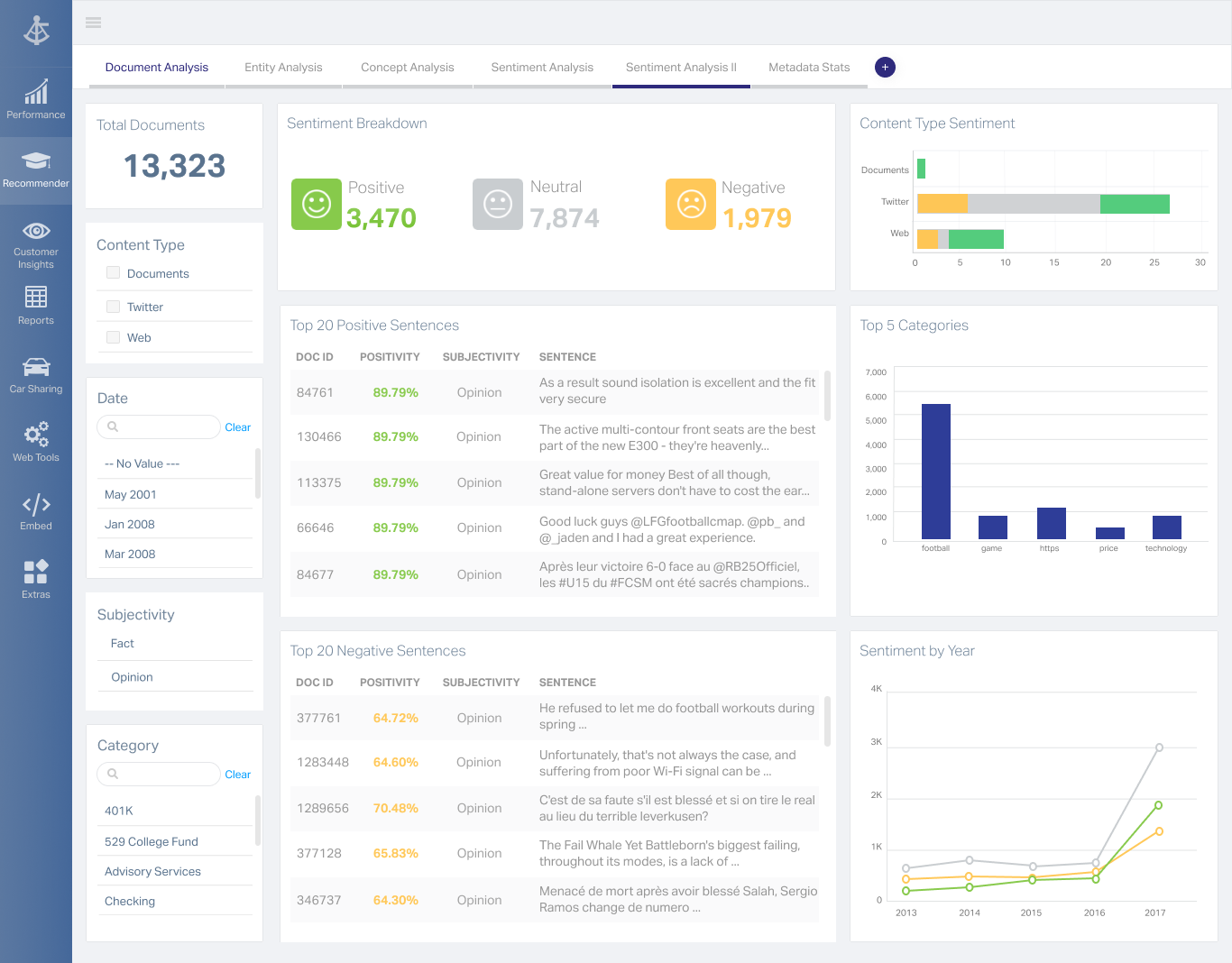
OpenText Magellan Analytics Suite leverages a comprehensive set of data analytics software to identify patterns, relationships and trends through data visualizations and interactive dashboards.
N/A
Pricing
Confluent
Databricks Data Intelligence Platform
OpenText Magellan
Editions & Modules
Basic
$0
Standard
Starting at ~$385
per month
Enterprise
Starting at ~$1,150
per month
Standard
$0.07
Per DBU
Premium
$0.10
Per DBU
Enterprise
$0.13
Per DBU
No answers on this topic
Offerings
Pricing Offerings
Confluent
Databricks Data Intelligence Platform
OpenText Magellan
Free Trial
No
No
No
Free/Freemium Version
Yes
No
No
Premium Consulting/Integration Services
No
No
No
Entry-level Setup Fee
No setup fee
No setup fee
No setup fee
Additional Details
Confluent monthly bills are based upon resource consumption, i.e., you are only charged for the resources you use when you actually use them:
Stream: Kafka clusters are billed for eCKUs/CKUs ($/hour), networking ($/GB), and storage ($/GB-hour).
Connect: Use of connectors is billed based on throughput ($/GB) and a task base price ($/task/hour).
Process: Use of stream processing with Confluent Cloud for Apache Flink is calculated based on CFUs ($/minute).
Govern: Use of Stream Governance is billed based on environment ($/hour).
Confluent storage and throughput is calculated in binary gigabytes (GB), where 1 GB is 2^30 bytes. This unit of measurement is also known as a gibibyte (GiB). Please also note that all prices are stated in United States Dollars unless specifically stated otherwise.
All billing computations are conducted in Coordinated Universal Time (UTC).
—
—
More Pricing Information
Community Pulse
Confluent
Databricks Data Intelligence Platform
OpenText Magellan
Considered Multiple Products
Confluent
Verified User
Director
Chose Confluent
For our use case it was very important that the technology we were working with fit into our Azure architecture, and met our data processing size requirements to stream data within certain SLAs. Confluent more than met our performance requirements and compared to the others …
If you have a need to stream data, real time or segmented structured data then Confluent is a great platform to do so with. You won't run into packet transfer size limitations that other platforms have. Flexibility in on-prem, cloud, and managed cloud offerings makes it very flexible no matter how you choose to implement.
Medium to Large data throughput shops will benefit the most from Databricks Spark processing. Smaller use cases may find the barrier to entry a bit too high for casual use cases. Some of the overhead to kicking off a Spark compute job can actually lead to your workloads taking longer, but past a certain point the performance returns cannot be beat.
If you do not have a large budget and are a large organization, I would steer clear of Actuate. If you are looking to do very complex washboarding, I would not use them. Your developers have to be very skilled to work with this. Plan to bring in consultants if necessary to help your process. Adhoc reporting is weak. If your pricing is user based and you expand, this could be very expensive.
I am no longer working for the company that was using Actuate but I believe they would continue to use it because the stitching costs would be to high. It would require a complete rewrite of the reports and the never version of Actuate (BIRT) even required an almost complete report rewrite
Because it is an amazing platform for designing experiments and delivering a deep dive analysis that requires execution of highly complex queries, as well as it allows to share the information and insights across the company with their shared workspaces, while keeping it secured.
in terms of graph generation and interaction it could improve their UI and UX
It is quite intuitive to use. It is fit specifically for doing sentiment, emotion, and intention analysis as well as text classification and text summarization. I would have given 10 if it is fit for the purpose of doing image processing and analysis as well. There is a huge market to analyze video and image data.
The support from the Confluent platform is great and satisfying. We have been working with Confluent for more than a year now. They sent out resident architects to help us set up Confluent cluster on our cloud and help us troubleshoot problems we have encountered. Overall, it has been a great experience working with the Confluent Platform.
One of the best customer and technology support that I have ever experienced in my career. You pay for what you get and you get the Rolls Royce. It reminds me of the customer support of SAS in the 2000s when the tools were reaching some limits and their engineer wanted to know more about what we were doing, long before "data science" was even a name. Databricks truly embraces the partnership with their customer and help them on any given challenge.
For our use case it was very important that the technology we were working with fit into our Azure architecture, and met our data processing size requirements to stream data within certain SLAs. Confluent more than met our performance requirements and compared to the others scale options and cost to run it was more than financially viable as a platform solution to our global operations.
The most important differentiating factor for Databricks Lakehouse Platform from these other platforms is support for ACID transactions and the time travel feature. Also, native integration with managed MLflow is a plus. EMR, Cloudera, and Hortonworks are not as optimized when it comes to Spark Job Execution. Other platforms need to be self-managed, which is another huge hassle.
It is vastly superior to these in many ways, for complex reporting it is a much more sophisticated solution. Visualizations are very good. Javascript extensibility is very powerful, others don't support this or as well. Pentaho and MS are both OLAP oriented. Pentaho is moving more toward big data, which was not our primary focus. Others are stuck in the Crystal Reports Band metaphor.
Actuate can handle 50 to 60 sub reports inside a report very well.
Dynamically creating the datasource, chart, graph, reports are the main advantages. We can do any level of drilling, and can create a performance matrix dashboard efficiently.