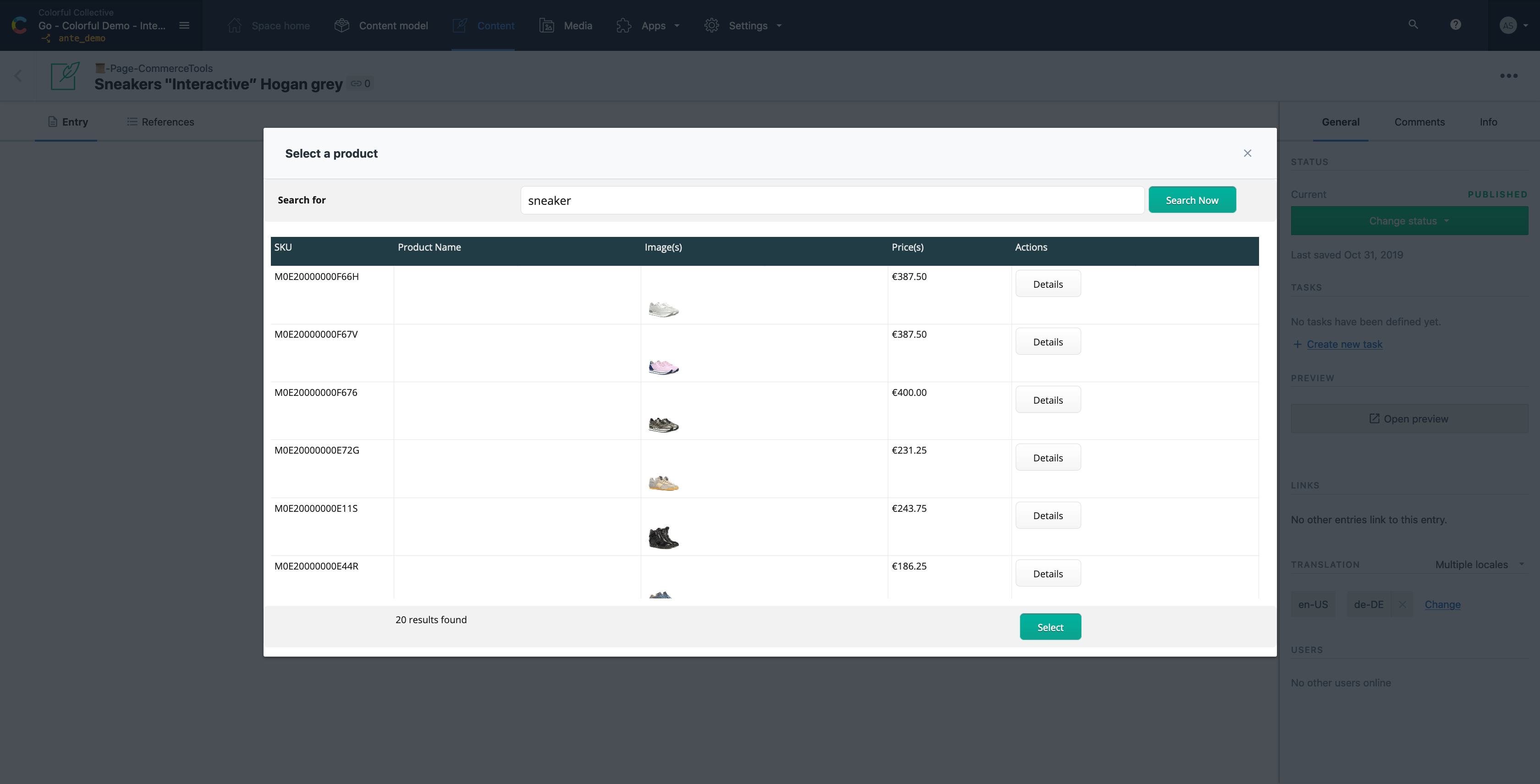
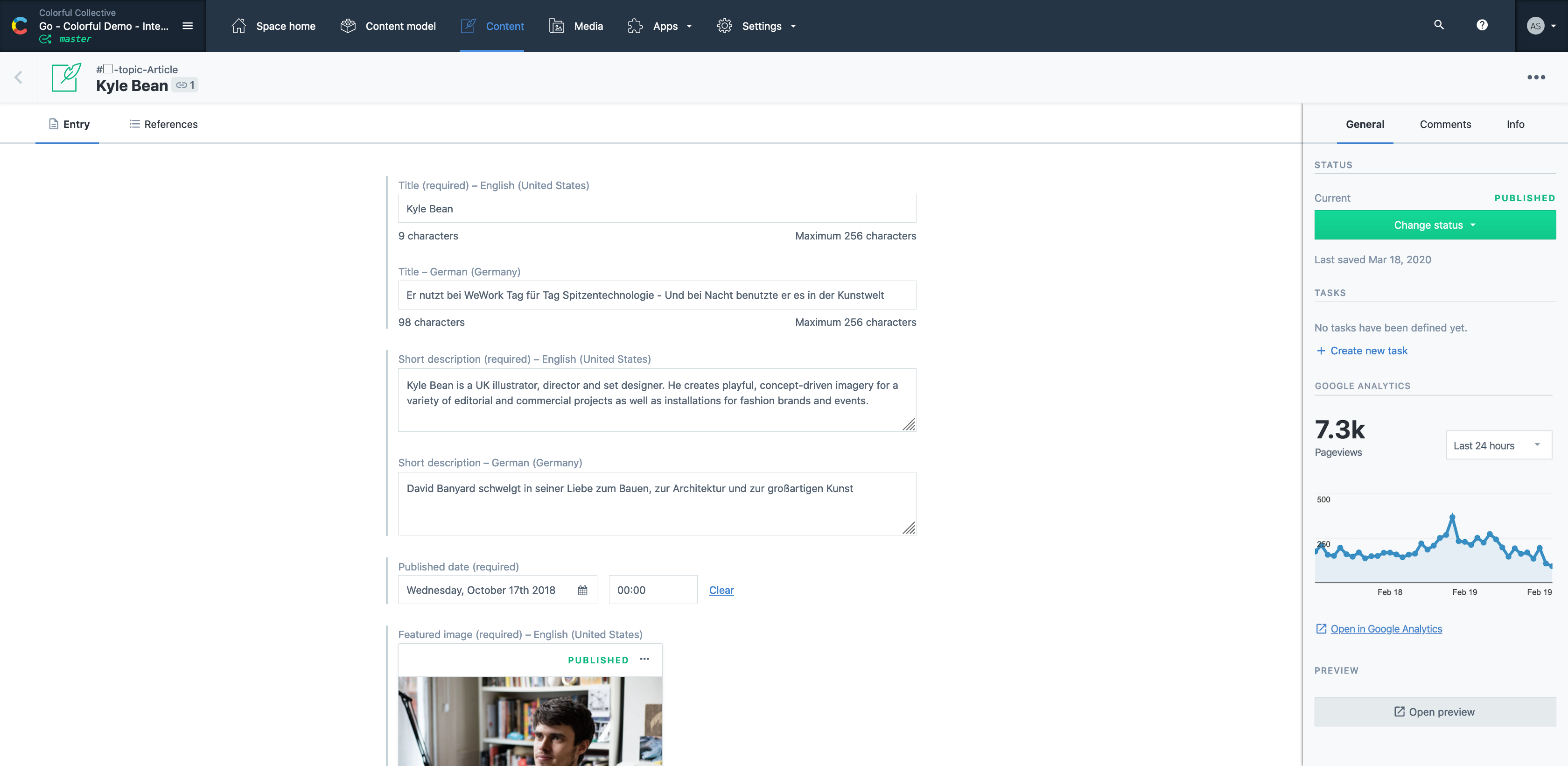
Contentful is a cloud based CMS solution that provides the ability to manage content across multiple platforms.The editing interface allows for managing content interactively and provides developers the ability to deliver the content with the programming language and template framework of their choice.
$0
Drupal
Score 6.7 out of 10
N/A
Drupal is a free, open-source content management system written in PHP that competes primarily with Joomla and Plone. The standard release of Drupal, known as Drupal core, contains basic features such as account and menu management, RSS feeds, page layout customization, and system administration.
N/A
Experro
Score 10.0 out of 10
N/A
Experro is presented as an agentic product discovery and personalization platform built to optimize eCommerce experiences. It is used by brands to deliver search, discovery, and content that is hyper-personalized for every shopper and automatically optimized to drive key business KPIs. Built to maximize AOV, profitability, and customer satisfaction, Experro aims to empower eCommerce teams with AI-driven tools and automation. Used by B2C, B2B, and DTC…
We considered Bloomreach, Contentstack, Contentful, and Experro. After comparing the services, integration capabilities, and pricing, we went ahead with Experro. The experience of working with them has been a smooth ride. We are looking forward to more success with Experro …
In my experience, Experro is Highly affordable, no operational overhead, fully-managed so you can focus on your business whereas Contentful has a Higher license, development, and maintenance costs.Experro integrates with any eCommerce platform and offers a fully-managed …
It's a great all rounder for content projects. It's easy in the basics and powerful in the complex, data heavy scenarios. Extending the platform is straightforward and the SDK gives you everything you need. If you have many many varying content types , it gets expensive and perhaps not the best choice .
Overall, I would give my rating of Drupal a 7/10 because there is an easy user experience for those without a website background but there is some technology work required to build more website capabilities that aren't as user-friendly. Drupal is specifically well suited to update content (like changing Relationship Manager cards when there is employee turnover), post announcements (putting up a holiday banner to let our customers know the dates we will be closed over Thanksgiving, Christmas, etc., and creating a sophisticated website hierarchy of pages (for our firm, several dropdowns depending on if you're looking for personal banking, business banking, investment banking, about us, etc.).
Here's why I wholeheartedly recommend Experro to any Ecommerce/Retail business AI- Powered Search: Experro takes the guesswork out of online shopping. It corrects typos and suggests the most common and popular search words for my customers type. This ensured that my customer found what they want faster, eliminating frustration and streamlining the shopping journey. Continuous Learning for Unmatched Personalization: Experro is not static; it's constantly learning from customers' interactions. With each search, click, and purchase, Experro fine-tuned its recommendations to match my customers' preferences and intent. My shoppers now feel like I have tailored the entire shopping experience just for them. Segment-Based Results: Not all customers are the same, and Experro understands this. It can re-rank products or provide entirely different search results for the same query based on customer segments like geography or demographics. This means results are more personalized and optimized for higher conversions. In conclusion, Experro is a game-changer in the world of Ecommerce. It doesn't just provide a platform for shoppers; it provides an experience. With its real-time learning, segment-based results, and actionable insights, Experro helped me to stand out in the competitive online marketplace. If you want to offer your customers a shopping experience like no other, I strongly recommend giving Experro a try.
It has excellent security features and consistent updates.
It allows for extensive customization with the integrated themes and core code, especially when you first install it. This allows our dev team to get creative with marketing initiatives.
There is a large online community of Drupal users that consistently help answer any questions and issues
The ability of Experro CMS to update content quickly and independently is a significant advantage. Whether it's a feature launch or new promotional content, we’re ready to go live in no time!
The platform offers an intuitive and user-friendly editing experience, making it accessible to individuals of all skill levels.
Contentful uses "references" to allow you to build very modular content. If I have a "slider" content type, I can create a "slide" content type which references a "button" content type, and so forth. This works well, but I occasionally wish there was a better solution for one-off content, like a settings page. Currently, this is done for creating an entire content type called "settings" with a single entry. Not a big deal, but not ideal, either.
There are a few quirks with GatsbyJS integration, etc, but these issues are being fixed and improved upon very quickly.
A minor gripe, but Contentful does not have a way to organize fields within an entry. Entries with many fields are somewhat tiresome to scroll through.
Security and new release notifications are a hassle as they happen too often
Allowing them to write PHP modules is a big advantage, but sometimes integrating them is a small challenge due to the version the developer is working on.
The time and money invested into this platform were too great to discontinue it at this point. I'm sure it will be in use for a while. We have also spent time training many employees how to use it. All of these things add up to quite an investment in the product. Lastly, it basically fulfills what we need our intranet site to do.
It is a very easy to use and configure application. I find that it is on the user to manage the content after the models have been created, yet I still do not encounter issues finding or creating new components for our site. It is easy to set up and easy to navigate.
As a team, we found Drupal to be highly customizable and flexible, allowing our development team to go to great lengths to develop desired functionalities. It can be used as a solution for all types of web projects. It comes with a robust admin interface that provides greater flexibility once the user gets acquainted with the system.
The ease of use is top-notch! Honestly, the platform is intuitive. Whether it i uploading new content or managing the digital assets of a landing page - we got the hang of it pretty quickly.
Drupal itself does not tend to have bugs that cause sporadic outages. When deployed on a well-configured LAMP stack, deployment and maintenance problems are minimal, and in general no exotic tuning or configuration is required. For highest uptime, putting a caching proxy like Varnish in front of Drupal (or a CDN that supports dynamic applications).
Drupal page loads can be slow, as a great many database calls may be required to generate a page. It is highly recommended to use caching systems, both built-in and external to lessen such database loads and improve performance. I haven't had any problems with behind-the-scenes integrations with external systems.
As noted earlier, the support of the community can be rather variable, with some modules attracting more attraction and action in their issue queues, but overall, the development community for Drupal is second to none. It probably the single greatest aspect of being involved in this open-source project.
We had contacted the support team to solve our doubts about the theme integration. The team was quick. Apparently they are available 24x5, it is pretty much enough to cover all our needs in the real-time.
I was part of the team that conducted the training. Our training was fine, but we could have been better informed on Drupal before we started providing it. If we did not have answers to tough questions, we had more technical staff we could consult with. We did provide hands-on practice time for the learners, which I would always recommend. That is where the best learning occurred.
The on-line training was not as ideal as the face-to-face training. It was done remotely and only allowed for the trainers to present information to the learners and demonstrate the platform online. There was not a good way to allow for the learners to practice, ask questions and have them answered all in the same session.
Plan ahead as much you can. You really need to know how to build what you want with the modules available to you, or that you might need to code yourself, in order to make the best use of Drupal. I recommend you analyze the most technically difficult workflows and other aspects of your implementation, and try building some test versions of those first. Get feedback from stakeholders early and often, because you can easily find yourself in a situation where your implementation does 90% of what you want, but, due to something you didn't plan for, foresee, or know about, there's no feasible way to get past the last 10%
Easy to use and much more organized as a single platform versus multi. The layout is clean and easy to read and we don’t have to worry about certain users safe guarding data or content then losing it when they leave the company. It’s a one stop shop for imagery
Drupal can be more complex to learn, but it offers a much wider range of applications. Drupal’s front and backend can be customized from design to functionality to allow for a wide range of uses. If someone wants to create something more complex than a simple site or blog, Drupal can be an amazing asset to have at hand.
In my opinion, setting up Experro is much easier compare to Bloomreach and we also didn't have to integrate with whole lot of tools to get the end results. Also, Experro is DXP with a combination of multiple tools like Headless CMS, Search, Merchandising, etc. giving us all the tools at a single place to play around without spending on integrations.
Drupal is well known to be scalable, although it requires solid knowledge of MySQL best practices, caching mechanisms, and other server-level best practices. I have never personally dealt with an especially large site, so I can speak well to the issues associated with Drupal scaling.
Contentful has saved us valuable development time that was previously spent doing deploys for minor content updates.
Contentful has helped us maintain consistent documentation, reducing time needed to review for consistency.
Can't say we've really experienced any negative ROI impacts from using Contentful, but we've run into some limitations in adding too many content models and the next pricing tier is substantially more expensive.