Databricks offers the Databricks Lakehouse Platform (formerly the Unified Analytics Platform), a data science platform and Apache Spark cluster manager. The Databricks Unified Data Service provides a platform for data pipelines, data lakes, and data platforms.
$0.07
Per DBU
OpenText Magellan
Score 9.0 out of 10
N/A
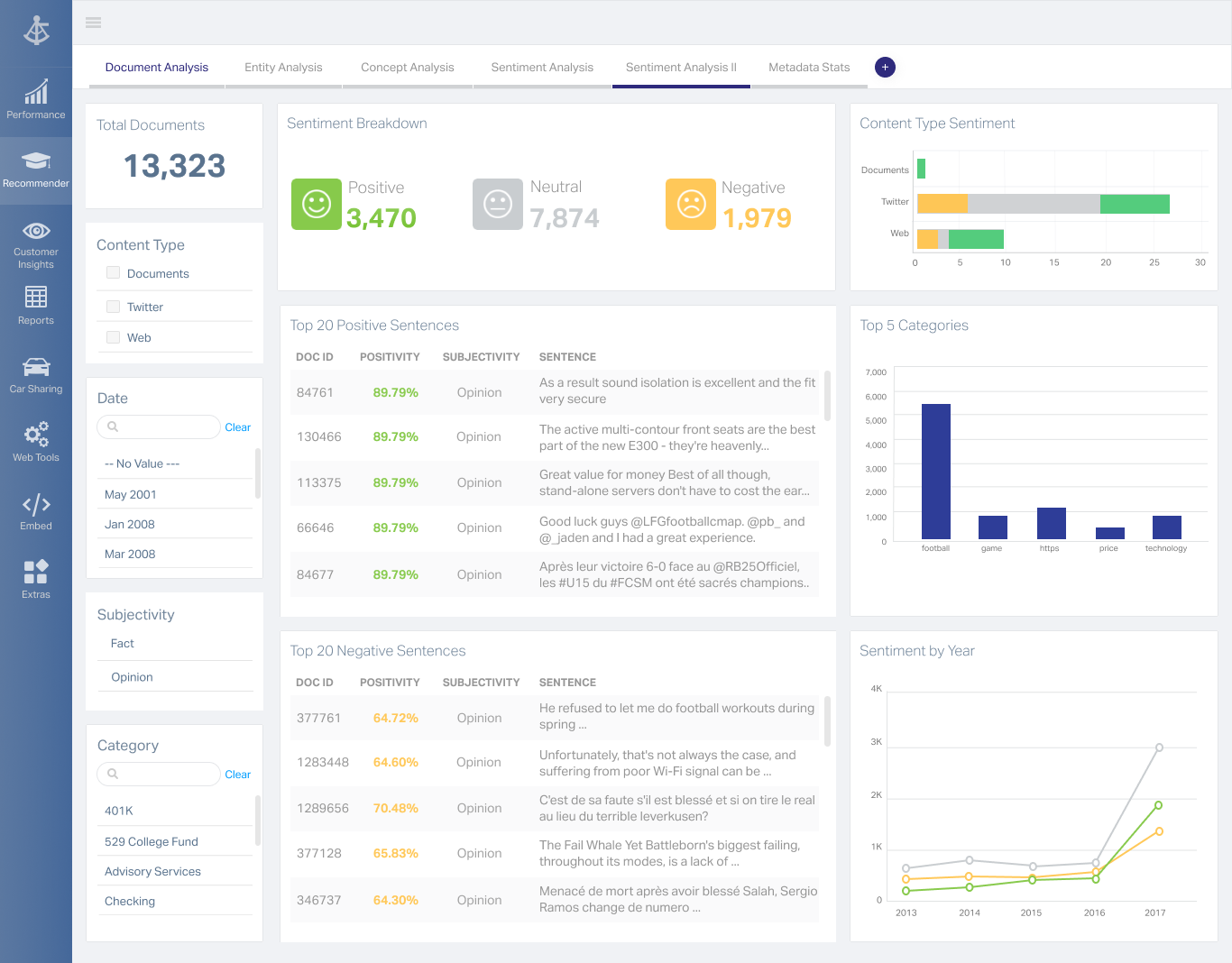
OpenText Magellan Analytics Suite leverages a comprehensive set of data analytics software to identify patterns, relationships and trends through data visualizations and interactive dashboards.
N/A
Saturn Cloud
Score 7.7 out of 10
N/A
Saturn Cloud is an ML platform for individuals and teams, available on multiple clouds: AWS, Azure, GCP, and OCI. It provides access to computing resources with customizable amounts of memory and power, including GPUs and Dask distributed computing clusters, in a wholly hosted environment. Saturn Cloud is presented as flexible and straightforward for new data scientists while giving senior and experienced staff the
capabilities and configurability they need.…
$10
hourly $5 credit purchase to start
Pricing
Databricks Data Intelligence Platform
OpenText Magellan
Saturn Cloud
Editions & Modules
Standard
$0.07
Per DBU
Premium
$0.10
Per DBU
Enterprise
$0.13
Per DBU
No answers on this topic
No answers on this topic
Offerings
Pricing Offerings
Databricks Data Intelligence Platform
OpenText Magellan
Saturn Cloud
Free Trial
No
No
Yes
Free/Freemium Version
No
No
Yes
Premium Consulting/Integration Services
No
No
No
Entry-level Setup Fee
No setup fee
No setup fee
No setup fee
Additional Details
—
—
—
More Pricing Information
Community Pulse
Databricks Data Intelligence Platform
OpenText Magellan
Saturn Cloud
Features
Databricks Data Intelligence Platform
OpenText Magellan
Saturn Cloud
BI Standard Reporting
Comparison of BI Standard Reporting features of Product A and Product B
Databricks Data Intelligence Platform
-
Ratings
OpenText Magellan
7.0
2 Ratings
16% below category average
Saturn Cloud
-
Ratings
Customizable dashboards
00 Ratings
7.02 Ratings
00 Ratings
Report Formatting Templates
00 Ratings
7.01 Ratings
00 Ratings
Ad-hoc Reporting
Comparison of Ad-hoc Reporting features of Product A and Product B
Databricks Data Intelligence Platform
-
Ratings
OpenText Magellan
8.3
3 Ratings
3% above category average
Saturn Cloud
-
Ratings
Drill-down analysis
00 Ratings
8.03 Ratings
00 Ratings
Formatting capabilities
00 Ratings
8.03 Ratings
00 Ratings
Integration with R or other statistical packages
00 Ratings
9.01 Ratings
00 Ratings
Report sharing and collaboration
00 Ratings
8.02 Ratings
00 Ratings
Report Output and Scheduling
Comparison of Report Output and Scheduling features of Product A and Product B
Databricks Data Intelligence Platform
-
Ratings
OpenText Magellan
8.3
2 Ratings
1% above category average
Saturn Cloud
-
Ratings
Publish to Web
00 Ratings
8.02 Ratings
00 Ratings
Publish to PDF
00 Ratings
8.02 Ratings
00 Ratings
Report Versioning
00 Ratings
9.02 Ratings
00 Ratings
Report Delivery Scheduling
00 Ratings
8.02 Ratings
00 Ratings
Data Discovery and Visualization
Comparison of Data Discovery and Visualization features of Product A and Product B
Medium to Large data throughput shops will benefit the most from Databricks Spark processing. Smaller use cases may find the barrier to entry a bit too high for casual use cases. Some of the overhead to kicking off a Spark compute job can actually lead to your workloads taking longer, but past a certain point the performance returns cannot be beat.
If you do not have a large budget and are a large organization, I would steer clear of Actuate. If you are looking to do very complex washboarding, I would not use them. Your developers have to be very skilled to work with this. Plan to bring in consultants if necessary to help your process. Adhoc reporting is weak. If your pricing is user based and you expand, this could be very expensive.
Saturn Cloud is a powerful data science platform that offers numerous benefits to organizations. It simplifies and streamlines the development, deployment, and scaling of data science and machine learning models. The platform addresses common business problems such as scalability, collaboration, efficiency, and cost-effectiveness. With Saturn Cloud, organizations can easily handle large datasets and complex computations, collaborate effectively among data science teams, automate repetitive tasks, optimize workflows, and utilize flexible and cost-efficient cloud resources. By leveraging Saturn Cloud, organizations can accelerate their data science projects, improve productivity, and achieve better outcomes in areas such as predictive modeling, recommendation systems, fraud detection, and more.
While Saturn Cloud offers a range of pre-built templates and workflows, there is currently limited support for customization. For example, users may not be able to modify the pre-configured environments that come with the templates, or may find it difficult to integrate their own custom libraries and tools. Offering more flexibility in this area could help users tailor the platform to their specific needs and workflows.
While Saturn Cloud offers a variety of pre-built environments for data science and machine learning workloads, some users may prefer to use custom Docker images instead. However, the platform currently has limited support for Docker, which can be a limitation for users who need to work with specific dependencies or custom libraries. Adding more robust support for Docker could help to make the platform more versatile and adaptable to a wider range of use cases.
I am no longer working for the company that was using Actuate but I believe they would continue to use it because the stitching costs would be to high. It would require a complete rewrite of the reports and the never version of Actuate (BIRT) even required an almost complete report rewrite
Because it is an amazing platform for designing experiments and delivering a deep dive analysis that requires execution of highly complex queries, as well as it allows to share the information and insights across the company with their shared workspaces, while keeping it secured.
in terms of graph generation and interaction it could improve their UI and UX
It is quite intuitive to use. It is fit specifically for doing sentiment, emotion, and intention analysis as well as text classification and text summarization. I would have given 10 if it is fit for the purpose of doing image processing and analysis as well. There is a huge market to analyze video and image data.
This is user friendly , better than its counterparts. Anyone familiar working with other cloud solutions for GPU will agree on this. Hence the rating of 10 was given to this. I personally love the fact that I get so much compute time for being a free user which is very efficient in terms of budget
One of the best customer and technology support that I have ever experienced in my career. You pay for what you get and you get the Rolls Royce. It reminds me of the customer support of SAS in the 2000s when the tools were reaching some limits and their engineer wanted to know more about what we were doing, long before "data science" was even a name. Databricks truly embraces the partnership with their customer and help them on any given challenge.
The most important differentiating factor for Databricks Lakehouse Platform from these other platforms is support for ACID transactions and the time travel feature. Also, native integration with managed MLflow is a plus. EMR, Cloudera, and Hortonworks are not as optimized when it comes to Spark Job Execution. Other platforms need to be self-managed, which is another huge hassle.
It is vastly superior to these in many ways, for complex reporting it is a much more sophisticated solution. Visualizations are very good. Javascript extensibility is very powerful, others don't support this or as well. Pentaho and MS are both OLAP oriented. Pentaho is moving more toward big data, which was not our primary focus. Others are stuck in the Crystal Reports Band metaphor.
Saturn Cloud provides an R server, that's super important. Even you can write R on CoLab with different settings, but it is inconvenient and slow. Saturn Cloud can give me a different IDE environment that I'm more used to, even if I'm using Python. Whereas CoLab is more dedicated to Jupyter notebook
Actuate can handle 50 to 60 sub reports inside a report very well.
Dynamically creating the datasource, chart, graph, reports are the main advantages. We can do any level of drilling, and can create a performance matrix dashboard efficiently.
Although we are still in the implementation phase with Saturn Cloud, we anticipate significant positive impacts on our business objectives.
The platform is expected to enhance our computational capabilities with its easy access to top-tier NVIDIA GPUs, which should accelerate our AI and machine learning projects. We believe this will lead to reduced development times and faster deployment of our generative AI models.
While Saturn Cloud provides excellent computational resources and reliable uptime, I find that their user interface could be improved. The UI can be unintuitive at times, making it a bit challenging to navigate and configure certain settings. Enhancing the user interface to be more streamlined and user-friendly would significantly improve the overall experience. Having pre-configured stacks readily available would also save time and make the platform even more efficient to use.