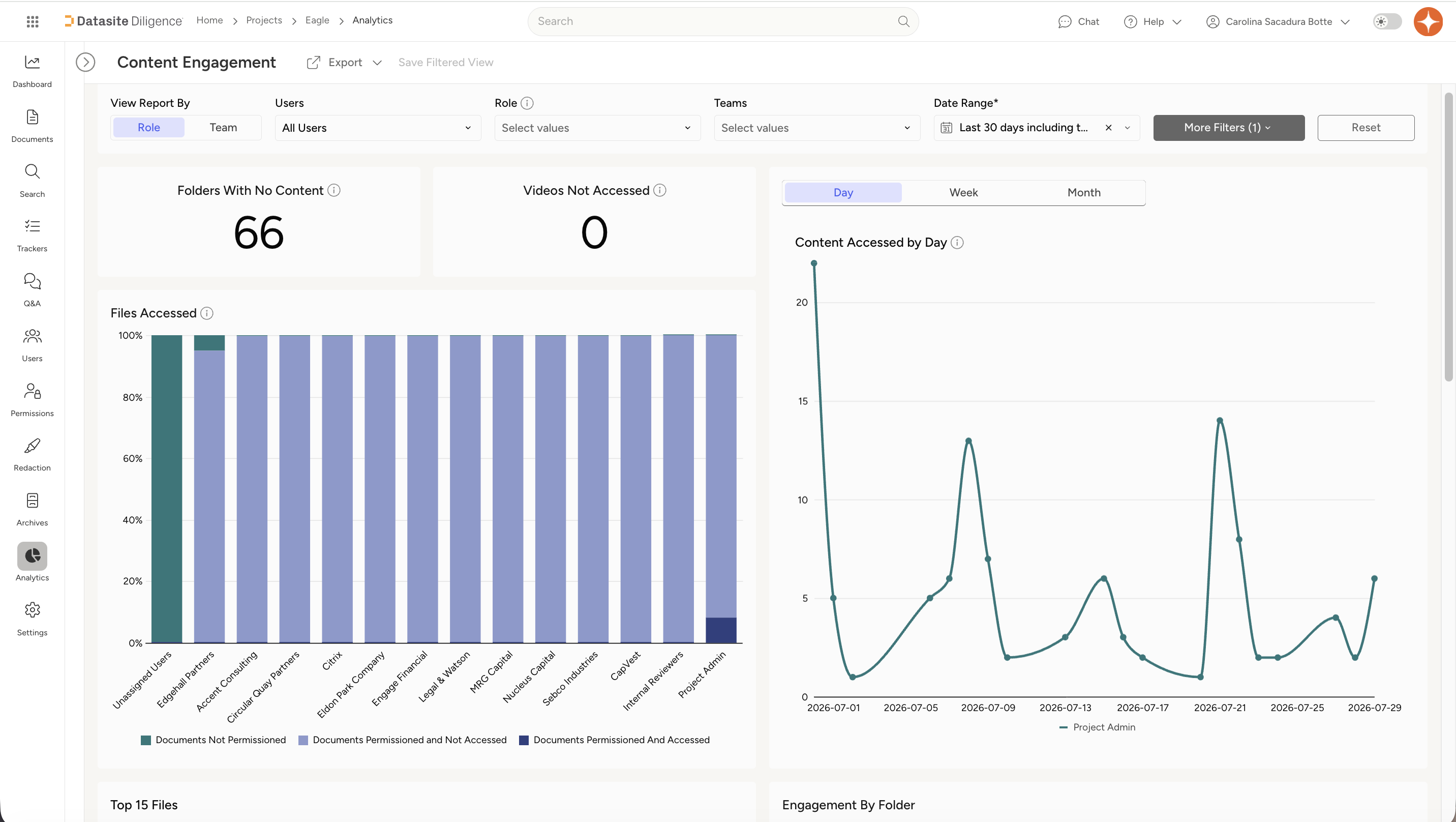
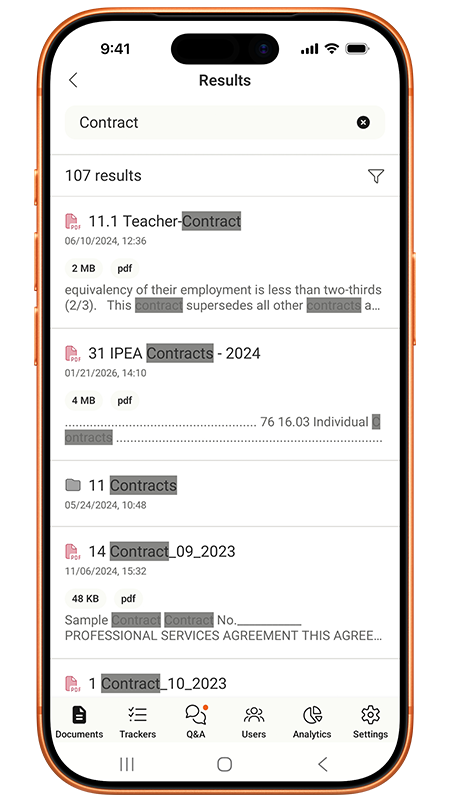
Datasite Diligence is a sell-side virtual data room, a secure online repository for sharing confidential documents during transactions. The platform supports document review, collaboration, and monitoring of deal activity.
N/A
SpecFlow
Score10 out of 10
N/A
SpecFlow is an open source BDD for .NET. that aims to bridge the communication gap between domain experts and developers by binding readable behavior specifications to the underlying implementation.
Datasite is well suited for organizing large quantities of a variety of documents into folders. It is not as well suited for Xcel, which generally requires downloading in order to review, but there are quick preview options for Word and PDF items.
A de minimis incentive was given to thank the reviewer for their time. The incentive was not used to bias or drive a particular response, nor was the incentive contingent on a positive endorsement. More Info
It is best suited for implementing the automated test cases in a human readable form so it's easy for non-technical members of the team and stakeholders to understand the test cases, features and the functionalities of the application. Automation of Integration tests and End to End tests are good use case. It is less appropriate or situations where the focus is only on the writing and maintenance of unit tests.
A de minimis incentive was given to thank the reviewer for their time. The incentive was not used to bias or drive a particular response, nor was the incentive contingent on a positive endorsement. More Info
User-friendly interface. We download datarooms for a single deal over 30+ times per deal (as the dataroom gets updated), so the interface being easy to access / navigate is extremely important.
Features: Datasite Diligence Virtual Data Room gives great tools beyond just downloading a dataroom. Easy notifications when something gets downloaded, two factor authentication, ability to search data room or filter for recently uploaded files, etc.
Organization: A lot of data rooms do not allow you to keep organized file paths. When you download a dataroom it often looses all the index folder names. Datasite Diligence Virtual Data Room keeps files extremely organized and is always available.
A de minimis incentive was given to thank the reviewer for their time. The incentive was not used to bias or drive a particular response, nor was the incentive contingent on a positive endorsement. More Info
Versatility to be used in combination with different kinds of automated testing like automated performance testing, API testing, UI testing etc. I use JavaScript, Selenium, C#, email testing libraries, database testing libraries in combination with BDD with SpecFlow. I am able to use all these with SpecFlow to make my automation framework to be able to automate any kind of automated testing.
It provides different widely used runner options like NUnit, XUnit etc. Before I started to work on establishing proper test automation in my workplace, the previous automation framework (non-BDD based) as well as unit tests used NUnit runner. The transition to using BDD was smooth because we could use the same runner and there were no compatibility issues.
The auto-complete feature is good. I use it with Visual Studio as well as Rider and I don't have to recall the entire Gherkin statements. I just type a few words and the entire Gherkin statement implemented in framework is auto-suggested by SpecFlow. It saves time and context switching.
A de minimis incentive was given to thank the reviewer for their time. The incentive was not used to bias or drive a particular response, nor was the incentive contingent on a positive endorsement. More Info
Major feature I noticed in other datarooms that's missing in Datasite Diligence Virtual Data Room is bulk download feature. I can select multiple files/folders under a parent folder, however, I would like to be able to download selected files/folders from among multiple folders.
Another feature I'd love to see is a "New*" menu item in Q&A, just like we have in the Documents section correctly. I know I can still use the date to filter the latest answered questions, but having the "New" option makes it a lot easier to do a quick filter. My idea is that this option will show all activity that I haven't looked at since my last login, irrespective of date.
A de minimis incentive was given to thank the reviewer for their time. The incentive was not used to bias or drive a particular response, nor was the incentive contingent on a positive endorsement. More Info
SpecFlow does not accepts optional input variables in the methods defined during Gherkin statement implementation. Cucumber supports optional input variables in the methods defined during Gherkin statement implementation.
The tests identified while using SpecFlow with NUnit removes all white spaces in the scenario names. It makes the tests less readable. If the white spaces are not auto-removed, it would be much better for readability as well as their actual identification in the repository.
A de minimis incentive was given to thank the reviewer for their time. The incentive was not used to bias or drive a particular response, nor was the incentive contingent on a positive endorsement. More Info
It is my go to data room provider and I am super comfortable using it. I don't think I would want to use anything else since I can't trust them like I can trust Datasite
A de minimis incentive was given to thank the reviewer for their time. The incentive was not used to bias or drive a particular response, nor was the incentive contingent on a positive endorsement. More Info
It's easy to manoeuvre across. And you can just use the search bar at the top to find specific files, so you don't have to search through all the folders. Relevant in a big deal with lots of workstreams, such as CDD, FDD, ODD, RDD.
A de minimis incentive was given to thank the reviewer for their time. The incentive was not used to bias or drive a particular response, nor was the incentive contingent on a positive endorsement. More Info
A de minimis incentive was given to thank the reviewer for their time. The incentive was not used to bias or drive a particular response, nor was the incentive contingent on a positive endorsement. More Info
A de minimis incentive was given to thank the reviewer for their time. The incentive was not used to bias or drive a particular response, nor was the incentive contingent on a positive endorsement. More Info
A de minimis incentive was given to thank the reviewer for their time. The incentive was not used to bias or drive a particular response, nor was the incentive contingent on a positive endorsement. More Info
A de minimis incentive was given to thank the reviewer for their time. The incentive was not used to bias or drive a particular response, nor was the incentive contingent on a positive endorsement. More Info
While the other players might offer certain additional features over the Datasite Diligence Virtual Data Room, the cost justification does not exist for any of those features. A secure data room at the cost of offering that is provided and the level of security functions make it at par with the other competitors and hence a go to choice for any organisation's requirements
A de minimis incentive was given to thank the reviewer for their time. The incentive was not used to bias or drive a particular response, nor was the incentive contingent on a positive endorsement. More Info
SpecFlow is .Net based which supports C#. Behave is Python based. Cucumber is Java based. Ghost Inspector is no-code based but provides very limited testing features. We wanted to implement BDD so we rued out using Ghost Inspector. Most of the developers in my team are C# experts so it was decided for everyone's comfort to go for SpecFlow rather than Behave or Cucumber. It's import to have technical experts in the language of the automation framework because there are many situations where the solutions to the test automation needs are not straightforward and implementing those requires expertise in the related programming language.
A de minimis incentive was given to thank the reviewer for their time. The incentive was not used to bias or drive a particular response, nor was the incentive contingent on a positive endorsement. More Info
A de minimis incentive was given to thank the reviewer for their time. The incentive was not used to bias or drive a particular response, nor was the incentive contingent on a positive endorsement. More Info
A de minimis incentive was given to thank the reviewer for their time. The incentive was not used to bias or drive a particular response, nor was the incentive contingent on a positive endorsement. More Info
A de minimis incentive was given to thank the reviewer for their time. The incentive was not used to bias or drive a particular response, nor was the incentive contingent on a positive endorsement. More Info
Everyone stays on the same page regarding the behavior of existing functionalities whether it be technical or non-technical individuals. So there is less need for multiple people to get involved which saves time and thus money.
Reusing the same code through the implemented Gherkin statement saves test automation time and thus reduces cost.
We combine SpecFlow with other opensource testing technologies to make our automation framework more versatile which further saves costs for us.
A de minimis incentive was given to thank the reviewer for their time. The incentive was not used to bias or drive a particular response, nor was the incentive contingent on a positive endorsement. More Info