Eclipse is a free and open source integrated development environment (IDE).
N/A
IntelliJ IDEA
Score 9.2 out of 10
N/A
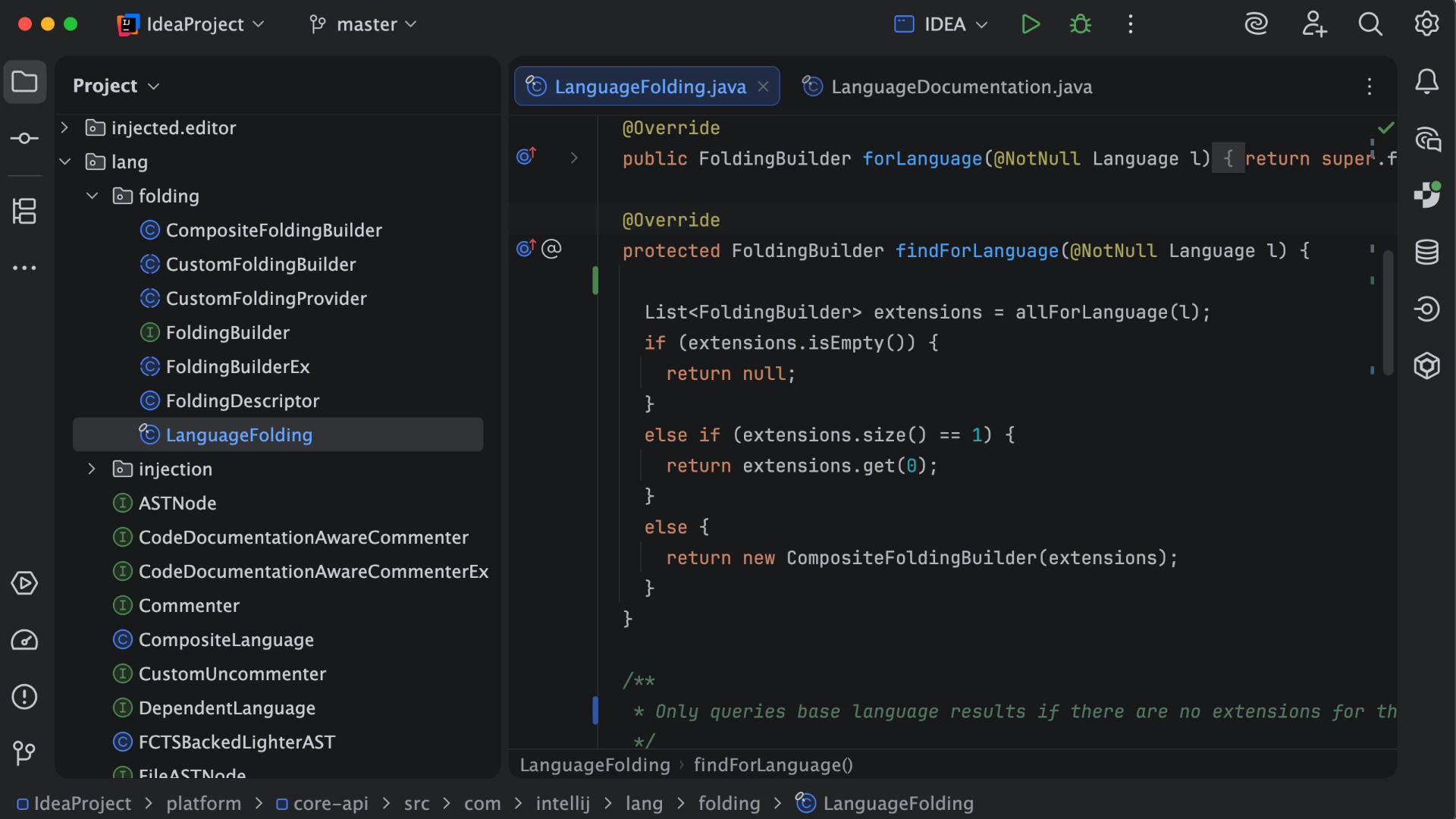
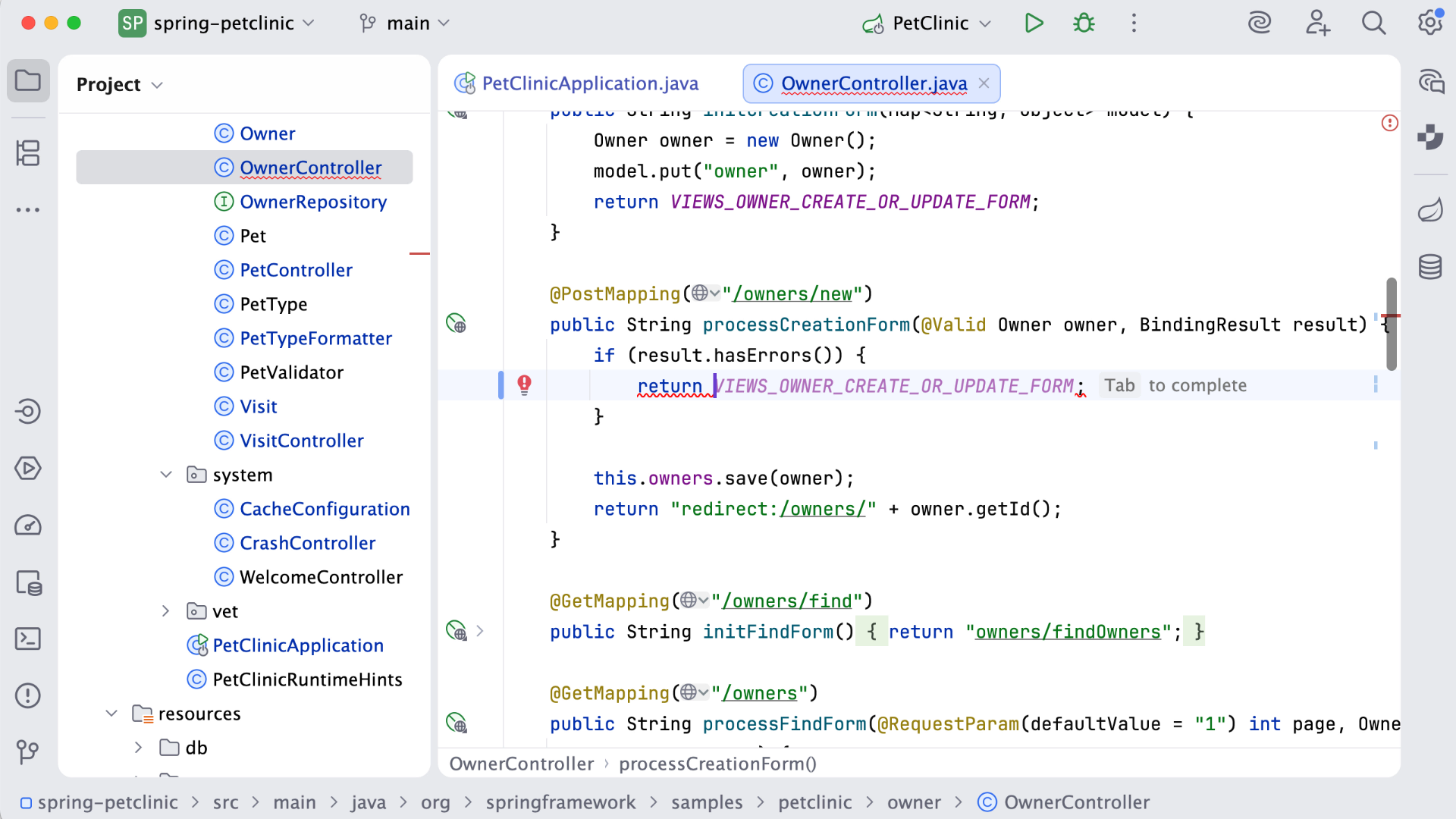
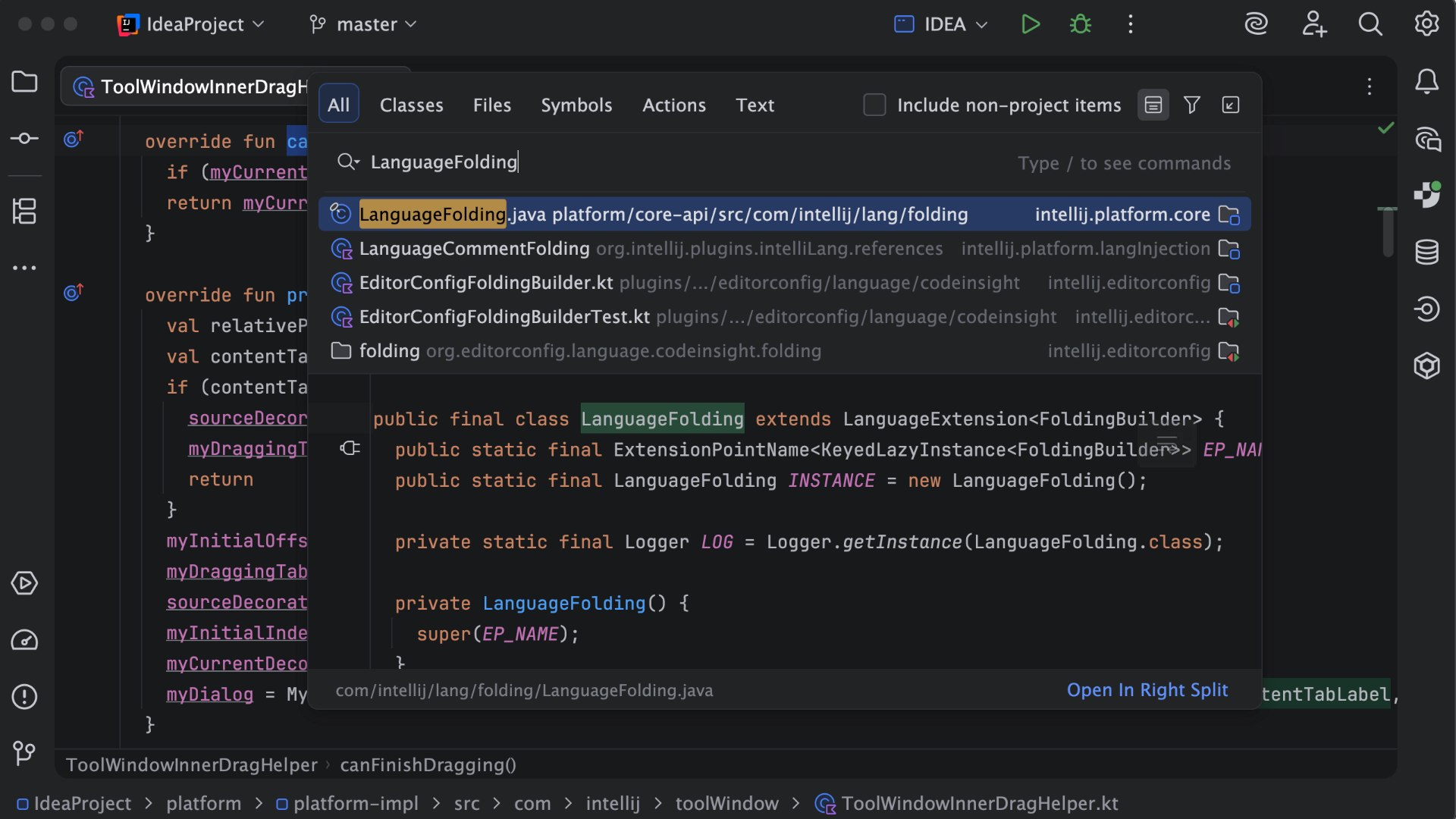
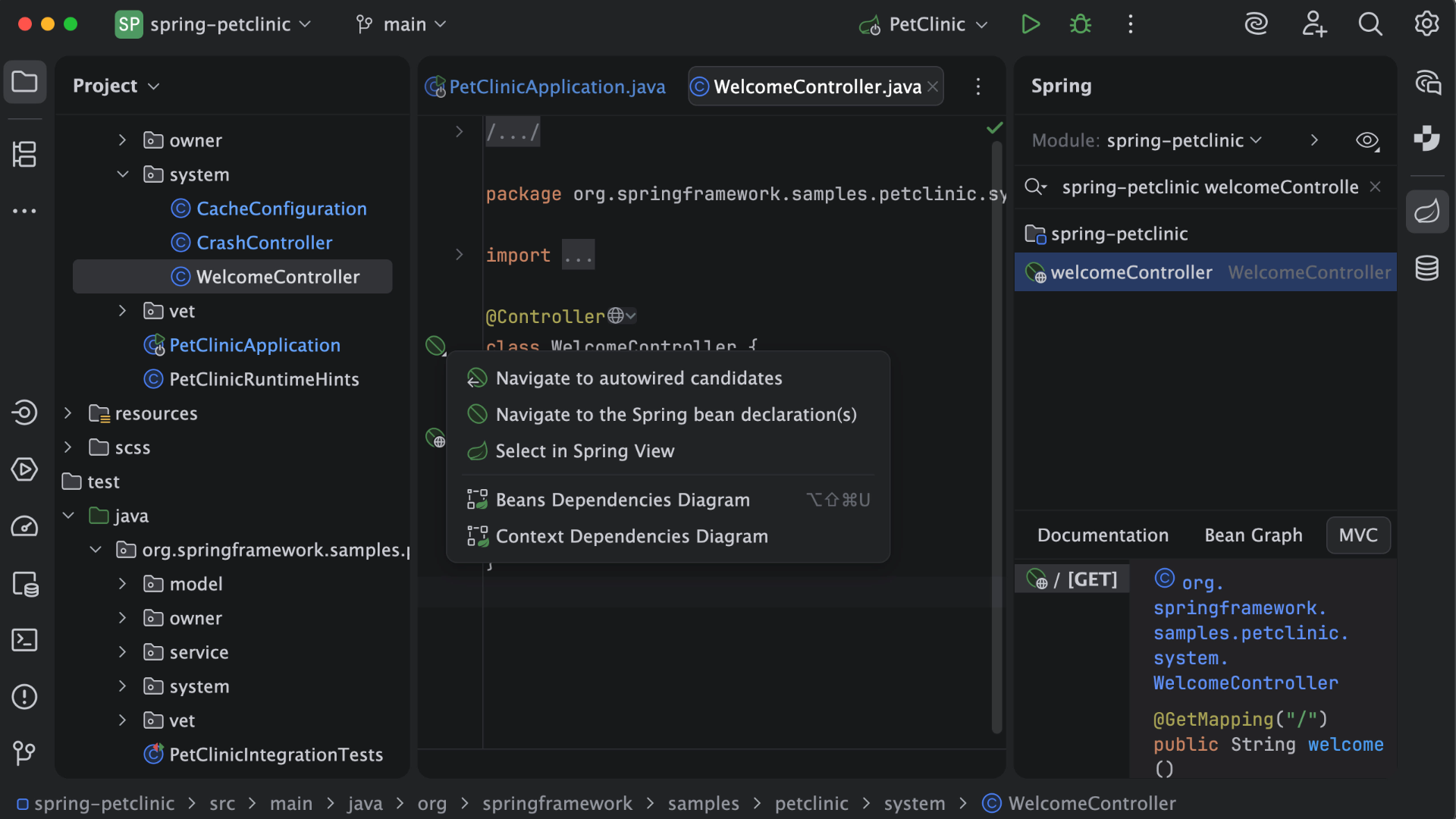
IntelliJ IDEA is an IDE that aims to give Java and Kotlin developers everything they need out of the box, including a smart code editor, built-in developer tools, framework support, database support, web development support, and much more.
$19.90
per month
NetBeans
Score 7.0 out of 10
N/A
NetBeans is a free and open source platform and integrated development environment (IDE).
N/A
Pricing
Eclipse
IntelliJ IDEA
NetBeans
Editions & Modules
No answers on this topic
For Individual Use (Monthly billing)
$19.90
per month
For Organizations (Monthly billing)
$71.90
per month
For Individual Use (Yearly billing)
$199
per year
For Organizations (Yearly billing)
$719
per year
No answers on this topic
Offerings
Pricing Offerings
Eclipse
IntelliJ IDEA
NetBeans
Free Trial
No
Yes
No
Free/Freemium Version
No
Yes
No
Premium Consulting/Integration Services
No
No
No
Entry-level Setup Fee
No setup fee
No setup fee
No setup fee
Additional Details
—
All Products Pack (For Individual Use) – $299 /1st year, $ 239 /2nd year and $ 179 /3d year onwards
All Products Pack (For Organizations) – $979 / year
NetBeans is the closest competitor I've found to Eclipse for Java development. IntelliJ IDEA is good as well but it isn't free. NetBeans is a free competitor that has split the Java community, and a lot of it comes down to preference, like the famous vim vs. emacs wars. I would …
Eclipse used to be the defacto standard for code development. But in recent years, as it has started focusing on its other products, like Orion and Che, it's core IDE (with focus on the 'I'), has seen a slowdown in its prominence. It cannot be compared to just the massive …
Eclipse and NetBeans are open-sourced and does not require a license to use the software. However, Eclipse has a wide selection of plugins to choose from to integrate any tools within the workspace, making development more accessible, and reducing the developer effort.
Eclipse beats all other Java IDEs in my honest opinion. I've tried NetBeans (among others) in the past for Java projects, but didn't see the same value which Eclipse provides. I have moved over to Visual Studio Code for Node.js, React Native and other JavaScript specific …
As compared to NetBeans, Eclipse is much faster. NetBeans needs to have JDK 1.8 which sometimes creates problems if your system already has a higher version installed, besides it has a glassfish server which is hard to configure. Integration of MySQL or other database is …
Verified User
Professional
Chose Eclipse
I think Eclipse is best for Java while the other products, for example, NetBeans, is good for PHP. Visual Studio is really good for C#. I would still say Eclipse is really good overall, but awesome for Java developers.
Eclipse stands out with its feature set, reliability, and being completely free of charge. I have previously used NetBeans but had reliability issues with it, at least on Windows version. IDEA has modern UI and is significantly more user friendly than Eclipse; however, the free …
Compared to IntelliJ IDEA, Eclipse is free of charge and that is the main advantage for me. Over the time I got used to Eclipse, I didn't want to switch even though I could, because all I need is there and it works like a charm. Compared to NetBeans, I found the community of …
Eclipse is far better than NetBeans. But when compared to IntellijIdea Eclipse is a good choice when it comes to handling large projects and costs. Eclipse has room to improve on its UI and IntelliSense.
1. Eclipse is easy to use. 2. when you are new to building something you can go for Eclipse as it provides a clean UI. 3. Provide support to connect with other tools and technology.
IntelliJ is a good IDE as well. Any motivated user can't go wrong focusing on one and then deeply learning it, and it will pay off in productivity. Note of course that one is free the other is not! I find Eclipse is stronger at managing very large projects.
Above all, the great variety of plugins that eclipse offers you for your developments, allowing you to consume personalized libraries that can help you in your development.
Also its implementation is simpler and faster allowing you to establish a development environment even …
They are both great IDEs and we use both. IntelliJ may have a larger community so there are more plugins available, which means it could be a better choice for some specific types of projects.
As previously said, Eclipse is one of the most complete and useful tools for Java development. And as a plus, it's open-source and free, so you won't beat that price-quality relation. When starting with Java projects, you won't fail with Eclipse. But, if you are getting into …
First thing, Eclipse is free. So zero cost as compared to other alternatives. Eclipse has tons of tools/plugins for better development/testing, helping devs, making their lives easier.
Eclipse offers all the features in the other IDEs but without any cost. It also is memory efficient as compared to other IDEs. Various themes are available in eclipse and we can customize it according to our needs very easily. The Windows Toolkit allows us to build desktop …
As I already said, Eclipse might not have all the features supported by IntelliJ. However, the variety of plugins available in Eclipse make it much flexible to work with. Another main reason to go for this product was because of price (free). Since I worked for a startup, the …
Eclipse was used for 3-5 years until IntelliJ became the more preferred IDE because IntelliJ has better code formatting, presentation, and navigation between different types of files. IntelliJ has a shorter learning curve and setup is easier especially for less experienced …
These are all very similar in what they can do, and so they all stack up very similarly. I personally have found that Eclipse did a little bit better when it came to programming with java and so that is why we went with it for the classes coding in Java.
Eclipse is the best IDE on the market for Java development. It has great error and warning handling, and many integrations with useful tools - debugger, sonarqube (static code analysis), Maven / Gradle / Ant, Tomcat / Wildfly / JBoss (web servers). The best part of eclipse is …
I used IDEA prior to using Eclipse. I loved how easy I can debug in both, but the debugging feature in IDEA is just way more polished then Eclipse. Other than that, Eclipse was easy to setup and start with.
For no license, Eclipse is a very good start. IntelliJ has much greater support and tools for many things like connecting to all kinds of databases and SaaS platform such as Salesforce. Code refactoring is also very cool on IntelliJ compared to Eclipse. For Python and Django …
Since we are primarily a Scala shop, I only evaluated other tools based on their support for Scala. As I hinted at before, Vim and Sublime Text 3 have practically no support for Scala as all the Scala plugins that worked were never finished and abandoned and only work for Scala …
IntelliJ is a full featured IDES and has the most advanced set of features for developing web and desktop applications. It supports integration of the Spring framework which is necessary for web development. It supports web app scripting languages and web development …
I have used Eclipse also in the past. But it is slow compared to IntelliJ, it does not offer as many features as IntelliJ offers, and the integrations with third-party tools is not great. But they are open-source and they don't charge anything whereas IntelliJ charges $500 per …
Against competition I can say about IntelliJ that:
1. It is definitely faster and efficient than other IDEs. Comparing with Eclipse it emerges as a clear winner in terms or raw performance. 2. More feature Rich with great support for modern technologies. It has great support for …
UI--IntelliJ IDEA is the winner. IntelliSense--Again, IntelliJ IDEA is the winner. Performance and CPU usage - IntelliJ IDEA has a lot of room to improve on this. Eclipse handle the large projects more effectively than IntelliJ IDEA.
Microsoft Visual Studio Code (VS) requires a lot of textual configuration, where IntelliJ IDEA provides a graphical interface with configuration options displayed. This matters a lot to me as I don't want to hunt around the internet to remember how to set different parameters …
Previously we were using Eclipse but due to the ease of understanding and easy to navigate user interface with drop downs, wizards they are better in IntelliJ moreover for experienced developers migrating to IntelliJ as compared to Eclipse. It has an easy to understand UI and …
Eclipse is just so old, like a dinosaur, compared to IntelliJ. There are still formats that Eclipse supports better, especially old and/or propriety ones. Still, most of the modern software development needs can be done on IntelliJ, & in a much better way, some of them are not …
IntelliJ stacks better against Eclipse or vs code because it provides better code suggestions, out-of-the-box SonarLint integration, and built-in support for version control with git. It also has a vast collection of plugins that can increase developer productivity, reduce …
In summary, IntelliJ is more polished and feature-rich out of the box, especially for Java development. Eclipse is extensible but can be rougher around the edges. IntelliJ costs money for advanced features, while Eclipse is free. IntelliJ offers many developers a better …
Back in the day, there weren't too many PHP IDEs with proper syntax and code checks, but PHPStorm and IDEA worked great. So great that when I needed a Java IDE the next time, I gave it a go and have never looked back since (okay, I did keep checking the competition and …
It is much more friendly to use and has more features in terms of leading to more efficient and productive software engineers. I prefer the interface as well as the code Completion/code refactoring and error suggestions
Compared to the other alternatives, IntelliJ is more complete, modern and robust. The other alternatives are dated and do not have features that exist by default in IntelliJ.
IntelliJ surpassed every single competitor. The only viable alternative I still use is VisualStudio Code build in a browser for demo purposes... other than that, IDEA does everything better, faster, and in a more comfy way. This is the best IDE out there. This is just as good …
IntelliJ IDEA includes FTP deployment which is ideal for legacy web applications and simple projects that don't use CI/CD. The outline view which lists methods within a class (ColdFusion component) is the easiest to use out of any other IDE and makes navigating large files a …
They are memory friendly. The boot-up really fast as compared to IntelliJ IDE. Open-source and freely available to use is one of the major reasons if someone can switch from IntelliJ. Vast community support is available in case of any issue. They occupy less space as compared …
I originally began coding with Eclipse, but found debugging to be difficult to implement; switched to NetBeans and never really looked back. When coding for specific projects (for instance Android or a Java class ) Eclipse seems to have a better foothold on integration of …
NetBeans is easier to use. It has a simpler UI and it's more similar with other IDEs than Eclipse. I never liked Eclipse's workspace concept, with NetBeans you just have projects. Overall I would say using NetBeans requires less learning since it's UI is more logical and you …
I have been using NetBeans for many years and I am very comfortable with it. NetBeans is a Java IDE and for different languages such as PHP, Javascript, JavaFX, C / C ++, etc. unlike Eclipse, which is more useful only for Java. NetBeans helps the developer to develop their …
NetBeans goes with other IDE's in market like Eclipse, Rational Application Development and more.
I prefer NetBeans since it's a lighter version than RAD and Eclipse for building/developing Java and J2EE applications. It also has dynamic support for JavaScript, HTML, PHP.
IntelliJ IDEA is more feature-rich and has professional support available, but comes with increased licensing costs.
Eclipse is widely used, and some of our developers still prefer Eclipse over NetBeans. However, developers spend more time working around IDE bugs when using Eclip…
NetBeans is open source and is freely available to use making it economical compared to Visual Studio IDE. It is fast compared to Visual Studio IDE. More Diversified Libraries are available with NetBeans to work on as compared to the Eclipse IDE. It can be used even by novices …
Netbeans has a larger number of plugins than Eclipse does which makes development easier. It provides a lot of support for enterprise Java based applications. It has a powerful user interface which makes it easier to navigate through the software. It provides support for the …
I would say NetBeans only shines when it comes to smaller projects. I prefer using Eclipse and Intellij over NetBeans when it comes to developing larger projects.
It works very smoothly as compared to other tools . The problem of restarting and reimporting the projects is not in the netbeans IDE . The front end development features are good . Netbeans connector is one of the best thing which enables us to deeply integrate netbeans IDE …
Netbeans is great as a stand-alone java ide and for compiling your java code. The platform provides easy access to better make use of your repos. Between the other ide, NetBeans is easier for us to integrate with android SDK. The only problem is the UI and for all other code …
It is supported primarily by Oracle and is free. This is a very important plus. Also, many things come embedded. You don't have to worry about adding library or framework. Finally, one of my favorite features is you can design the interface with drag and drop. This feature is …
All above mentioned is good for web development and Netbeans is an IDE which can do a lot more than normal text editors. File navigation is also easy in Netbeans.
I think that if someone asked me for an IDE for Java programming, I would definitely recommend Eclipse as is one of the most complete solutions for this language out there. If the main programming language of that person is not Java, I don't think Eclipse would suit his needs[.]
This is a superb tool if your project involves a lot of backend development, especially in Java/Spring Boot and Kotlin. The support for the front end is great as well, but some developers may prefer to use the GitHub copilot add-on. I especially love using the GitHub copilot add-on. It may be less appropriate if your project requires heavy use of HotSwaps for backend debugging, as sometimes the support for that can be limited.
NetBeans is extremely user friendly and easy to start developing complex applications. Adding and configuring external libraries is much simpler than in Eclipse. It is highly cost effective and most of the latest framework based libraries required are automatically downloaded to the projects. The overall tool is also light weight and consumes less memory as compared to other competitor tools.
Unit testing: Fully integrated into IntelliJ IDEA. Your unit tests will run smoothly and efficiently, with excellent debugging tools for when things get tricky.
Spring integration: Our Spring project using Maven works flawlessly in IntelliJ IDEA. I know firsthand that Apache is also easily and readily supported too. The integration is seamless and very easy to set up using IntelliJ IDEA's set up wizard when importing new projects.
Customization: IntelliJ IDEA comes out of the box with a bunch of handy shortcuts, as well as text prediction, syntax error detection, and other tools to help keep your code clean. But even better is that it allows for total customization of shortcuts you can easily create to suit your needs.
While the DB integration is broad (many connectors) it isn't particularly deep. So if you need to do serious DB work on (for example) SQL Server, it is sometimes necessary to go directly to the SQL Server Studio. But for general access and manipulation, it is ok.
The syntax formatting is sometimes painful to set up and doesn't always support things well. For example, it doesn't effectively support SCSS.
Using it for remote debugging in a VM works pretty well, but it is difficult to set up and there is no documentation I could find to really explain how to do it. When remote debugging, the editor does not necessarily integrate the remote context. So, for example, things like Pylint don't always find the libraries in the VM and display spurious errors.
The debugging console is not the default, and my choice is never remembered, so every time I restart my program, it's a dialog and several clicks to get it back. The debugging console has the same contextual problems with remote debugging that the editor does.
NetBeans [should] work smoothly with systems having less RAM. Systems with less RAM face trouble with NetBeans.
File open history also requires improvement. Once NetBeans is restarted, all files are closed automatically and there is no shortcut to open last opened files.
I love this product, what makes it one of the best tool out in the market is its ability to function with a wide range of languages. The online community support is superb, so you are never stuck on an issue. The customization is endless, you can keep adding plugins or jars for more functionalities as per your requirements. It's Free !!!
VS Code is maturing and has a Scala plugin now. The overall experience with VS Code - for web development at least - is very snappy/fast. IntelliJ feels a bit sluggish in comparison. If that Scala plugin for VS Code is deemed mature enough - we may not bother renewing and resort to the Community Edition if we need it.
It has everything that the developer needs to do the job. Few things that I have used in my day-to-day development 1. Console output. 2. Software flash functionality supporting multiple JTAG vendors like J-LINK. 3. Debugging capabilities like having a breakpoint, looking at the assembly, looking at the memory etc. this also applies to Embedded boards. 4. Plug-in like CMake, Doxygen and PlantUML are available.
There is always room for improvement, but I haven't met any IDE that I liked more so far. Even if it did not fit a use case right out of the box, there is always a way to configure how it works to do just that.
Netbeans enhances my coding work, shows me where I have errors and helps find variable instances. I would be lost without find/replace in projects functionality as I use projects as templates for new projects. Occasionally the code hints aggravate me, but I understand that it is actually making me a better coder, working to get the 'green light' of a clean file with no errors or clumsy code.
I gave this rating because Eclipse is an open-source free IDE therefore no support system is available as far as I know. I have to go through other sources to solve my problem which is very tough and annoying. So if you are using Eclipse then you are on your own, as a student, it is not a big issue for me but for developers it is a need.
Customer support is really good in the case of IntelliJ. If you are paying for this product then, the company makes sure that you will get all the services adequately. Regular update patches are provided to improve the IDE. An online bug report makes it easier for the developers to find the solution as fast as possible. The large online community also helps to find the various solutions to the issues.
NetBeans has a very strong user community. We can find solutions here for almost all the problems we face. In addition, we can forward NetBeans Support teams the problems we cannot solve. We can get quick feedback from the support teams, but I generally try to solve my problems by following the forums.
This installs just like any other application - its pretty straight forward. Perhaps licensing could be more challenging - but if you use the cloud licensing they offer its as simple as having engineers login to the application and it just works.
The installation, adaptability, and ease of usage for Eclipse are pretty high and simple compared to some of the other products. Also, the fact that it is almost a plug and play once the connections are established and once a new user gets the hang of the system comes pretty handy.
Eclipse is just so old, like a dinosaur, compared to IntelliJ. There are still formats that Eclipse supports better, especially old and/or propriety ones. Still, most of the modern software development needs can be done on IntelliJ, & in a much better way, some of them are not even supported on Eclipse.
It works very smoothly as compared to other tools . The problem of restarting and reimporting the projects is not in the netbeans IDE . The front end development features are good . Netbeans connector is one of the best thing which enables us to deeply integrate netbeans IDE with google chrome browser
This development environment offers the possibility of improving the productivity time of work teams by supporting the integration of large architectures.
It drives constant change and evolution in work teams thanks to its constant versioning.
It works well enough to develop continuous server client integrations, based on solid or any other programming principle.
By working on Netbeans I just learned one more tool and can teach others about it. One should learn every tool so that it might help someday if another editor is not available and you have to use different software for your work.
Compiling code became easy as it is not a feature of normal text editors. Only IDE can do this.