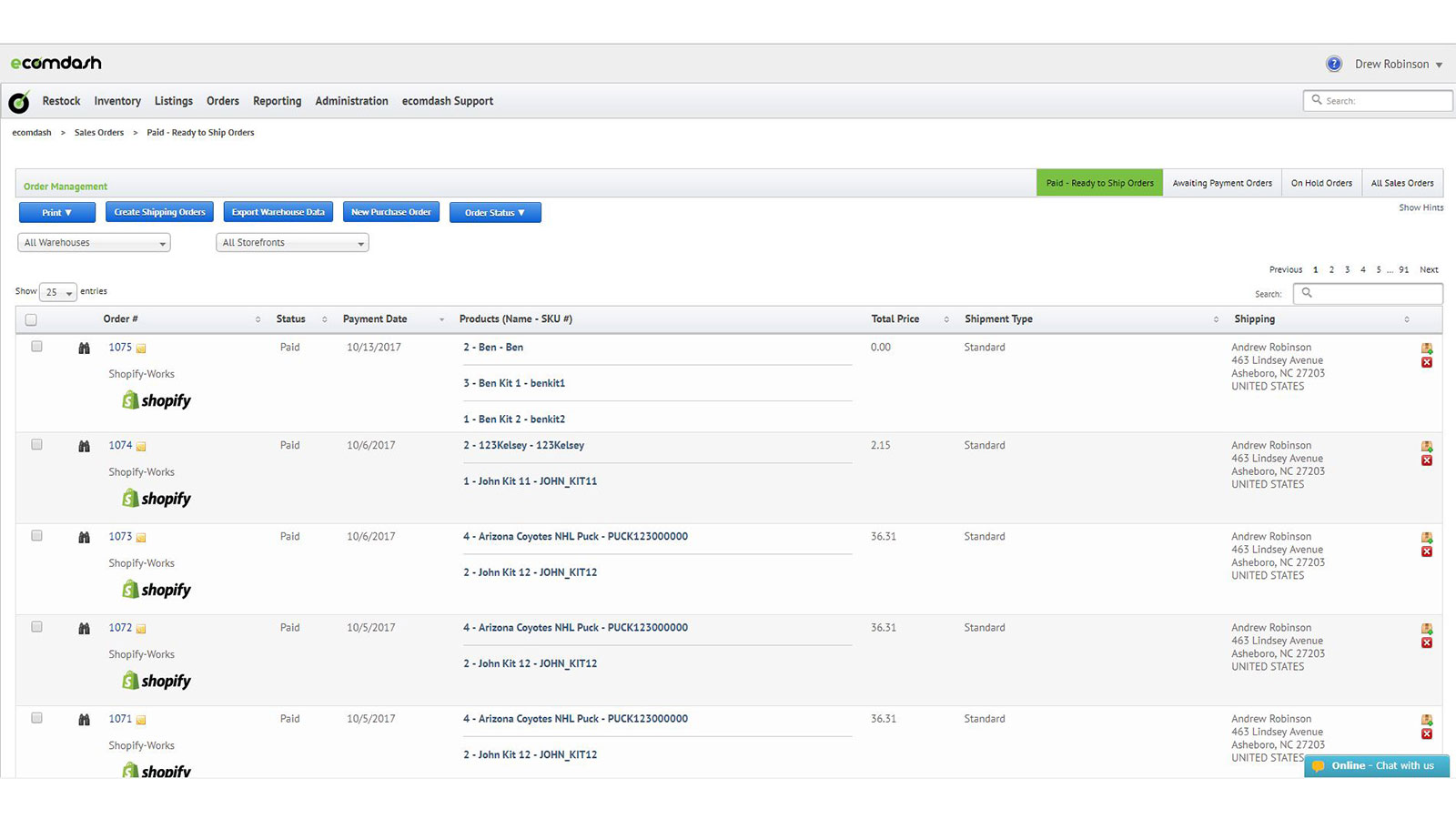
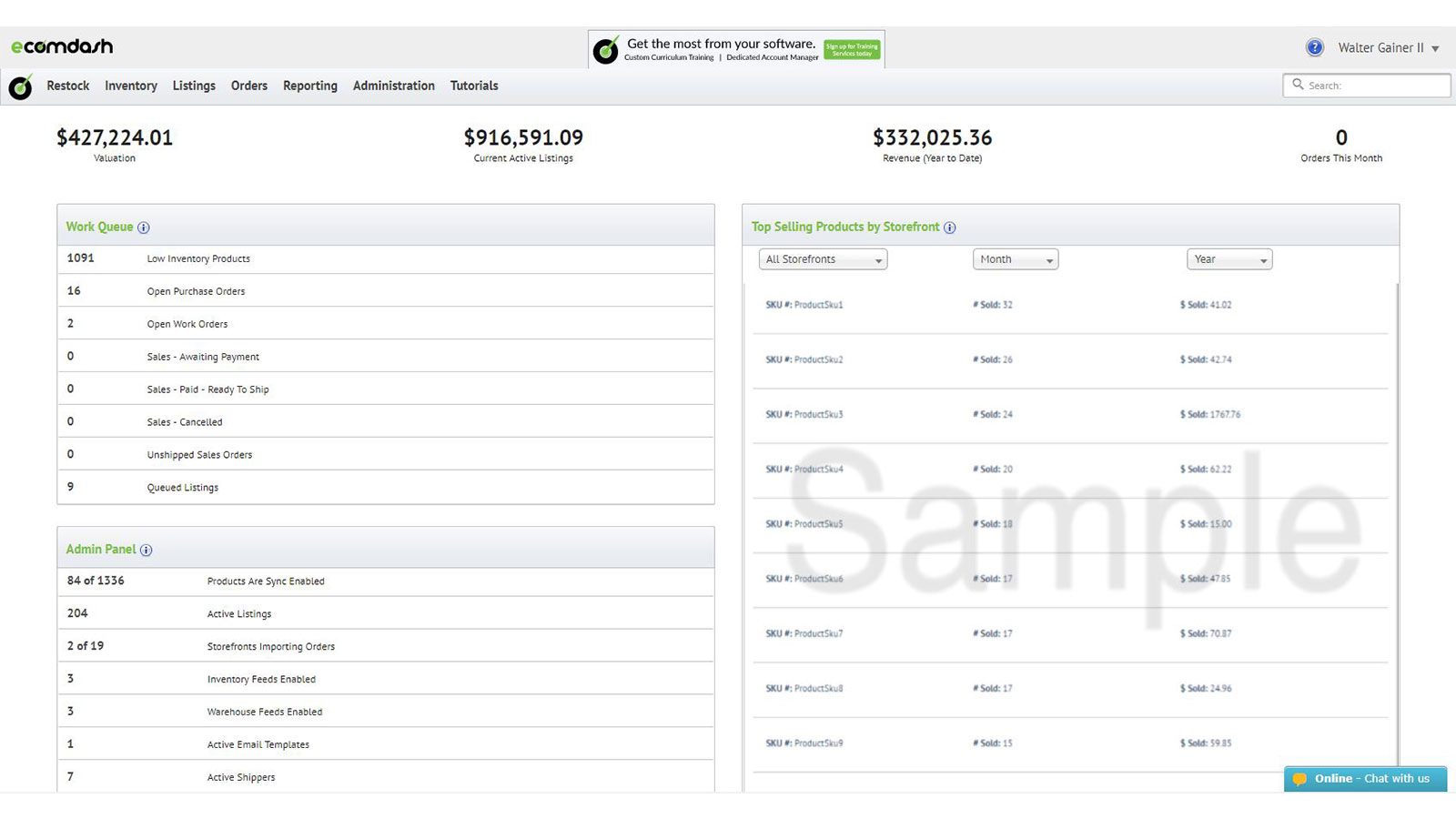
ecomdash is a cloud-based inventory management solution that aims help online retailers save time and money, improve profit margins and optimize inventory control. This solution includes several web-based tools that are designed to make managing an e-commerce business simple and efficient.
N/A
IBM Digital Commerce
Score9 out of 10
N/A
IBM Digital Commerce is an e-commerce platform that is designed to deliver omni-channel shopping experiences, including mobile, social, and in-store. In June 2019, IBM Digital Commerce was acquired by HCL Technologies.
N/A
Pricing
ecomdash
IBM Digital Commerce
Editions & Modules
No answers on this topic
No answers on this topic
Offerings
Pricing Offerings
ecomdash
IBM Digital Commerce
Free Trial
Yes
No
Free/Freemium Version
No
No
Premium Consulting/Integration Services
Yes
No
Entry-level Setup Fee
$50
No setup fee
Additional Details
Ecomdash starts at $50/Month.
—
More Pricing Information
Features
ecomdash
IBM Digital Commerce
Online Storefront
Comparison of Online Storefront features of ecomdash and IBM Digital Commerce
Feature
ecomdash
-
Ratings
IBM Digital Commerce
7.6
3 Ratings
3% below category average
Product catalog & listings
00 Ratings
8.03 Ratings
Product management
00 Ratings
8.03 Ratings
Bulk product upload
00 Ratings
8.03 Ratings
Branding
00 Ratings
8.03 Ratings
Mobile storefront
00 Ratings
8.03 Ratings
Product variations
00 Ratings
8.03 Ratings
Website integration
00 Ratings
8.03 Ratings
Visual customization
00 Ratings
8.03 Ratings
CMS
00 Ratings
4.02 Ratings
Online Shopping Cart
Comparison of Online Shopping Cart features of ecomdash and IBM Digital Commerce
Feature
ecomdash
-
Ratings
IBM Digital Commerce
6.0
3 Ratings
24% below category average
Abandoned cart recovery
00 Ratings
6.02 Ratings
Checkout user experience
00 Ratings
6.03 Ratings
Online Payment System
Comparison of Online Payment System features of ecomdash and IBM Digital Commerce
Feature
ecomdash
-
Ratings
IBM Digital Commerce
6.0
3 Ratings
33% below category average
eCommerce security
00 Ratings
6.03 Ratings
eCommerce Marketing
Comparison of eCommerce Marketing features of ecomdash and IBM Digital Commerce
Feature
ecomdash
-
Ratings
IBM Digital Commerce
7.0
3 Ratings
9% below category average
Promotions & discounts
00 Ratings
7.03 Ratings
Personalized recommendations
00 Ratings
7.03 Ratings
SEO
00 Ratings
7.03 Ratings
eCommerce Business Management
Comparison of eCommerce Business Management features of ecomdash and IBM Digital Commerce
It would be well suited for a business that is just starting out with inventory management and sells on multiple channels. They are a growing company that is constantly changing and making improvements. I don't think there is another competitor out there that can offer the same features at their price point. It may not be well suit for large organizations.
A de minimis incentive was given to thank the reviewer for their time. The incentive was not used to bias or drive a particular response, nor was the incentive contingent on a positive endorsement. More Info
I think WebSphere Commerce is well suited for customers looking to sell products online that need robustness and scalability as a priority. It provides a complete order cycle out of the box, or you can integrate with your existing order fulfillment. Online shopping models like digital subscriptions or a marketplace are not well suited as it requires a lot of customization
A de minimis incentive was given to thank the reviewer for their time. The incentive was not used to bias or drive a particular response, nor was the incentive contingent on a positive endorsement. More Info
A de minimis incentive was given to thank the reviewer for their time. The incentive was not used to bias or drive a particular response, nor was the incentive contingent on a positive endorsement. More Info
A de minimis incentive was given to thank the reviewer for their time. The incentive was not used to bias or drive a particular response, nor was the incentive contingent on a positive endorsement. More Info
A de minimis incentive was given to thank the reviewer for their time. The incentive was not used to bias or drive a particular response, nor was the incentive contingent on a positive endorsement. More Info
The e-Marketing spots contain content associated with marketing activities to target customer segment - needs some improvement. The algorithm to set up the priority of each of the Web Activity with in eMarketing spot is little bit confusing.
The catalog load can be simplified.
WebSphere Commerce is a huge application - someone needs to spend at least 5-6 years to learn about the whole application.
A de minimis incentive was given to thank the reviewer for their time. The incentive was not used to bias or drive a particular response, nor was the incentive contingent on a positive endorsement. More Info
The scalability and various configurations of the product allows for a wide range of e-commerce site features. It provides a storefront to begin with so it helps with speeding up development.
A de minimis incentive was given to thank the reviewer for their time. The incentive was not used to bias or drive a particular response, nor was the incentive contingent on a positive endorsement. More Info
eComdash always answers our questions, and they have a call-back system to speak on the phone which is very convenient. The people there actually understand the complexities of the software and understand our problems when we explain them. Things get solved quickly and we feel like they care about the speed of the resolution.
A de minimis incentive was given to thank the reviewer for their time. The incentive was not used to bias or drive a particular response, nor was the incentive contingent on a positive endorsement. More Info
A de minimis incentive was given to thank the reviewer for their time. The incentive was not used to bias or drive a particular response, nor was the incentive contingent on a positive endorsement. More Info
IBM Digital Commerce was a lot more customizable and had a good engine for us to make enhancements. We were not locked down to certain integrations and we were able to utilize a lot of the features outside of the box vs using a prescribed set of features and functionality that other tools would force us to use
A de minimis incentive was given to thank the reviewer for their time. The incentive was not used to bias or drive a particular response, nor was the incentive contingent on a positive endorsement. More Info
A de minimis incentive was given to thank the reviewer for their time. The incentive was not used to bias or drive a particular response, nor was the incentive contingent on a positive endorsement. More Info
A de minimis incentive was given to thank the reviewer for their time. The incentive was not used to bias or drive a particular response, nor was the incentive contingent on a positive endorsement. More Info