Google App Engine is Google Cloud's platform-as-a-service offering. It features pay-per-use pricing and support for a broad array of programming languages.
$0.05
Per Hour Per Instance
Microsoft Azure
Score 8.4 out of 10
N/A
Microsoft Azure is a cloud computing platform and infrastructure for building, deploying, and managing applications and services through a global network of Microsoft-managed datacenters.
$29
per month
OCI
Score 8.1 out of 10
N/A
Oracle Cloud Infrastructure (OCI) is Oracles's infrastructure-as-a-service (IaaS) platform which combines the utility of public cloud with the granular control, security, and predictability of on-premises infrastructure.
N/A
Pricing
Google App Engine
Microsoft Azure
Oracle Cloud Infrastructure
Editions & Modules
Starting Price
$0.05
Per Hour Per Instance
Max Price
$0.30
Per Hour Per Instance
Developer
$29
per month
Standard
$100
per month
Professional Direct
$1000
per month
Basic
Free
per month
No answers on this topic
Offerings
Pricing Offerings
Google App Engine
Microsoft Azure
OCI
Free Trial
No
Yes
Yes
Free/Freemium Version
Yes
Yes
Yes
Premium Consulting/Integration Services
No
No
Yes
Entry-level Setup Fee
No setup fee
No setup fee
Optional
Additional Details
—
The free tier lets users have access to a variety of services free for 12 months with limited usage after making an Azure account.
Compared with Microsoft Azure, Google App Engine requires a more complicated development environment setup. It's not as simple as using Visual Studio 2015 with Azure SDK. There are multiple IDE on the market to choose from for developing apps for Google App Engine. JetBrains …
If you have a small team which is also responsible for development of the product then surely go for it. And if you have a larger team with dedicated person to take care of deployments. Go for cheaper options such as compute engine or AWS (be sure to do your research on pricing …
We were on another much smaller cloud provider and decided to make the switch for several reasons - stability, breadth of services, and security. In reviewing options, GCP provided the best mixtures of meeting our needs while also balancing the overall cost of the service as …
I think that Microsoft and Amazon are simply investing more in their offerings, and there are a bunch of cool PaaS solutions out there as well. Google App Engine is solid, and is probably the right choice for some projects. But ultimately one should evaluate each platform …
We have settled with Microsoft Azure considered its effective administration and the ability to data visualization and analysis, together with the top-notch security/stability.
We did an proof of concept between Oracle Cloud Infrastructure, Amazon Web Service and Microsoft Azure. Oracle Cloud Infrastructure was the clear winner with us because of support of the product. The Oracle Cloud Infrastructure support staff was very knowledgeable and helpful …
We used Microsoft Azure and Docker earlier and faced some difficulties like Microsoft Azure and Docker. Occasionally, the generation of large images can delay deployment. It is also necessary for me to admit that Microsoft Azure and Docker have a somewhat steep learning curve. …
Oracle Cloud Infrastructure (OCI) competes with several major cloud providers, including Amazon Web Services (AWS), Microsoft Azure, Google Cloud Platform (GCP), and others.Here is why we consider selecting Oracle Cloud Infrastructure: Strong for Oracle Workloads, …
Microsoft Azure Cloud does not provide the native Oracle Database service with features like RAC, ASM Exadata, etc. Hence, we decided to use the Oracle Cloud for the database platform instead of Azure. Also, Microsoft and Azure came to an agreement to work together where Azure …
Oracle Cloud Infrastructure (OCI) competes effectively with cloud giants like AWS, Azure and GCP. OCI's standout features include robust security and compliance measures, transparent pricing with cost optimization tools, high-performance computing capabilities, seamless …
When compared to AWS, Azure, and Veem, Oracle Cloud Infrastructure appeared to have a more robust offering for our primary objective of Disaster Recovery. The Oracle single click disaster recovery plan creation tool was especially beneficial as this is our first true …
Oracle Cloud Infrastructure excels in website hosting Oracle workloads. It gives optimized infrastructure and database offerings for Oracle Database, making it a natural preference for businesses heavily reliant on Oracle technology. Oracle Cloud Infrastructure's close …
Compared to its competitors, Oracle Cloud Infrastructure is the best solution for autonomous databases which reduces the overall operational burden on the team. It is best suited for regulated industries like Banking due to its enhanced compliance and security along with its …
In one liner, Oracle Cloud Infrastructure is second only to AWS in terms of cost effectiveness. But availability wise and performance wise it is at par with Amazon Web Services. Acquia Cloud doesn't have much comparison against Oracle Cloud Infrastructured as the later is …
I think Oracle Cloud Infrastructure has a long way to go to be at par with AWS, GCP & Azure infrastructure that have an established presence and repute proving functionality beyond what it has for Oracle databases
While AWS and Azure are more mature than Oracle Cloud Infrastructure, we felt Oracle Cloud Infrastructure had a lower barrier to entry with a greater range of always-free services. It also provides free certification opportunities periodically which incentivised our engineers …
Honestly, It is much easier to use and operate your workloads on other cloud providers than Oracle, however, Oracle Cloud Infrastructure main advantage is its existence in some different countries/regions where others haven't established a foothold yet, making its cloud …
We use Azure for most of company deployments, since we use Microsoft stack, but since we also use Oracle databases we were able to test OCI and compare the usage. I use OCI to test new features and solutions.
App Engine is such a good resource for our team both internally and externally. You have complete control over your app, how it runs, when it runs, and more while Google handles the back-end, scaling, orchestration, and so on. If you are serving a tool, system, or web page, it's perfect. If you are serving something back-end, like an automation or ETL workflow, you should be a little considerate or careful with how you are structuring that job. For instance, the Standard environment in Google App Engine will present you with a resource limit for your server calls. If your operations are known to take longer than, say, 10 minutes or so, you may be better off moving to the Flexible environment (which may be a little more expensive but certainly a little more powerful and a little less limited) or even moving that workflow to something like Google Compute Engine or another managed service.
Azure is particularly well suited for enterprise environments with existing Microsoft investments, those that require robust compliance features, and organizations that need hybrid cloud capabilities that bridge on-premises and cloud infrastructure. In my opinion, Azure is less appropriate for cost-sensitive startups or small businesses without dedicated cloud expertise and scenarios requiring edge computing use cases with limited connectivity. Azure offers comprehensive solutions for most business needs but can feel like there is a higher learning curve than other cloud-based providers, depending on the product and use case.
As per our usage Oracle Cloud Infrastructure for almost 6 years hosting 500 + customers I can say its well suited application for any small scale to larger scale application as it can handle that capacity and provide more reliable cloud service only if you need any messaging service like pub/sub or sqs better to consider other services.
Microsoft Azure is highly scalable and flexible. You can quickly scale up or down additional resources and computing power.
You have no longer upfront investments for hardware. You only pay for the use of your computing power, storage space, or services.
The uptime that can be achieved and guaranteed is very important for our company. This includes the rapid maintenance for security updates that are mostly carried out by Microsoft.
The wide range of capabilities of services that are possible in Microsoft Azure. You can practically put or create anything in Microsoft Azure.
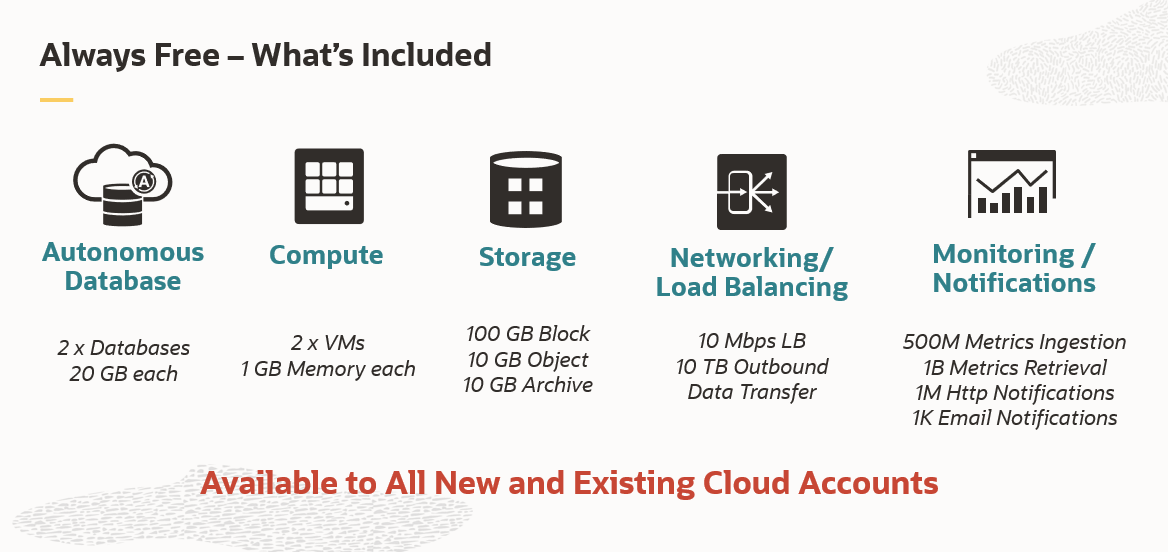
Oracle Cloud Infrastructure has a generous free tier, moreso than other hyperscalers, with an always-free tier that guarantees certain products are always free
Oracle Cloud Infrastructure allows you to size VMs with differing combinations of CPU and RAM, which is contrary to other hyperscalers that have specific pre-defined combinations only
There is a slight learning curve to getting used to code on Google App Engine.
Google Cloud Datastore is Google's NoSQL database in the cloud that your applications can use. NoSQL databases, by design, cannot give handle complex queries on the data. This means that sometimes you need to think carefully about your data structures - so that you can get the results you need in your code.
Setting up billing is a little annoying. It does not seem to save billing information to your account so you can re-use the same information across different Cloud projects. Each project requires you to re-enter all your billing information (if required)
The cost of resources is difficult to determine, technical documentation is frequently out of date, and documentation and mapping capabilities are lacking.
The documentation needs to be improved, and some advanced configuration options require research and experimentation.
Microsoft's licensing scheme is too complex for the average user, and Azure SQL syntax is too different from traditional SQL.
Navigating the UI takes lots of getting used to. It reminds me of older GCP (just to get used to where everything is).
Permission for different things always seemed to be more difficult than it really needed to be. Once you got them set up you were good but updating anything or creating new permissions for just about anything took longer than I thought it should.
Based on how the buttons were laid out, it was pretty easy to delete all of your DNS records, and backing them up was not as intuitive as I'd like with the UI, but it was easy to do using a script.
App Engine is a solid choice for deployments to Google Cloud Platform that do not want to move entirely to a Kubernetes-based container architecture using a different Google product. For rapid prototyping of new applications and fairly straightforward web application deployments, we'll continue to leverage the capabilities that App Engine affords us.
Moving to Azure was and still is an organizational strategy and not simply changing vendors. Our product roadmap revolved around Azure as we are in the business of humanitarian relief and Azure and Microsoft play an important part in quickly and efficiently serving all of the world. Migration and investment in Azure should be considered as an overall strategy of an organization and communicated companywide.
Reliability: Very dependable and stable OCI services have been for the business operations.Performance: The speed and efficiency of OCI in meeting their computing and storage needs.Scalability: The ease and effectiveness of scaling resources up or down to accommodate changing demands.Security: The robustness and effectiveness of OCI's security features in protecting their data and applications.
I had to revisit the UI after a year of just setting up and forgetting. The UI got some improvements but the amount of navigation we have to go through to setup a new app has increased but also got easier to setup. Gemini now is integrated and make getting answers faster
As Microsoft Azure is [doing a] really good with PaaS. The need of a market is to have [a] combo of PaaS and IaaS. While AWS is making [an] exceptionally well blend of both of them, Azure needs to work more on DevOps and Automation stuff. Apart from that, I would recommend Azure as a great platform for cloud services as scale.
The services & products in Oracle Cloud Infrastructure needs more improvement to beat other Cloud service providers. The price is good & Security processes are good. We are requiring to put more effort in supporting this Oracle Cloud Infrastructure than other Cloud service providers. Probably better ways are there but is not super easy to find or not super available
Yeah sometimes we had to face unplanned outages due to underlying infrastructure issues, so not every time,e but once in a while we face issues with availability. But the good thing is we have redundancy with DR setup and multi region so we can manage.
From the start, I was surprised by response times and image quality accessing windows VMs with RDP. GCP, Azure and -many offerings in AWS- don't perform this speed. Also, that's evident in the quality of Infrastructure Management Team, because I just received one warning regarding a region failure, what confirms that's a mature platform.
Good amount of documentation available for Google App Engine and in general there is large developer community around Google App Engine and other products it interacts with. Lastly, Google support is great in general. No issues so far with them.
We were running Windows Server and Active Directory, so [Microsoft] Azure was a seamless transition. We ran into a few, if any support issues, however, the availability of Microsoft Azure's support team was more than willing and able to guide us through the process. They even proposed solutions to issues we had not even thought of!
Overall it is amazing, there is always room for improvement. We have weekly updates that tend to slow the program used more and more. We had to change some reports within Oracle because the others wouldn’t load. This is tied to our payroll and the delays are causing many time constraint issues and panic. We have to create a new report when one breaks. Otherwise awesome!
As I have mentioned before the issue with my Oracle Mismatch Version issues that have put a delay on moving one of my platforms will justify my 7 rating.
We were on another much smaller cloud provider and decided to make the switch for several reasons - stability, breadth of services, and security. In reviewing options, GCP provided the best mixtures of meeting our needs while also balancing the overall cost of the service as compared to the other major players in Azure and AWS.
As I continue to evaluate the "big three" cloud providers for our clients, I make the following distinctions, though this gap continues to close. AWS is more granular, and inherently powerful in the configuration options compared to [Microsoft] Azure. It is a "developer" platform for cloud. However, Azure PowerShell is helping close this gap. Google Cloud is the leading containerization platform, largely thanks to it building kubernetes from the ground up. Azure containerization is getting better at having the same storage/deployment options.
We used Microsoft Azure and Docker earlier and faced some difficulties like Microsoft Azure and Docker. Occasionally, the generation of large images can delay deployment. It is also necessary for me to admit that Microsoft Azure and Docker have a somewhat steep learning curve. Proper paperwork needs to be there. Docker has issues with performance on a number of platforms. On the other hand, OCI is easy to deploy and easy to understand.
was not part of initial purchase team. Anyways, i think unit pricing and billing frequency is good compared to other Cloud service providers, when it comes to Cloud Capital expenditure & Operational expenditure. Would be more interested in exploring more options where customers can get more cost relaxations on trying out new cloud services in Oracle Cloud Infrastructure for example a new App or a feature
We have hosted around 500 + customers on this cloud so till day not faced any major issues, so we can use it for any kind of products and it can hold the load and easily scale based on need.
Services & Infra wise is ok to use & host applications & services. Security wise also good for a Cloud service provider. It is a interesting area to explore & using it for day to day needs can be further improvised in future probably. Modern day Services like AI and Machine learning could be improved
Effective integration to other java based frameworks.
Time to market is very quick. Build, test, deploy and use.
The GAE Whitelist for java is an important resource to know what works and what does not. So use it. It would also be nice for Google to expand on items that are allowed on GAE platform.
For about 2 years we didn't have to do anything with our production VMs, the system ran without a hitch, which meant our engineers could focus on features rather than infrastructure.
DNS management was very easy in Azure, which made it easy to upgrade our cluster with zero downtime.
Azure Web UI was easy to work with and navigate, which meant our senior engineers and DevOps team could work with Azure without formal training.