The Google Cloud CDN is touted as a low cost option with tight integration with Google Cloud apps and services.
N/A
Pantheon
Score 9.8 out of 10
N/A
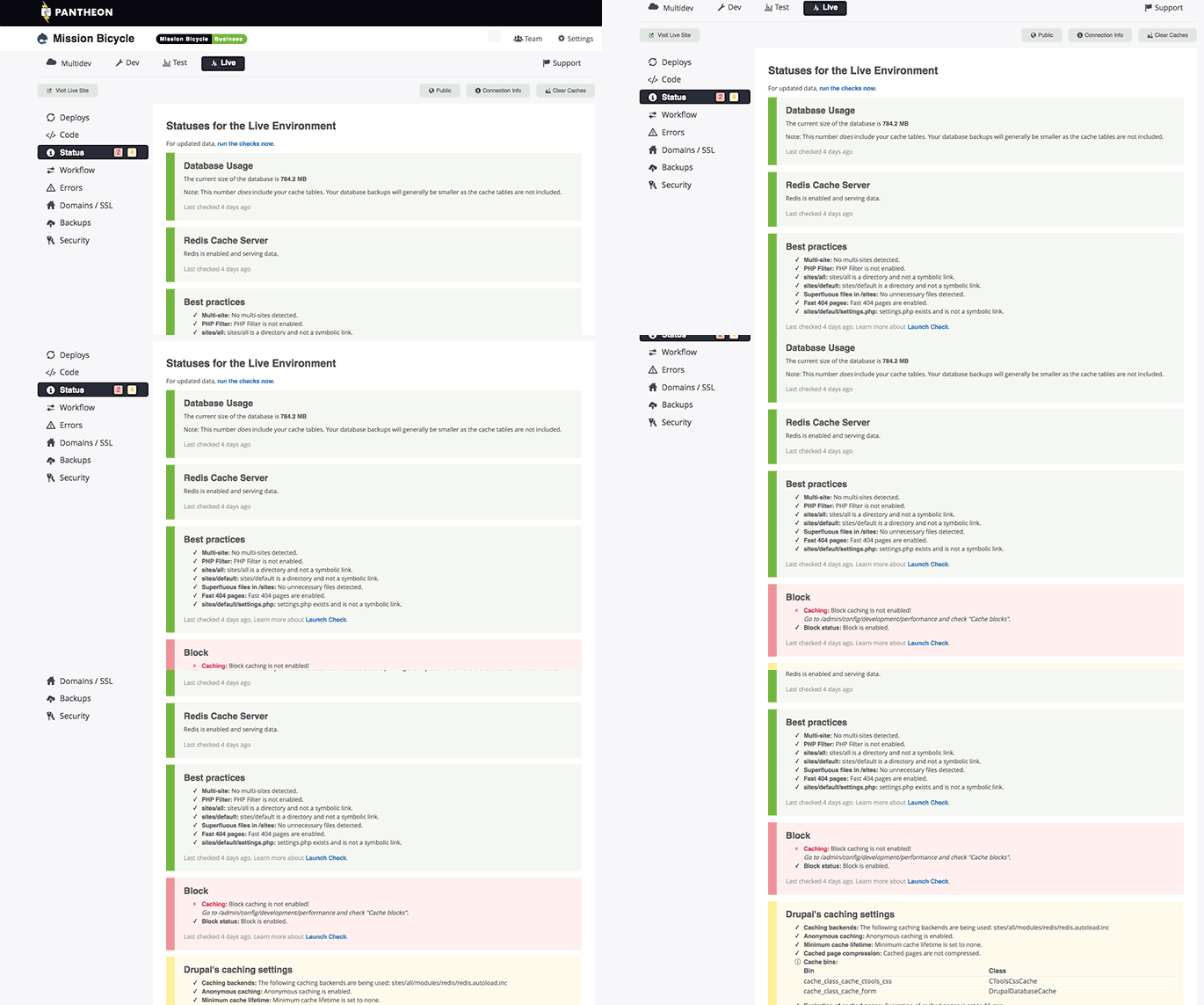
Pantheon is a WebOps platform where marketers and developers collaborate to drive results. The vendor states that with Pantheon, site owners maximize their capacity to update website design and functionality, responding to market trends, catering to consumer behavior, and adding real value to the business's bottom line. Today, companies compete on the basis of digital experiences, and the best results emerge from an agile build-test-learn process. Whether it's publishing content,…
$29
per month
Upsun
Score 9.9 out of 10
N/A
Platform.sh helps companies of all sizes, from SaaS entrepreneurs looking to build, run, and scale their websites and web applications.
Acquia was terrible. We use DigitalOcean for some all-purpose computing needs and Platform.sh for an application that does more computing and high-throughput processing where we do not want page views (API calls) to count against our usage.
We use several hosting solutions depending on the client needs or what they were already setup on. Pantheon is very similar to them and offers similar services however one of the main features we use is the Multidev service which allows us to test pieces of work separately and …
In our team we use Platform.sh mostly while sites are in developmental phase. Then we do a lift and shift to either Acquia or AWS depending on the type of sites we have. Platform.sh is really cost effective and more fluid in terms of Continuous Development hence the usage. …
Google Cloud CDN is available globally and supports various load balancers available in different regions around the globe, so I find Google Cloud CDN as one of the best choices for CDN as it serves globally and it is really fast, safe, and secure. It might be not suitable for you if you do not have any technical background.
Pantheon is excellent for medium-large websites that require high availability and a managed workflow. It would be inappropriate for small websites because of the cost or for situations where more control of the environment is appropriate. We find it useful because we rarely do anything outside of the Drupal application.
In our organisation we are the only team that uses Platform.sh to host any site. This was a cost effective way for us as we were using Acquia Cloud earlier for these websites. We mostly use Platform.sh for those sites which are always in development as it is simpler and faster to handle these operations in Platform.sh. Then we do a lift and shift to Acquia as we move more towards the go live and post production maintenance side.
The intelligent categorization and management of site content cache in Google Cloud CDN is unique and offers the best results with simple settings.
It has powerful servers in all geographical regions of the world and the speed of the site will increase many times for the customer with smart routing.
It has AnyCast IP feature and website receives a single global IP address. In this case, the site loads at the same speed worldwide.
Platform.sh is not for beginners in my opinion. It has a good amount of learning curve in my opinion.
As this is a PaaS, teams habituated with cloud infrastructure may miss the server side support from their cloud teams. I believe you will have to work on server bugs more on your own.
During normal maintenance periods, integrations may fail if you are working on your sites in that time, in my experience.
There is not really an interface for managing rules directly, compared to market leaders, Google's implementation is probably strong on the technical side but for the average user it might be lacking. There are no advanced features which can be compared to what other leaders in the CDN sector are providing or they can be achieved but with high implementation cost and usage of other products in the Google Cloud suite
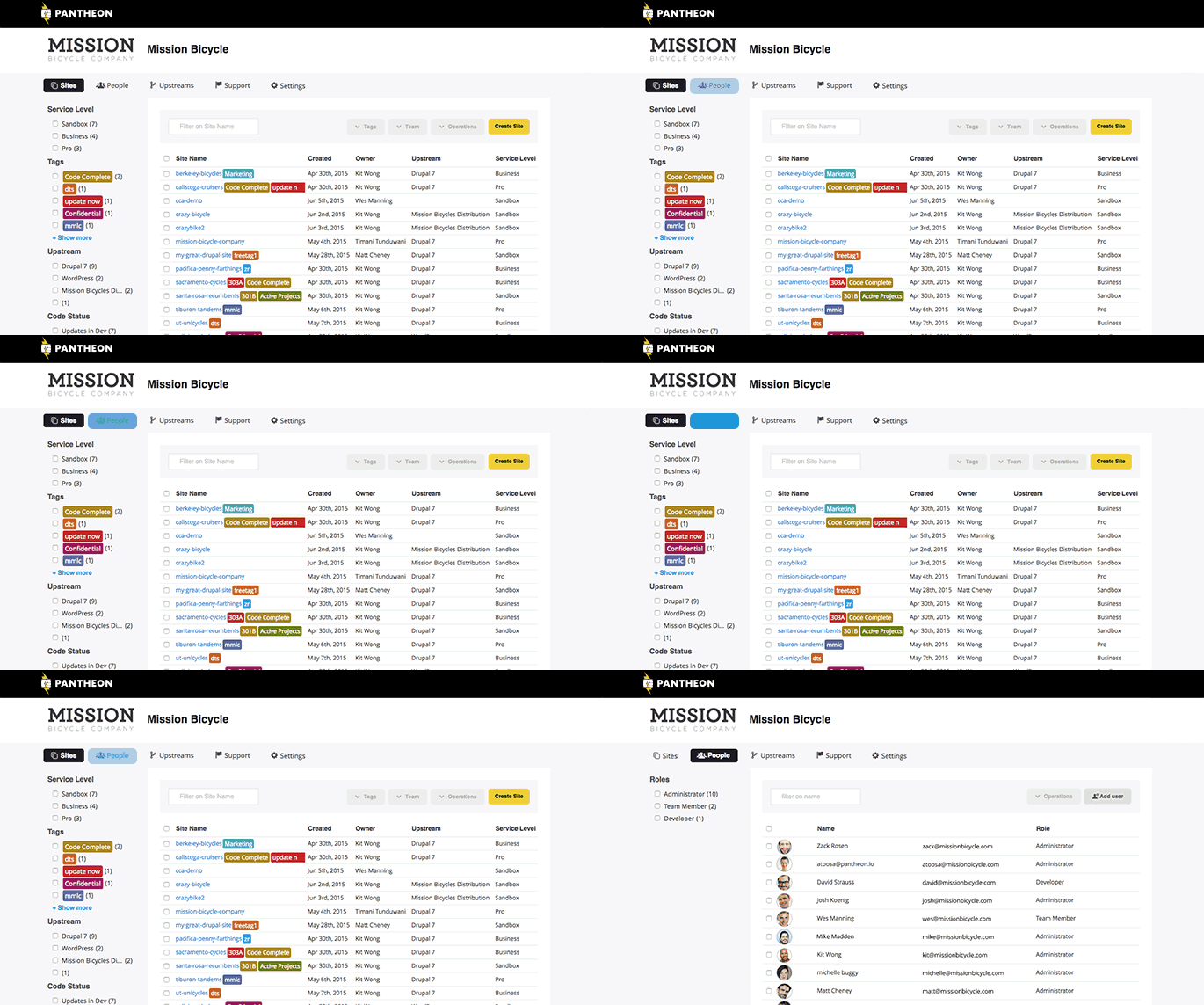
Pantheon is an easy system, especially to the users with previous experience with other similar platform and the interface is clear enough to easily understand how things operates. On the Cloud deployment everything also works effectively and the technical team from Pantheon community are very helpful on providing the necessary assistant to their customers.
I didn't have the need to use support from Google when I was either testing or setting up my website. Information was easily found by searching online if I needed to, and the options that I needed to install or enable were there on the setup page. Honestly, I was a former systems administrator so most of this stuff is not challenging for me.
Even tier 1 Pantheon chat and ticket support are knowledgeable, competent, and useful. They routinely understand and promptly resolve urgent, complex, and/or unusual issues that other hosts need to escalate to tier 2 or tier 3 support personnel. I honestly can't think of a truly negative or disappointing support experience in the years I've used Pantheon hosting for client websites.
We have limited software developers and don't have the need for a big cloud service provider along with their costs. Google Cloud CDN brings to usr, reliability and brand familiarity. Google Cloud CDN also doesn't bother us with pitches or 1000 emails about the products. We went and signed up for it, without dealing with a pushy salesperson.
Although it may seem a good fit for a company that needs extra control over the deployment process and development process, for a firm that is mainly concentrating on SEO, it would be an overkill. Pantheon provides that sweet automation that allows us to shed some weight on development and focus on our business activities.
In our team we use Platform.sh mostly while sites are in developmental phase. Then we do a lift and shift to either Acquia or AWS depending on the type of sites we have. Platform.sh is really cost effective and more fluid in terms of Continuous Development hence the usage. After said development is done, we generally lift and shift to Acquia for more content heavy sites and to AWS for more transaction oriented sites.