An enterprise-grade configuration management system that provides controlled access to software assets.
N/A
Ansible
Score 9.2 out of 10
N/A
The Red Hat Ansible Automation Platform (acquired by Red Hat in 2015) is a foundation for building and operating automation across an organization. The platform includes tools needed to implement enterprise-wide automation, and can automate resource provisioning, and IT environments and configuration of systems and devices. It can be used in a CI/CD process to provision the target environment and to then deploy the application on it.
$5,000
per year
Splunk Observability Cloud
Score 8.4 out of 10
N/A
Splunk Observability Cloud aims to enable operational agility and better customer experience through real-time AI-driven streaming analytics allowing accurate alerts in seconds. It is designed to shorten MTTD and MTTR by providing real-time visibility into cloud infrastructure and services.
IBM Rational ClearCase might be better suited for a smaller / simpler code base. Larger code bases really slow it down... but then again there are better alternatives out there for source control
Red Hat Ansible automates server management, configuration updates, and deployments across our server infrastructure, keeping everything consistent, reducing human error, and saving time. Also provides detailed reports on what is done and uses role-based access controls to keep systems secure by controlling who can make changes.
Its great if you need real-time visibility across complex or regulated environments. Also strong for hybrid or multi-cloud setups where uptime, observability and fast IR are required. It’s probably overkill for smaller teams or environments that don’t have constant changes or compliance reporting needs. It's expensive and has a steep learning curve. Also, in my opinion, do not get yourself into a consumption based model. Costs can certainly get out of control quickly.
Rational ClearCase is excellent for handling versioning and branching. No other tool I've used has the depth that ClearCase has when it comes to handling complex branching scenarios and identifying where certain versions of particular files are within a particular configuration.
Rational ClearCase handles parallel development of many dependent applications really well.
The use of ClearCase Views to switch between projects and configurations is extremely convenient as opposed to the local workstation model of the competitors.
It reduces custom scripting efforts because everything can be scripted in simple, human-readable YAML playbooks.
Not only servers, but also network devices, VMs, Containers, Kubernetes clusters, etc., can be automated via Ansible, showcasing its extensive list of supported devices.
It is agentless, which makes it lightweight and allows for easy integration into CI/CD and GitOps pipelines.
Many Tier-1 telcos use Ansible for Day 0/1/2 automation of RAN, transport, and core infrastructure (e.g., network function lifecycle management, NE configuration push, patching VNFs).
The first one is its Kubernetes container monitoring.
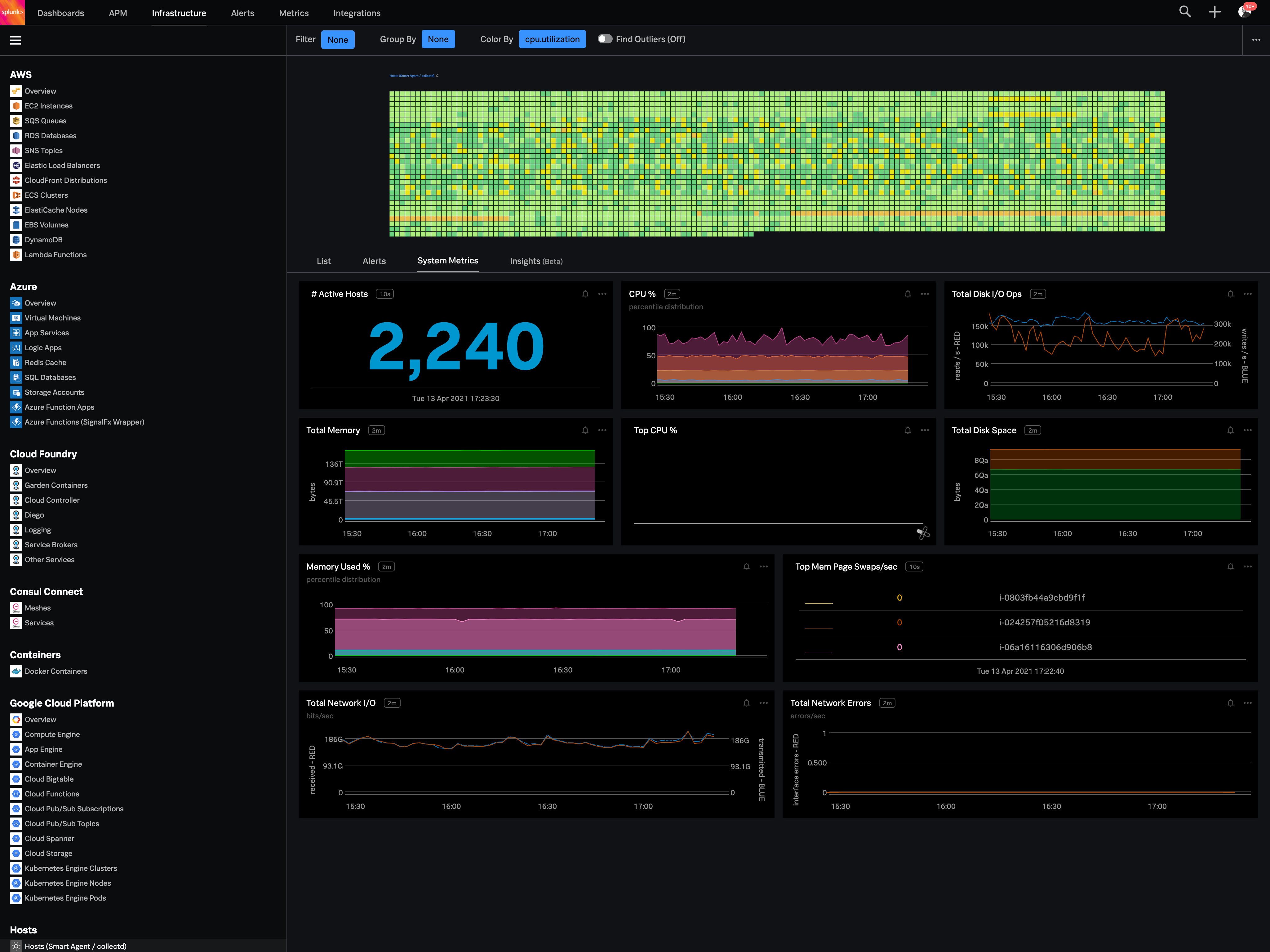
I really like this features because as we know how much K8s is vast and to manually monitor each part of the Kubernetes it takes so much time but Splunk Observability Cloud makes it easier. And even once we integrate K8s with Splunk Observability Cloud it gives us some prebuilt dashboards which gives holistic view of our Cluster and its nodes, pods, etc.
The dashbaord feature of Splunk Observability Cloud, it gives us full flexibility to customize our dashboard with a wide range of predefined chart types.
Now it also supports OTEL, which is a plus point for observability. As now everyone is moving towards Otel and in current market there are only few tools who supports OTEL based integrations, Splunk Observability Cloud is one out of them.
I can't think of any right now because I've heard about the Lightspeed and I'm really excited about that. Ansible has been really solid for us. We haven't had any issues. Maybe the upgrade process, but other than that, as coming from a user, it's awesome.
You can use table-like functionality to generate dashboards, but these queries are heavy on the system.
It could be easier to give insight into what type of line parsing is used for specific documents in a company-managed environment and/or show ways to gain the insights needed.
I would like to see ways to anonymize specific data for shared reports without pre-formatting this in a dashboard on which reports could be based.
Even is if it's a great tool, we are looking to renew our licence for our production servers only. The product is very expensive to use, so we might look for a cheaper solution for our non-production servers. One of the solution we are looking, is AWX, free, and similar to AAP. This is be perfect for our non-production servers.
Good: Stable system with low error rate Easy to use for simple use cases Bad: UI is not very clear for complex usage Mobile view (when logged in from phone) is bad No library for .net
Overall, the product is excellent, with daily-use features for both large and small infrastructure. Ansible does its job quickly and ensures compliance, keeping the environment up to date and safe from open vulnerabilities. Large-scale inventory management and license management. Industry standard followed by best practices to maintain continuity. Budget-friendly compared to other products.
When there is an issue, it’s a win if one can easily identify the root cause. To do the same, it should allow the user to dig deep with multiple data points and compare the data and identify the anomaly. In this use case, it’s good to drive from Splunk 011y.
Great in almost every way compared to any other configuration management software. The only thing I wish for is python3 support. Other than that, YAML is much improved compared to the Ruby of Chef. The agentless nature is incredibly convenient for managing systems quickly, and if a member of your term has no terminal experience whatsoever they can still use the UI.
There is a lot of good documentation that Ansible and Red Hat provide which should help get someone started with making Ansible useful. But once you get to more complicated scenarios, you will benefit from learning from others. I have not used Red Hat support for work with Ansible, but many of the online resources are helpful.
If development is centrallized to one location and your company releases hundreds of customized versions of your software per year, then ClearCase is the best tool for managing the complexity of multiple versions of customized software. If your company has globally distributed development, then I'd recommend Team Foundation Server over ClearCase. If your organization uses Agile Methodologies, then I'd recommend TFS with GIT.
AAP compares favorably with Terraform and Power Automate. I don't have much experience with Terraform, but I find AAP and Ansible easier to use as well as having more capabilities. Power Platform is also an excellent automation tool that is user friendly but I feel that Ansible has more compatibility with a variety of technologies.
Splunk Infrastructure Monitoring provides far superior options for anybody using a complex hybrid multi-cloud environment and allows both your SOC and NOC to work together on the same data while driving their own insights. We found other products are still in the old world view of servers and agents residing together within a single data centre, but modern apps are no longer like this.
POSITIVE: currently used by the IT department and some others, but we want others to use it.
NEGATIVE: We need less technical output for the non-technical. It should be controllable or a setting within playbooks. We also need more graphical responses (non-technical).
POSITIVE: Always being updated and expanded (CaC, EDA, Policy as Code, execution environments, AI, etc..)