IBM Maximo Application Suite is an enterprise asset management (EAM) platform.
N/A
Sage 100cloud
Score7.2 out of 10
Small Businesses (1-50 employees)
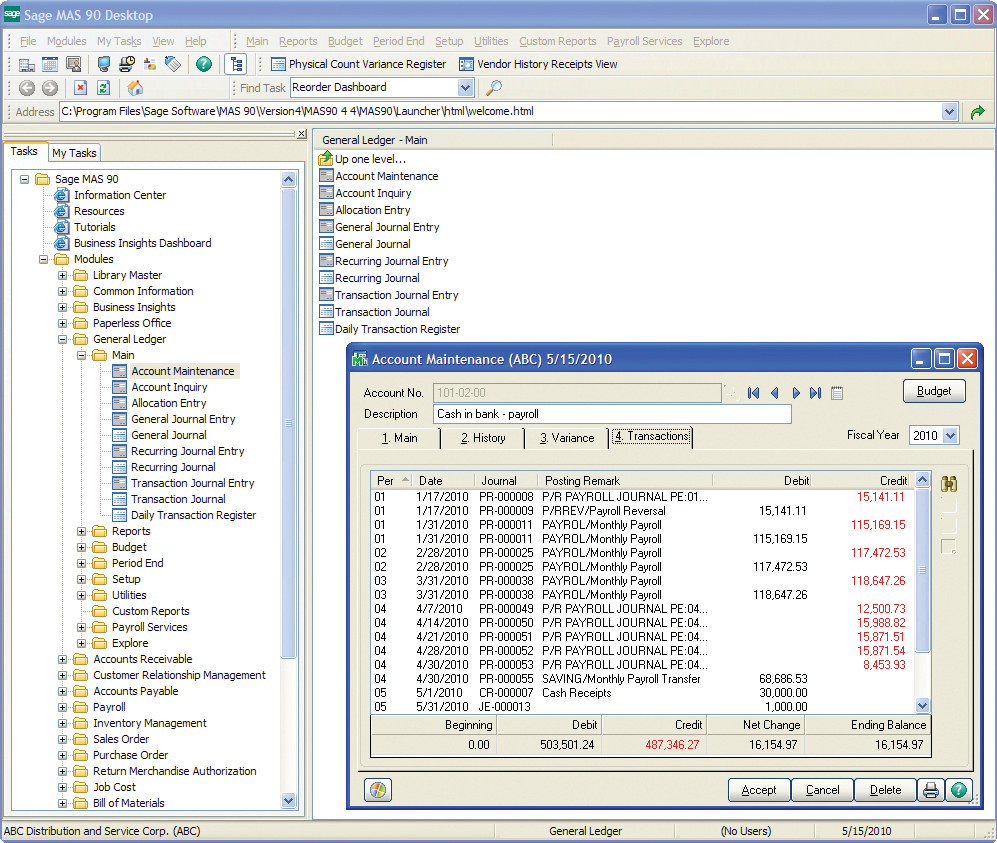
Sage 100 (or Sage 100cloud is a business management software offering a broad range of modules designed to meet the many needs of virtually any business. It encompasses financial operations and accounting, payroll, business intelligence, CRM, eBusiness, manufacturing and distribution.
N/A
Pricing
IBM Maximo Application Suite
Sage 100cloud
Editions & Modules
No answers on this topic
Sage 100 ERP Standard
Custom Pricing
Per Seat per Month
Sage 100 ERP Advanced
Custom Pricing
Per Seat per Month
Sage 100 ERP Premium
Custom Pricing
Per Seat per Month
Sage 100 ERP Online
$0
Per User per Month
Offerings
Pricing Offerings
IBM Maximo Application Suite
Sage 100cloud
Free Trial
Yes
No
Free/Freemium Version
No
No
Premium Consulting/Integration Services
Yes
No
Entry-level Setup Fee
No setup fee
No setup fee
Additional Details
The IBM® Maximo® Application Suite (MAS) comes in two packages: client managed software or software as a service (SaaS). MAS is purchased using a simplified licensing and usage model leveraging a credit-based system called AppPoints. This provides the flexibility to easily add functionality and users, scale your business, and pay only for what you use with a single entitlement.
The software is very well-suited to asset lifecycle management and system condition monitoring. User-friendliness of the product and effectiveness in managing work orders. The software's pricing is much more affordable than that of other EAM systems. Many improvements are needed in the customer support services department. Delays in response are costly.
A de minimis incentive was given to thank the reviewer for their time. The incentive was not used to bias or drive a particular response, nor was the incentive contingent on a positive endorsement. More Info
Sage 100 has been well suited for running the monthly accounts receivable and accounts payable aging reports. This helps us track our accounts that need to be collected and payments that need to be made. Our field operations team has been slow and unwanting to adopt the Sage Field Ops just because they're resistant to change and technology. It's less appropriate for really detailed accounting reports spanning for long periods of time with all accounts because it takes a very long time to run and process.
A de minimis incentive was given to thank the reviewer for their time. The incentive was not used to bias or drive a particular response, nor was the incentive contingent on a positive endorsement. More Info
Delivers Out-of-Box solutions for various industries without the need for customization and configuration
Modules and Applications are well developed and linked in an orderly way, with proper documentation and help guides that allow end users to start using the system with ease
Powerful Work Management, Contracts, Inventory, and Purchasing applications and features that are a better match to other ERP applications today
A de minimis incentive was given to thank the reviewer for their time. The incentive was not used to bias or drive a particular response, nor was the incentive contingent on a positive endorsement. More Info
A de minimis incentive was given to thank the reviewer for their time. The incentive was not used to bias or drive a particular response, nor was the incentive contingent on a positive endorsement. More Info
Usually, we have problems with the mobile apps. For about seven out of ten customers, we need to use third-party mobile applications. It’s been a rollercoaster — Anywhere was terrible, then Maximo Mobile for 8 was pretty good, and now with Maximo 9, it’s problematic again. So it’s been ups and downs. But the good thing is that the architecture is open, so we can use third-party applications or even develop our own add-ons. Still, IBM could do this better.
A de minimis incentive was given to thank the reviewer for their time. The incentive was not used to bias or drive a particular response, nor was the incentive contingent on a positive endorsement. More Info
Sage 100 at times will simply not connect to our server, we get remote support & all is well but, that issue tends to happen 2-3X a year.
Other than the above, I really can't complain. Coming from a more custom U.V. type database that used a whole bunch of codes to navigate, I think Sage 100 is 10x easier to use.
A de minimis incentive was given to thank the reviewer for their time. The incentive was not used to bias or drive a particular response, nor was the incentive contingent on a positive endorsement. More Info
IBM Maximo Application Suite has provided a solution to our desire to consolidate the multiple applications serving the layers of the Procurement process we has been accustomed to using. By consolidating applications, licensing and software costs are reduced, and the overall headcount to support the various applications was able to be minimized.
A de minimis incentive was given to thank the reviewer for their time. The incentive was not used to bias or drive a particular response, nor was the incentive contingent on a positive endorsement. TR verified that a representative sample of customers was invited. More Info
I would put this out to bid, if I were at the same organization. There have been a lot of improvements and changes in enterprise software and my preference would be to find a good web-based or cloud-based tool. Lower overall cost of ownership and improved efficiency would be my target criteria for a rebid of this.
A de minimis incentive was given to thank the reviewer for their time. The incentive was not used to bias or drive a particular response, nor was the incentive contingent on a positive endorsement. More Info
The IBM Maximo Application Suite is well known for inventory management solutions. This solution is in use by many corporations but mostly I have seen its use in Ports, defense and aerospace industries. Some of the benefits are 1. asset tracking is amazing 2. Maintenance cost is less 3. Reduced inspection costs 4. Less downtime 5. It allows customization 6 Simplify data management 7. Highly adaptable
A de minimis incentive was given to thank the reviewer for their time. The incentive was not used to bias or drive a particular response, nor was the incentive contingent on a positive endorsement. TR verified that a representative sample of customers was invited. More Info
Overall Sage 100 has been pretty user friendly. If we have a question on anything, we are able to contact our implementation rep who helps us right away. Some of the Sage Field Operations may not be as intuitive for our field personnel to use. I wish the reports ran faster so that we could run and put together many reports quickly at once.
A de minimis incentive was given to thank the reviewer for their time. The incentive was not used to bias or drive a particular response, nor was the incentive contingent on a positive endorsement. More Info
A de minimis incentive was given to thank the reviewer for their time. The incentive was not used to bias or drive a particular response, nor was the incentive contingent on a positive endorsement. More Info
I have regularly contacted IBM Support to report issues and raise requests for issues we face during project implementations. The response from them has overall been good and to the point, and they get back to us within a day or 2 and guide us through the process of fixing it or providing an interim fix of the product
A de minimis incentive was given to thank the reviewer for their time. The incentive was not used to bias or drive a particular response, nor was the incentive contingent on a positive endorsement. More Info
A de minimis incentive was given to thank the reviewer for their time. The incentive was not used to bias or drive a particular response, nor was the incentive contingent on a positive endorsement. More Info
A de minimis incentive was given to thank the reviewer for their time. The incentive was not used to bias or drive a particular response, nor was the incentive contingent on a positive endorsement. More Info
Implementation of IBM MAS as a service provider has been easy. The functionality in the OEM space has been the best of its class with all related modules and application subject to maintenance
A de minimis incentive was given to thank the reviewer for their time. The incentive was not used to bias or drive a particular response, nor was the incentive contingent on a positive endorsement. More Info
We had an advantage in implementing the tool in that our director of Ops had been part of the team implementing the ERP for other users so we knew what to expect and were able to avoid a lot of the challenges people sometimes face with implementations. However, the process still took far longer than desired.
A de minimis incentive was given to thank the reviewer for their time. The incentive was not used to bias or drive a particular response, nor was the incentive contingent on a positive endorsement. More Info
As a computerized maintenance management system i do not have experience of any other system. The only experience I have is for Maximo and it works excellent for me. I am using many modules available in Maximo and all of these modules are almost fulfilling all of my business needs.
A de minimis incentive was given to thank the reviewer for their time. The incentive was not used to bias or drive a particular response, nor was the incentive contingent on a positive endorsement. More Info
I didn't choose Sage 100 ERP -- it was already in use when I started at the organization over five years ago. It has the same types of pros and cons as other big hulking software suites meant to power the infrastructure of corporations. It's slow, tough to customize, and doesn't connect well with other software. It does bring all the information into one place, which is great
A de minimis incentive was given to thank the reviewer for their time. The incentive was not used to bias or drive a particular response, nor was the incentive contingent on a positive endorsement. More Info
A de minimis incentive was given to thank the reviewer for their time. The incentive was not used to bias or drive a particular response, nor was the incentive contingent on a positive endorsement. TR verified that a representative sample of customers was invited. More Info
Being the core business of my organization, IBM Maximo had a complete ROI for our objectives. We are able to successfully maintain and offer multiple solutions based on our interaction with Maximo.
Based on our contracts, we are able to provide a great partnership with IBM thru Maximo and it's tools.
We are able to maintain our business with steady market growth based mainly on our offer of the IBM Maximo in various layers.
A de minimis incentive was given to thank the reviewer for their time. The incentive was not used to bias or drive a particular response, nor was the incentive contingent on a positive endorsement. More Info
Sage 100 overall had a very positive overall ROI for the business. All users were making decisions based on the same information and valuable time was no longer spent trying to analyze data from a number of sources.
Moving the warehouses to using Sage 100 reduced the operating expense of the distribution side of the business by 5% on an annual basis (~$100K).
A de minimis incentive was given to thank the reviewer for their time. The incentive was not used to bias or drive a particular response, nor was the incentive contingent on a positive endorsement. More Info