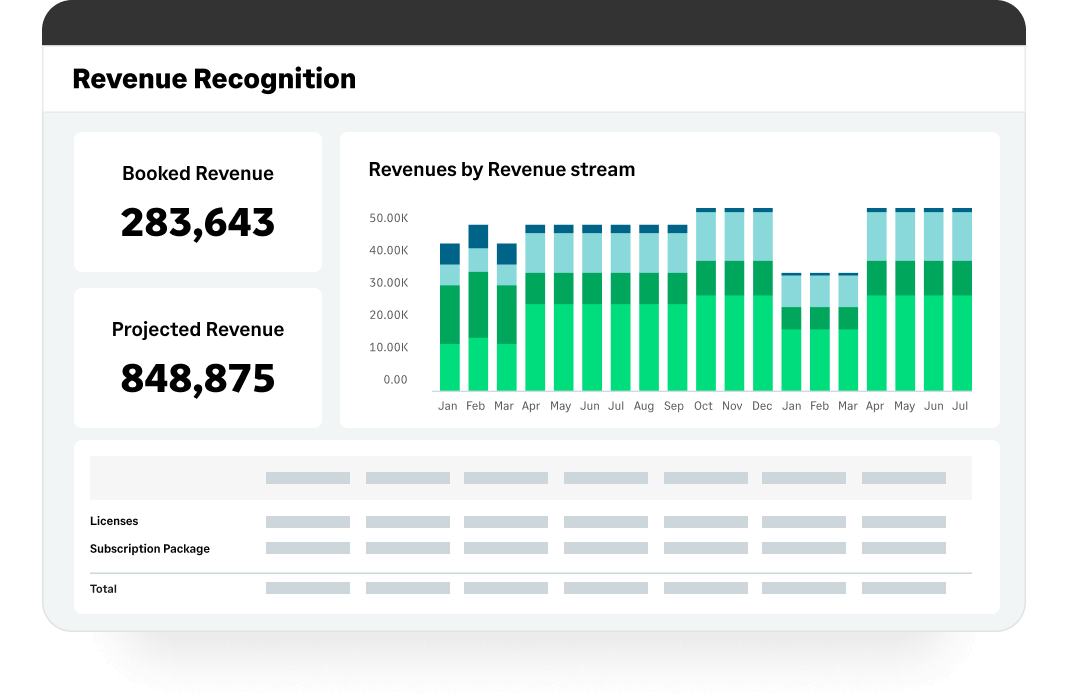
Sage Intacct is a cloud ERP system targeted at high-growth small and medium-sized businesses. Intacct includes applications for core financials and accounting, purchasing, order management, and financial reporting and business intelligence. It also integrates with 3rd party software like Salesforce.
N/A
Sage Fixed Assets
Score8.1 out of 10
N/A
Sage Fixed Assets provides simplified fixed-asset tracking with comprehensive depreciation calculations, including over 300,000 U.S. and Canadian regulations for businesses, governments and nonprofits.
Sr. Client Service Lead, Client Accounting Services in Finance and Accounting at Ximplifi (Accounting, 51-200 employees)
Chose Sage Intacct
While I have liked all of the Sage products that I have used, Sage Intacct is simply just better for companies with complex accounting needs. The customized reporting blows the other products out of the water.
A de minimis incentive was given to thank the reviewer for their time. The incentive was not used to bias or drive a particular response, nor was the incentive contingent on a positive endorsement. TR verified that a representative sample of customers was invited. More Info
Verified User
Chose Sage Intacct
We ended up going with Sage due to price, ease of use, and customer services. Also the support platforms are amazing! If you have a problem you can post about it and get answers in minutes. They also offer peer conferences which are great so you can learn new things without …
A de minimis incentive was given to thank the reviewer for their time. The incentive was not used to bias or drive a particular response, nor was the incentive contingent on a positive endorsement. TR verified that a representative sample of customers was invited. More Info
It depends on the scale and nature of the organisation, but for a business like ours, i.e. a medium sized business with several entities operating in more than one location with different currencies, I think it is a very good fit. It is relatively easy to get to grips with and provides a good level of functionality.
A de minimis incentive was given to thank the reviewer for their time. The incentive was not used to bias or drive a particular response, nor was the incentive contingent on a positive endorsement. More Info
The app is best suited to managing audits of assets and financial reporting, supporting asset control, and serving small businesses, but less suitable for large businesses that rely heavily on online operations. Limited to real-time businesses, but probably better for physical-based or physical asset tracking.
A de minimis incentive was given to thank the reviewer for their time. The incentive was not used to bias or drive a particular response, nor was the incentive contingent on a positive endorsement. More Info
Excellent roll-up reporting of various categories of expenses across multiple depts. Data is not siloed when we want to find all revenue sources across business entities, for example, or even down to details such as what is spent on "discretionary" expense elements.
Coding nomenclature is flexible and makes sense across business areas. Again, this allows for both more effective capture of data and with reporting slices and iterations.
Sage Intacct's open architecture (availability of APIs and already existing hooks) has made integration with other system tool-sets easier than we would ever have thought.
A de minimis incentive was given to thank the reviewer for their time. The incentive was not used to bias or drive a particular response, nor was the incentive contingent on a positive endorsement. TR verified that a representative sample of customers was invited. More Info
A de minimis incentive was given to thank the reviewer for their time. The incentive was not used to bias or drive a particular response, nor was the incentive contingent on a positive endorsement. More Info
A de minimis incentive was given to thank the reviewer for their time. The incentive was not used to bias or drive a particular response, nor was the incentive contingent on a positive endorsement. TR verified that a representative sample of customers was invited. More Info
A de minimis incentive was given to thank the reviewer for their time. The incentive was not used to bias or drive a particular response, nor was the incentive contingent on a positive endorsement. More Info
Sage Intacct is continuously evolving and increasing it's functionalities. I am excited to attend conferences to learn what is in the roadmap for future releases. Additionally, using Sage Intacct allows me grow as a professional, I am really enjoy the knowledge that I have within the product to be able to share my experiences.
A de minimis incentive was given to thank the reviewer for their time. The incentive was not used to bias or drive a particular response, nor was the incentive contingent on a positive endorsement. More Info
The ease of use as a seasoned user is wonderful; however, new users struggle to adapt to the program efficiently. Better training videos--all in one location--would be beneficial. The use of a "sandbox" environment is a great tool for new employees or for the fiscal department to test certain journal entries or other transactions to verify accuracy of data.
A de minimis incentive was given to thank the reviewer for their time. The incentive was not used to bias or drive a particular response, nor was the incentive contingent on a positive endorsement. TR verified that a representative sample of customers was invited. More Info
Well, it's effective enough for managing asset depreciation, tracking, managing business, and sometimes reporting. It helps us save time by avoiding errors. However, the UI can become complex, and reporting can be clunky. It may take some time to get used to, so it's not always for beginners. Also, not intuitive enough for the modern era in the subject of integration and cloud-based management.
A de minimis incentive was given to thank the reviewer for their time. The incentive was not used to bias or drive a particular response, nor was the incentive contingent on a positive endorsement. More Info
There has only been one occurrence where Sage Intacct was not available to me, however I had already been working a number of hours trying to get a project completed. It honestly allowed me to step back and take a much needed break.
A de minimis incentive was given to thank the reviewer for their time. The incentive was not used to bias or drive a particular response, nor was the incentive contingent on a positive endorsement. More Info
As fas as integration is concerned I don't feel this slows Sage Intacct down at all. However, sometimes I do feel it takes some larger reports more time to load due to all the detail. As well as, I "move very fast" in my motions so sometimes I double click on fuctions too quickly and the system seems to think that I have a duplicate request.
A de minimis incentive was given to thank the reviewer for their time. The incentive was not used to bias or drive a particular response, nor was the incentive contingent on a positive endorsement. More Info
Only a few times have we had to reach out to support, and every time we did, we received a relatively quick response and a solution was found fairly quickly. Only once was there an issue that took longer than a week to resolve, but it still did eventually get solved.
A de minimis incentive was given to thank the reviewer for their time. The incentive was not used to bias or drive a particular response, nor was the incentive contingent on a positive endorsement. TR verified that a representative sample of customers was invited. More Info
Rather lackluster. Our account manager generally works with Sage's support team and oftentimes finds herself frustrated with a lack of understanding from the support team. Additionally, when IT is attempting to update the system (which from my understanding is a bear of epic complex proportions) they often times find themselves frustrated and at a loss for what needs done.
A de minimis incentive was given to thank the reviewer for their time. The incentive was not used to bias or drive a particular response, nor was the incentive contingent on a positive endorsement. More Info
I have taken in person training classes at several of the annual Sage Intacct user conferences. It is very interactive and the trainers are very easy to follow and understand. They are great at getting everyone in the class involved. They also make sure everyone has learned to task before moving to a new one.
A de minimis incentive was given to thank the reviewer for their time. The incentive was not used to bias or drive a particular response, nor was the incentive contingent on a positive endorsement. More Info
The free training is very minimal. For what we pay for the service, I would like more training. We end up training new users in-house because the provided free training is not nearly comprehensive enough. That being said, the training provided, for the material covered, was adequate and relevant for the given topics.
A de minimis incentive was given to thank the reviewer for their time. The incentive was not used to bias or drive a particular response, nor was the incentive contingent on a positive endorsement. TR verified that a representative sample of customers was invited. More Info
I would not use a thrid party administrator to implement your system, especially if you are going to be modifying the system at all. Use Intacct implementors as they will be able to better support you on any issues that come up after you go live.
A de minimis incentive was given to thank the reviewer for their time. The incentive was not used to bias or drive a particular response, nor was the incentive contingent on a positive endorsement. More Info
We evaluated Sage Intacct alongside many other options, but Blackbaud and NetSuite were the frontrunners. They all were cloud-based and capable systems, but for our team, Sage Intacct was the clearer choice for a few reasons. First, usability. Our team has varying levels of accounting experience, and Sage felt more intuitive across those different levels. The others could be powerful, but it also felt like it required more technical depth to navigate day-to-day, which was a concern for a small team. Second, functionality out of the box. Sage Intacct had more of what we needed built in without requiring a significant number of add-ons, which kept the solution simpler and the pricing more predictable. Third, nonprofit fit. Sage Intacct is purpose-built for organizations like ours, and that showed in the functionality available and the system's overall design. And finally, our implementation partner, RSM, was well-versed in Sage Intacct and gave us confidence that we would have the right support behind us. That partnership was part of the overall value of choosing Sage.
A de minimis incentive was given to thank the reviewer for their time. The incentive was not used to bias or drive a particular response, nor was the incentive contingent on a positive endorsement. More Info
Sage was overall a much simpler product to understand. Our users were able to wrap their heads around how it worked and the learning curve was very short. Meanwhile the other products we looked at seemed so complicated for what were needing. I am glad that we chose Sage in the end.
A de minimis incentive was given to thank the reviewer for their time. The incentive was not used to bias or drive a particular response, nor was the incentive contingent on a positive endorsement. More Info
A de minimis incentive was given to thank the reviewer for their time. The incentive was not used to bias or drive a particular response, nor was the incentive contingent on a positive endorsement. More Info
Positive - It runs better than our old software when we all work together, rather than having to sign off on each other and deal with syncing issues.
Negative - It's not as easy to go back to fix an amount, a date, etc. Sometimes, a very small mistake needs to be corrected by voiding and redoing the entire transaction.
We can successfully sync other software we use with Intacct! It reduces workload when things are automated.
A de minimis incentive was given to thank the reviewer for their time. The incentive was not used to bias or drive a particular response, nor was the incentive contingent on a positive endorsement. TR verified that a representative sample of customers was invited. More Info
A de minimis incentive was given to thank the reviewer for their time. The incentive was not used to bias or drive a particular response, nor was the incentive contingent on a positive endorsement. More Info