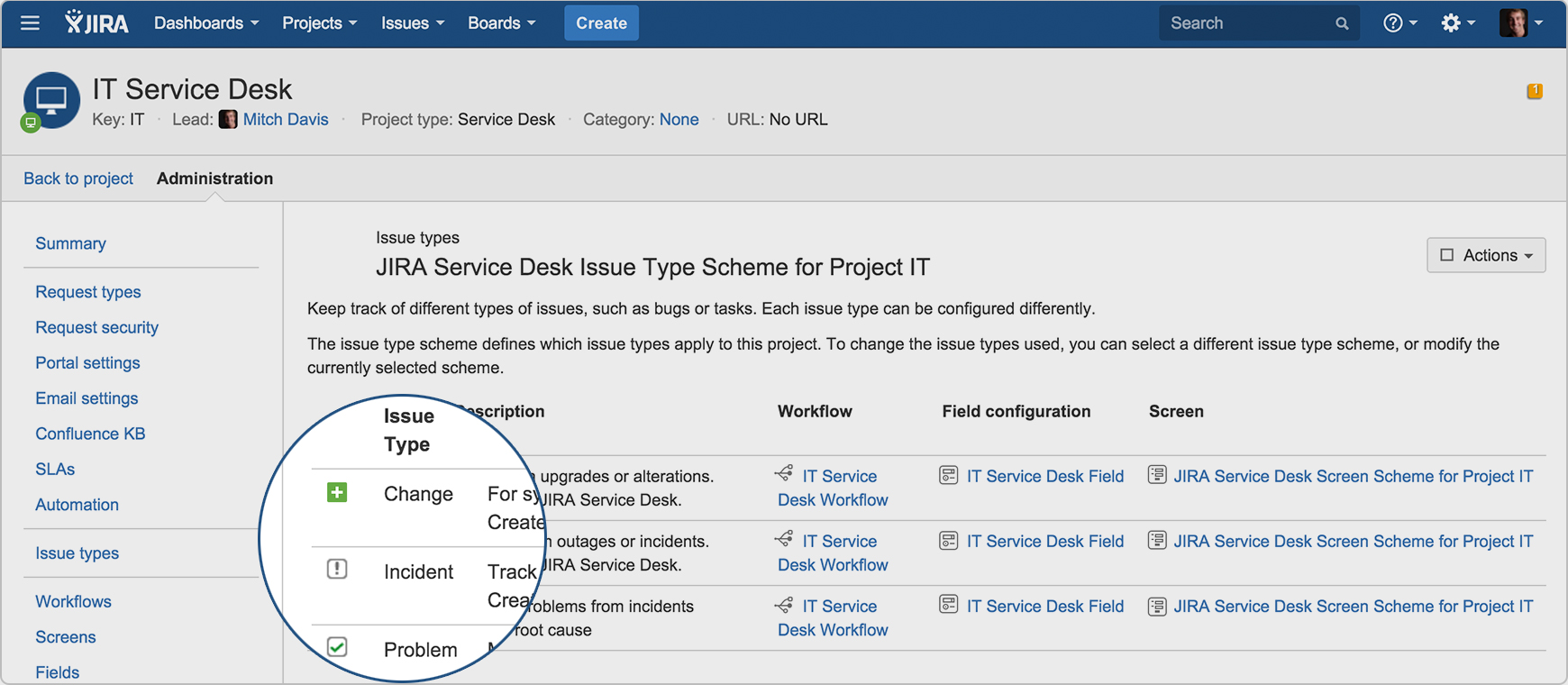
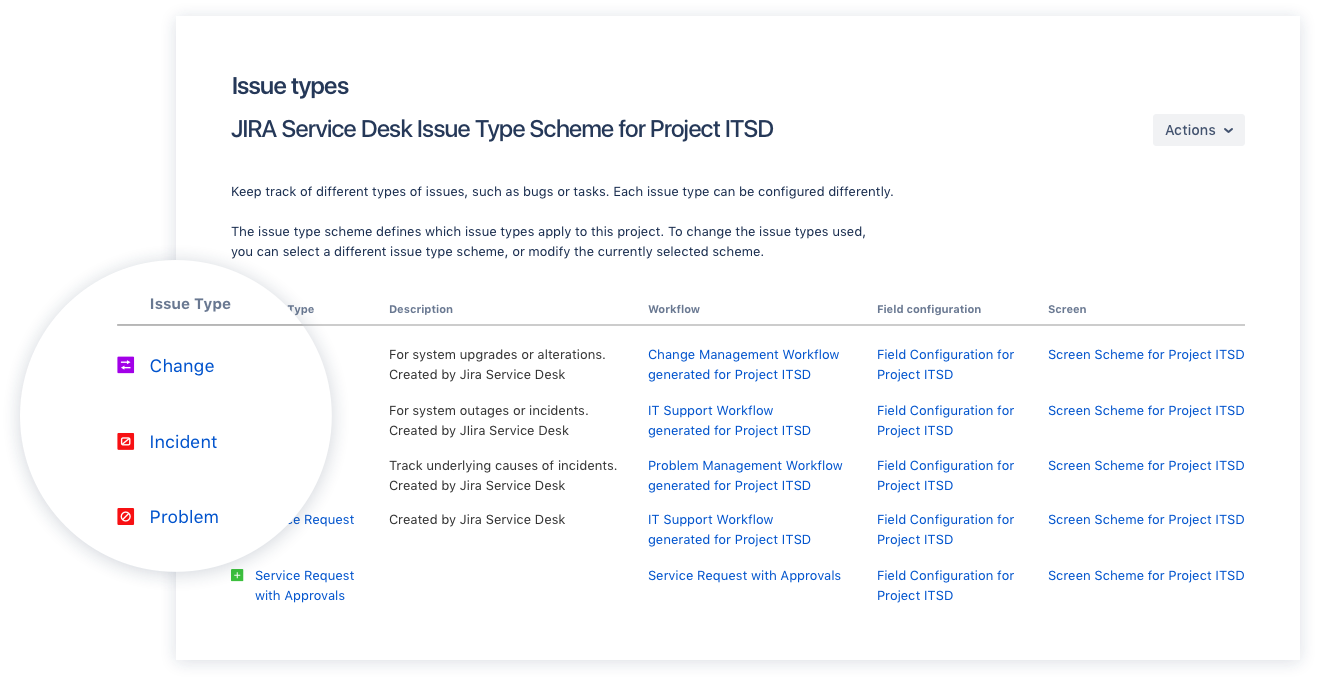
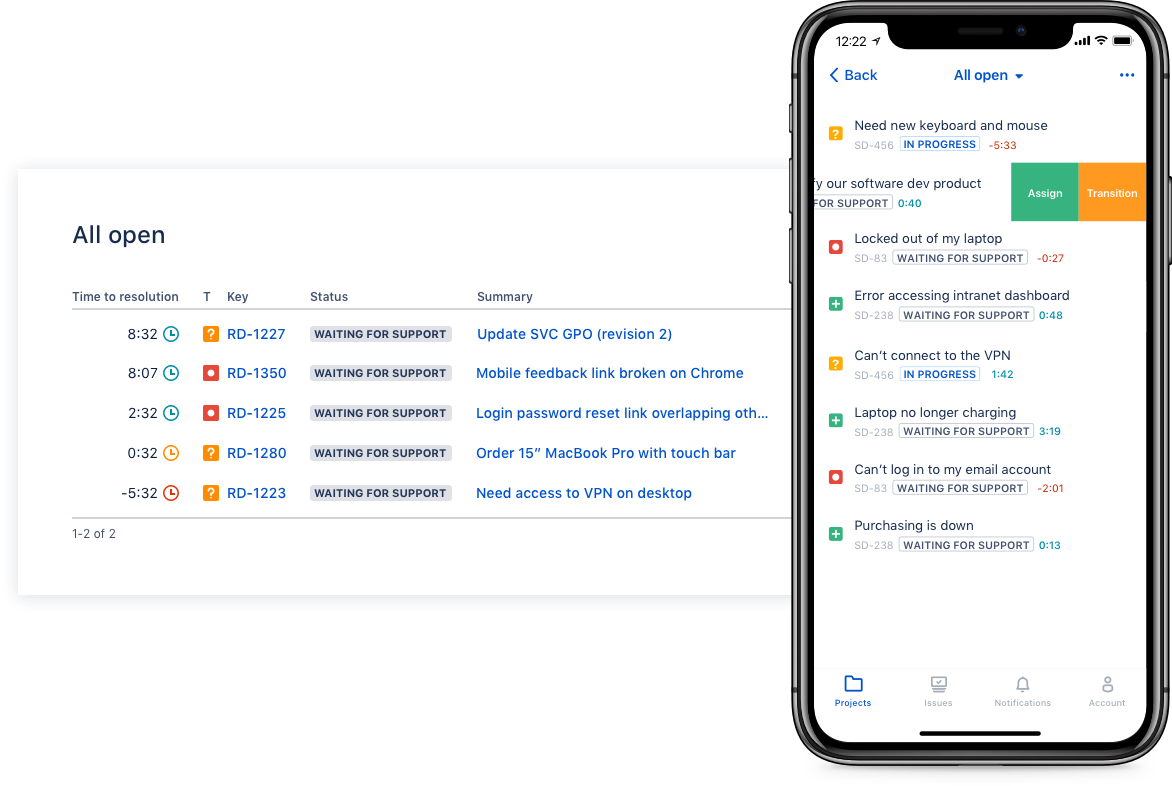
Jira Service Management (formerly Jira Service Desk, now including features from the former Mindville Insight, acquired by Atlassian in June 2020) is a service desk software that is purpose-built for IT, service, and support teams. The software provides everything IT and support teams need out-of-the-box for service request, incident, problem and change management. Jira Service Management integrates seamlessly with Jira Software so that IT and development teams can work better together. Users…
$0
per month
Joomla
Score 8.3 out of 10
N/A
Joomla! is a free and open source content management system used to publish web content. Included features are page caching, RSS feeds, printable versions of pages, news flashes, blogs, polls, a search function, and support for language internationalization.
N/A
Pricing
Jira Service Management
Joomla!
Editions & Modules
Free
$0
per month
Standard
$20
per agent/per month
Premium
$40
per agent/per month
Enterprise
Contact sales team
No answers on this topic
Offerings
Pricing Offerings
Jira Service Management
Joomla
Free Trial
Yes
No
Free/Freemium Version
No
No
Premium Consulting/Integration Services
Yes
No
Entry-level Setup Fee
No setup fee
No setup fee
Additional Details
—
—
More Pricing Information
Community Pulse
Jira Service Management
Joomla!
Features
Jira Service Management
Joomla!
Incident and problem management
Comparison of Incident and problem management features of Product A and Product B
Jira Service Management
8.5
85 Ratings
3% above category average
Joomla!
-
Ratings
Organize and prioritize service tickets
8.884 Ratings
00 Ratings
Expert directory
9.02 Ratings
00 Ratings
Service restoration
9.52 Ratings
00 Ratings
Self-service tools
8.176 Ratings
00 Ratings
Subscription-based notifications
10.01 Ratings
00 Ratings
ITSM collaboration and documentation
7.771 Ratings
00 Ratings
ITSM reports and dashboards
6.772 Ratings
00 Ratings
ITSM asset management
Comparison of ITSM asset management features of Product A and Product B
Jira Service Management
10.0
1 Ratings
19% above category average
Joomla!
-
Ratings
Configuration mangement
10.01 Ratings
00 Ratings
Asset management dashboard
10.01 Ratings
00 Ratings
Policy and contract enforcement
10.01 Ratings
00 Ratings
Change management
Comparison of Change management features of Product A and Product B
Jira Service Management
7.5
79 Ratings
14% below category average
Joomla!
-
Ratings
Change requests repository
8.472 Ratings
00 Ratings
Change calendar
6.52 Ratings
00 Ratings
Service-level management
7.777 Ratings
00 Ratings
Security
Comparison of Security features of Product A and Product B
Jira Service Management
-
Ratings
Joomla!
8.4
51 Ratings
2% above category average
Role-based user permissions
00 Ratings
8.451 Ratings
Platform & Infrastructure
Comparison of Platform & Infrastructure features of Product A and Product B
Jira Service Management
-
Ratings
Joomla!
6.8
48 Ratings
13% below category average
API
00 Ratings
7.346 Ratings
Internationalization / multi-language
00 Ratings
6.347 Ratings
Web Content Creation
Comparison of Web Content Creation features of Product A and Product B
Jira Service Management
-
Ratings
Joomla!
7.8
54 Ratings
0% above category average
WYSIWYG editor
00 Ratings
8.253 Ratings
Code quality / cleanliness
00 Ratings
8.651 Ratings
Admin section
00 Ratings
8.349 Ratings
Page templates
00 Ratings
7.052 Ratings
Library of website themes
00 Ratings
6.450 Ratings
Mobile optimization / responsive design
00 Ratings
7.650 Ratings
Publishing workflow
00 Ratings
8.450 Ratings
Form generator
00 Ratings
7.646 Ratings
Web Content Management
Comparison of Web Content Management features of Product A and Product B
I think using a ticketing system is very easy to use and allows multiple teams to create help desks in the same portal. In terms of internal usage, I think this is a great option. However, suppose you're trying to keep internal items and external helpdesks in the same instance. In that case, this is not ideal, as there is no effective way to separate the two instances to protect internal data better.
If your developers want to have some fun, Joomla offers the stability and friendliness to do custom coding. Certain marketing initiatives require us to get "cute" with the interface, and Joomla allows for that a bit easier than WordPress (and definitely easier than sites like Squarespace). The security of Joomla is also always a plus.
Integration with many of the most common tools companies are using (Slack, MS Teams, Salesforce, ... etc)
Natural workflow with Jira (as product development / project management tool) which makes the full fix and follow up of the tickets / issues very easy to follow
Allow multiple different entry points and work flows for as many different needs your teams / company have
Security. Its got many new features in the new Joomla! 4 which make the already good security even better. I like the ability to use my Yubi keys to log in with the new webauth standard, I don't think any other CMS has that built in
W3C Accessibility Guidelines (WCAG) 2.1 (with AA compliance)
Really good SEO that gets our sites to the top of the search engines again without the need for any extra things
Speed, it gets a really good score (100%) in the google lighthouse on our server, can't beat that
Because Joomla's user community is smaller than WP, it lacks as many choices from 3rd party developers, meaning it can be a little more difficult to find the right extension for what you need to accomplish
Along the same vein, most of the best 3rd-party software for Joomla! is paid
Simple features such as Add to Menu and Cache cleaners should be adopted as part of the Joomla! core, though they are available as extensions
Joomla! could use a simpler and easier URL rewriting process
In the current contect the requirments is around having a tool that is focused and can handle large ticket volumes and tracking incident, problem and user requests concerning end users. Jira has built in functionality to address the above practice needs faily easily and has a substantial amount of customizable reports for generating the relevant intelligence.
I gave it a rating of 10 because I just love how Joomla! works, how it is set up and how it handles many users. Also it is very fast, and there is no overload on the MySQL database or servers ever.
If you're used to other tools in the Atlassian ecosystem, you'll feel right at home with JSM. It's also a platform that technical folk can easily pick up. However, I wouldn't recommend using JSM as a company's first jumping off point into Atlassian. There are a lot of other 'newer' tools that provide sleeker ITSM systems at a similar cost.
Joomla! 3.x is easily installed either manually or via a script provided by your host. It contains most of the tools needed to begin creating websites right from the start. Those features that it doesn't have are easily installed via links and buttons from the thousands of extensions available in the community
Today's Modern Joomla performs very well and is robust and durable. The pages load faster than they ever did in the past and Modern Joomla's integration into other software or systems has become seamless. Modern Joomla sites will last long and will stay running forever.
I gave JIRA a 9 rating since for me JIRA works according to its purpose. Since there is a customer portal, our clients can leave a comment or communicate with us using the PR ticket that way it is easier for us to also request any additional information we need for our investigation.
Between the core Joomla developers who are excellent at answering questions and providing support, you have a whole community of developers who work with Joomla and are happy to help fellow developers out answering questions and supporting the Joomla project. Out of the many communities I am involved in for open-source software, Joomla's community is by far the best.
Joomla has gone through tremendous growing pains. It is now better than ever. But before, when it was going from 1.5-2.5, the templates and plugins would break over and over again. If you don't understand what Joomla was trying to do back then, you might have a bad attitude toward it. Today, those pains are over and things don't break like they used to during that time period.
Zendesk is a similar ticketing system that our organization used before JIRA Service Desk. The main drawback of Zendesk was that it can only be used as a cloud service. This means that our company data would be living on the internet at the hands of their security team. Another drawback of this is the price is significantly more expensive rather than hosting it yourself. Zendesk does have some additional features such as commenting on multiple tickets at once that JSD does lack. However, switching to JSD was significantly more cost effective because we have the ability and the infrastructure to host our own ticketing system, something that Zendesk could not provide. Ultimatley switching to JSD saved us money and allows the ability for integration with all of the other Atlassian Suite products that we use on a day to day basis.
We tested other platforms like WordPress, Magento and some local CMS.
But Joomla offered us better resources for generating content.
Joomla is a CMS suitable for many types of projects, especially if you have several people editing content at the same time.
It allows you to maintain visual standardization and offers many options for working with images.
With its ability to control access to different articles, categories or even different components, it is a great tool, even if they are managed by different people.