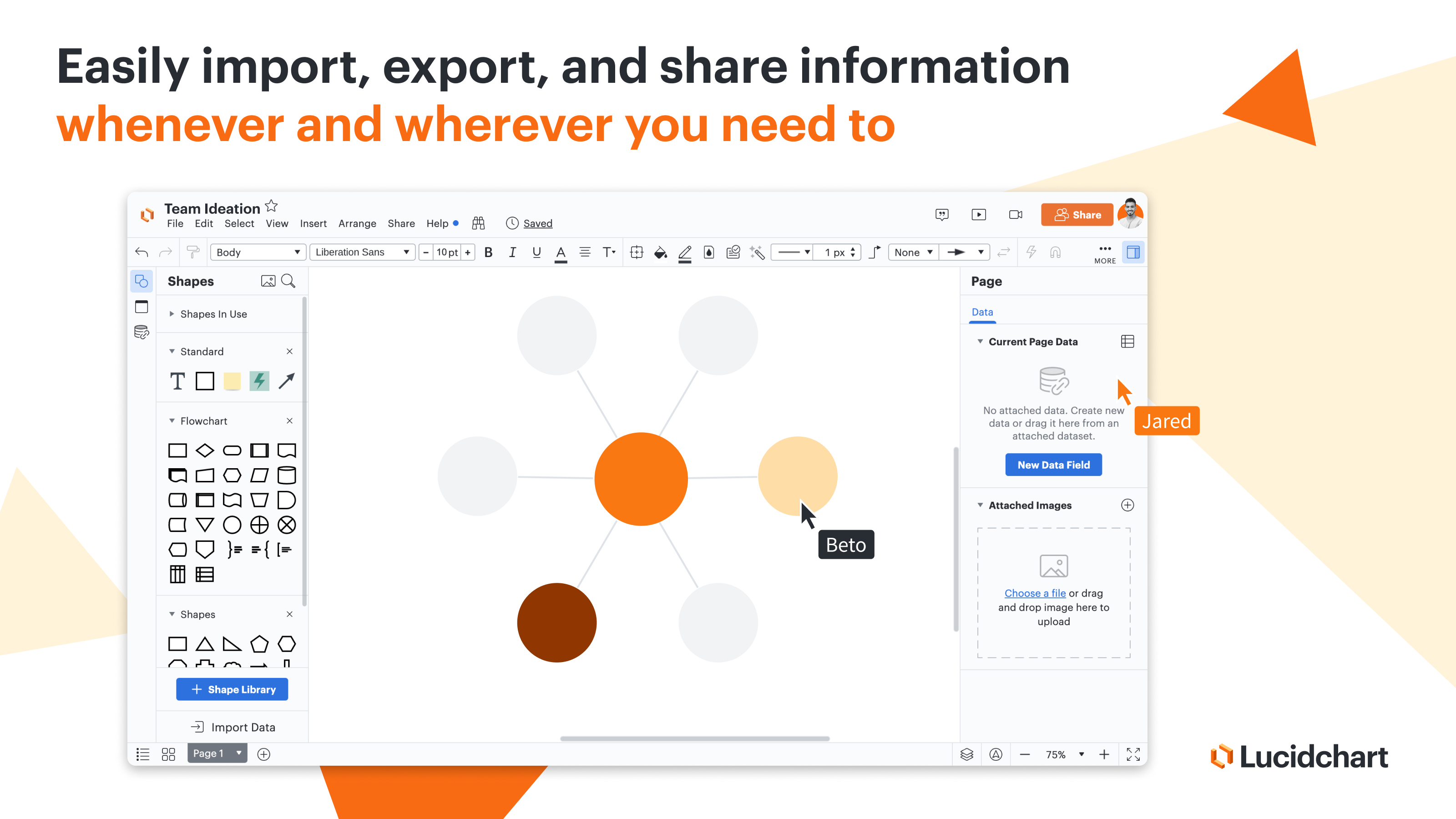
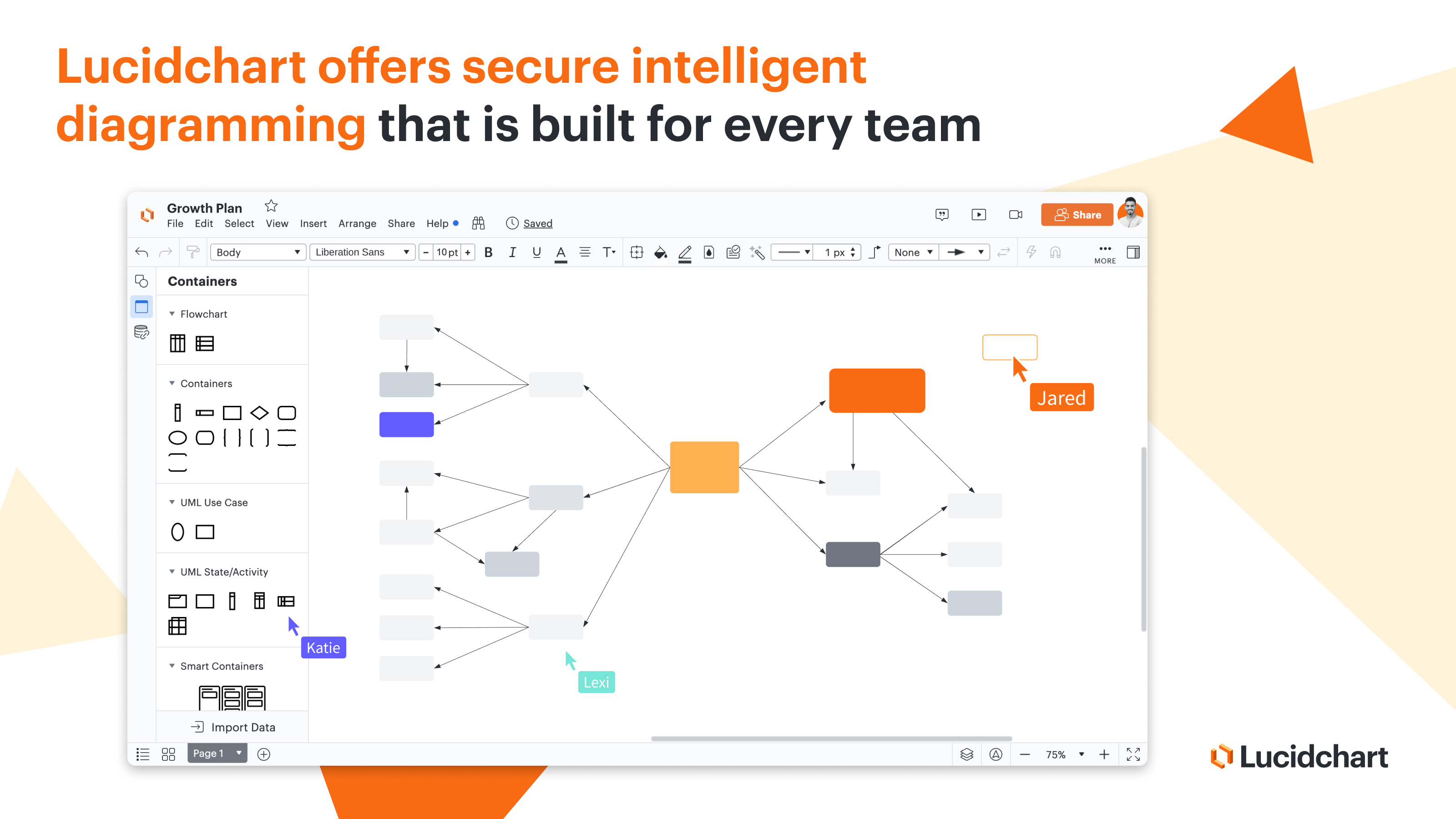
The Lucid Visual Collaboration Suite empowers teams to ideate, plan, design, build, and launch game-changing solutions from a shared infinite canvas.
$0
per month
Microsoft Visio
Score7.8 out of 10
N/A
Microsoft offers Visio, a diagramming tool for building flowcharts, diagrams (e.g. network diagrams), org charts and floor plans, available online as a subscription and also in enterprise level packages (e.g. Visio Professional).
$5
per month per user
Pricing
Lucid Visual Collaboration Suite
Microsoft Visio
Editions & Modules
Free
$0
Individual
$9
per month per user
Team
$10
per month per user (3 user minimum)
Enterprise
.
per year
Visio Plan 1
$5.00
per month per user
Visio Plan 2
$15.00
per month per user
Visio Standard 2024
$309.99
one-time fee On-premises diagramming solution, licensed for one PC
Visio Professional 2024
$579.99
one-time fee On-premises diagramming solution, licensed for one PC
Machine Learning Engineer in Information Technology at Equifax (Information Technology & Services, 10,001+ employees)
Chose Lucid Visual Collaboration Suite
Lucid Visual Collaboration Suite is a well balanced tool that fits right in the middle on complexity levels against draw.io and Visio. It has a way better set of tools when faced against draw.io, and its way less complicated and easy to use when compared with Microsoft Visio. …
A de minimis incentive was given to thank the reviewer for their time. The incentive was not used to bias or drive a particular response, nor was the incentive contingent on a positive endorsement. More Info
A de minimis incentive was given to thank the reviewer for their time. The incentive was not used to bias or drive a particular response, nor was the incentive contingent on a positive endorsement. TR verified that a representative sample of customers was invited. More Info
Business Platform Owner in Information Technology at Allied Solutions (Financial Services, 1001-5000 employees)
Chose Lucid Visual Collaboration Suite
Lucidchart is well beyond Microsoft Visio and is constantly improving. Visio is pretty much stagnant and hasn't been improved for several years, Lucid is constantly adding new functionality like AI powered functions and tools. We have no reason to pay for Visio licenses when …
A de minimis incentive was given to thank the reviewer for their time. The incentive was not used to bias or drive a particular response, nor was the incentive contingent on a positive endorsement. More Info
Verified User
Chose Lucid Visual Collaboration Suite
I have used Microsoft Visio for over 20 years and have found it always provided the functionality that I've needed. In the case where I began using Lucidchart, I started working at a company where Lucid was used instead of Visio. For me, the key was having an app that I could …
A de minimis incentive was given to thank the reviewer for their time. The incentive was not used to bias or drive a particular response, nor was the incentive contingent on a positive endorsement. More Info
Verified User
Chose Lucid Visual Collaboration Suite
Lucidchart is wasy better than Microsoft Visio. Super low learning curve compared to Visio.
A de minimis incentive was given to thank the reviewer for their time. The incentive was not used to bias or drive a particular response, nor was the incentive contingent on a positive endorsement. More Info
Senior System Administrator in Information Technology at BLDD Architects (Architecture & Planning, 51-200 employees)
Chose Lucid Visual Collaboration Suite
It does what i need it to do. I don't need functions I'm not going to use. I also can't afford to spend a lot (especially when it's not what I want anyway). Lucid Visual Collaboration Suite was the way to go and well worth the money. I never give out 10 out of 10 reviews.
A de minimis incentive was given to thank the reviewer for their time. The incentive was not used to bias or drive a particular response, nor was the incentive contingent on a positive endorsement. More Info
Verified User
Chose Lucid Visual Collaboration Suite
Lucid Visual Collaboration Suite is more modern, Visio seems clunky to me.
A de minimis incentive was given to thank the reviewer for their time. The incentive was not used to bias or drive a particular response, nor was the incentive contingent on a positive endorsement. TR verified that a representative sample of customers was invited. More Info
A de minimis incentive was given to thank the reviewer for their time. The incentive was not used to bias or drive a particular response, nor was the incentive contingent on a positive endorsement. More Info
A de minimis incentive was given to thank the reviewer for their time. The incentive was not used to bias or drive a particular response, nor was the incentive contingent on a positive endorsement. More Info
Verified User
Chose Lucid Visual Collaboration Suite
Much better, it doesn't get the steps in lines even a tenth as much as Visio, can use custom shapes as actual shapes rather than images, and aligns much easier. Lucid Visual Collaboration Suite is easily the best and I have tried about 4-5 programs over the last 5 years.
A de minimis incentive was given to thank the reviewer for their time. The incentive was not used to bias or drive a particular response, nor was the incentive contingent on a positive endorsement. TR verified that a representative sample of customers was invited. More Info
Verified User
Chose Lucid Visual Collaboration Suite
I like Lucid Visual Collaboration Suite more than both of those for the ease of use and collaboration. Miro is similar with collaboration but didn't find as easy to use and Visio is similar to use but a bit harder to collaborate with.
A de minimis incentive was given to thank the reviewer for their time. The incentive was not used to bias or drive a particular response, nor was the incentive contingent on a positive endorsement. More Info
Systems Planner in Research & Development at NI (Industrial Automation, 5001-10,000 employees)
Chose Lucid Visual Collaboration Suite
We started using LucidChart after switching from another visual collaboration tool. The import process worked surprisingly well - way better than anyone on our team was expecting. Lucidchart itself is simple to use, easy to collaborate with coworkers, has a ton of built-in …
A de minimis incentive was given to thank the reviewer for their time. The incentive was not used to bias or drive a particular response, nor was the incentive contingent on a positive endorsement. More Info
Verified User
Chose Lucid Visual Collaboration Suite
I think the products are very similar when it comes to actually making flowcharts, but Lucidchart is significantly better when it comes to collaboration and sharing
A de minimis incentive was given to thank the reviewer for their time. The incentive was not used to bias or drive a particular response, nor was the incentive contingent on a positive endorsement. More Info
A de minimis incentive was given to thank the reviewer for their time. The incentive was not used to bias or drive a particular response, nor was the incentive contingent on a positive endorsement. More Info
Senior Analytics Engineer in Information Technology at ResMed (Medical Device, 5001-10,000 employees)
Chose Lucid Visual Collaboration Suite
There has never been another tool that has came close for me. None of these tools had the options, ease of use, and performance that Lucidchart has continuously had for me. I have found the other tools to be clunky, unresponsive, and lacking the variety and options that …
A de minimis incentive was given to thank the reviewer for their time. The incentive was not used to bias or drive a particular response, nor was the incentive contingent on a positive endorsement. More Info
Verified User
Chose Lucid Visual Collaboration Suite
To be frank, the other products are lame compared to Lucidchart.
A de minimis incentive was given to thank the reviewer for their time. The incentive was not used to bias or drive a particular response, nor was the incentive contingent on a positive endorsement. More Info
Director of Product Management in Product Management at IsoTalent (Human Resources, 11-50 employees)
Chose Lucid Visual Collaboration Suite
If it's solo work, I prefer Lucidchart over all its competitors. For larger group collaboration, Lucidspark or Miro is much much preferred than Lucidchart. Figma is ok for some basic use but can't handle complex stuffs. MURAL and Visio are just terrible products to use in …
A de minimis incentive was given to thank the reviewer for their time. The incentive was not used to bias or drive a particular response, nor was the incentive contingent on a positive endorsement. More Info
A de minimis incentive was given to thank the reviewer for their time. The incentive was not used to bias or drive a particular response, nor was the incentive contingent on a positive endorsement. More Info
A de minimis incentive was given to thank the reviewer for their time. The incentive was not used to bias or drive a particular response, nor was the incentive contingent on a positive endorsement. More Info
Verified User
Chose Lucid Visual Collaboration Suite
Visio is difficult to use and hard to navigate. In my view, it is complex and tough to design the right diagram. It's sticky and tough to work with
A de minimis incentive was given to thank the reviewer for their time. The incentive was not used to bias or drive a particular response, nor was the incentive contingent on a positive endorsement. More Info
Verified User
Chose Lucid Visual Collaboration Suite
Visio is a high-performance tool, but we couldn't really use it to collaborate in a team that has a mix of Mac and Windows computers. Trying to get licenses coordinated and virtual machines set up was a mess. It was significantly easier and less expensive to just get a Visio …
A de minimis incentive was given to thank the reviewer for their time. The incentive was not used to bias or drive a particular response, nor was the incentive contingent on a positive endorsement. More Info
A de minimis incentive was given to thank the reviewer for their time. The incentive was not used to bias or drive a particular response, nor was the incentive contingent on a positive endorsement. More Info
Microsoft
Verified User
Chose Microsoft Visio
Microsoft Visio is easier to use compared to the other one
A de minimis incentive was given to thank the reviewer for their time. The incentive was not used to bias or drive a particular response, nor was the incentive contingent on a positive endorsement. More Info
Network Architect in Information Technology at TTEC (Information Technology & Services, 1001-5000 employees)
Chose Microsoft Visio
Microsoft Visio is a desktop app, while the ones mentioned are browser native apps, starting from here both work differently. Microsoft Visio is a great app for any company whether small, medium or large since there are so many use cases for it, and you can provide individual …
A de minimis incentive was given to thank the reviewer for their time. The incentive was not used to bias or drive a particular response, nor was the incentive contingent on a positive endorsement. More Info
Head of PMO in Information Technology at Kerv (Information Technology & Services, 501-1000 employees)
Chose Microsoft Visio
Microsoft Visio is somewhat more rigid that the other tools I mentioned, which can definitely be a good thing. Also the cross functional swim diagram in Microsoft Visio is more advanced.
A de minimis incentive was given to thank the reviewer for their time. The incentive was not used to bias or drive a particular response, nor was the incentive contingent on a positive endorsement. More Info
Verified User
Chose Microsoft Visio
Microsoft Visio is a much more improved software. Its technological features are very advanced compared to the ones from other softwares. It makes it easy to create work of quality, to analyze and visualize any process or data and generate ideas of any kind. It is the easiest …
A de minimis incentive was given to thank the reviewer for their time. The incentive was not used to bias or drive a particular response, nor was the incentive contingent on a positive endorsement. More Info
Verified User
Chose Microsoft Visio
I feel like they all can play an important role in your organization's success but for those who are comfortable with the Microsoft suite of tools, I would choose Visio.
A de minimis incentive was given to thank the reviewer for their time. The incentive was not used to bias or drive a particular response, nor was the incentive contingent on a positive endorsement. More Info
Verified User
Chose Microsoft Visio
Other paid services have rather better aesthetics and template/graphic support compared to Visio. However, Visio is a clear winner being a part of the Microsoft family and the positives it brings along such as collaboration, service, etc.
A de minimis incentive was given to thank the reviewer for their time. The incentive was not used to bias or drive a particular response, nor was the incentive contingent on a positive endorsement. More Info
Verified User
Chose Microsoft Visio
We have used Lucid charts in the past, Lucid chart does the job well. Microsoft Visio has more templates and seamless integration with MS word and excel. Both of the software does the diagram and charting pretty well but Visio is costly in comparison to Lucid charts. If you …
A de minimis incentive was given to thank the reviewer for their time. The incentive was not used to bias or drive a particular response, nor was the incentive contingent on a positive endorsement. More Info
Verified User
Chose Microsoft Visio
Microsoft Visio is very user-friendly and has many options for the created to use in order to get to their final product. The tool helps to get complex ideas into a visual design, therefore making it easier for other team members to understand the message you are trying to …
A de minimis incentive was given to thank the reviewer for their time. The incentive was not used to bias or drive a particular response, nor was the incentive contingent on a positive endorsement. More Info
Director, Marketing Operations in Marketing at Many (Information Technology & Services, 1001-5000 employees)
Chose Microsoft Visio
Even though it’s a more expensive solution, Vizio is built for the enterprise. Therefore, it integrates perfectly with our existing Microsoft stack, and quite frankly, because it’s such a more mature product, it provides exactly the functionality we need and expect.
A de minimis incentive was given to thank the reviewer for their time. The incentive was not used to bias or drive a particular response, nor was the incentive contingent on a positive endorsement. More Info
Verified User
Chose Microsoft Visio
Visio is superior to the Lucid chart. They are similar in functionality, but Visio is much better when combined with other Microsoft applications (e.g., MS word to document policies and procedures or MS power point when presenting to executives). I like the Lucid Chart is a …
A de minimis incentive was given to thank the reviewer for their time. The incentive was not used to bias or drive a particular response, nor was the incentive contingent on a positive endorsement. More Info
Verified User
Chose Microsoft Visio
Lucidchart is very simple to use and integrates well with other Microsoft products. Lucidchart is great for simple diagrams but it is not a perfect solution for complex diagrams [compared to] Microsoft Visio which stands out. Microsoft Visio has really advanced diagramming …
A de minimis incentive was given to thank the reviewer for their time. The incentive was not used to bias or drive a particular response, nor was the incentive contingent on a positive endorsement. TR verified that a representative sample of customers was invited. More Info
Verified User
Chose Microsoft Visio
The closest competitor is Lucidchart, but any drawing or design program can do this job very well. While I say this, it is also a simple tool for someone who is used to the MIcrosoft design language for their tools and will be able to pick it up easily and start using it almost …
A de minimis incentive was given to thank the reviewer for their time. The incentive was not used to bias or drive a particular response, nor was the incentive contingent on a positive endorsement. More Info
Verified User
Chose Microsoft Visio
Not personally used but seen it in action. Whilst very capable, Lucidchart doesn't make sense for us given our enterprise licensing agreement for using Microsoft products. Also, given that Visio performs so well, there is no need to explore alternatives.
A de minimis incentive was given to thank the reviewer for their time. The incentive was not used to bias or drive a particular response, nor was the incentive contingent on a positive endorsement. More Info
Senior Marketing Leader in Marketing at Covered California (Insurance, 5001-10,000 employees)
Chose Microsoft Visio
Microsoft Visio, with a plethora of templates, shapes, layouts, and designs, Visio is a paradise for your visual modeling requirements. Lucidchart advertises itself as a Visio alternative and boasts of being used by the teams at Cisco, Harvard University, Accenture, and more. …
A de minimis incentive was given to thank the reviewer for their time. The incentive was not used to bias or drive a particular response, nor was the incentive contingent on a positive endorsement. More Info
Systems Administrator in Information Technology at Western Governors University (Higher Education, 1001-5000 employees)
Chose Microsoft Visio
Visio does a great job with flowchart work. If you already have a subscription to Office 365, then its not much more to add to your current license. draw.io is a free service that you can use online, but it requires you to be online in order to use it at all.
A de minimis incentive was given to thank the reviewer for their time. The incentive was not used to bias or drive a particular response, nor was the incentive contingent on a positive endorsement. More Info
RPA Developer in Corporate at Fujitsu UK (Computer Software, 10,001+ employees)
Chose Microsoft Visio
It's free! It offers the basics that most users require, without bloat. Did I mention it's free? For most users, this is the best way to create process diagrams, especially if they're only going to be shown to clients as images, or for personal use. Unfortunately, if diagrams …
A de minimis incentive was given to thank the reviewer for their time. The incentive was not used to bias or drive a particular response, nor was the incentive contingent on a positive endorsement. More Info
Lucid Visual Collaboration Suite is effective for process documentation and knowledge sharing across teams. For us, we used it to map out individual roles and specific tasks within each role to create clear and visual workflows that others can follow at any time. A key scenario where it works well in our business for business continuity during absences another colleague can pick up the role by following the process on Lucid Visual Collaboration Suite with minimal disruption. The visual diagrams are easy to understand and a written document.
A de minimis incentive was given to thank the reviewer for their time. The incentive was not used to bias or drive a particular response, nor was the incentive contingent on a positive endorsement. More Info
Visio is by far and away the best tool that I have used to do Value Stream Mapping sessions with the warehouse I support. It has all of the shapes needed built in to be able to represent all areas of the processes. I also like how you are able to make the drawing as big as needed and when printing it out of Visio you have the ability to use the necessary paper size. The biggest complaint that I have with the software if how it can be cumbersome for non-Visio users (that is, people without a license in the orgnaization) to interact with the Visio Map. We normally have to dedicate one Visio SME to be able to make the changes that Process SME's find since they do not have access to the software.
A de minimis incentive was given to thank the reviewer for their time. The incentive was not used to bias or drive a particular response, nor was the incentive contingent on a positive endorsement. More Info
Large number of predefined charts, diagrams, flows
A great repository of various symbols and objects
The easiness of using and manipulating objects and shapes. There is a lot of auto-editing and adjusting which the software does for you which saves a lot of your time.
Easy way of duplicating shapes.
While working with the app everything feels organic and natural. You don't get the clunky/limited feeling which happens with some other similar apps.
A de minimis incentive was given to thank the reviewer for their time. The incentive was not used to bias or drive a particular response, nor was the incentive contingent on a positive endorsement. More Info
Microsoft Visio is excellent for organizing thought processes related to our more complex research.
The diagrams created with Microsoft Visio are ideal for graphically displaying the internal organization of work and research groups through flow diagrams.
Microsoft Visio is a great tool for managing our students' activities by creating flowcharts that help us graphically visualize the steps of their group work.
The sign in page could use some help. When I first signed up, it was really difficult to login, unless I was logged into the perfect Lucid Visual Collaboration Suite software. It doesn’t seem to have a route to get people to the right place if you’re in the wrong place.
It’s nearly impossible to move content off of the Lucid Visual Collaboration Suite if you’re looking to get your content into a different platform.
Lucid Visual Collaboration Suite requires frequent updates and refreshes of the pages (at least daily).
A de minimis incentive was given to thank the reviewer for their time. The incentive was not used to bias or drive a particular response, nor was the incentive contingent on a positive endorsement. TR verified that a representative sample of customers was invited. More Info
When navigating through swim lanes, the user must be careful between switching from the point to the connection features as it can be difficult to remember which mode you’re in.
When drawing “decision points,” it can be difficult to type words like “yes” or “no” between the connection lines.
The exporting options aren’t ideal. They are hard to create in PDF format.
A de minimis incentive was given to thank the reviewer for their time. The incentive was not used to bias or drive a particular response, nor was the incentive contingent on a positive endorsement. More Info
We use Microsoft Visio to keep our diagrams updated and to that end we will need the subscription to keep using the software. Otherwise we will be left with PDF versions of the diagrams.
A de minimis incentive was given to thank the reviewer for their time. The incentive was not used to bias or drive a particular response, nor was the incentive contingent on a positive endorsement. More Info
The usability of Lucid Visual Collaboration Suite is bar none and incomparable to any other tool used in the past. There is such a vast offering that covers all the needs of any user in industries far and wide. It is no doubt that this is a firm recommendation for anyone and everyone to utilize this tool for all their needs.
A de minimis incentive was given to thank the reviewer for their time. The incentive was not used to bias or drive a particular response, nor was the incentive contingent on a positive endorsement. More Info
I have always struggled with some basics, such as connection points, object alignment, font consistency, arranging layers and their order (bring forward, send backward), and managing overlap. I usually need to create an initial rough draft and then do a separate cleanup pass to bring the diagram up to my quality standards. If I skip that step, the result generally does not look very good. And once a diagram becomes busy or the file gets large, Visio has been unstable for me in the past, including occasional crashes that caused non-recoverable edits.
A de minimis incentive was given to thank the reviewer for their time. The incentive was not used to bias or drive a particular response, nor was the incentive contingent on a positive endorsement. More Info
I reached out about being able to access Linear through their new acquisition partner, and they kept pointing me to the same article even though I told them it wasn't giving me the information I needed. I asked for a meeting with a CSM and they didn't reach out to help. I've also tried to contact some PM friends to give feedback, but no one seems to care
A de minimis incentive was given to thank the reviewer for their time. The incentive was not used to bias or drive a particular response, nor was the incentive contingent on a positive endorsement. TR verified that a representative sample of customers was invited. More Info
Overall, I feel that Microsoft's support is weak. They are now such a behemoth that their model of putting documentation online for their users to sift through is totally outgrown. Given the amount of money you pay for these licenses, Microsoft should provide easy one-on-one support for their products via email or chat. The idea of paying their rates for support incidents is ridiculous. If you have an enormous amount of time on your hands, use their support websites and you will eventually find a solution most of the time.
A de minimis incentive was given to thank the reviewer for their time. The incentive was not used to bias or drive a particular response, nor was the incentive contingent on a positive endorsement. More Info
Lucidchart is well beyond Microsoft Visio and is constantly improving. Visio is pretty much stagnant and hasn't been improved for several years, Lucid is constantly adding new functionality like AI powered functions and tools. We have no reason to pay for Visio licenses when Lucid can provide so much more for less.
A de minimis incentive was given to thank the reviewer for their time. The incentive was not used to bias or drive a particular response, nor was the incentive contingent on a positive endorsement. More Info
Even though it’s a more expensive solution, Vizio is built for the enterprise. Therefore, it integrates perfectly with our existing Microsoft stack, and quite frankly, because it’s such a more mature product, it provides exactly the functionality we need and expect.
A de minimis incentive was given to thank the reviewer for their time. The incentive was not used to bias or drive a particular response, nor was the incentive contingent on a positive endorsement. More Info
Though I can't necessarily provide hard numbers, I can confidently say that Lucidchart has saved countless hours for myself and my teams as we don't need to try to develop some type of complex diagram using markup or any kind of code.
I have previously been able to build a complete ERD using Lucidchart in a past position, which the company never had before. It ended up being used by countless teams in the company and ultimately in a large-scale data stack migration effort.
A de minimis incentive was given to thank the reviewer for their time. The incentive was not used to bias or drive a particular response, nor was the incentive contingent on a positive endorsement. More Info
Reduces the amount of time I need to create process flow diagrams. In the past I would use Powerpoint or Word which required a lot more effort and time and never looked as good. Visio just takes that headache away.
Only negative is that I personally believe it should always have been part and parcel of the Office suite, thus giving more users the opportunity to use it rather than specifically having to justify its separate purchase within our organisation. Different now with Office 365 of course!
A de minimis incentive was given to thank the reviewer for their time. The incentive was not used to bias or drive a particular response, nor was the incentive contingent on a positive endorsement. More Info