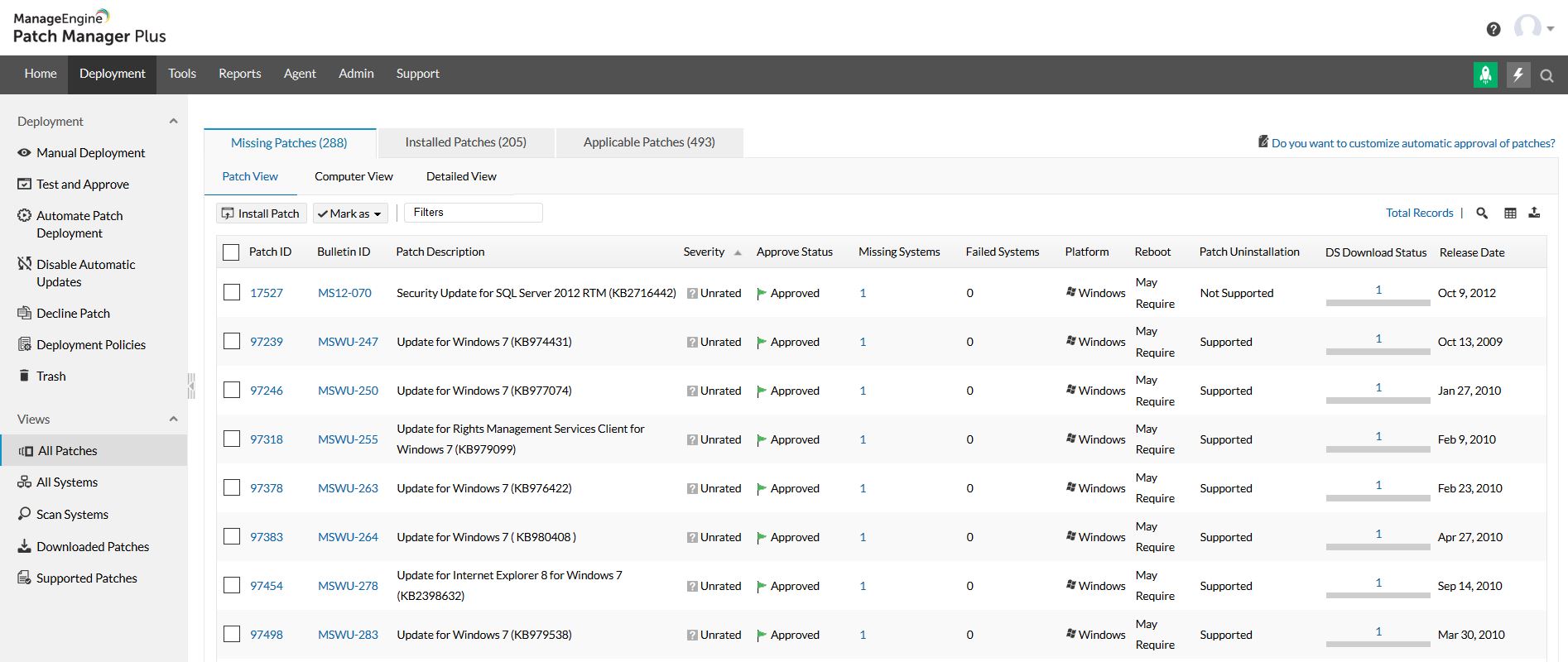
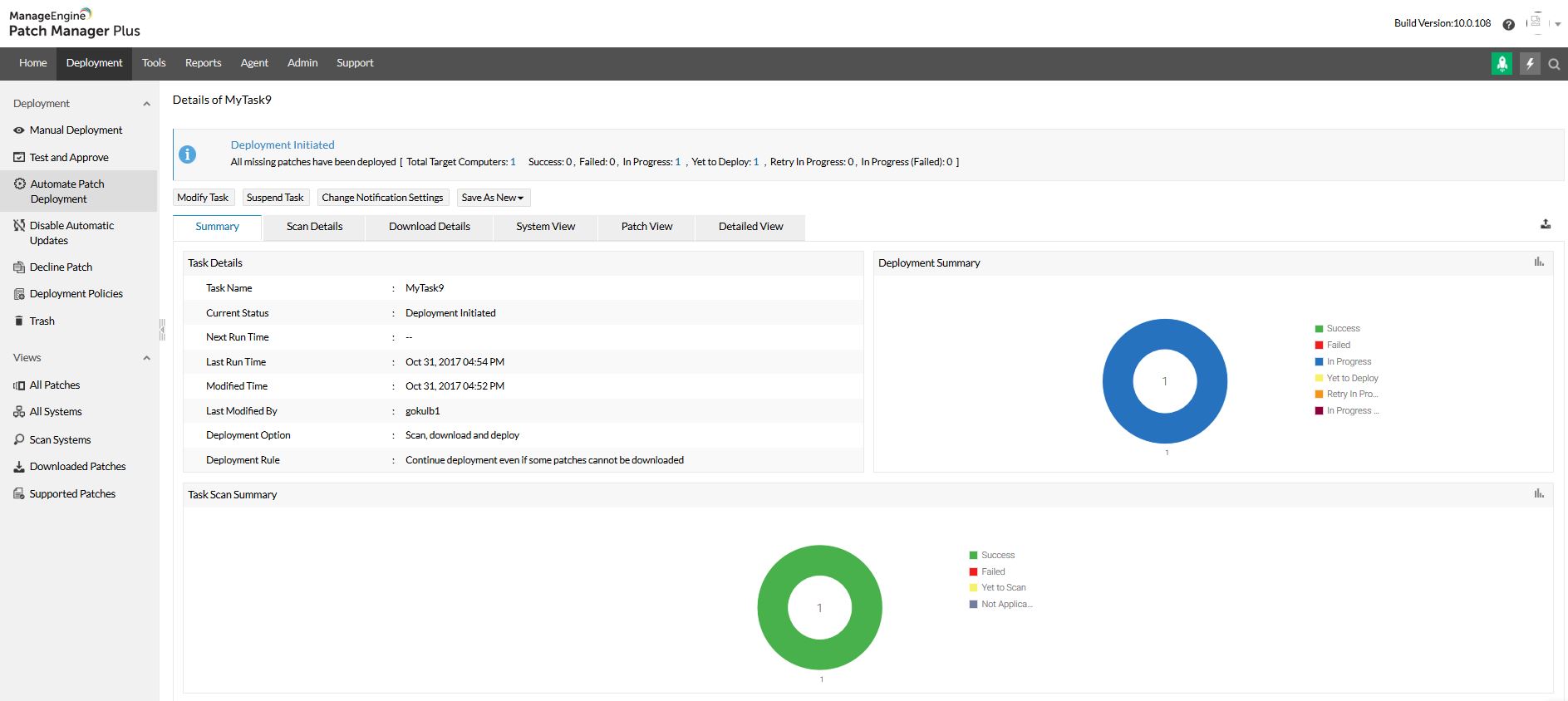
Patch Manager Plus is an automated patch management software that provides enterprises with a single interface for all patch management tasks. The vendor claims it works across platforms, helping users patch Windows, Mac, Linux & 300+ third-party applications. With Automated Patch Deployments, users can automate the entire process of patch management:…
$245
50 endpoints
Salt
Score 6.2 out of 10
N/A
Built on Python, Salt is an event-driven automation tool and framework to deploy, configure, and manage complex IT systems. Salt is used to automate common infrastructure administration tasks and ensure that all the components of infrastructure are operating in a consistent desired state.
If you are managing a very large number of computers, I would say 1000+, the standard patching tools provided by Microsoft will fail to do their job properly. This is where you will benefit from ManageEngine PATCH MANAGER Plus, being agent-based it is fast, easy to manage, and reliable. If you require functionality more than just patching, like security auditing, you have to look elsewhere.
SaltStack is a very well architected toolset and framework for reliably managing distributed systems' complexity at varied scale. If the diversity of kind or number of assets is low, or the dependencies are bounded and simple, it might be overkill. Realization that you need SaltStack might come in the form of other tools, scripts, or jobs whose code has become difficult, unreliable, or unmaintainable. Rather than a native from-scratch SaltStack design, be aware that SaltStack can be added on to tools like Docker or Chef and optionally factor those tools out or other tools into the mix.
Targeting is easy and yet extremely granular - I can target machines by name, role, operating system, init system, distro, regex, or any combination of the above.
Abstraction of OS, package manager and package details is far advanced beyond any other CRM I have seen. The ability to set one configuration for a package across multiple distros, and have it apply correctly no matter the distrospecific naming convention or package installation procedure, is amazing.
Abstraction of environments is similarly valuable - I can set a firewall rule to allow ssh from "management", and have that be defined as a specific IP range per dev, test, and prod.
The overall usability for the application is great precisely for the ease of use the application provides, if i would go in a different organisation, i would suggest implementing ManageEngine Patch Manager Plus or Endpoint Central due to its features, and productivity.
The support team at Patch Manager Plus has been awesome. Very responsive and knowledgeable. There are times when there is confusion between different tickets but there is still good service.
We haven't had to spend a lot of time talking to support, and we've only had one issue, which, when dealing with other vendors is actually not that bad of an experience.
We were talking to Action1 and Adaptiva about their solutions of patch management. The main factor of choosing ManageEngine was pricing, which was considerably lower compared to these tools. Also, for Action1, it didn't featured some important features (like Linux patching), and it looked like a solution that is getting started in the market, even being more expensive than Patch Manager Plus.
We moved to SaltStack from Puppet about 3 years ago. Puppet just has too much of a learning curve and we inherited it from an old IT regime. We wanted something we could start fresh with. Our team has never looked back. SaltStack is so much easier for us to use and maintain.
It has saved engineers so much time when monitoring patching out of hours.
We no longer need to log into each individual server to patch it if it's failed, it can all be done from inside ManageEngine Patch Manager Plus itself.
We manage two complex highly available self-healing (all infrastructure and systems) environments using SaltStack. Only one person is needed to run SaltStack. That is a HUGE return on investment.
Building tooling on top of SaltStack has allowed us to share administrative abilities by role - e.g. employee X can deploy software Y. No need to call a sysadmin and etc.
Recovery from problems, or time to stand-up new systems is now counted in minutes (usually under eight) rather than hours. This is a strategic advantage for rolling out new services.