Chose SAP Datasphere
Unlike SAP Data Warehouse Cloud, Snowflake does not offer tons of pre-integrated services which makes it overwhelming to model and visualize data from on-premise platforms.

| Product | Rating | Most Used By | Product Summary | Starting Price |
|---|---|---|---|---|
 Microsoft Fabric | N/A | Microsoft Fabric: A Comprehensive Data Management Solution Microsoft Fabric presents a unified, robust platform designed to optimize data management, enhance AI model development, and empower users across an organization. It focuses on integrating data seamlessly, ensuring governance and security, and providing AI capabilities. Microsoft Fabric is presented as an all-encompassing data management solution, providing organizations with tools for efficient data integration,… | N/A | |
 SAP Datasphere | N/A | SAP Datasphere, the next generation of SAP Data Warehouse Cloud, is a comprehensive data service that enables data professionals to deliver seamless and scalable access to mission-critical business data. It provides a unified experience for data integration, data cataloging, semantic modeling, data warehousing, data federation, and data virtualization. SAP Datasphere enables users to distribute mission-critical business data — with business context and logic preserved — across the data… | N/A | |
 Snowflake | N/A | The Snowflake Cloud Data Platform is the eponymous data warehouse with, from the company in San Mateo, a cloud and SQL based DW that aims to allow users to unify, integrate, analyze, and share previously siloed data in secure, governed, and compliant ways. With it, users can securely access the Data Cloud to share live data with customers and business partners, and connect with other organizations doing business as data consumers, data providers, and data service providers. | N/A |
| Microsoft Fabric | SAP Datasphere | Snowflake | ||||||||||||||||||||||
|---|---|---|---|---|---|---|---|---|---|---|---|---|---|---|---|---|---|---|---|---|---|---|---|---|
| Editions & Modules | No answers on this topic | No answers on this topic | No answers on this topic | |||||||||||||||||||||
| Offerings |
| |||||||||||||||||||||||
| Entry-level Setup Fee | No setup fee | No setup fee | No setup fee | |||||||||||||||||||||
| Additional Details | Use Microsoft Fabric by purchasing Fabric Capacity, a billing unit that enables each Fabric experience. Pay for every data tool in one transparent, simplified pricing model and save time for other business needs. Fabric Capacity is priced uniquely across regions. | SAP Datasphere is available as a subscription or consumption-based model. The SAP Datasphere capacity unit (CU) offers an adaptable approach to pricing that enables any workload on any hyperscaler. The number of CUs required is determined by the unique workload, with the ability to tailor the combination of required services within SAP Datasphere utilizing a flexible tenant configuration. The services that contribute to CU consumption are the core application (compute and storage), data lake, BW bridge, data integration, and data catalog (crawling and storage). | — | |||||||||||||||||||||
| More Pricing Information | ||||||||||||||||||||||||
| Microsoft Fabric | SAP Datasphere | Snowflake | |
|---|---|---|---|
| Considered Multiple Products | Microsoft Fabric No answer on this topic | SAP Datasphere |  Snowflake  Prateek Rao Partner and MD at Roland Berger Chose Snowflake We use these tools for applications they are better suited for vs a Snowflake. For e.g. MS Fabric has powerful agentic AI capabilities; Redshift is our go to choice for the TMT vertical within the organization and Databricks is the default choice for AI/ML applications.  Yogesh Kulkarni Principal Consultant Chose Snowflake While Snowflake is more open to cloud eco system, SAP integrated well with SAP eco system products like SAP ECC or SAP S/4. So for people who have invested heavily in SAP eco system including SAP ECC or S/4, it makes sense to go with SAP DWC which is also evolving very rapidly. … |
| Microsoft Fabric | SAP Datasphere | Snowflake | |
|---|---|---|---|
| Likelihood to Recommend | 8.0 (1 ratings) | 8.5 (120 ratings) | 8.8 (44 ratings) |
| Likelihood to Renew | - (0 ratings) | 6.8 (4 ratings) | 7.0 (3 ratings) |
| Usability | 4.0 (1 ratings) | 8.1 (62 ratings) | 9.0 (20 ratings) |
| Support Rating | - (0 ratings) | 9.0 (21 ratings) | 9.9 (8 ratings) |
| Contract Terms and Pricing Model | - (0 ratings) | 8.4 (8 ratings) | 8.0 (1 ratings) |
| Professional Services | - (0 ratings) | 8.8 (4 ratings) | - (0 ratings) |
| Microsoft Fabric | SAP Datasphere | Snowflake | |
|---|---|---|---|
| Likelihood to Recommend | Microsoft
| SAP
| Snowflake Computing
|
| Pros | Microsoft
| SAP
| Snowflake Computing
 Harvey Wyche Director of Technical Product Management |
| Cons | Microsoft
| SAP
| Snowflake Computing
|
| Likelihood to Renew | Microsoft No answers on this topic | SAP
| Snowflake Computing
|
| Usability | Microsoft
| SAP
 Nitesh Kumar Manager Marketing | Snowflake Computing
|
| Support Rating | Microsoft No answers on this topic | SAP
 faith kelsie Information Technology Support Specialist | Snowflake Computing
 David Williams Head of Engineering |
| Alternatives Considered | Microsoft
| SAP
| Snowflake Computing
|
| Contract Terms and Pricing Model | Microsoft No answers on this topic | SAP
| Snowflake Computing No answers on this topic |
| Professional Services | Microsoft No answers on this topic | SAP
 Anilkumar Patel Information Security Manager | Snowflake Computing No answers on this topic |
| Return on Investment | Microsoft
| SAP
 Heather Mckenzie Information Technology Administrator | Snowflake Computing
 Sahil Khan Data Analyst |
| ScreenShots | Microsoft Fabric Screenshots    | Snowflake Screenshots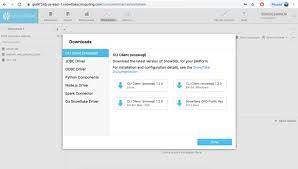 |