Oracle Data Integrator is an ELT data integrator designed with interoperability other Oracle programs. The program focuses on a high-performance capacity to support Big Data use within Oracle.
N/A
Qlik Talend Cloud
Score 8.8 out of 10
N/A
The Qlik Talend Cloud suite of solutions offer data integration, data quality, application integration, and data governance that work with key data sources, targets, architectures, or methodologies to ensure business users always have trusted and accurate data.
N/A
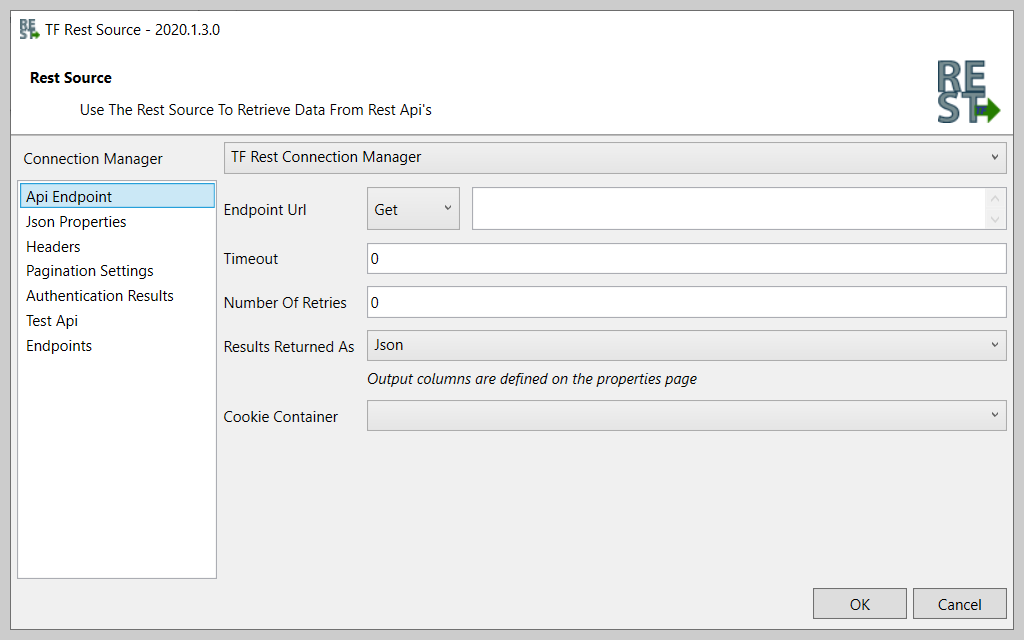
SolarWinds Task Factory
Score 8.2 out of 10
N/A
According to the vendor, SolarWinds Task Factory saves time managing tedious ELT/ETL tasks with high-performing SQL Server Integration Services (SSIS) components that can be used within the Visual Studio environment to connect to nearly any data source. Task Factory’s components and tasks have been optimized to ensure fast performance of data-centric applications, and the user can run Task Factory…
N/A
Pricing
Oracle Data Integrator (ODI)
Qlik Talend Cloud
SolarWinds Task Factory
Editions & Modules
No answers on this topic
No answers on this topic
Task Factory
1,245 (annual subscription license)
per server
Task Factory Azure Data Factory
1,495 (annual subscription license)
per ADF node
Offerings
Pricing Offerings
Oracle Data Integrator (ODI)
Qlik Talend Cloud
SolarWinds Task Factory
Free Trial
No
No
Yes
Free/Freemium Version
No
No
Yes
Premium Consulting/Integration Services
No
No
No
Entry-level Setup Fee
No setup fee
No setup fee
No setup fee
Additional Details
—
—
—
More Pricing Information
Community Pulse
Oracle Data Integrator (ODI)
Qlik Talend Cloud
SolarWinds Task Factory
Considered Multiple Products
Oracle Data Integrator (ODI)
Verified User
Manager
Chose Oracle Data Integrator (ODI)
Oracle Data Integrator works very well if the rest of your systems are in the Oracle environment. There are some other good alternatives out there, but for what Oracle Data Integrator has to offer, it is good. It is also a little harder to use compared to the other ones I have …
Talend Data Integrator has been evaluated during the setup of the architecture for a customer, in comparison to ODI, since it's an open source ETL. But, differently from the meaning of "open source", it has licence costs too that aren't that different from ODI ones. Moreover, …
Most other tools of similar nature work well for small and medium sized data warehouses, but fail to maintain performance for very large data warehouses. However, Talend works decently well on large data as well. On the other hand, there are software tools like Oracle Data …
Talend is the best for ETL out of all the other products we looked at. Of course, it is not meant for synchronous services. But, batch jobs that we schedule and run on bulk data are the best fit for Talend Data Integration. Though Talend does not provide a preview of …
Oracle Data Integrator is well suited in all the situations where you need to integrate data from and to different systems/technologies/environments or to schedule some tasks. I've used it on Oracle Database (Data Warehouses or Data Marts), with great loading and transforming performances to accomplish any kind of relational task. This is true for all Oracle applications (like Hyperion Planning, Hyperion Essbase, Hyperion Financial Management, and so on). I've also used it to manage files on different operating systems, to execute procedures in various languages and to read and write data from and to non-Oracle technologies, and I can confirm that its performances have always been very good. It can become less appropriate depending on the expenses that can be afforded by the customer since its license costs are quite high.
This tool fits all kinds of organizations and helps to integrate data between many applications. We can use this tool as data integration is a key feature for all organizations. It is also available in the cloud, which makes the integration more seamless. The firm can opt for the required tools when there are no data integration needs.
Since I started working with this great tool all data analysis programs have been running effectively. Implementation of projects and tasks have been effective and reliable. Data collected from each department gives us working plan on better management of various programs. The Dimension Merge SCD Transform helps us to load large volumes of data within a short period of time.
Oracle Data Integrator nearly addresses every data issue that one can expect. Oracle Data Integrator is tightly integrated to the Oracle Suite of products. This is one of the major strengths of Oracle Data Integrator. Oracle Data Integrator is part of the Oracle Business Intelligence Applications Suite - which is highly used by various industries. This tool replaced Informatica ETL in Oracle Business Intelligence Applications Suite.
Oracle Data Integrator comes with many pre-written data packages. If one has to load data from Excel to Oracle Database, there is a package that is ready available for them - cutting down lot of effort on writing the code. Similarly, there are packages for Oracle to SQL, SQL to Oracle and all other possible combinations. Developers love this feature.
Oracle Data Integrator relies highly on the database for processing. This is actually an ELT tool rather than an ETL tool. It first loads all the data into target instance and then transforms it at the expense of database resources. This light footprint makes this tool very special.
The other major advantage of Oracle Data Integrator, like any other Oracle products, is a readily available developer pool. As all Oracle products are free to download for demo environments, many organizations prefer to play around with a product before purchasing it. Also, Oracle support and community is a big advantage compared to other vendors.
Talend Data Integration allows us to quickly build data integrations without a tremendous amount of custom coding (some Java and JavaScript knowledge is still required).
I like the UI and it's very intuitive. Jobs are visual, allowing the team members to see the flow of the data, without having to read through the Java code that is generated.
The single most beneficial component to Task Factory is the Upsert component. If you're familiar with writing MERGE statements in T-SQL, you'll appreciate the Upsert component. Drag the component into your Data Flow and a few clicks later you have a MERGE without the code complexities.
Where some native SSIS components leave you wanting more, Task Factory extends on many of these components as well as support for data sources not native to SSIS components.
The number of extra components that come in the Task Factory tool kit will expand your tool belt to do just about anything you need or want to accomplish in SSIS.
ODI does not have an intuitive user interface. It is powerful, but difficult to figure out at first. There is a significant learning curve between usability, proficiency, and mastery of the tool.
ODI contains some frustrating bugs. It is Java based and has some caching issues, often requiring you to restart the program before you see your code changes stick.
ODI does not have a strong versioning process. It is not intuitive to keep an up to date repository of versioned code packages. This can create versioning issues between environments if you do not have a strong external code versioning process.
It was built by Pragmatic Works who sold it to SentryOne and now Solar Winds, concerned about future support. SolarWinds is discontinuing support for related products such as BiXpress.
Had issues with connecting to certain versions of SQL Server - would fail when deploying one package - had to deploy the entire solutions.
Occasional random failures observed with the Filter tranform.
It is maturing and over time will have a good pool of resources. Each new version has addressed the issues of the previous ones. Its getting better and bigger.
Task Factory has become a key product for our use of doing ETL work in SSIS. Their custom SSIS components allow us to work simply on the data engineering side of things. We can ignore the lower level work needed to connect to disparate data sources. This allows us to work faster and provide more value to the business
We use Talend Data Integration day in and day out. It is the best and easiest tool to jump on to and use. We can build a basic integration super-fast. We could build basic integrations as fast as within the hour. It is also easy to build transformations and use Java to perform some operations.
Good support, specially when it relates to PROD environment. The support team has access to the product development team. Things are internally escalated to development team if there is a bug encountered. This helps the customer to get quick fix or patch designed for problem exceptions. I have also seen support showing their willingness to help develop custom connector for a newly available cloud based big data solution
Overall, the best vendor we currently have on the data side of the house. No issues, issues are resolved very quickly and upgrades go without any issues.
I have used Trifacta Google Data Prep quite a bit. We use Google Cloud Platform across our organization. The tools are very comparable in what they offer. I would say Data Prep has a slight edge in usability and a cleaner UI, but both of the tools have comparable toolsets.
In comparison with the other ETLs I used, Talend is more flexible than Data Services (where you cannot create complex commands). It is similar to Datastage speaking about commands and interfaces. It is more user-friendly than ODI, which has a metadata point of view on its own, while Talend is more classic. It has both on-prem and cloud approaches, while Matillion is only cloud-based.
ZappySys is an alternative provider that we tested. However, we found the ease of use, set up and installation to be much simplier and quicker using Task Factory. ZappySys has a number of the same connectors but are more difficult to setup and the GUI is not as intuitive and simple to use.
It’s only been a positive RoI with Talend given we’ve interfaced large datasets between critical on-Prem and cloud-native apps to efficiently run our business operations.
We were able to support our developers with Task Factory features and reduce the development time by 40%.
Recently Task Factory has changed their pricing module and it seems to be pretty costly for our process. Our business team has started to evaluate whether this is worth it going forward.