RabbitMQ, an open source message broker, is part of Pivotal Software, a VMware company acquired in 2019, and supports message queue, multiple messaging protocols, and more.
RabbitMQ is available open source, however VMware also offers a range of commercial services for RabbitMQ; these are available as part of the Pivotal App Suite.
N/A
HPE Zerto Software
Score9.4 out of 10
Enterprise companies (1,001+ employees)
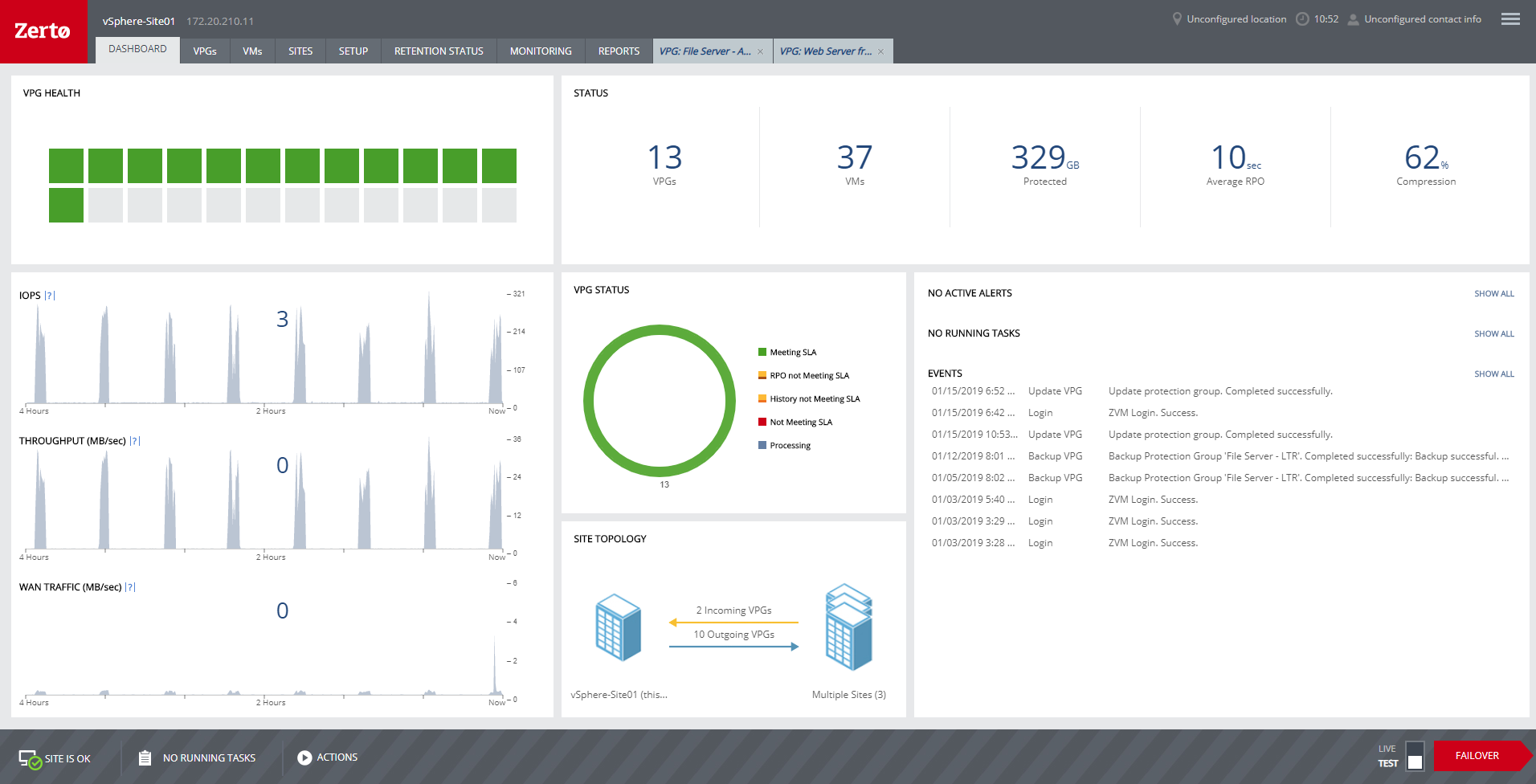
HPE Zerto Software aims to enable customers to run an always-on business by simplifying the protection, recovery, and mobility of on-premises and cloud applications.
It is highly recommended that if you have microservices architecture and if you want to solve 2 phase commit issue, you should use RabbitMQ for communication between microservices. It is a quick and reliable mode of communication between microservices. It is also helpful if you want to implement a job and worker mechanism. You can push the jobs into RabbitMQ and that will be sent to the consumer. It is highly reliable so you won't miss any jobs and you can also implement a retry of jobs with the dead letter queue feature. It will be also helpful in time-consuming API. You can put time-consuming items into a queue so they will be processed later and your API will be quick.
A de minimis incentive was given to thank the reviewer for their time. The incentive was not used to bias or drive a particular response, nor was the incentive contingent on a positive endorsement. More Info
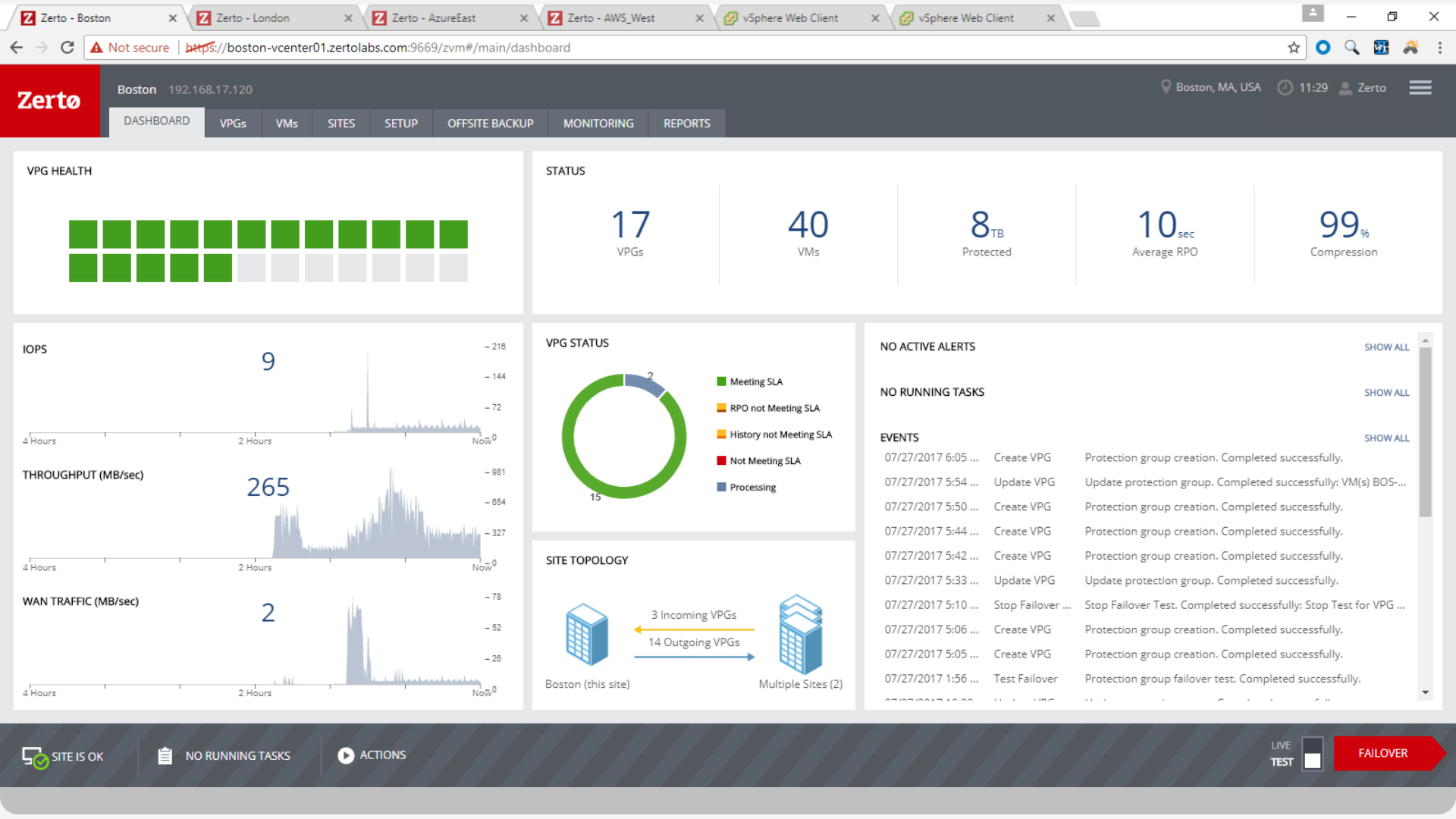
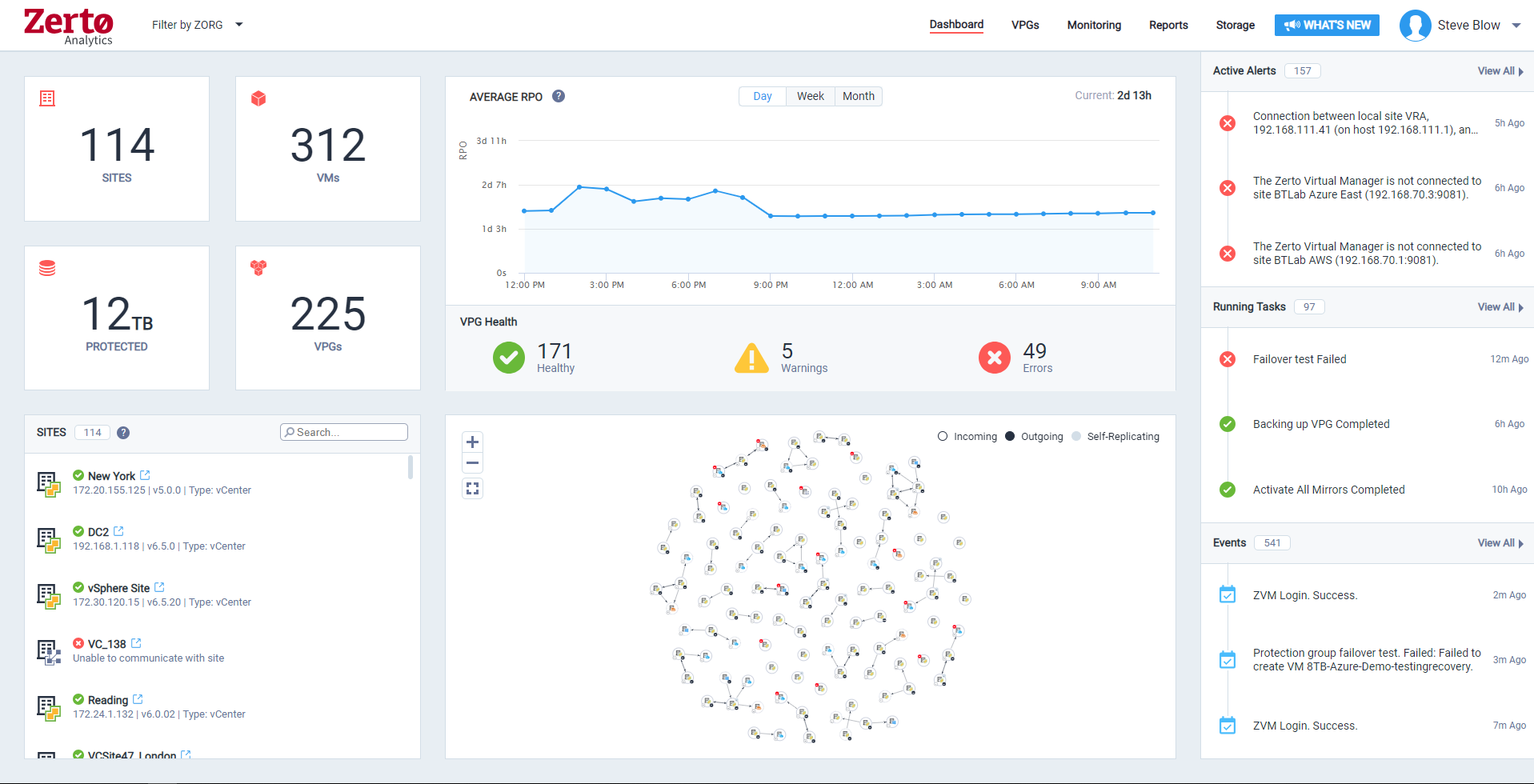
Zerto is well suited for disaster recovery and virtual machine replication between multiple data centers. DR testing for audit or regulations is much easier with Zerto, great reporting, dashboard etc. It is not well suited for physical server replication for disaster recovery or as a primary backup solution.
A de minimis incentive was given to thank the reviewer for their time. The incentive was not used to bias or drive a particular response, nor was the incentive contingent on a positive endorsement. More Info
What RabbitMQ does well is what it's advertised to do. It is good at providing lots of high volume, high availability queue. We've seen it handle upwards of 10 million messages in its queues, spread out over 200 queues before its publish/consume rates dipped. So yeah, it can definitely handle a lot of messages and a lot of queues. Depending on the size of the machine RabbitMQ is running on, I'm sure it can handle more.
Decent number of plugins! Want a plugin that gives you an interface to view all the queues and see their publish/consume rates? Yes, there's one for that. Want a plugin to "shovel" messages from one queue to another in an emergency? Check. Want a plugin that does extra logging for all the messages received? Got you covered!
Lots of configuration possibilities. We've tuned over 100 settings over the past year to get the performance and reliability just right. This could be a downside though--it's pretty confusing and some settings were hard to understand.
A de minimis incentive was given to thank the reviewer for their time. The incentive was not used to bias or drive a particular response, nor was the incentive contingent on a positive endorsement. More Info
Anyone with a large disk (VMDK) knows the issues of VMware snapshots. Most backup software is a "point in time backup" that uses snapshots. While the backup can be run multiple times per day the stress of the snapshot on the host and storage is eliminated by the continuous protection of Zerto log replication.
A client had a the disks on a VM go missing for some reason. We had them "flip the switch" for a real fail over and press the fail over button. The VM on our DR site started to come alive as the VM at the customer site was brought down. When the DR VM was fully up, automatic reverse replication started. The DR machine was available in a few minutes (to take into account different host hardware) for access. One the vm at both sites were in sync, we had the customer again repeat the fail over process and the DR site VM was turned off and the Production site VM was brought back on line. This was a 200 GB VM and the whole process was finished in about 3 hours.
Zerto also allows for "Test" fail overs that can be configured on many different functions, such as host, datastore, network and IP usage. Configuring the IPs is crucial to avoid inadvertent site cross contamination of the same VM.
Zerto can also retrieve files from any VM disk on the DR site without starting a VM. Very handy for retrieving files or directories.
Since Zerto is running continuous log replication, changes on the production VM are nearly instantaneously copied to the DR site. As with any data process, having sufficient bandwidth for "churn" peaks minimizes the delay in updating the DR site.
A de minimis incentive was given to thank the reviewer for their time. The incentive was not used to bias or drive a particular response, nor was the incentive contingent on a positive endorsement. More Info
It breaks communication if we don't acknowledge early. In some cases our work items are time consuming that will take a time and in that scenario we are getting errors that RabbitMQ broke the channel. It will be good if RabbitMQ provides two acknowledgements, one is for that it has been received at client side and second ack is client is completed the processing part.
A de minimis incentive was given to thank the reviewer for their time. The incentive was not used to bias or drive a particular response, nor was the incentive contingent on a positive endorsement. More Info
A de minimis incentive was given to thank the reviewer for their time. The incentive was not used to bias or drive a particular response, nor was the incentive contingent on a positive endorsement. More Info
We really like the easy setup of this replication solution, as well as the ease of management. Not to mention, our internal IT Economist determined that the Zerto solution would provide the best ROI out of the competing solutions we analyzed. So far, his calculations have been spot on, and we have saved substantially
A de minimis incentive was given to thank the reviewer for their time. The incentive was not used to bias or drive a particular response, nor was the incentive contingent on a positive endorsement. More Info
RabbitMQ is very easy to configure for all supported languages (Python, Java, etc.). I have personally used it on Raspberry Pi devices via a Flask Python API as well as in Java applications. I was able to learn it quickly and now have full mastery of it. I highly recommend it for any IoT project.
A de minimis incentive was given to thank the reviewer for their time. The incentive was not used to bias or drive a particular response, nor was the incentive contingent on a positive endorsement. More Info
Zerto is very easy to implement and support. Uses are broad, only issues are once something doesn't sync it is difficult to get assistance until your reach tier 2 or tier 3 support. Basic file and folder recovery is great. Live and test fail overs are also easy to implement without issue.
A de minimis incentive was given to thank the reviewer for their time. The incentive was not used to bias or drive a particular response, nor was the incentive contingent on a positive endorsement. TR verified that a representative sample of customers was invited. More Info
I gave it a 10 but we do not have a support contract with any company for RabbitMQ so there is no official support in that regard. However, there is a community and questions asked on StackOverflow or any other major question and answer site will usually get a response.
A de minimis incentive was given to thank the reviewer for their time. The incentive was not used to bias or drive a particular response, nor was the incentive contingent on a positive endorsement. More Info
Overall support is very good. We sometimes get pushback when asking Level 1 support to escalate to Level 2. This causes undue frustrations when you need a more knowledgeable support person to get involved. We've had to escalate to account reps a few times for this scenario. Zerto is very responsive and normally handles our requests very quickly.
A de minimis incentive was given to thank the reviewer for their time. The incentive was not used to bias or drive a particular response, nor was the incentive contingent on a positive endorsement. More Info
A de minimis incentive was given to thank the reviewer for their time. The incentive was not used to bias or drive a particular response, nor was the incentive contingent on a positive endorsement. More Info
RabbitMQ has a few advantages over Azure Service Bus 1) RMQ handles substantially larger files - ASB tops out at 100MB, we use RabbitMQfor files over 200MB 2) RabbitMQ can be easily setup on prem - Azure Service Bus is cloud only 3) RabbitMQ exchanges are easier to configure over ASB subscriptions ASB has a few advantages too 1) Cloud based - just a few mouse clicks and you're up and running
A de minimis incentive was given to thank the reviewer for their time. The incentive was not used to bias or drive a particular response, nor was the incentive contingent on a positive endorsement. More Info
We started out using Backup Exec which was in service until we virtualized our environment where it didn't perform as well at the time. Then we switched to Veeam which worked well, but then as we started needing to do migrations and off-site DR, we found ourselves relying on Zerto more often.
A de minimis incentive was given to thank the reviewer for their time. The incentive was not used to bias or drive a particular response, nor was the incentive contingent on a positive endorsement. More Info
For my organization, the pricing model was an upfront investment for the Zerto licenses. My organization prefers to pay upfront and not deal with month-to-month or year-to-year pricing models that most companies are moving to. But for some, the investment may be more than they can afford, and would prefer the year-to-year pricing model.
A de minimis incentive was given to thank the reviewer for their time. The incentive was not used to bias or drive a particular response, nor was the incentive contingent on a positive endorsement. More Info
I mean, it was 6 years ago, but we were up and going with all applications synchronizing in short order. The longest tasks was getting the 30 TB of application data synchronized between the datacenters.
A de minimis incentive was given to thank the reviewer for their time. The incentive was not used to bias or drive a particular response, nor was the incentive contingent on a positive endorsement. More Info
Positive: we don't need to keep way too many backend machines around to deal with bursts because RabbitMQ can absorb and buffer bursts long enough to let an understaffed set of backend services to catch up on processing. Hard to put a number to it but we probably save $5k a month having fewer machines around.
Negative: we've got many angry customers due to queues suddenly disappearing and dropping our messages when we try to publish to them afterward. Ideally, RabbitMQ should warn the user when queues expire due to inactivity but it doesn't, and due to our own bugs we've lost a lot of customer data as a result.
Positive: makes decoupling the web and API services from the deeper backend services easier by providing queues as an interface. This allowed us to split up our teams and have them develop independently of each other, speeding up software development.
A de minimis incentive was given to thank the reviewer for their time. The incentive was not used to bias or drive a particular response, nor was the incentive contingent on a positive endorsement. More Info
Zerto is like having the best possible insurance ... it just works, and often provides the backups taken overnight that are key in recovering data/work between overnight backups.
Zerto easily enabled the move of primary datacenters by allowing easy failover to a secondary site, and failback to the primary site.
A de minimis incentive was given to thank the reviewer for their time. The incentive was not used to bias or drive a particular response, nor was the incentive contingent on a positive endorsement. More Info