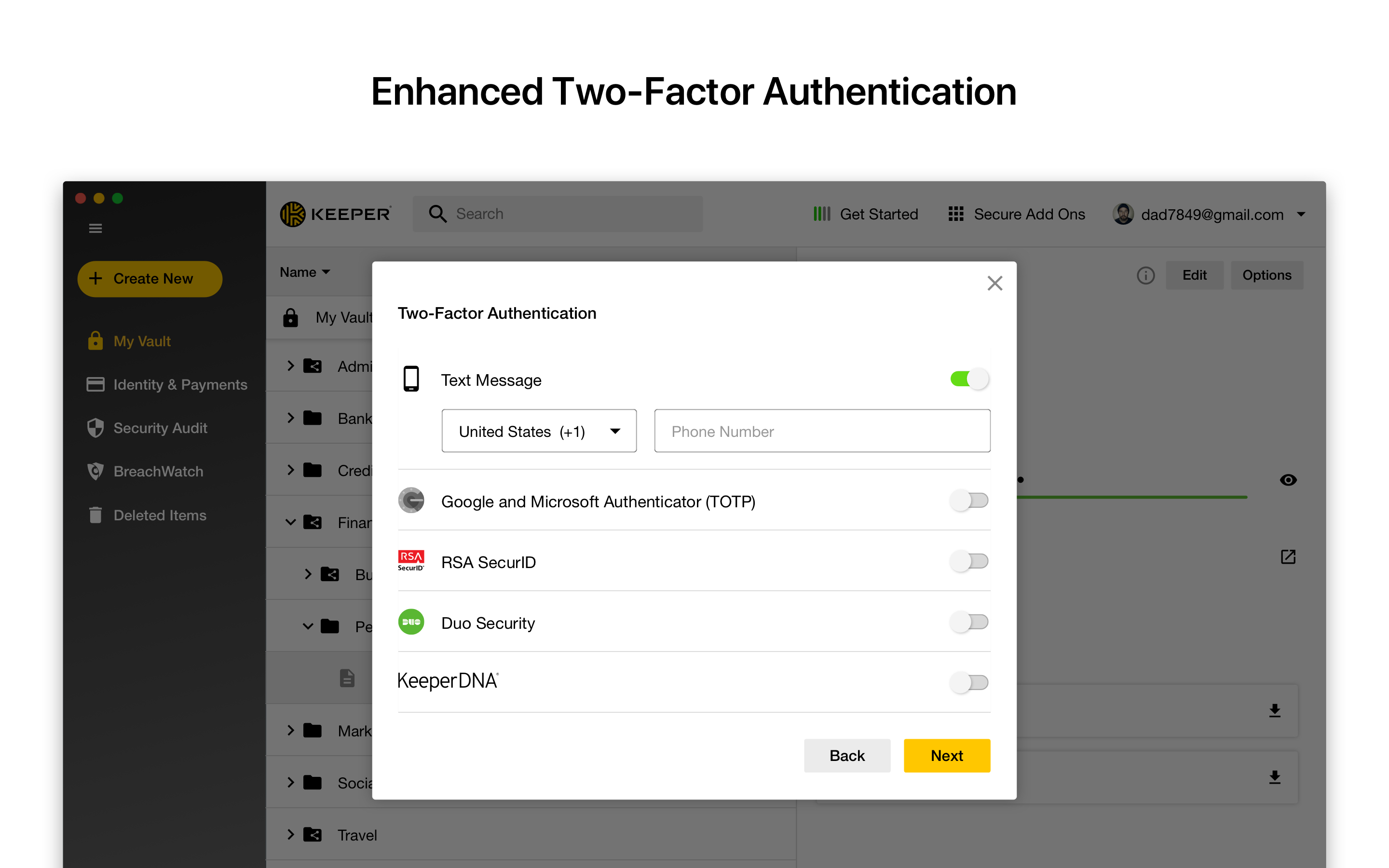
AgileBits in Toronto offers 1Password, a password manager available to both private individuals and businesses, touting a unique approach to multi-factor authentication to improve security.
$2.99
per month
Keeper
Score 8.1 out of 10
N/A
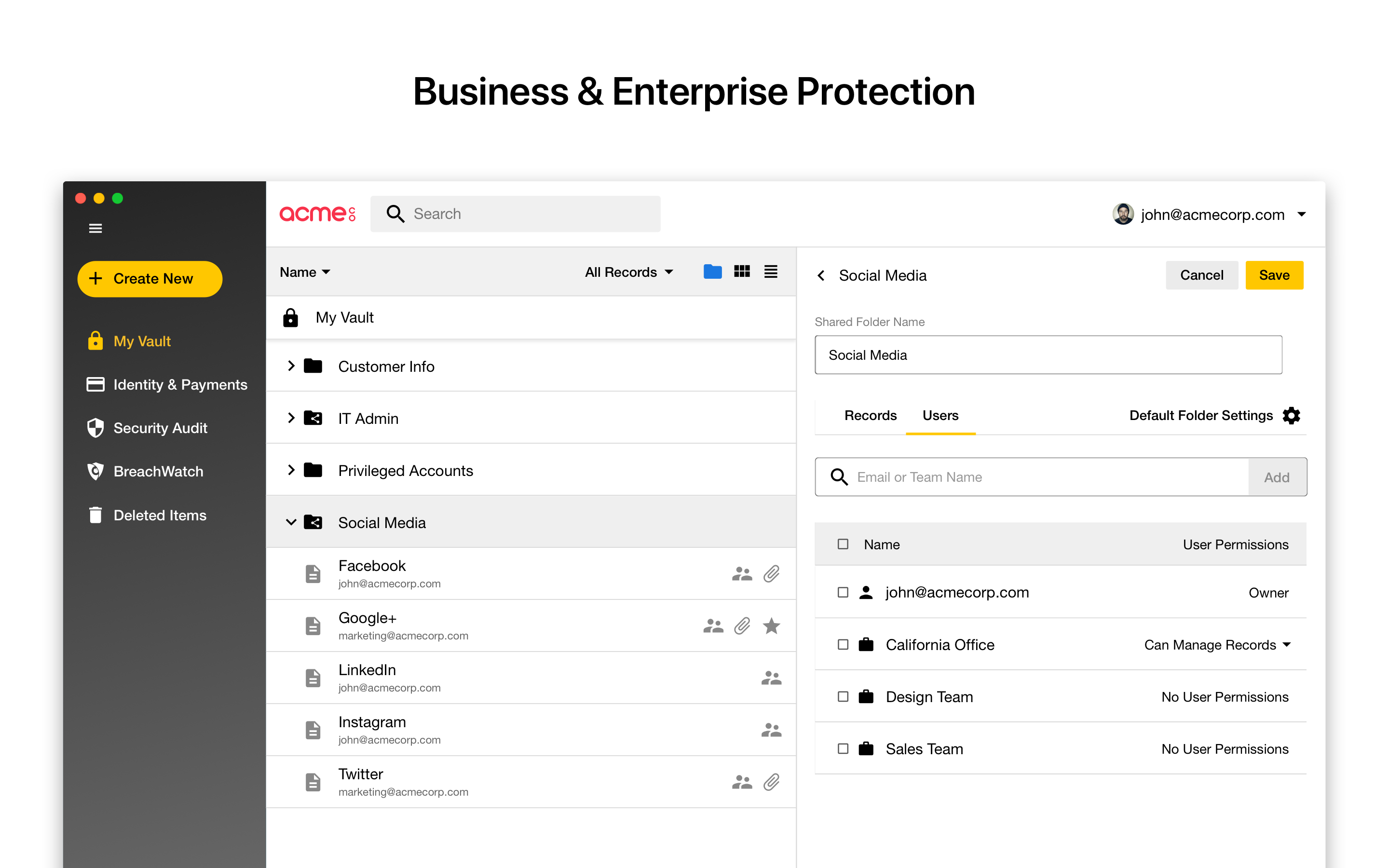
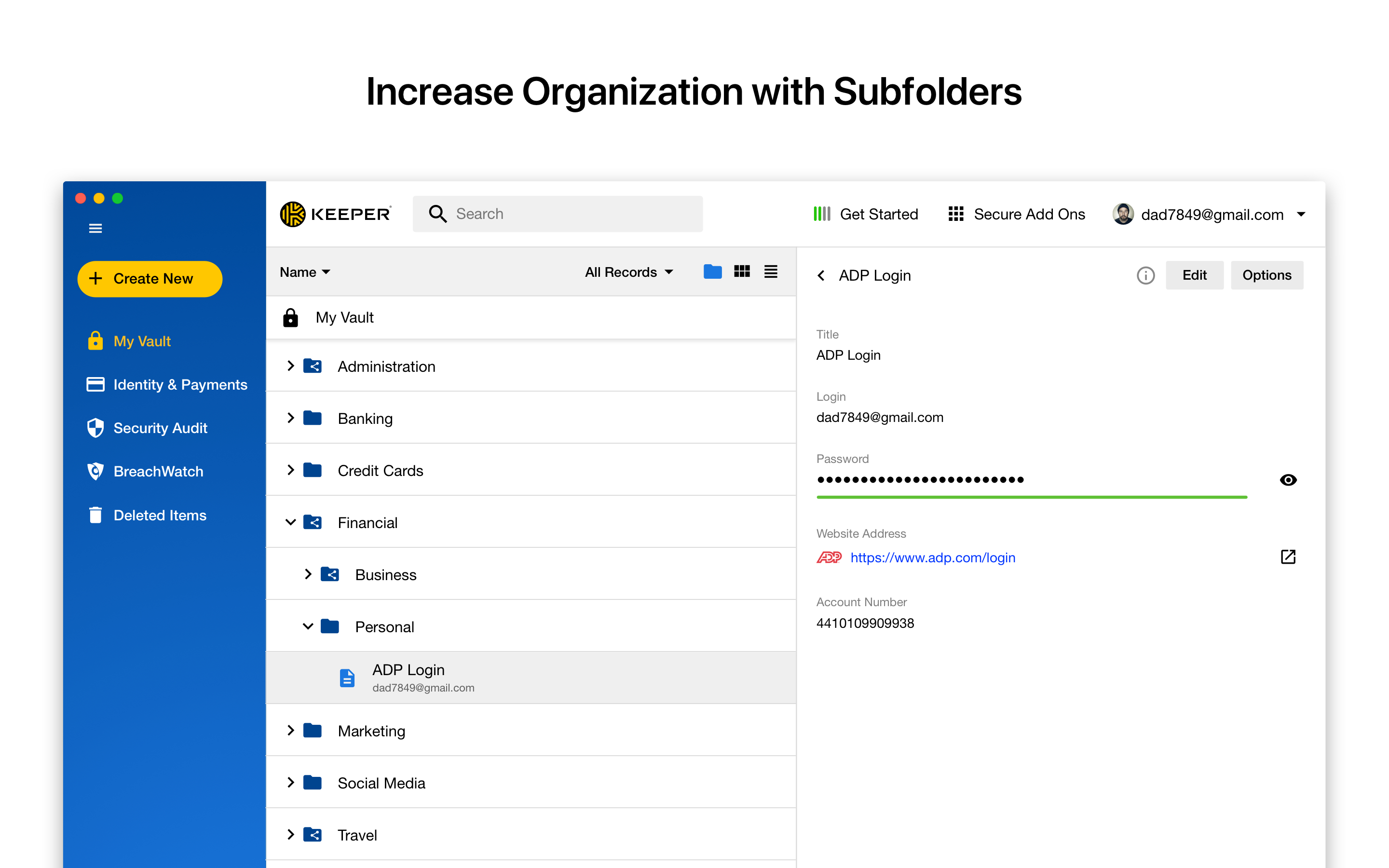
Keeper's password security and management platform boasts millions of people and thousands of businesses as users, who manage, secure and enforce strong passwords across all employee logins, applications and sites. Employees can access Keeper natively on all mobile operating systems, desktops and browsers. Keeper enables businesses to auto-generate high-strength passwords, protect sensitive files in an encrypted digital vault, securely share records with teams and integrate with SSO, LDAP and…
$2
per month per user
Yubico YubiKeys
Score 9.3 out of 10
N/A
Yubico YubiKeys make the internet safer with phishing-resistant multi-factor authentication (MFA) by providing simple and secure access to computers, mobile devices, servers, and internet accounts. The Yubico YubiKey stops account takeovers at scale by mitigating phishing and ransomware attacks, and delivers users authentication with a simple touch or tap.
I Would like to add Bitwarden as a comparison, but it's not listed on Trust Radius. We already trying another password manager too like Keeper (https://www.keepersecurity.com/) or Dashlane (https://www.dashlane.com/) . But based on its feature, ease of access, and pricing we …
They offer ways to store passwords or MFA support, but most need a root password. In addition, LastPass and 1Password do not have much support for MFA. This results in a lack of MFA support. For Okta, although it offers MFA and SSO, the OTP can be very annoying to have as I do …
I have tested the Google Titan Keys. I found Yubico YubiKeys to be a bit more durable and last longer. I've already had a few Google Titan Keys that have just gone out. They just stopped working. So the Yubico YubiKeys are a bit more lightweight and easier to fit on a key ring. …
1Password is a great tool when it comes to data security and managing your passwords. It is perfect for daily work that requires accessing a lot of different login credentials to different softwares, servers etc., so it is a great tool for all web developers and programmers, but also to project managers and other employees that have to login to multiple different services regularly.
I can only think of scenarios where Keeper is well-suited, in my experience. I work in small business (i.e., sole proprietor, 1 employee) environments and Keeper is well-suited to my needs. I imagine it would also be well-suited to multi-user environments, but would require a great deal more management and organization in such environments.
Yubico YubiKeys will likely always be my default recommendation for hardware security keys. It's well suited for environments where key portability is necessary, and for privileged environments where step-up or separate authentication hardware benefits the situation. For example, I can step up my Microsoft rights through PIM, but I'm required to use a Yubico YubiKey (AAGUID filter) even if I'm already using Windows Hello. This means that accessing my workstation doesn't grant rights, accessing my device AND my Yubico YubiKey does. I wouldn't necessarily recommend deploying Yubico YubiKeys to entire user populaces unless the situation calls for it (shared workstations, compliance environments, etc.). This is primarily centered around user training (which is a low bar, but still different), and dealing with loss (you'll want to budget for a % of key loss and be ready to rapidly issue replacements).
So as I said, the second-factor authentication that it does is really well. The response time is really good and all you have to do is just enter the second factor code and that's about it. Right? So that's the good part about using Yubico YubiKeys.
1Password is so secure, that it lacks a self-managed "forget your password" functionality which means that as a manager, I have to approve password resets which may slow down some users.
On Chrome, the extension sometimes stops working when the browser is updated.
It can be about access control because either right now it's just you have access or you don't have access. I think there can be a use case where you are allowed a particular set of servers and not a particular set of servers. I think maybe it's there or we don't use it, but I haven't seen that. I think I've used Yubico YubiKeys at two companies and I haven't seen that. Maybe that's something that can be added.
1Password is a great password manager and it helps us a lot in our every day duties at the company. Since implementing this solution we also feel way more secure when it comes to our own data or the data of our Clients.
As for implementing YubiKey its simple so I don't see us using anything else as we have experienced no issues so fare. Adding these to our environment is still new for us currently but in the transition phase I only see us buying YubiKey. It is highly rated and well known and cost is reasonable so no need to find another solution.
The 1Password app design is top notch, much better than a couple other password managers I've looked at. The app and service are very flexible, allowing for many different types of data storage. The browser extensions generally work very well, allowing for easy access to login information while using pretty much any modern web browser.
It's just easy to use, plain and simple. It has the complexity and user-interface that gives you confidence in its build but the ease-of-use that keep things from getting too complicated. A huge plus when you have to onboard new members of the team or summer interns when you need them to step in and make orders on your behalf.
I give slightly better than average rating because of the complexity in using a Yubikey. It is not as easy as native push notifications for 2FA products, however, it provides much better strength. Rating this higher or lower would be a disservice to people reading this review. If you are in the market for a hardware 2FA tool, Yubikey will be a great asset in your toolbox.
We have not experienced any issues with availability which is very important when you are dealing with a company that holds the keys to the gate. We have had more issues with availability from our SaaS providers before with authentication but that was on their end. YubiKey has worked every time for us over the course of the last 6 or so months we began testing phase.
We have not seen any lag in loading pages and getting into systems or sites. In comparison to other 2FA and MFA options it is actually faster most of the time to authenticate due to not having to type in. We require users to have long passwords and when there is an option given for password less they jump on it with excitement. As we explore going password less on their PC's the YubiKey is going to make their lives a lot easier to access the resources they need.
I have never had any issues with 1Password and they have always been able to answer my questions adequately resolve my issues. Furthermore, they have a robust peer forum that can be accessed. They have helpful "Get to know Apps", videos and many articles to assist in the process of using the product.
I figured it all out on my own with the excellent product documentation provided by Yubico. I even managed to produce a backup YubiKey in case I lost my frequently used one. This was crucial when I temporarily lost the original.
1Password and LastPass are presently quite comparable in terms of the feature set they offer to their users. Unfortunately, it is their pricing models that differ, and is the only reason we felt the need to switch to LastPass from 1Password. LastPass simply offered better pricing for their business tier k(cheaper by $1/user/month.)
I have used the Apple cloud, but if you forget your password into that, once again, you’re at the mercy of calling customer service. With Keeper, you can use the thumbprint option to log on, and there’s any of your needed passwords. It’s fast and simple, and you don’t have to wait online to unlock the app you’ve locked yourself out of.
Yubico YubiKeys has been a leader in the security key market, and I think they have a new product we just read about two days back and they can store up to a hundred private keys now. So I think this is what it distinguishes them from the market, apart from this, whatever features we need personally and for our customers. So they provide all those features, but versus the other brands.
For us I feel like the ease of deployment has made this product very appealing, overall this will make the scalability very easy for us to push out once we roll out to our users and the management tools that we have looked at will make the admins like me happy as it is clear and easy to use. The rollout process looks to be very straight forward from the demos that we have looked at regarding the enterprise tools.
The spreadsheets and printed papers being passed around the office with passwords on them have gone! This is a huge security hole plugged.
Users actively use the software which says something - it is easy to use and intuitive. When software is not intuitive, it tends to not get used.
It gives IT control over who does what with passwords, and while difficult to quantify it is certainly a dramatically positive impact on the organization.
I think it's the flexibility in being able to let users pick the type of authentications that they want to use. Some are comfortable with the touch device on the physical Yubico YubiKeys. Others prefer the mobile app. So it provides flexibility for our users to choose how they want to authenticate without running a file of our security requirements.