Abstract, from the company of the same name headquartered in San Francisco, offers a collaboration tool for developers and others, featuring a version controlled master file set and approval workflow.
N/A
OneDrive
Score 7.4 out of 10
N/A
OneDrive from Microsoft is a cloud storage and file syncing service.
$5
per month
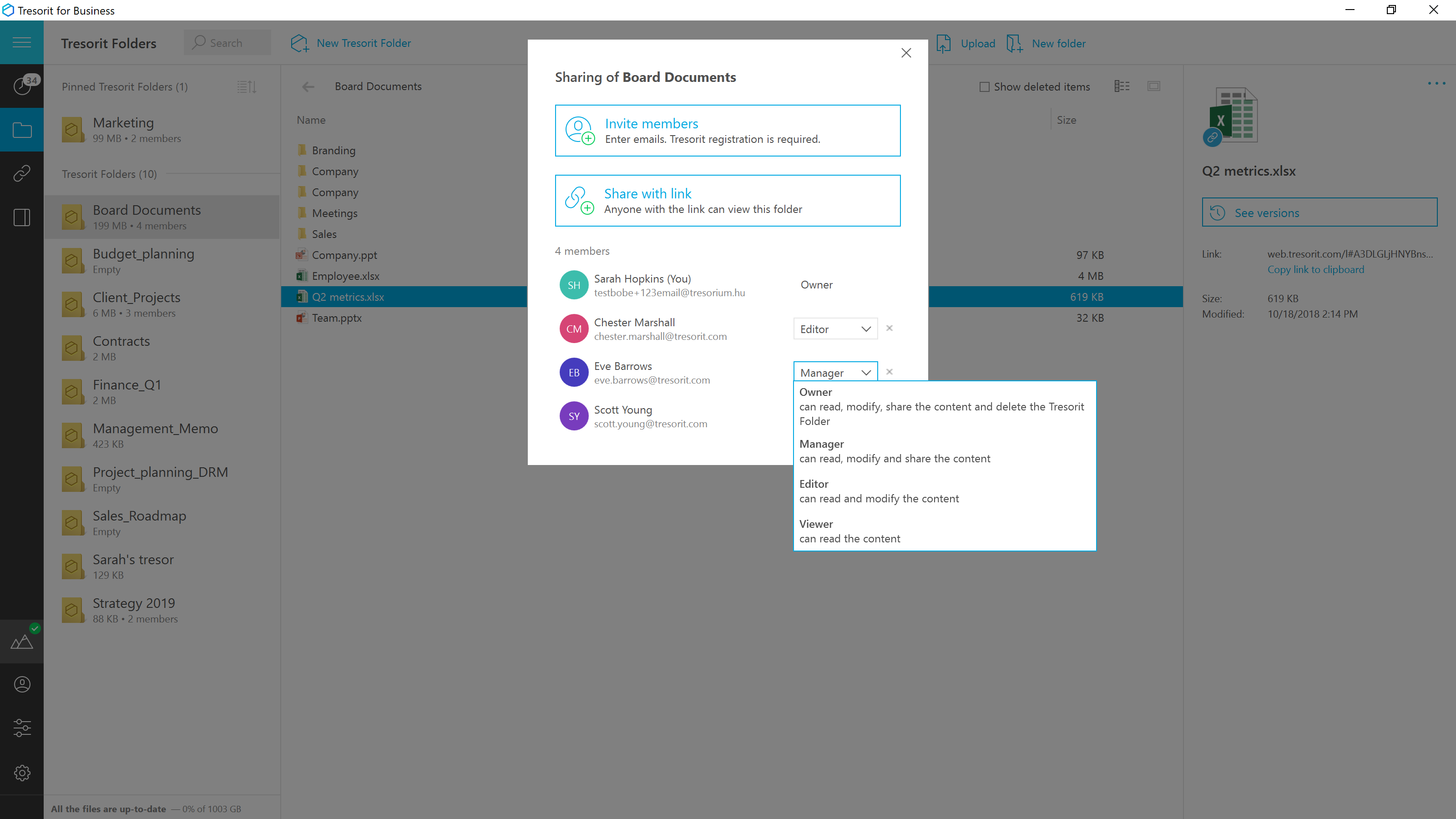
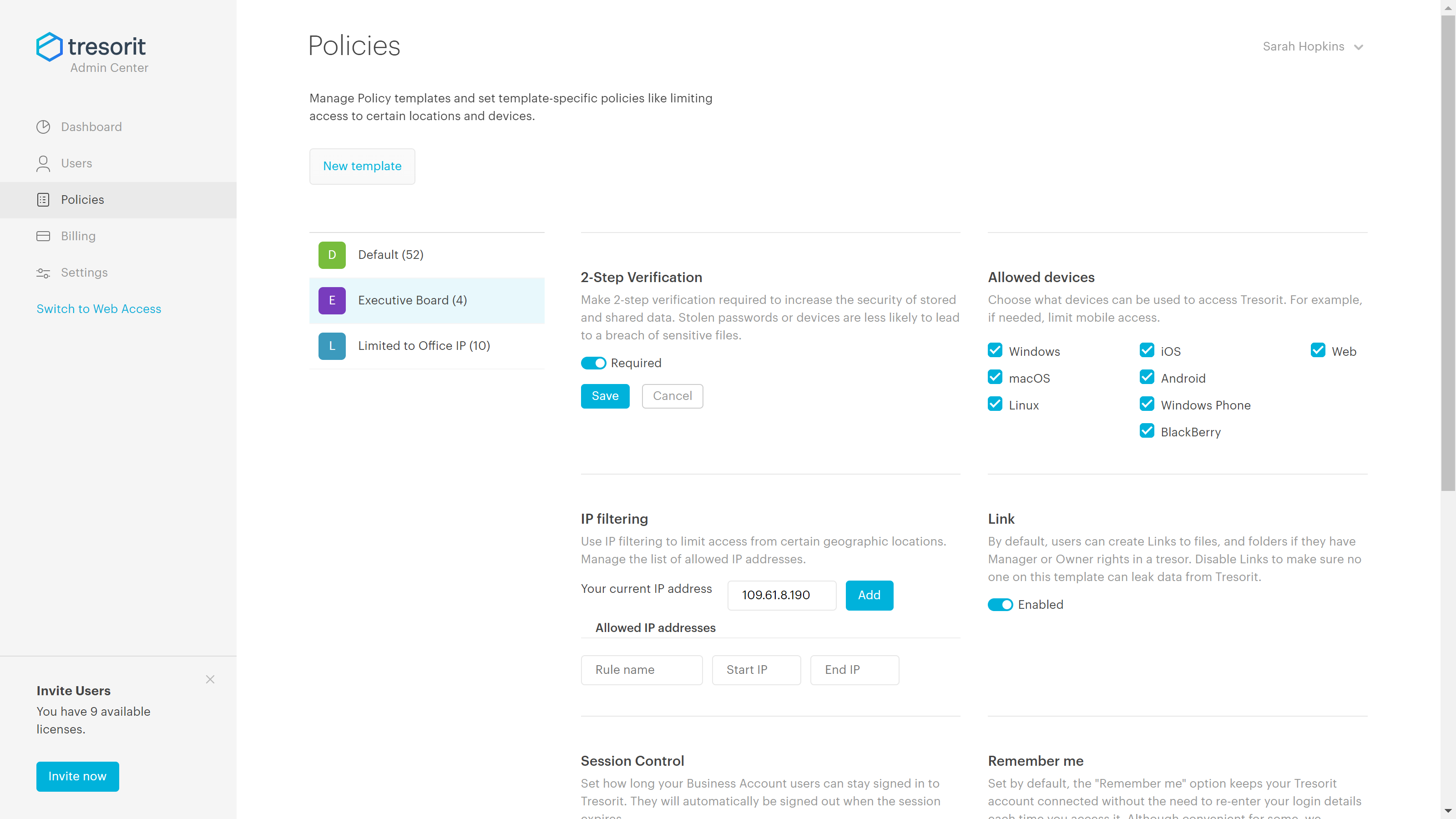
Tresorit
Score 6.2 out of 10
N/A
Tresorit offers end-to-end encrypted file
sync & sharing. The vendor promises an ultra-secure place in the cloud to store,
sync and share files easily from anywhere, anytime. The vendor says Tresorit is powered by
end-to-end encryption and enhanced with a flexible permission system, therefore
it seals your files away from internal data breaches and hackers. All the data
is securely stored according to the GDPR in Europe in Microsoft Azure
datacenters.
Tresorit promises to help secure…
$13.99
per month 1TB of encrypted storage
Pricing
Abstract
OneDrive
Tresorit
Editions & Modules
No answers on this topic
OneDrive for Business Plan 1
$5.00
Per Month (Annual Commitment)
Microsoft 365 Business Basic
$5.00
Per Month (Annual Commitment)
OneDrive for Business Plan 2
$10.00
Per Month (Annual Commitment)
Microsoft 365 Business Standard
$12.50
Per Month (Annual Commitment)
Personal
$13.99
per month 1TB of encrypted storage
Business Standard
$18
per month 1TB of encrypted storage
Business Plus
$24
per month per user (2TB of encrypted storage per user)
Professional
$33.99
per month 4TB of encrypted storage
Enterprise
Custom
Starts from 50 users
Offerings
Pricing Offerings
Abstract
OneDrive
Tresorit
Free Trial
No
Yes
Yes
Free/Freemium Version
No
No
No
Premium Consulting/Integration Services
No
No
Yes
Entry-level Setup Fee
No setup fee
No setup fee
No setup fee
Additional Details
—
OneDrive can be purchased as a standalone tool, or as part of a Microsoft 365's business suite.
Discount for annual pricing.
More Pricing Information
Community Pulse
Abstract
OneDrive
Tresorit
Features
Abstract
OneDrive
Tresorit
Project Management
Comparison of Project Management features of Product A and Product B
Abstract
7.8
4 Ratings
0% above category average
OneDrive
-
Ratings
Tresorit
-
Ratings
Workflow Automation
7.62 Ratings
00 Ratings
00 Ratings
Mobile Access
7.03 Ratings
00 Ratings
00 Ratings
Search
8.93 Ratings
00 Ratings
00 Ratings
Communication
Comparison of Communication features of Product A and Product B
Abstract
8.7
4 Ratings
8% above category average
OneDrive
-
Ratings
Tresorit
-
Ratings
Chat
10.02 Ratings
00 Ratings
00 Ratings
Notifications
9.04 Ratings
00 Ratings
00 Ratings
Discussions
8.04 Ratings
00 Ratings
00 Ratings
Internal knowledgebase
7.62 Ratings
00 Ratings
00 Ratings
File Sharing & Management
Comparison of File Sharing & Management features of Product A and Product B
Abstract
8.1
4 Ratings
1% above category average
OneDrive
7.1
119 Ratings
16% below category average
Tresorit
4.7
1 Ratings
56% below category average
Versioning
10.04 Ratings
7.695 Ratings
00 Ratings
Document collaboration
8.53 Ratings
8.4113 Ratings
2.01 Ratings
Access control
6.24 Ratings
6.7114 Ratings
2.01 Ratings
Advanced security features
6.92 Ratings
00 Ratings
00 Ratings
Device sync
9.13 Ratings
7.5117 Ratings
10.01 Ratings
Video files
00 Ratings
6.3106 Ratings
2.01 Ratings
Audio files
00 Ratings
6.3100 Ratings
2.01 Ratings
File search
00 Ratings
7.0119 Ratings
10.01 Ratings
Cloud Storage Security & Administration
Comparison of Cloud Storage Security & Administration features of Product A and Product B
Abstract
-
Ratings
OneDrive
7.3
113 Ratings
17% below category average
Tresorit
7.7
1 Ratings
11% below category average
User and role management
00 Ratings
7.1101 Ratings
9.01 Ratings
File organization
00 Ratings
7.8113 Ratings
5.01 Ratings
Device management
00 Ratings
7.096 Ratings
9.01 Ratings
Cloud Storage Platform
Comparison of Cloud Storage Platform features of Product A and Product B
I can speak from my own experience: in cases where workstations are switched every year or so, one drive makes it very simple to keep things synced, even for very large files. This is even true for large files (such as video or CAD files) that are enormous.
Good scenario: Wanting to have your files stored by an independent group that specializes in secure file storage. The ability to have files stored on servers that are not domestic is a big plus too. We had issues in the past with a solution that went down when the US AWS East Coast servers had an issue; Tresorit is insulated from these problems and appears to handle load balancing as well. Not good scenario: If you want to have outside parties, upload files/share files with you within your Tresorit environment. There is no way of doing this, and this is a real operational problem.
I like Box better. If you sign into Microsoft using a personal account, be EXTREMELY careful. All of your downloads could suddenly be available to your entire company, and that is incredibly embarrassing. Did that happen to me? Not going to say, but just always check which MS account you sign into.
Abstract has a difficult learning curve. If a feature-branch workflow is new to you, then it will take some getting used to. They make a lot of updates to the interface and these feature releases get ahead of their documentation. They rely heavily on an excellent customer support team and are present on various Slack channels to help design professionals with issues.
Using OneDrive is very intuitive and has been improved over the years. It's just like using native file management on either your Mac or PC. It's drag and drop functionality is easy and it clearly shows when files are uploaded to the cloud or if there are errors
It has a good performance, the pages load normally, access to the files, management, reports, everything is working well. With regard to integration with other systems, we have not done so yet.
Abstract by nature is complex and has to respond to whatever changes in Sketch. So there are frequent issues. Support can be slow to respond and are not always helpful, but they are quick to find and patch the bugs. Overall, it's not the best support, but it hasn't been detrimental.
It's a Microsoft product so there is a wealth of information online both from Microsoft directly and from millions of users but as a corporate user we also have access to direct Microsoft support through a variety of avenues (phone, email, etc.). This makes finding answers to issues more accessible, however, it does also mean that any new feature requests will get buried.
Exceptionally responsive. This is something we needed from our storage provider. We are continuously accessing the information, and downtime or technical issues would be and are unacceptable. We have had no downtime issues so far, and Support has been responsive to us whenever needed. Exactly what we needed from their service.
Box is another file-sharing application that is very similar to OneDrive. Box falls short of OneDrive in its syncing capabilities. OneDrive is very quick with syncing so you never have to be concerned that you are not using the most up-to-date materials. Box was always a bit delayed and did not always accurately sync across systems. OneDrive benefits from being backed by Microsoft, so you expect the connection across applications that it allows. OneDrive also provides consistency for use and intuitive understanding because of that Microsoft consistency. I'd prefer OneDrive over Box.
Secure and independently operated. We selected Tresorit for its secure file storage capabilities that the other services (except SpiderOak) did not provide. Tresorit is a zero-knowledge system, which gives us a lot of comforts when it comes to secure data storage. SpiderOak was a close alternative, but they have been in continuous development to provide competitive features, and still haven't provided what we needed (SpiderOak has promised features for several years at this point).
OneDrive allows us to save much time on creating and archiving backup copies of our data. Microsoft gives a guarantee on the possibility of recovery of files or folders even from 30 days ago. It provides a great comfort of work.