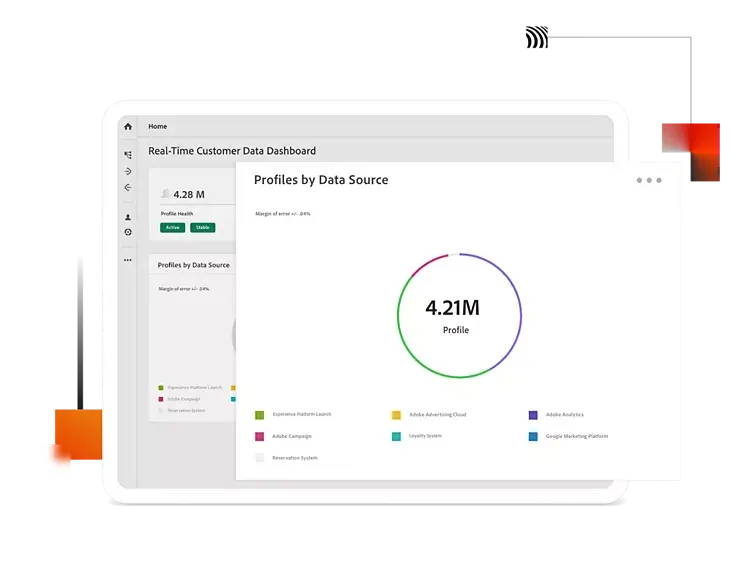
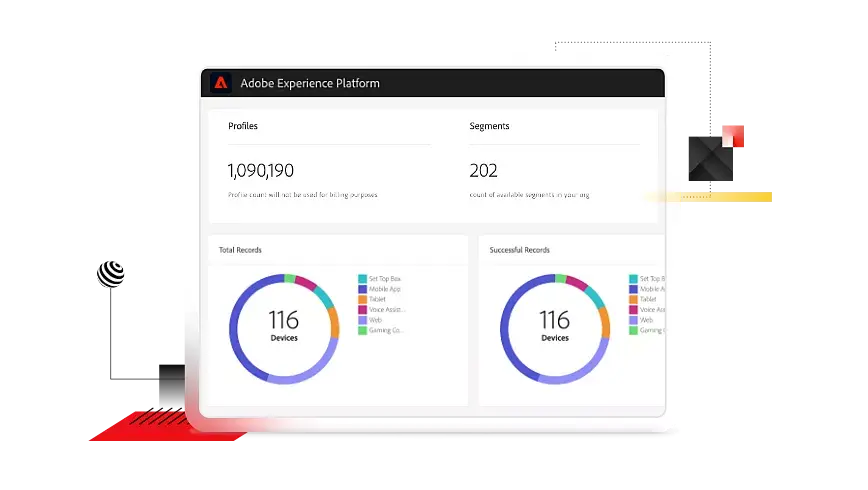
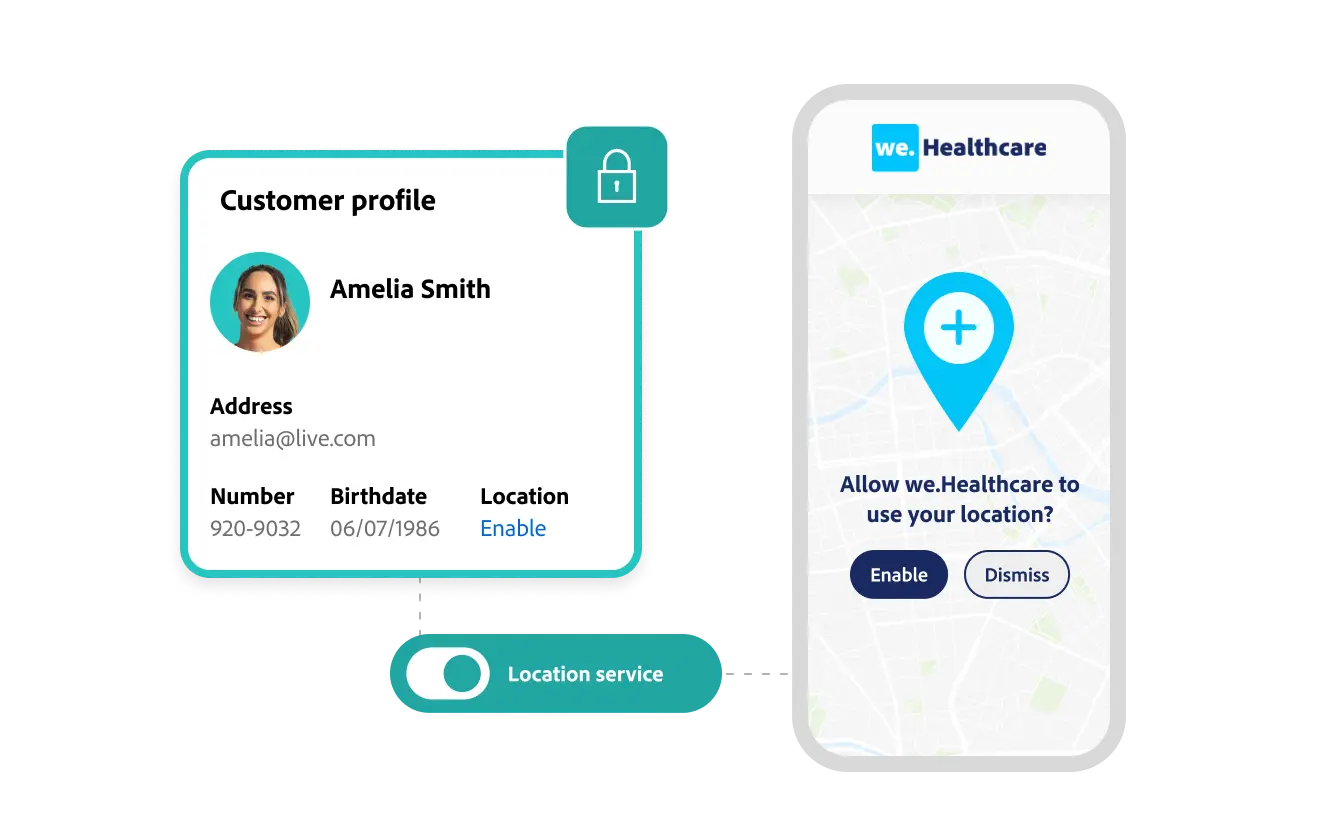
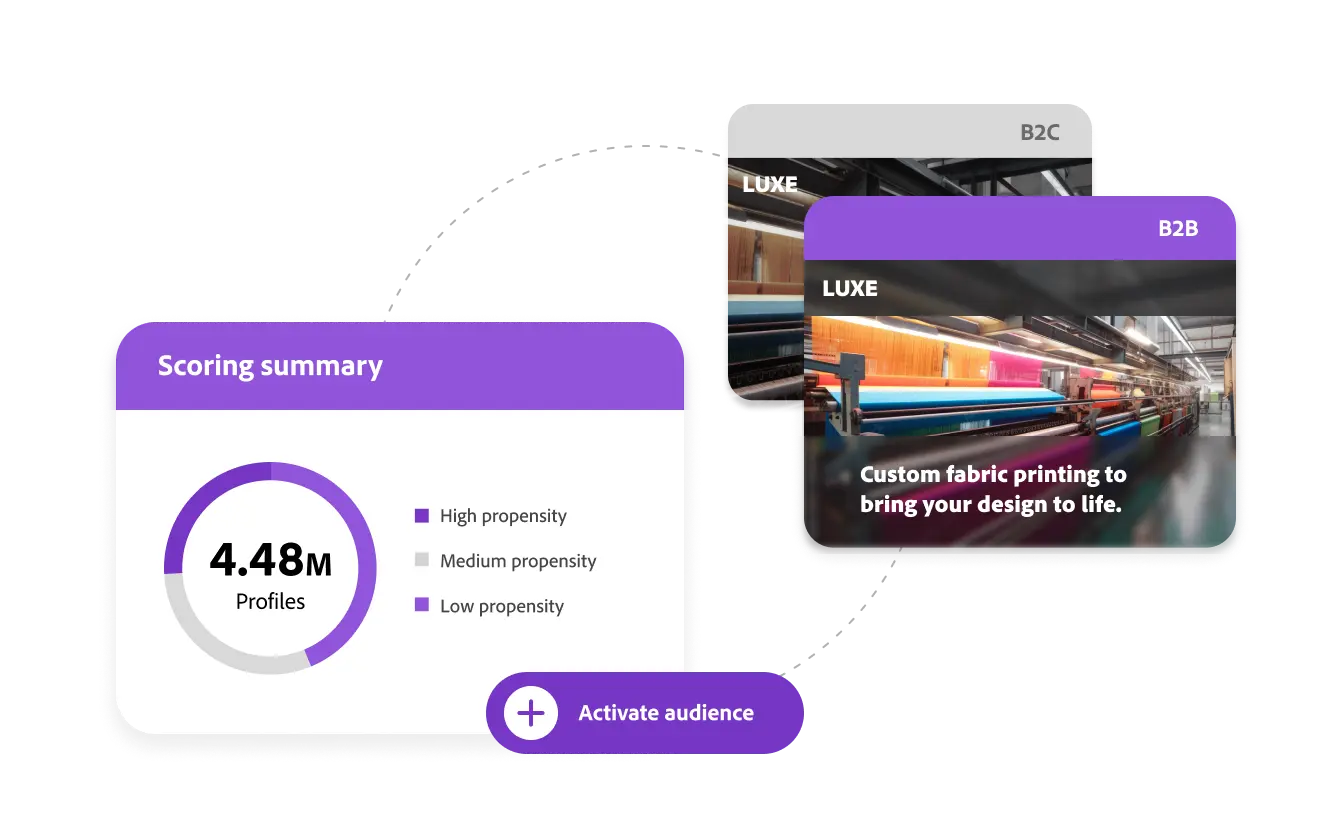
Adobe's Real-Time Customer Data Platform allows marketers to collect, normalize, and unify known and pseudonymous consumer and professional data into real-time profiles. These person or account-based profiles then power B2B, B2C, and hybrid customer experiences at scale.
N/A
Planhat
Score 7.9 out of 10
N/A
Planhat, headquartered in Stockholm, offers their modular suite of applications to subscription based businesses, providing customer success product usage health alerts and guidance, as well as revenue management for tracking subscriptions and business health.
N/A
Pricing
Adobe Real-Time Customer Data Platform
Planhat
Editions & Modules
No answers on this topic
No answers on this topic
Offerings
Pricing Offerings
Adobe Real-Time CDP
Planhat
Free Trial
No
No
Free/Freemium Version
No
No
Premium Consulting/Integration Services
No
No
Entry-level Setup Fee
Optional
No setup fee
Additional Details
Adobe offers three tiers of Real-Time CDP tailored for any type of business wanting to power their customer experience management strategy with unified customer data. The Business-to-Consumer Edition is for B2C brands wanting to personalize experiences for consumers. The Business-to-Business Edition is for B2B brands wanting to personalize experiences for leads and accounts. The Business-to-Person Edition is for combined B2C and B2B brands wanting to personalize experiences for the same person across all lines of business.
Compared to competitors like Salesforce Data Cloud and Twilio Segment, RT-CDP is strongest in real-time segmentation, audience activation, and deep integration with digital experience tools. It was purpose-built to stream data, unify profiles, and activate them quickly for …
Tealium CDP is too much simple and works mostly with those type of Business who are not majorly in Adobe's ecosystem. However in data governence Adobe Real-Time CDP is definitely a better product and help business to get robust growth
Its my favorite tool in the entire Adobe Experience Platform ecosystem. I thought that its important to be connected with your customers and the best way to do it its to have a really good description to reveal what they like and prefer, that's the most important thing, so …
CDP enables data management and segment aspects, leveraging data from ADobe Analytics and EDL, while Adobe Target enables us to do A/B Testing and personilation use-cases
Adobe takes a very different approach to how profiles are stitched together than these other platforms. There are pros and cons, but there are more pros to the way Adobe has approached it. Also, the Adobe approach is designed from the ground up in the context of the other AEP …
Adobe CDP is a very capable product that offers all of the features that its competitors offer and more. The only differences can be noticed while connecting with other external tools. Adobe can help easily connect with tools within its ecosystem: Analytics/Marketo/Target, etc.
Synerise - All segments are real-time. We do not need to wait for the batch process. Data automations/transformation processes in SAS 360 - do not know well. However, AEP has better UI.
Overall performance is great in Planhat, and value vs investment (money) is good! Planhat is made for larger companies and teams that want to create a scalable way of working cross departments.
I believe Planhat is the best Customer Success Management tool in the market. It gives me a 360-degree view of all my customers and has a modern interface as compared to the other similar tools that I have used. Planhat also offers a competitive pricing that makes it easier for …
I was not the person involved in choosing Planhat, but it seems to me that Planhat is much better suited to an account management style role, whereas Hubspot is closer to a sales CRM instead. In my position, Planhat is better suited as it is more graphical, more flexible, and …
When evaluating Planhat, we found that it had a better UI and was a more rounded product than Churn Zero. Planhat was considerably more expensive than Churn Zero, but we felt that the extra investment was worthwhile given that the product better met our needs.
Planhat compares relatively well to Totango, despite not coming along with the massive price tag. It was able to perform all of the functions our CSM team was needing and hoping it could do for us. It was able to highlight the customer's health according to the metrics we …
We needed a software that would not take months to set up and learn how to use. We needed powerful data that was easy to understand and action based on health scores dropping, etc. It was also important for us to be able to get our full team on the platform so that we could all …
Planhat was the most agile and easy to use software, while still having unique and powerful features that allowed us to really customize the software around our organization and needs. Planhat is more than a Customer Success tool in essence and adds tremendous value and …
Adobe Real-Time Customer Data Platform is well suited for organisations that have extensive PII data with attributes & consumer behaviors. Also, who wants to run omnichannel customer acquisition and focus on middle- or low-funch campaigns? Also, having multiple digital assets (i.e., website, mobile application, CRM, SMS campaign channels, etc).
Planhat is very cost-effective compared to its competitors and offers a similar level of functionality. So if you are looking for a CS platform that will give your CSM's all the data they need to manage their portfolio, then Planhat will do the job very well. I was part of the team that was tasked with selecting a CS platform for Pexip, and the combination of cost and performance made Planhat a clear winner against the other two products we were evaluating.
I still use Salesforce on a daily basis because that's the platform we use to generate quotes. It would be nice if I only had one platform to perform all of my CS tasks in. I'm not sure if that's a criticism of Planhat or not, as I don't know if it has a quoting module that we haven't implemented, or whether that function simply isn't available.
Excellent customer support and onboarding experience. They are very quick to respond to queries via the live chat. Our CS manager was brilliant in helping us get set up and making sure we were getting the most from all the features.
The platform and features are very user friendly and intuitive. It's an extremely powerful tool with a lot of functionality, but thankfully it doesn't take long to learn how to use it.
The customer portal is a game changer. The ability to share playbooks, data, and meeting notes all in one place is so useful for our customers and helps build trust and transparency.
Allow for cc'ing of AEs or others within the same organization from the messaging center. When I went to send a message from within Planhat, I had to manually type out the AE's email address every time if I wanted them cc'd.
The fonts were funky if I went to add text into an existing email template. For example, if I added in an extra sentence or paragraph, in Outlook on the recipient's end, the font was different despite looking the same within Planhat. Gmail was all consistent, Outlook was showing a different font.
We will definitely renew the product because we are making business through the software the data management and prediction is easier in this earlier the learning curve was tough but now as I have learnt it It became handy to me. We are successful in retaining previous precious clients now we can offer them discounts on early bookings, entertainment ideas can be discussed to engage people. So definitely I will work with Adobe Real-Time Customer Data Platform.
Activation - great Segmentation - in UI, there should be the possibility of writing advanced code Tags. Both Mobile and Desktop Data Ingestion - might be pain in the ass. Changing one customer attribute is time-consuming. It should be some super admin or some feature. One user can change some customers' attributes easily. Data Transformation - Maybe there are some modules for that in AJO?
It takes a while to learn Planhat even for experienced users. It has limitations in terms of what data you can present where, but its important to set internal guides outside Planhat as well so everybody working collaborative. But as CSM Planhat is a great- and critical tool which I use daily to optimise my work schedule and customer interaction with various topics.
Planhat support is excellent. We have a dedicated resource allocated to work with us, and he is extremely knowledgeable, articulate and responsive. The wider support team at Planhat is also very good, responding quickly to any issues logged. As an end-user, you can chat with Planhat support if you encounter any issues or have any questions, and they have always helped me.
Adobe CDP is a very capable product that offers all of the features that its competitors offer and more. The only differences can be noticed while connecting with other external tools. Adobe can help easily connect with tools within its ecosystem: Analytics/Marketo/Target, etc.
I believe Planhat is the best Customer Success Management tool in the market. It gives me a 360-degree view of all my customers and has a modern interface as compared to the other similar tools that I have used. Planhat also offers a competitive pricing that makes it easier for my team to evaluate as compared to other similar platforms. The support team of Planhat is also great which makes it the right fit for my organisation
Planhat has, for the first time, given us a 360-degree view of all our customers and access to all the different types of communication we have with them across different departments and functions.
The ability to automate workflows, tasks, and assign playbooks to the various phases of our customer lifecycle has aligned all our departments.