The WorkForce Suite, by WorkForce Software, is a mobile-first, cloud-based modern workforce management solution with integrated employee communications and collaboration capabilities. The WorkForce Suite aims to help global enterprise organizations optimize their labor, protect against compliance risks, and maximize productivity while building a highly engaged, resilient, and agile workforce.
N/A
Asana
Score8.5 out of 10
N/A
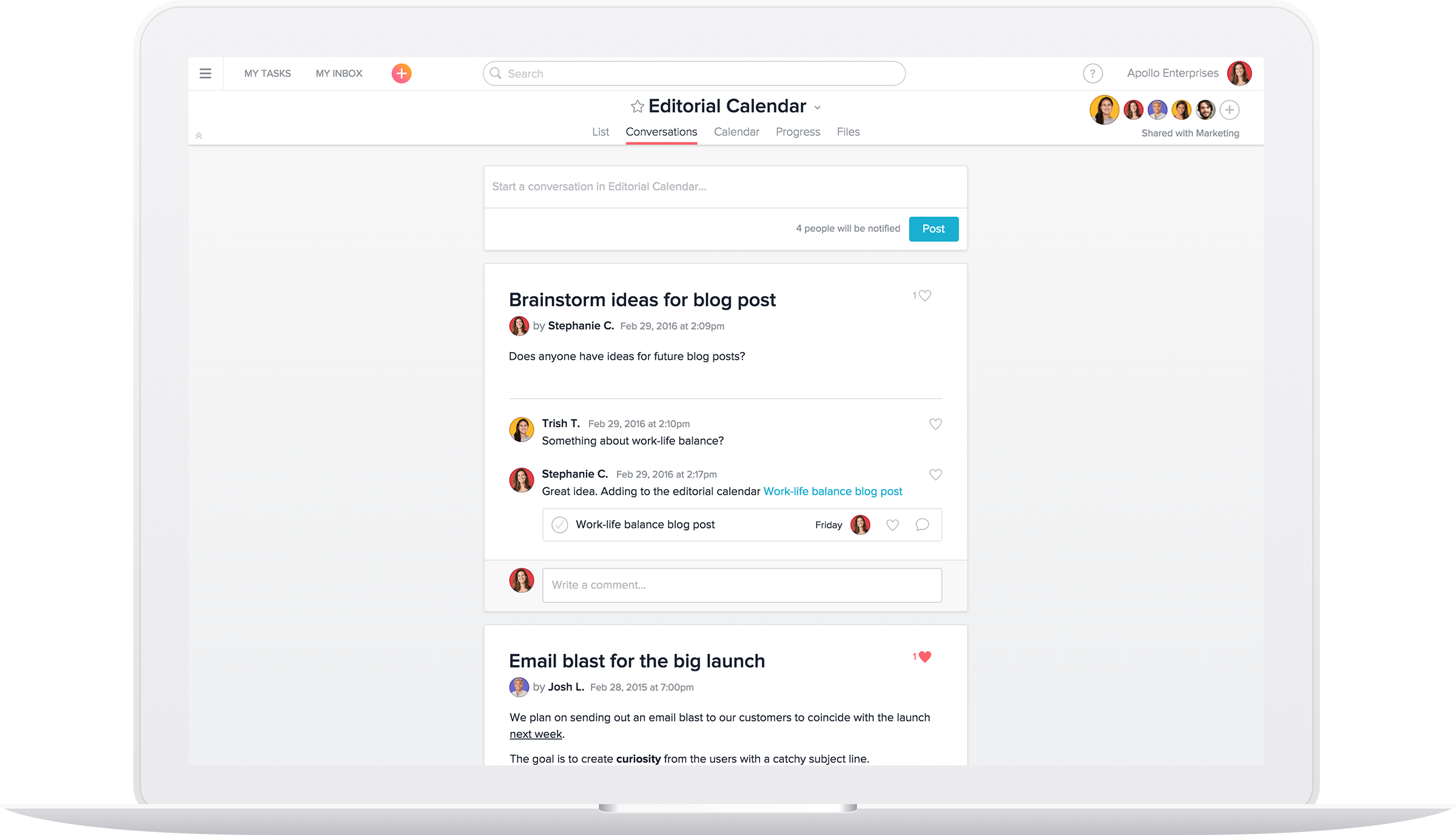
Asana is a web and mobile project management app. With tasks, projects, conversations, and dashboards, Asana lets an entire team know who's doing what by when, enabling workload balancing. Users can also add integrations for GANTT charts, time tracking and more.
EmpCenter is really well suited for companies with minimal variety in time keeping needs. Certainly somewhere that has fairly regular work schedules and operational needs the system would be programmed for and meet those needs quite well. I think they assert themselves as a product specifically for those more complex companies, and I believe it is one of a few products available for companies with many employee types and complex work schedule and pay needs, but because of those complexities each have their own specific customizations I feel it is difficult for the company to then manage the different products that end up existing. Each ends up being unique so applying large scale changes doesn't work well as something we may request and need if applied over EmpCenter in general may cause problems for another company. Therefore everything has to be done on an individual basis and is more time consuming and costly.
The usability of Asana is broad since it's available in a variety of platforms that are widely used nowadays. I think that it would be great for people who are constantly on the move and switching devices, since it has allowed me to work from my phone, too. I also think that Asana has proven itself to handle a large quantity of work
works well with other systems. We were able to collect data from another time system, Avaya phone systems and even a point of sale system with not a lot of difficulty.
They know their product and integration points. They were able to troubleshoot problems with hardware time collection devices quite quickly. We found the devices they sold to be quite durable.
Out of the box they have more reports than I would have anticipated. Creating new reports was sometimes a task if it was complex but there were usually similar reports you could use as a starter template
Through it, we were able to communicate and cooperate with the rest of the team to complete the work in the required manner and at the appropriate time.
A de minimis incentive was given to thank the reviewer for their time. The incentive was not used to bias or drive a particular response, nor was the incentive contingent on a positive endorsement. TR verified that a representative sample of customers was invited. More Info
A de minimis incentive was given to thank the reviewer for their time. The incentive was not used to bias or drive a particular response, nor was the incentive contingent on a positive endorsement. More Info
After spending close to 5 years to decide on which payroll product to acquire for our University, I cannot image we would switch now that we have it in use.
A de minimis incentive was given to thank the reviewer for their time. The incentive was not used to bias or drive a particular response, nor was the incentive contingent on a positive endorsement. More Info
It is very user-friendly. Takes a new employee an hour to start figuring out how the system works. That's an important factor. You don't want to encounter the issue where employees need a week to understand how the system works. For example, JIRA, I tried using it for a week and I still don't understand the complicated layout. Asana has a simple interface. Once you see it, you get it type of program.
A de minimis incentive was given to thank the reviewer for their time. The incentive was not used to bias or drive a particular response, nor was the incentive contingent on a positive endorsement. More Info
I haven't had to use their support so I can't rate it. The fact that I haven't needed them reflects the ease of use of the product. I would recommend that any new users schedule a complete demo of the product to ensure that they are using it to it's fullest (there's a lot of useful features).
A de minimis incentive was given to thank the reviewer for their time. The incentive was not used to bias or drive a particular response, nor was the incentive contingent on a positive endorsement. More Info
EmpCenter is a new software to the company however, I only trained on the old software for a few months before EmpCenter was introduced. I think EmpCenter has a smoother data entry process and can run more in depth reports, but since this is the system I know best I cannot accurately compare it to previous software.
Asana is a top-tier project management software that helps us organize and track projects from start to finish. It allows us to apply tasks/to-dos to multiple projects without duplication, divide complex projects into smaller tasks, and track project progress. It also helps us organize work on Kanban boards or linear lists. It stands out from the crowd in a big way compared to the competition.
EmpCenter has reduced the amount of time administrators are spending on payroll. Certainly it has made our entry to our pay system more efficient since we can simply load the data from the time keeping system and we are not collecting actual physical signatures and paper timesheets that must be reviewed for accuracy and completeness. The system does this for us and some automatic calculating of certain pay due that we were hand adding. However the feedback I am getting is that the supervisors feel their work has been increased greatly. They are spending more time correcting and approving time. Essentially the work we were doing in our central offices to review and correct time the supervisor must now do as they approve the time. We have now asked them to be more responsible for proper reporting and use which requires they know more about the rules and many different aspects of pay than they had before. We have employees who are union represented and get some benefits from the contract others do not receive, contract employees who have certain pay aspects in their contracts that must be known, as well as temporary employees and students who get very different pay from the other employees. While some things have been programmed for the system to know and handle, some things must be added to the time sheet to pay properly or the way time is reported is different (some clock out for lunch some don't) supervisors must now know these differences while that used to be a role that was more mine as an administrator. Now I just help them and audit and review.
A de minimis incentive was given to thank the reviewer for their time. The incentive was not used to bias or drive a particular response, nor was the incentive contingent on a positive endorsement. More Info