
Akamai Cloud Computing vs. Amazon Elastic Block Store (EBS)
Akamai Cloud Computing vs. Amazon Elastic Block Store (EBS)
| Product | Rating | Most Used By | Product Summary | Starting Price |
|---|---|---|---|---|
 Akamai Cloud Computing | N/A | Akamai Cloud Computing (formerly Linode) include scalable and accessible Linux cloud solutions and services. These products and services support developers and enterprises as they build, deploy, secure, and scale applications. | $5 per month | |
 Amazon Elastic Block Store (EBS) | N/A | Amazon Elastic Block Store (EBS) from AWS is designed for application workloads that benefit from fine tuning for performance, cost and capacity. Typical use cases include Big Data analytics engines (like the Hadoop/HDFS ecosystem and Amazon EMR clusters), relational and NoSQL databases (like Microsoft SQL Server and MySQL or Cassandra and MongoDB), stream and log processing applications (like Kafka and Splunk), and data warehousing applications (like Vertica and Teradata). | N/A |
| Akamai Cloud Computing | Amazon Elastic Block Store (EBS) | |||||||||||||||
|---|---|---|---|---|---|---|---|---|---|---|---|---|---|---|---|---|
| Editions & Modules | No answers on this topic | No answers on this topic | ||||||||||||||
| Offerings |
| |||||||||||||||
| Entry-level Setup Fee | Optional | No setup fee | ||||||||||||||
| Additional Details | CPU, transfer, storage, and RAM are bundled into one price. Storage capacity can be increased with additional Block Storage or S3-compatible Object Storage. Instant Backups can be added with complete independence to the stack. Linode NodeBalancers ensure applications are available. | — | ||||||||||||||
| More Pricing Information | ||||||||||||||||
| Akamai Cloud Computing | Amazon Elastic Block Store (EBS) |
|---|
| Akamai Cloud Computing | Amazon Elastic Block Store (EBS) | |
|---|---|---|
| Small Businesses |  DigitalOcean Droplets Score 9.7 out of 10 |  Vultr Score 8.9 out of 10 |
| Medium-sized Companies |  SAP on IBM Cloud Score 9.0 out of 10 |  Everpure FlashArray Score 8.3 out of 10 |
| Enterprises | SAP on IBM Cloud Score 9.0 out of 10 | Everpure FlashArray Score 8.3 out of 10 |
| All Alternatives | View all alternatives | View all alternatives |
| Akamai Cloud Computing | Amazon Elastic Block Store (EBS) | |
|---|---|---|
| Likelihood to Recommend | 8.1 (218 ratings) | 9.1 (20 ratings) |
| Likelihood to Renew | 9.2 (30 ratings) | - (0 ratings) |
| Usability | 8.6 (22 ratings) | 8.0 (1 ratings) |
| Availability | 8.2 (4 ratings) | - (0 ratings) |
| Performance | 8.2 (4 ratings) | - (0 ratings) |
| Support Rating | 9.0 (217 ratings) | 8.0 (1 ratings) |
| Online Training | 8.2 (1 ratings) | - (0 ratings) |
| Implementation Rating | 8.3 (12 ratings) | - (0 ratings) |
| Configurability | 9.1 (3 ratings) | - (0 ratings) |
| Ease of integration | 9.1 (2 ratings) | - (0 ratings) |
| Product Scalability | 9.1 (4 ratings) | - (0 ratings) |
| Vendor post-sale | 9.1 (2 ratings) | - (0 ratings) |
| Vendor pre-sale | 9.1 (3 ratings) | - (0 ratings) |
| Akamai Cloud Computing | Amazon Elastic Block Store (EBS) | |
|---|---|---|
| Likelihood to Recommend |  Akamai
| Amazon AWS
|
| Pros | Akamai
 Eric Mintz CEO | Amazon AWS
 Andrey Lokshin Senior Financial Analyst |
| Cons | Akamai
| Amazon AWS
 Anuj Rai Senior Associate Technology |
| Likelihood to Renew | Akamai
| Amazon AWS No answers on this topic |
| Usability | Akamai
 Erik Rothoff Andersson Founder | Amazon AWS
|
| Reliability and Availability | Akamai
| Amazon AWS No answers on this topic |
| Performance | Akamai
Erik Rothoff Andersson Founder | Amazon AWS No answers on this topic |
| Support Rating | Akamai
 Osama Khan Support Specialist | Amazon AWS
|
| Online Training | Akamai
| Amazon AWS No answers on this topic |
| Implementation Rating | Akamai
| Amazon AWS No answers on this topic |
| Alternatives Considered | Akamai
| Amazon AWS
|
| Scalability | Akamai
| Amazon AWS No answers on this topic |
| Return on Investment | Akamai
 Arthur Furlan CEO & Co-founder | Amazon AWS
|
| ScreenShots | Akamai Cloud Computing Screenshots   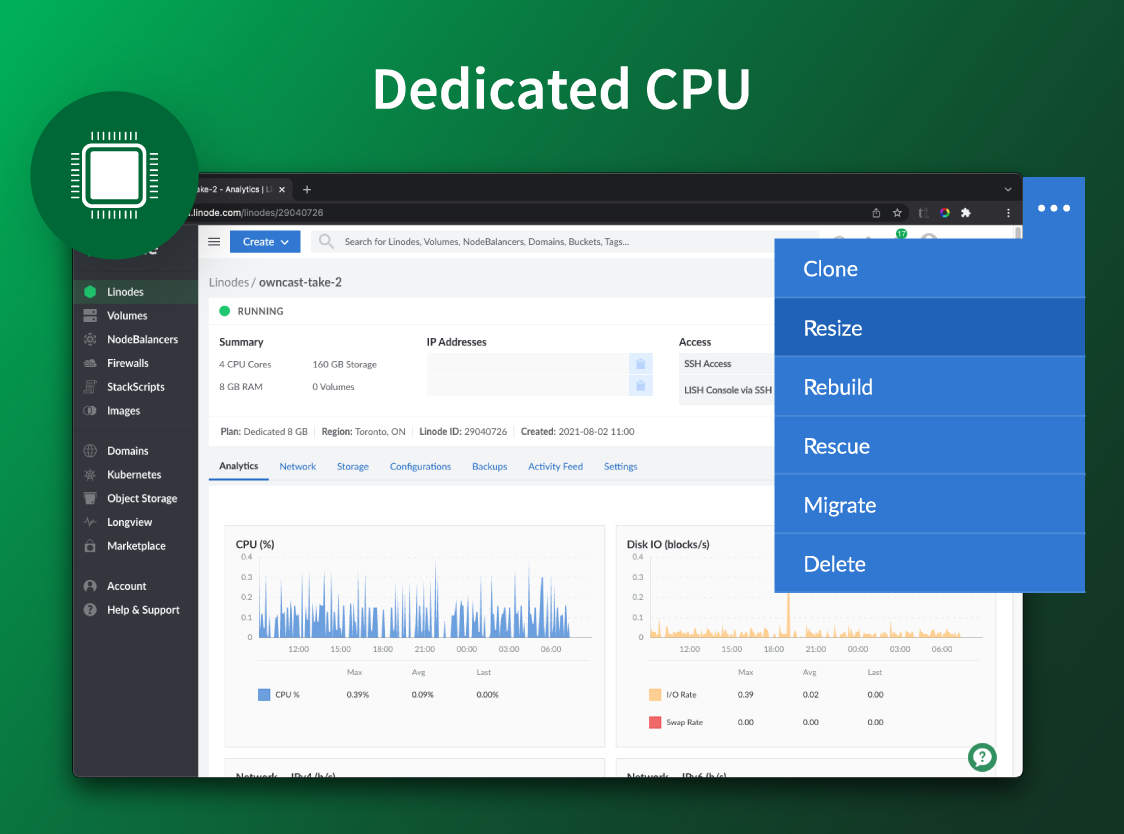 |