AWS offers the Amazon API Gateway supports the creation and publication of an API for web applications, as well as its monitoring and maintenance. The Amazon API Gateway is able to support thousands of API calls concurrently and provides traffic management, as well as monitoring and access control.
$0.90
Per Million
Azure API Management
Score 8.7 out of 10
N/A
Microsoft's Azure API Management supports creation of API.
$0.04
per 10,000 calls
SAP Integration Suite
Score 8.5 out of 10
N/A
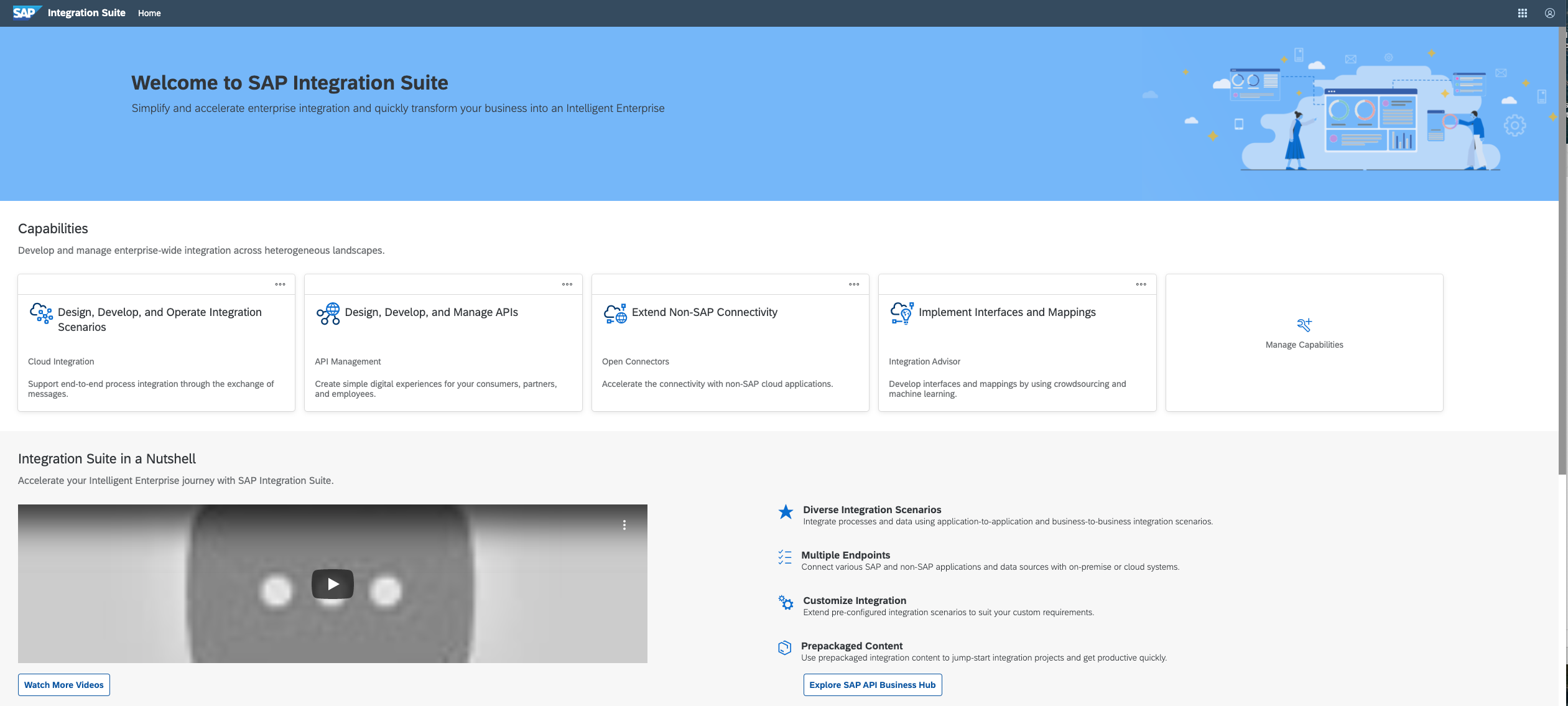
SAP Integration Suite is a modern, secure integration platform as a service (iPaaS) that connects applications, data, processes, and AI agents across SAP and non‑SAP environments.
$11,199
per year
Pricing
Amazon API Gateway
Azure API Management
SAP Integration Suite
Editions & Modules
Past 300 Million
$0.90
Per Million
First 300 Million
$1.00
Per Million
Consumption
0.042 per 10,000 calls
Lightweight and serverless version of API Management service, billed per execution
Developer
$48.04
per month Non-production use cases and evaluations
Basic
$147.17
per month Entry-level production use cases
Standard
$686.72
per month Medium-volume production use cases
Premium
$2,795.17
per month High-volume or enterprise production use cases
Isolated
TBA
per month Enterprise production use cases requiring high degree of isolation
No answers on this topic
Offerings
Pricing Offerings
Amazon API Gateway
Azure API Management
SAP Integration Suite
Free Trial
No
No
Yes
Free/Freemium Version
No
No
No
Premium Consulting/Integration Services
No
No
No
Entry-level Setup Fee
No setup fee
No setup fee
No setup fee
Additional Details
—
—
Access to free tier services does not expire while there is an active Pay-As-You-Go or CPEA account with SAP. Once a free tier service limit has been reached users have the option to update from a free to a paid service plan in the same account.
When we tested Azure API Management at the time, it had serious connectivity issues, it was very unstable, and it needed to do a lot using the command line. Comparing with the AWS solution, which was more mature, and the fact that we have services in use on AWS, we ended up …
Compared to other solutions, Azure is much easier to use and setup, but probably for hybrid solution Talend API in the cloud is the best solution and Talend API can take advantage of Amazon API Gateway, thus all this hard work is done by other software solution. Additionally, …
As AWS API comes with more security and API key authentication functions, it's easy for the organization to handle the various customers based with different level of permission. And also very easy comparable to others for tracking the API calls. Also, scalability and …
It’s a great tool, and so easy to seamlessly connect into your current Azure world that it’s hard not to look at it or even test the waters with it. It’s priced well, and is feature-rich enough to accomplish most tasks. I think the ease of having everything together and the …
Great services and integrating features that make it easy to use and implement. Given the risk of cyber attacks in order to protect customer data SAP cloud platform is better respective to other competitors. It helps in reducing the cost of duplicating the hardware, and …
SAP Integration Suite holds its own when it comes to integrating with SAP on-prem systems. But, the devops and comprehensive monitoring and configuration capabilities of the Azure API and devops services are much more well rounded offerings.
Other services seem to have a head start in supporting open standards. Not only in the support of up-and-coming ones but some fringe technologies as well. The biggest advantage of SAP is connectivity and interoperability with their core modules.
Experienced a lack of available programming languages while working on a minor project. I had to halt the project and wait for it to be added later. It took ages and had a hit on our productivity. It has a centralized management system which helps and an easy interface which helps to manage multiple tasks in case of large-scale operations and projects.
1) Securing your back-end APIs - If you have a legacy back-end web service that has a basic authentication scheme, you can add some additional security by placing APIM in front, and requiring subscription keys. Leverage your existing firewall to ensure only your APIM instance can communicate with your back-end API, and you've basically added a layer of protection.
2) Lift and shift - there are always going to be clients that don't want to update their clients to use a newer API; in some cases you can make a newer API look like an older one by implementing some complex policies in APIM. You can also do the opposite, making older APIs look new, such as making an XML back-end accept both JSON and XML.
3) Centralizing your APIs - if you've acquired another company and want to make their API set look as if it's a part of the larger whole, APIM is an easy way to provide a consistent front-end interface for developers.
In our case to have a such a poweful middleware in the cloud, give us a lot of benefits such as maintenance and support. In the integration part to be able to connect SAP and Non SAP applications makes SAP Integration Suite a good investment when our master data in this case is in S4HANA. Less appropriate is that sometimes the updates in production tenant failed and they have to downgrade or repair the issues. Affecting the usage of the tool. I guess SAP team have to be more aware of performing the changes and tested well on development environments and then when they know for sure that is the correct way to go with the update put it in production.
API Gateway integrates well with AWS Lambda. This allows us to build a web server in the language and framework of our choice, deploy it as a Lambda function, and expose it through API Gateway.
API Gateway manages API keys. Building rate limiting and request quota features are not trivial (or interesting).
API Gateway's pricing can be very attractive for services that are accessed infrequently.
Lack of robustness is a bit of an issue. Several other providers offer more options and capabilities, but then, they are lacking in interface ease.
As with anything Azure, pricing is really hard to stay on top of. I always find that you really don’t know what you’re paying for until you get the bill. Having an excellent Azure Administrator can help resolve that.
Integrating with app services outside of Azure can be a challenge, or at least much more challenging than just using Azure App Services.
Provide more pre-built integrations to use within SuccessFactors or other modules instead of everything having to be custom built
Support is unable to provide advice on custom builds so you often have to engage a 3rd party partner
Works best when you have the functional and technical teams working together. Otherwise, the system is too technical for a functional user to create integration and a technical user not always understand the functional perspective
It is in place, our system integrators are familiar with it, and it fits into the ecosystem. A better user interface, flow build and debugging experience would see it grow, many technical staff do not enjoy using it for this reason, however it is quite capable and powerful behind this one shortcoming.
It is a great product very reliable and stable for connecting various aws services like we connected with lambda function and it is working very well, never faced any issue after the setup. It also saves out lots of money as well as time after we implemented the automatic ec2 server recovery system
The user interface is messy and not intuitive. It has a steep learning curve, and flows developed around are easy to make a mess with layout and can be difficult to follow. The debugging is also quite difficult, it takes some time to figure out how to follow the flow and examine data. Error handling is also difficult and not intuitive, it is better to let some errors leak and monitor through ALM.
We always had a great experience with the AWS support team. They were always on time and very dependable. It was a good partnership while we worked to resolve our issues.
The support for SAP Integration Suite is satisfactory. We leverage SAP support through our manage services partner. So far, we have not had many major issues. One concern, to make our rating a ten, would be turnaround time on high priority incidents. SAP Integration Suite drives our key business functions forward. Without a reasonable service level agreement on turnaround, we sometimes find us running into issues running pay, etc.
When we tested Azure API Management at the time, it had serious connectivity issues, it was very unstable, and it needed to do a lot using the command line. Comparing with the AWS solution, which was more mature, and the fact that we have services in use on AWS, we ended up choosing to continue using AWS products. This so as not to run the risk of increasing latency in accesses, and of some functionality not working, due to being developed yet.
SAP Integration Suite was already part of our SAP stack, part of Business Technology Platform, with out-of-the-box integration with S/4 HANA transactional and ERP system that we are using as our main back-end. Thus, we are achieving significant Total Cost Optimization benefits or running both solutions on the same platform, hosted on Azure cloud.