Apache Spark is a multi-language engine for executing data engineering, data science, and machine learning on single-node machines or clusters.
N/A
Woopra
Score 3.0 out of 10
Enterprise companies (1,001+ employees)
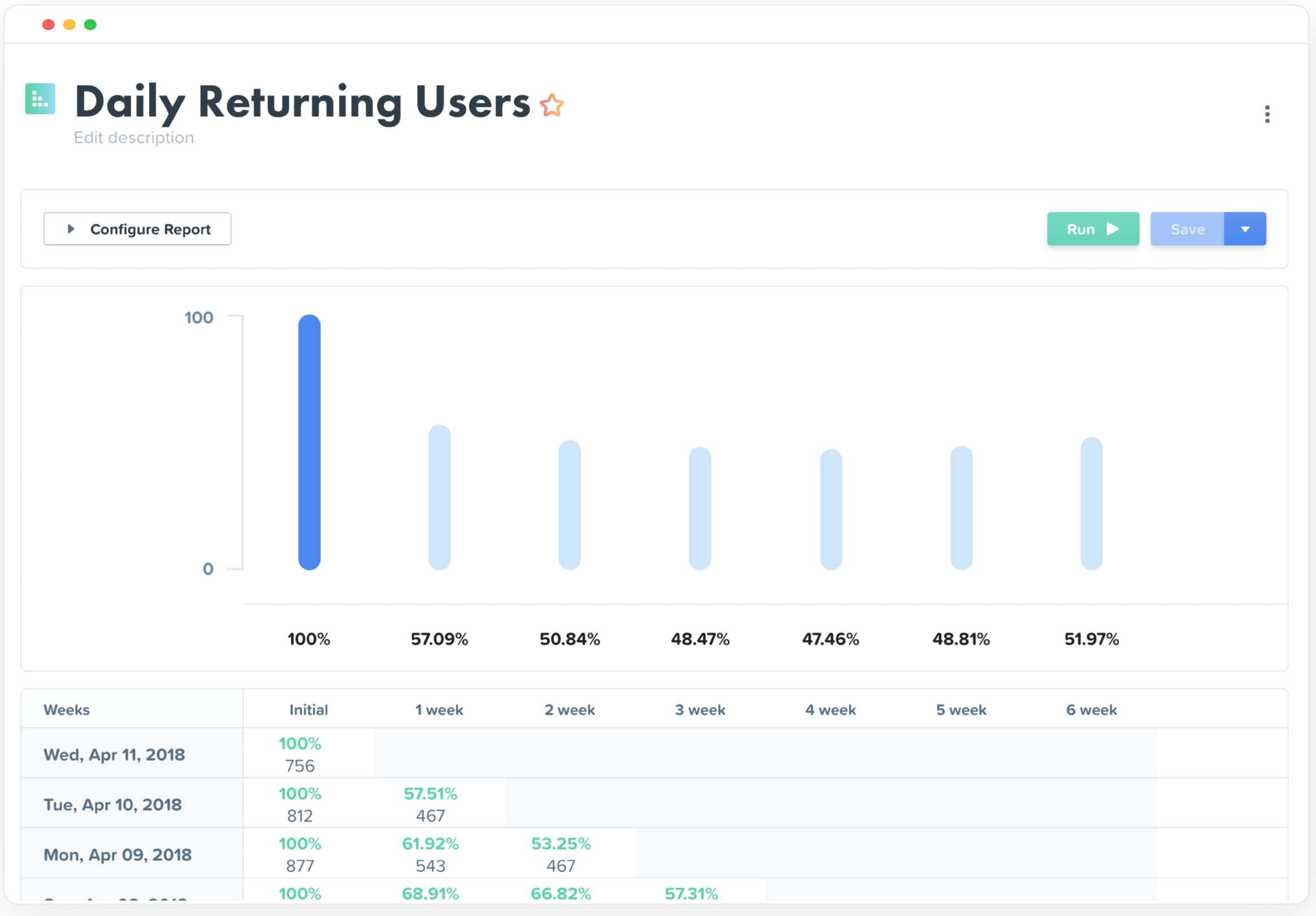
Woopra provides real-time customer analytics. It begins by tracking users across digital touch points (website, mobile app, help desk, marketing automation, etc.) and building a comprehensive behavioral profile for each user. These Customer Profiles are Woopra's building blocks, which are used to generate custom analytics reports, funnel analytics, retention analytics, and more.
Well suited: To most of the local run of datasets and non-prod systems - scalability is not a problem at all. Including data from multiple types of data sources is an added advantage. MLlib is a decently nice built-in library that can be used for most of the ML tasks. Less appropriate: We had to work on a RecSys where the music dataset that we used was around 300+Gb in size. We faced memory-based issues. Few times we also got memory errors. Also the MLlib library does not have support for advanced analytics and deep-learning frameworks support. Understanding the internals of the working of Apache Spark for beginners is highly not possible.
My rating of Woopra is the absolute best possible. I would recommend them to anyone looking for an analytics website that prefers a visual interface and a beautiful design. I have not encountered any problems using their app -- ZERO! Their integration with other marketing software, such as MailChimp, helps our company zero in on our marketing campaigns and gives us the information we need to make better choices. I LOVE Woopra and think they are the best out there! I have used other websites and there is no comparison!
Woopra tracks *individual users and customer accounts*. It cannot be understated how important this is. Google Analytics and other low cost solutions only sample users and provide aggregate data. For enterprise sales, this is critical. Likewise, for product managers trying to segment product usage by types of accounts, this is incredibly useful.
Woopra updates user analytics in real time. This is critical in a sales context as you want to be able to follow up quickly on opportunities. Likewise, it is useful for customer success as they can see usage in real time for an individual they are supporting.
Woopra has the most turnkey integrations of any web analytics solution on the market. By far the most useful are Marketo, SalesForce, and Slack, but there are several more we didn't tap into. While any solution worth its salt has an API, Woopra's integrations usually require a login and/or API key, and you are good to go. Here is the current list: https://www.woopra.com/appconnect/.
Woopra enables B2B product managers to track product and feature usage by revenue, not just clicks. Again, in a B2B context, this is critical, as there are high-value users and low-value users. Knowing the difference is critical.
Woopra's implementation is super simple. We were able to set it up with a couple of hours of one frontend developer and some help from our product intern.
We just really like the tool. There are lots of us using it internally... from Product, to marketing, to customer service, to optimization team, to traffic acquisition, to Executives. Really helps us answer questions about how well things are going, and what is not going well.
If the team looking to use Apache Spark is not used to debug and tweak settings for jobs to ensure maximum optimizations, it can be frustrating. However, the documentation and the support of the community on the internet can help resolve most issues. Moreover, it is highly configurable and it integrates with different tools (eg: it can be used by dbt core), which increase the scenarios where it can be used
The UI and reports are great overall. Creating reports just requires a few too many screens and clicks. Also dashboard tiles can't be resized. Both of these are easy items that are being addressed
1. It integrates very well with scala or python. 2. It's very easy to understand SQL interoperability. 3. Apache is way faster than the other competitive technologies. 4. The support from the Apache community is very huge for Spark. 5. Execution times are faster as compared to others. 6. There are a large number of forums available for Apache Spark. 7. The code availability for Apache Spark is simpler and easy to gain access to. 8. Many organizations use Apache Spark, so many solutions are available for existing applications.
Compared to other products, the support was a small effort. We only had part time contributions from a product management intern and front end developer.
Spark in comparison to similar technologies ends up being a one stop shop. You can achieve so much with this one framework instead of having to stitch and weave multiple technologies from the Hadoop stack, all while getting incredibility performance, minimal boilerplate, and getting the ability to write your application in the language of your choosing.
Woopra is much easier to setup and use than Google Analytics. I've spent hours trying to create custom reports in Google Analytics. Woopra does not take this much time to get solid reporting for our site. If you need something that tracks marketing efforts then Google Analytics will likely be a better fit.
Really helped us begin to segment our users based on their engagement and retention.
Helped increase retention by about 1.5% after about 5 months of implementation (don't shoot the messenger if your team can't implement that quickly).
I felt like it had great potential to create a pipeline between sales and the CSM, but I had trouble getting the sales team to implement it properly as they had their noses deep in calls and emails (they struggle entering notes in SalesForces as well, so it's more a company specific problem).