Tomcat is an open-source web server supported by Apache.
N/A
NGINX
Score 9.1 out of 10
Mid-Size Companies (51-1,000 employees)
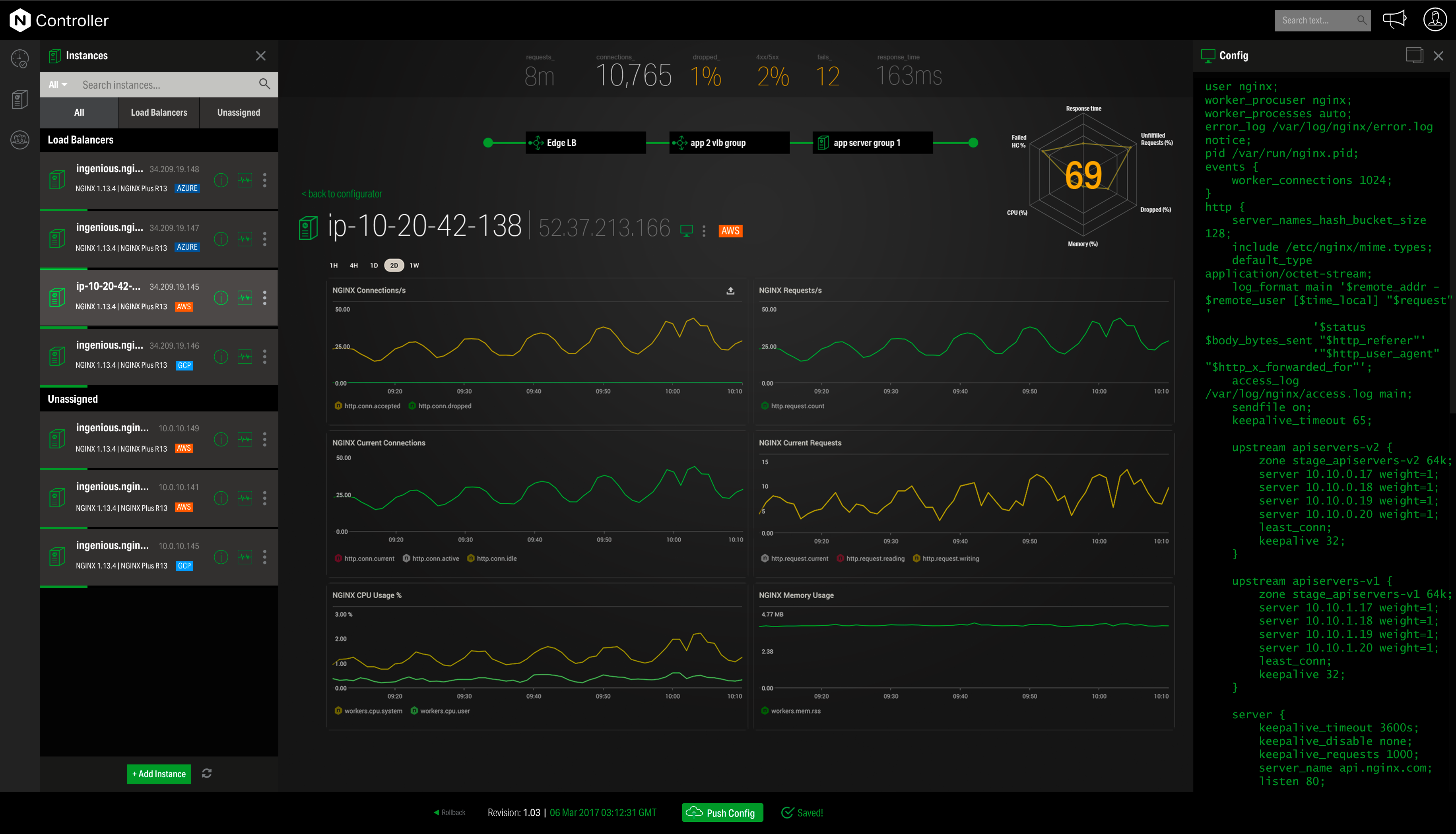
NGINX, a business unit of F5 Networks, powers over 65% of the world's busiest websites and web applications. NGINX started out as an open source web server and reverse proxy, built to be faster and more efficient than Apache. Over the years, NGINX has built a suite of infrastructure software products o tackle some of the biggest challenges in managing high-transaction applications. NGINX offers a suite of products to form the core of what organizations need to create…
N/A
Tricentis NeoLoad
Score 7.8 out of 10
N/A
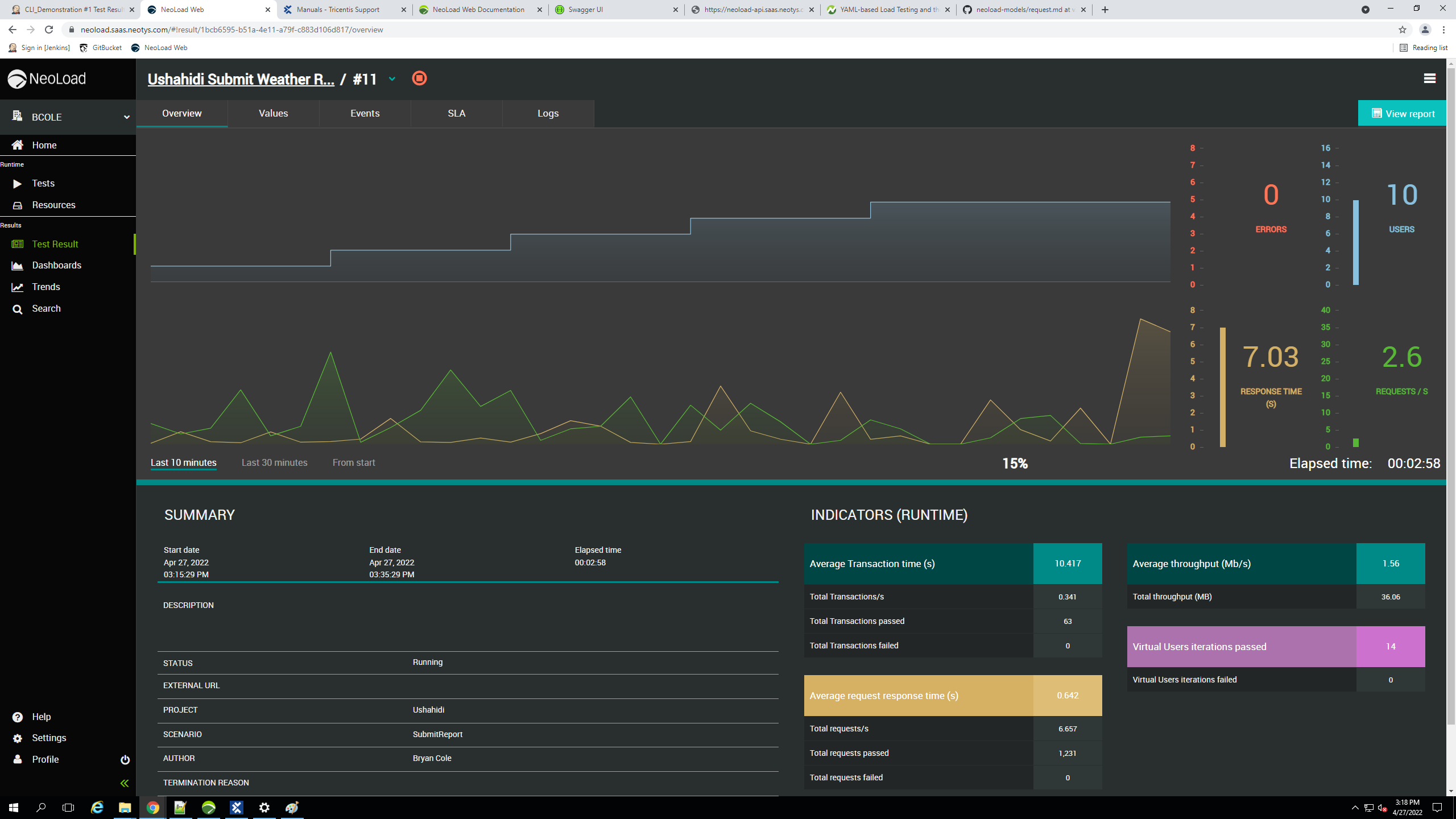
Tricentis NeoLoad is a solution for continuous performance testing software to automate API and application load testing. It was developed by the French company Neotys and acquired by Tricentis, along with the company, in March 2021.
Apache Tomcat is very smooth tool compared to other applications. Since there are very less feature it's very smooth. NGINX server doesn't need Apache Tomcat we can directly deploy so it faster comparatively. In my working time I have never come across the UI of NGINX. Apache …
Apache Tomcat is lightweight but performs well, even when running multiple applications. Its performance and security features are the reasons for choosing Apache Tomcat among its competitors. Also, there is a huge community support than other products.
Nginx's cache mechanism is better than Apache and HAProxy. Also Nginx is very light weight and works for multiple sites with much less work. i.e. As front end proxy server configuration is very easy as compared to other applications. Apache sometimes crashes and is not able to …
How does it compare? We use Apache ATP server and we also use Tom Cat also owned by Apache, but both Apache, ATP, and MKA. They are relatively older than GX and so they're one problem for Apache and MKA they need more power, more memory, and more space.
NGINX have higher market share which obviously show to us it is the preferred choice of most of the customers. Both of platform competes in the Web and Application server areas, but due the security features of NGINX be more flexible this in my opinion makes more sense.
It's lightweight and it does not require complex configurations for simple scenarios. If you want you can accomplish some other complicated tasks like reverse proxies which are well supported by the product.
Nginx is one of the top three web servers and sits in the second position in terms of the amount of servers deployed. The main competition comes from Apache and Apache-based forks on Linux based servers, and less-so from Microsoft IIS on Windows based servers. As stated …
Excellent value for companies wishing to host Java applications in the cloud. Utilizing hosting tools such as load balancers and network and application firewalls, Tomcat can be part of a powerful system to host web applications to thousands of users. There has been consistency in the development and support of Tomcat since its initial release in the late '90s and the best commonalities have been carried forward. If you host Java web applications, Tomcat is as good as any for an application server.
Nginx is well-suited for any web server scenarios, such as web applications, backend or reverse proxy for both application and HTTP requests, and distribution. It is less appropriate for Windows-based applications that run directly on a Windows Server host. In any case, it is very easy to manage, through separate conf files for each application or site you want to host with it.
While Tricentis NeoLoad supports SAP GUI protocols, recording and maintaining test scripts for complex SAP transactions (like those in the OTC module) can be cumbersome.
For instance, we had challenges recording a VA01 (Sales Order Creation) transaction because of the dynamic nature of SAP screen fields and session handling. NeoLoad sometimes struggles to properly correlate or handle SAP’s SAPGUI Dynpro fields automatically.
With Tricentis NeoLoad, we have control on the test dynamically. One can alter user count/volume even when test is in progress. This makes it a very cool tool as you can avoid running multiple tests eventually saves a lot of time.
Tricentis NeoLoad user paths are very well structured. End points can be identified and tweaked easily especially when a large list of endpoints are part of the neoload project.
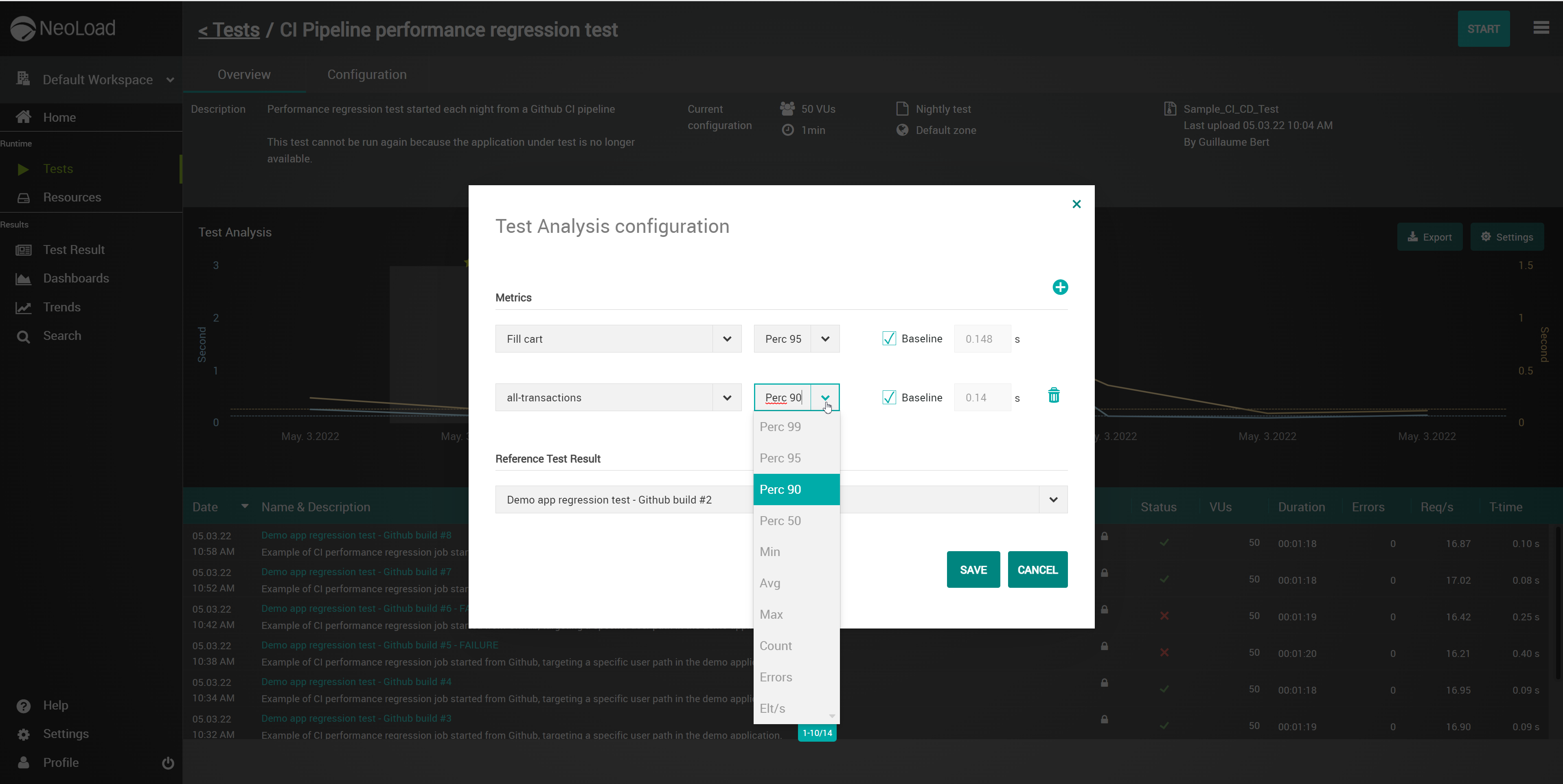
Tricentis NeoLoad results comparison is one of the cool options. We can compare previous tests against the current one to see the exact delta between transaction metrics. This helps in gauging the application behaviour with changes deployed
Using tomcat manager to troubleshoot is not very informative. Error messages are vague, you have to dig into log files for more information about the problems.
Is great for simple web applications, but may not work for heavy development which may require a full J2EE stack, might like JBoss better.
Security in tomcat is not straightforward, as I discovered that you have to understand how to set up realms in tomcat in order to hash passwords, which I was not overly familiar with, which is a big deal when setting up users in the tomcat-users.xml file.
Customer support can be strangely condescending, perhaps it's a language issue?
I find it a little weird how the release versions used for Nginx+ aren't the same as for open source version. It can be very confusing to determine the cross-compatibility of modules, etc., because of this.
It seems like some (most?) modules on their own site are ancient and no longer supported, so their documentation in this area needs work.
It's difficult to navigate between nginx.com commercial site and customer support. They need to be integrated together.
I'd love to see more work done on nginx+ monitoring without requiring logging every request. I understand that many statistics can only be derived from logs, but plenty should work without that. Logging is not an option in many environments.
Ease of use: Some users find certain features or aspects of the interface to be confusing or hard to use. Improving the overall usability of the tool could make it more accessible and easier for users to get up and running with it.
Integration with other tools: Tricentis NeoLoad does not have many integrations with other tools. Adding more integrations with popular tools and platforms could make it easier for users to work with Tricentis NeoLoad as part of their overall workflow.
Mobile testing: Some users wish that Tricentis NeoLoad had more robust support for testing the performance of mobile applications. This could include the ability to simulate different mobile devices and networks, as well as the ability to test the performance of native mobile apps.
Cloud support: Tricentis NeoLoad does not have as much support for cloud-based applications and infrastructure. Adding more support for testing the performance of applications hosted in the cloud could be a useful feature for some users.
Advanced scripting capabilities: While Tricentis NeoLoad does offer some scripting capabilities, it would be nice to have more advanced options for customizing and automating load testing scenarios. Adding more advanced scripting capabilities could make it easier for users to create complex load testing scenarios.
We find NeoLoad easy to use compared to their competitors. It requires minimal coding knowledge, also it is easy to train newcomers with NeoLoad. It also offers good integration and automation capability where with less code you can automate your testing process
Tomcat has a very rich API set which allows us to implement our automation script to trigger the deployment, configure, stop and start Tomcat from the command line. In our projects, we embedded Tomcat in our Eclipse in all of the developer's machines so they could quickly verify their code with little effort, Azure Webapp has strong support for Tomcat so we could move our application to Azure cloud very easy. One drawback is Tomcat UI quite poorly features but we almost do not use it.
This tool is really easy to use and configure. Consumes very less system resources. It is highly modular and configurable. You can easily use it with other tools like certbot for SSLs. You can configure basic security with configuration and headers
Tomcat doesn't have a built-in watchdog that ensures restart upon failure, so you have to provide it externally. A very good solution is java service wrapper. The community edition is able to restart Tomcat upon out of memories exceptions.
Tomcat support to customize memory used and allow us to define the Connection pool and thread pool to increase system performance and availability, Tomcat server itself consume very little memory and almost no footprint. We use Tomcat in our production environment which has up to thousands of concurrent users and it is stable and provides a quick response.
Community support is great, and they've also had a presence at conferences. Overall, there is no shortage of documentation and community support. We're currently using it to serve up some WordPress sites, and configuring NGINX for this purpose is well documented.
This is the only area where we strongly feel Tricentis needs to improve. Their support process is inadequate, representatives are not so capable of providing solutions at one shot without consulting their internal engineering teams. Most importantly, the time they take to resolve simple issues is huge and at many times hampered our work.
Eclipse Jetty is the best alternative for Apache Tomcat because which is also an open-source and lightweight servlet container like Tomcat. A major advantage of this over Tomcat is that Jetty server can easily be embedded with the source code of web applications. Since it requires less memory to operate, you may realize that it is very efficient.
I have found that [NGINX] seems to perform better throughout the years with less issues although I've used Apache more. I would definitely recommend [NGINX] for any high volume site and I've seen this to usually be the case from most provided web hosts who will pick [NGINX] over alternatives
When we used Apache JMeter we faced some problems like less documentation is available for integrating tools, and some integrations have not yet been deployed. Very few plugin updates are made. Since customer support is an open source tool, it is a major problem. While Tricentis Neoload provides better documentations and customer services.
Tomcat is cheap and very quick to deploy, so it has benefited much when situation needs applications to be deployed quickly without wasting time on licensing and installations.
Plenty of documentation available so no vendor training is required. Support contract is not needed as well.
By using Nginx, we can host multiple web services on a single server, keeping our infrastructure costs lower.
Nginx maintains our HTTPS connections, allowing us to keep our promise to our customers that their data is safe in transit.
Due to Nginx's extremely low failure rate, our web addresses always return something meaningful, even when individual services go down. In sense, this means we are "always online" and allows us to maintain brand and support our customers even in the face of catastrophe.
Performance testing is like an insurance. An online store which is not available causes a loss of sales. Without a performance test you do not know if it might happen. The invest into performance tests reduces the risk of loosing sales. The flexible license model of NeoLoad allows or customers to choose reasonable and suiteable rate.