AWS Lambda is a serverless computing platform that lets users run code without provisioning or managing servers. With Lambda, users can run code for virtually any type of app or backend service—all with zero administration. It takes of requirements to run and scale code with high availability.
$NaN
Per 1 ms
IBM Cloud Functions
Score 6.8 out of 10
N/A
IBM Cloud Functions is a PaaS platform based on Apache OpenWhisk. With it, developers write code (“actions”) that respond to external events. Actions are hosted, executed, and scaled on demand based on the number of events coming in. No servers or infrastructure to provision and manage.
$0
per second of execution
SAP Integration Suite
Score 8.5 out of 10
N/A
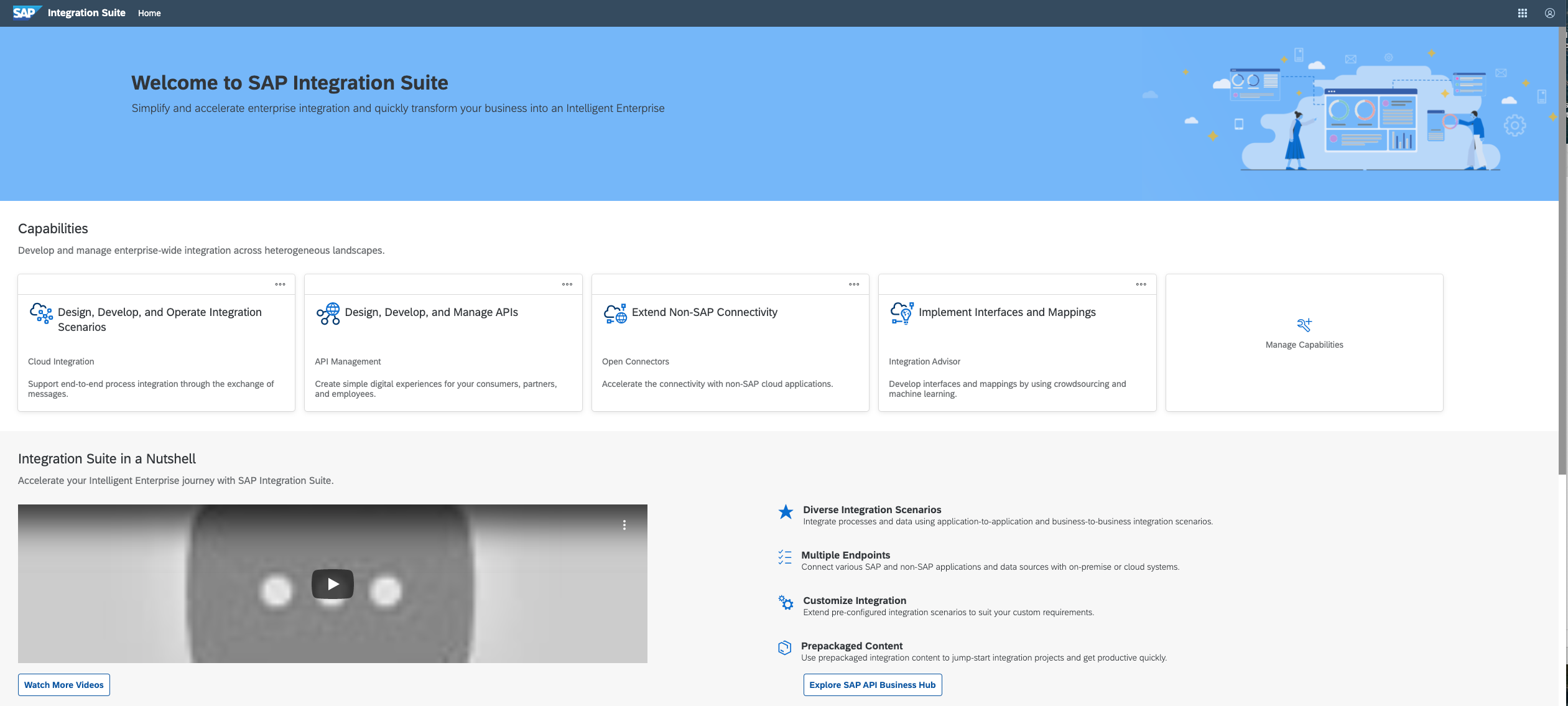
SAP Integration Suite is an integration platform-as-a-service (iPaaS) that helps quickly integrate on-premises and cloud-based processes, services, applications, events, and data. It is used to accelerate innovation, automate more processes, and realize a faster time to value.
$11,199
per year
Pricing
AWS Lambda
IBM Cloud Functions
SAP Integration Suite
Editions & Modules
128 MB
$0.0000000021
Per 1 ms
1024 MB
$0.0000000167
Per 1 ms
10240 MB
$0.0000001667
Per 1 ms
Basic Cloud Functions Rate
$0.00017
per second of execution
API Gateway Rate
Free
No answers on this topic
Offerings
Pricing Offerings
AWS Lambda
IBM Cloud Functions
SAP Integration Suite
Free Trial
No
No
Yes
Free/Freemium Version
No
No
No
Premium Consulting/Integration Services
No
No
No
Entry-level Setup Fee
No setup fee
No setup fee
No setup fee
Additional Details
—
—
Access to free tier services does not expire while there is an active Pay-As-You-Go or CPEA account with SAP. Once a free tier service limit has been reached users have the option to update from a free to a paid service plan in the same account.
AWS Lambda might be more suited for larger scaled companies looking to consistently access similar features at a higher volume/frequency, but for smaller teams with a limited budget, IBM's Cloud Functions are a competitive choice
AWS Lambda is 100 times more robust than IBM cloud functions. They essentially do the same thing, but AWS works. AWS is stable. we have had epic failures with cloud functions. Support was horrible. We literally had an open ticket with them for 2 months and it literally went …
SAP integration suits are more easier and flexible to use than AWS Lambda. it meets the customer requirements more than any other tool available in the market. the inbuilt analytics has proven more beneficial than any other tools like AWS Lambda also the CICD process and …
We also have AWS adoption heavy due to its sleekness and support of many modern features tools such as git support or CI/CD. Multi-region support, near 99.9 availability.
The artificial intelligence used in the software, as well as the speed of deploying and processing faster than competitors, is a good advantage for SAP Integration Suite. The support team also responds quickly to questions, and always application developers are developing …
SAP Integration Suite has unique features compared to other platforms. It is easier to set up, develop, design and monitor the flows created in SAP Integration Suite. Compared to other products, SAP Integration Suite has features that stand out like the SAP Integration Suite or …
Other services seem to have a head start in supporting open standards. Not only in the support of up-and-coming ones but some fringe technologies as well. The biggest advantage of SAP is connectivity and interoperability with their core modules.
Lambda excels at event-driven, short-lived tasks, such as processing files or building simple APIs. However, it's less ideal for long-running, computationally intensive, or applications that rely on carrying the state between jobs. Cold starts and constant load can easily balloon the costs.
IBM Cloud Functions [is] not the worse product on the IBM cloud. I decided to write this review as I thought it would be balanced. I would still use functions to set up a serverless architecture where execution time is pretty quick and the code is relatively simple. I wouldn't use IBM Cloud Functions for async calls obviously, as costs could be higher. The functions documentation is lacking in terms of CI/CD, and there are unexplainable errors occurring - like the network connection that I mentioned. So I wouldn't just rely on IBM Cloud Functions too much for the entire system, but make sure it's diversified.
In our case to have a such a poweful middleware in the cloud, give us a lot of benefits such as maintenance and support. In the integration part to be able to connect SAP and Non SAP applications makes SAP Integration Suite a good investment when our master data in this case is in S4HANA. Less appropriate is that sometimes the updates in production tenant failed and they have to downgrade or repair the issues. Affecting the usage of the tool. I guess SAP team have to be more aware of performing the changes and tested well on development environments and then when they know for sure that is the correct way to go with the update put it in production.
Developing test cases for Lambda functions can be difficult. For functions that require some sort of input it can be tough to develop the proper payload and event for a test.
For the uninitiated, deploying functions with Infrastructure as Code tools can be a challenging undertaking.
Logging the output of a function feels disjointed from running the function in the console. A tighter integration with operational logging would be appreciated, perhaps being able to view function logs from the Lambda console instead of having to navigate over to CloudWatch.
Sometimes its difficult to determine the correct permissions needed for Lambda execution from other AWS services.
Provide more pre-built integrations to use within SuccessFactors or other modules instead of everything having to be custom built
Support is unable to provide advice on custom builds so you often have to engage a 3rd party partner
Works best when you have the functional and technical teams working together. Otherwise, the system is too technical for a functional user to create integration and a technical user not always understand the functional perspective
It is in place, our system integrators are familiar with it, and it fits into the ecosystem. A better user interface, flow build and debugging experience would see it grow, many technical staff do not enjoy using it for this reason, however it is quite capable and powerful behind this one shortcoming.
I give it a seven is usability because it's AWS. Their UI's are always clunkier than the competition and their documentation is rather cumbersome. There's SO MUCH to dig through and it's a gamble if you actually end up finding the corresponding info if it will actually help. Like I said before, going to google with a specific problem is likely a better route because AWS is quite ubiquitous and chances are you're not the first to encounter the problem. That being said, using SAM (Serverless application model) and it's SAM Local environment makes running local instances of your Lambdas in dev environments painless and quite fun. Using Nodejs + Lambda + SAM Local + VS Code debugger = AWESOME.
The user interface is messy and not intuitive. It has a steep learning curve, and flows developed around are easy to make a mess with layout and can be difficult to follow. The debugging is also quite difficult, it takes some time to figure out how to follow the flow and examine data. Error handling is also difficult and not intuitive, it is better to let some errors leak and monitor through ALM.
Amazon consistently provides comprehensive and easy-to-parse documentation of all AWS features and services. Most development team members find what they need with a quick internet search of the AWS documentation available online. If you need advanced support, though, you might need to engage an AWS engineer, and that could be an unexpected (or unwelcome) expense.
The support for SAP Integration Suite is satisfactory. We leverage SAP support through our manage services partner. So far, we have not had many major issues. One concern, to make our rating a ten, would be turnaround time on high priority incidents. SAP Integration Suite drives our key business functions forward. Without a reasonable service level agreement on turnaround, we sometimes find us running into issues running pay, etc.
AWS Lambda is good for short running functions, and ideally in response to events within AWS. Google App Engine is a more robust environment which can have complex code running for long periods of time, and across more than one instance of hardware. Google App Engine allows for both front-end and back-end infrastructure, while AWS Lambda is only for small back-end functions
SAP Integration Suite was already part of our SAP stack, part of Business Technology Platform, with out-of-the-box integration with S/4 HANA transactional and ERP system that we are using as our main back-end. Thus, we are achieving significant Total Cost Optimization benefits or running both solutions on the same platform, hosted on Azure cloud.
Positive - Only paying for when code is run, unlike virtual machines where you pay always regardless of processing power usage.
Positive - Scalability and accommodating larger amounts of demand is much cheaper. Instead of scaling up virtual machines and increasing the prices you pay for that, you are just increasing the number of times your lambda function is run.
Negative - Debugging/troubleshooting, and developing for lambda functions take a bit more time to get used to, and migrating code from virtual machines and normal processes to Lambda functions can take a bit of time.