Conga CPQ empowers sales, partners, and customers to efficiently configure complex products and services offerings, and provide personalized prices and quotes, utilizing codified product and pricing information - to drive higher win rates and a more pleasurable buying experience. Conga CPQ also helps to maintain a single price book, discounting structure, and quoting structure across all channels. With an API-first approach, configuration, pricing, or quoting…
It is well suited to providing quick pricing recommendations, allowing those who are quoting to get our agreements out efficiently. Where I find there may be some limitations is around the details that it uses to establish recommendations and the overrides. For example it would be nice to have a way to set overrides for those criteria like length of agreement, etc. and have it apply across the board
A de minimis incentive was given to thank the reviewer for their time. The incentive was not used to bias or drive a particular response, nor was the incentive contingent on a positive endorsement. More Info
This software is very well-suited to companies who find themselves expanding their footprint, the number of their Sales representatives, their territories, and/or their products and services and need to maximize their ability to both keep up with those demands whilst streamlining their proposal resources. Further, this is a very powerful tool with a lot of features and functionality including CRM plug-in and reporting. Thus, it may be less appropriate for a very small organization with only one product and that is also blessed with lengthy cradle-to-grave turnaround windows. In addition, to better the odds for success an investment in upfront personnel training and either a dedicated periodic window of time and/or dedicated person(s) for content upkeep are prudent. Finally, working with the vendor is a delight as they make every effort to maintain and deliver a product that both meets your needs and on which you can rely.
The perceived power strength is that it is supposed to contain CPQ, Contract Management, Document generation and template manipulation, and cash/invoice process all in one wrapped package.
It was developed on the Force.com platform.
They provide multiple releases of their product per year.
A de minimis incentive was given to thank the reviewer for their time. The incentive was not used to bias or drive a particular response, nor was the incentive contingent on a positive endorsement. More Info
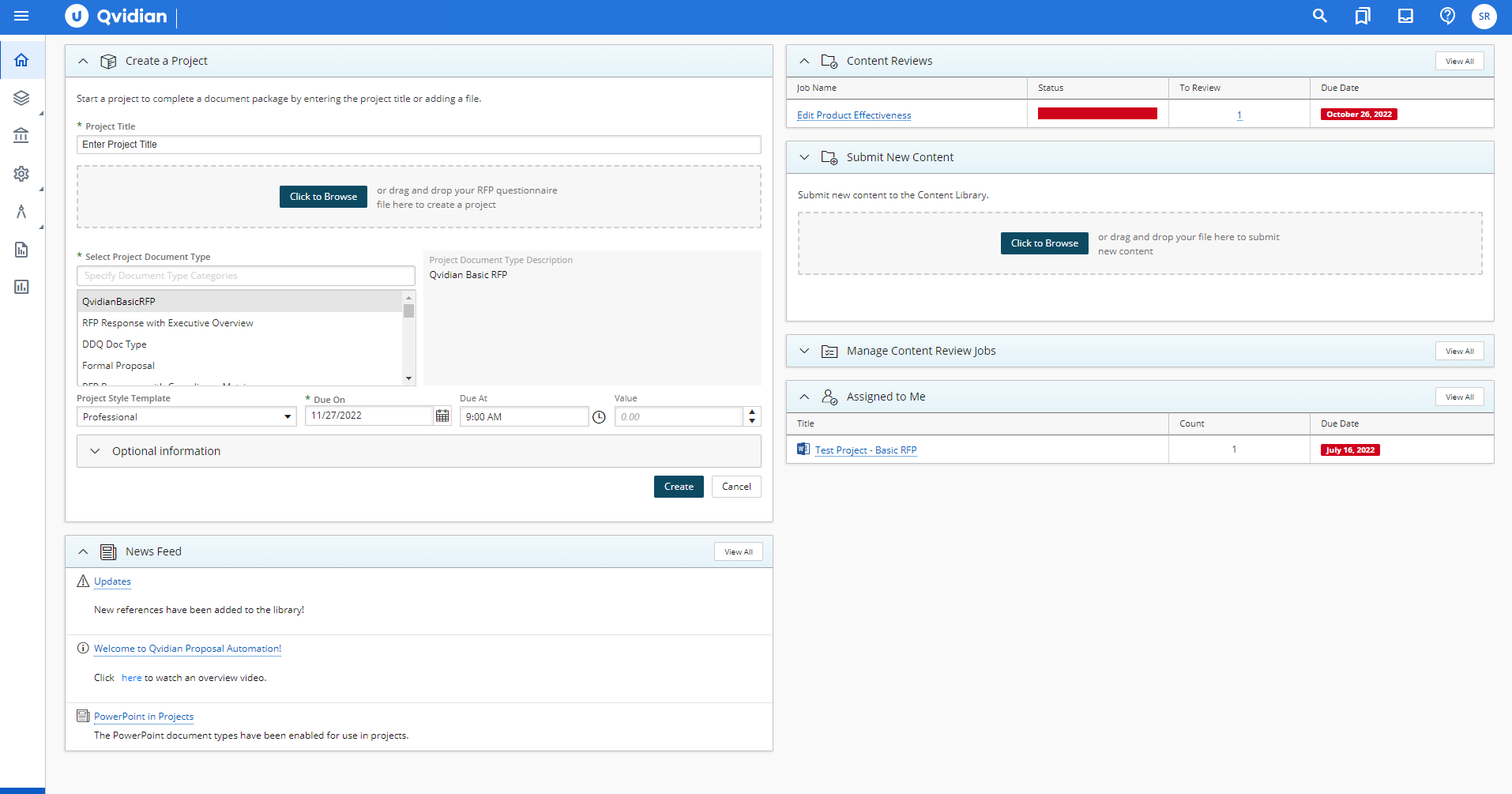
Using Qvidian as an RFP tool has made a difference in our RFP process, turn-around time, and content development. It's helped us streamline our RFP process so that we are able to produce the majority of the document before the kick-off meeting, which means we have more time to customize and refine the document before it goes to print.
Additionally, it took several hours before to gather all of the basic data we needed for an RFP, but now we can have the majority of the response ready in under 15 minutes in most cases. We are also able to start projects from our phones (iPhone thru Safari) or on an iPad. This has been extremely helpful while traveling.
Finally, our content is centrally located on a searchable database. Previously we had used several free tools to aid in content storage that would allow us access easily via search. It never seemed to do what we wanted, and when we did find something, we weren't sure if it was the most current or usable. The library functions in Qvidian have been a huge help, and has changes the way we collect data, and retrieve it.
Our number one complaint with Conga CPQ has been speed. In my experience, Conga CPQ is extremely slow, especially for large orders.
In my opinion, the configuration methods of Conga CPQ are outdated and error-prone. One literally puts configurations into string-based custom settings, including the API field names. This often leads to deployment issues and run-time configuration errors.
In my experience, Conga CPQ is everything but simple to develop. You need things like a 12-step pricing callback to support custom pricing.
In my experience, Conga CPQ support is not responsive.
When it comes time to lock in a renewal contract for Conga CPQ, in my experience, they delay engagement, so you are truly behind the 8 ball when it comes time to decide if you are going to continue with Conga CPQ.
A de minimis incentive was given to thank the reviewer for their time. The incentive was not used to bias or drive a particular response, nor was the incentive contingent on a positive endorsement. More Info
One area where Qvidian occasionally struggles is feature regression. For instance, the editing option that puts multiple records into one document had always been present in Qvidian; however, when the multi-edit feature that only allows editing one record at a time was released in version 9.1, the original editing functionality was removed. This caused me a lot of frustration, as it severely slowed down my work flow since I could now only see and edit one record at a time. It wasn't until a year later when version 10 was released that the old editing functionality was added back. However, one bright spot of version 9.1 was an added feature that allowed organizing records by simply dragging and dropping them into different categories. This was much easier than having to right click on a record, select Move, then right click on a folder and select paste. However, with version 10, this feature was removed and I'm now back to having to right click on records instead of dragging and dropping. It seems that with each release, I never know if something I like will be taken away or if something I don't like will be added -- sometimes it's both.
A recent change that was added in version 10.1 that I personally view as a negative is that Qvidian now handles all requests server side instead of on the user's computer. This means that if a user wants to export or edit a large number of records, they have to wait for Qvidian's server to generate a report of those records. Depending on the number of records, this can be very quick (a few seconds) or very long (I've waited up to 20 minutes before) depending on how taxed Qvidian's servers currently are. I understand the reasoning behind the move, in that it takes the load off of a user's computer so that other applications they currently have open aren't affected by added memory usage, but in practice I find that it only slows down my workflow. Any somewhat modern PC shouldn't have any trouble handling a large report request from Qvidian.
Although Qvidian is certified for use in several different browsers (Internet Explorer, Firefox, and Chrome for Windows), it doesn't offer the same functionality in each one. For instance, in Explorer, when a record is selected for editing or export, it will automatically open in Word. In Firefox, a pop-up dialog appears and a user has to click Open in order for the record to appear in Word. And in Chrome, the file is added to the download bar and a user must click on the file there for it to open, unless they add an exception to .docx file types to automatically open in Word (which I had to do, since I prefer using Chrome). Other simple features such as right clicking on a folder or record to bring up Qvidian's context menu are hit or miss depending on the browser. In Explorer, everything is generally smooth, though the browser itself is slower than the other choice. In Firefox, right clicking generally works but sometimes has some hiccups, and in Chrome, more often than not right clicking brings up Chrome's context menu instead of Qvidian's, which often leads to having to first select a folder and then click the dedicated Actions button in Qvidian to perform the desired action. No matter which browser you use, there will be some sort of functionality that doesn't quite work as expected.
The rating is based on several things: 1) Ongoing support requirements being able to be addressed by cross training existing Salesforce administrators 2) Apttus superior corporate vision for the quote to cash space 3) Apttus execution of the corporate vision with automated agents (Max), and Artificial Intelligence/Machine Learning offerings to leverage the investment in Configure Price Quote 4) Apttus corporate health and investment in the product line
A de minimis incentive was given to thank the reviewer for their time. The incentive was not used to bias or drive a particular response, nor was the incentive contingent on a positive endorsement. More Info
The tool provides us with the functionality we need to perform more efficiently and we have not identified another product that offers enough "nice to haves" in addition to the "must haves" to warrant a compelling reason for changing tools.
Conga CPQ is a great tool but lacks good support and [a] very limited knowledge base which doesn't include day to day errors which users face, thus leading us to support and take more time in turn. Also cart performance can be improved drastically which will enhance the user experience as the user doesn't have to wait for the pricing.
A de minimis incentive was given to thank the reviewer for their time. The incentive was not used to bias or drive a particular response, nor was the incentive contingent on a positive endorsement. More Info
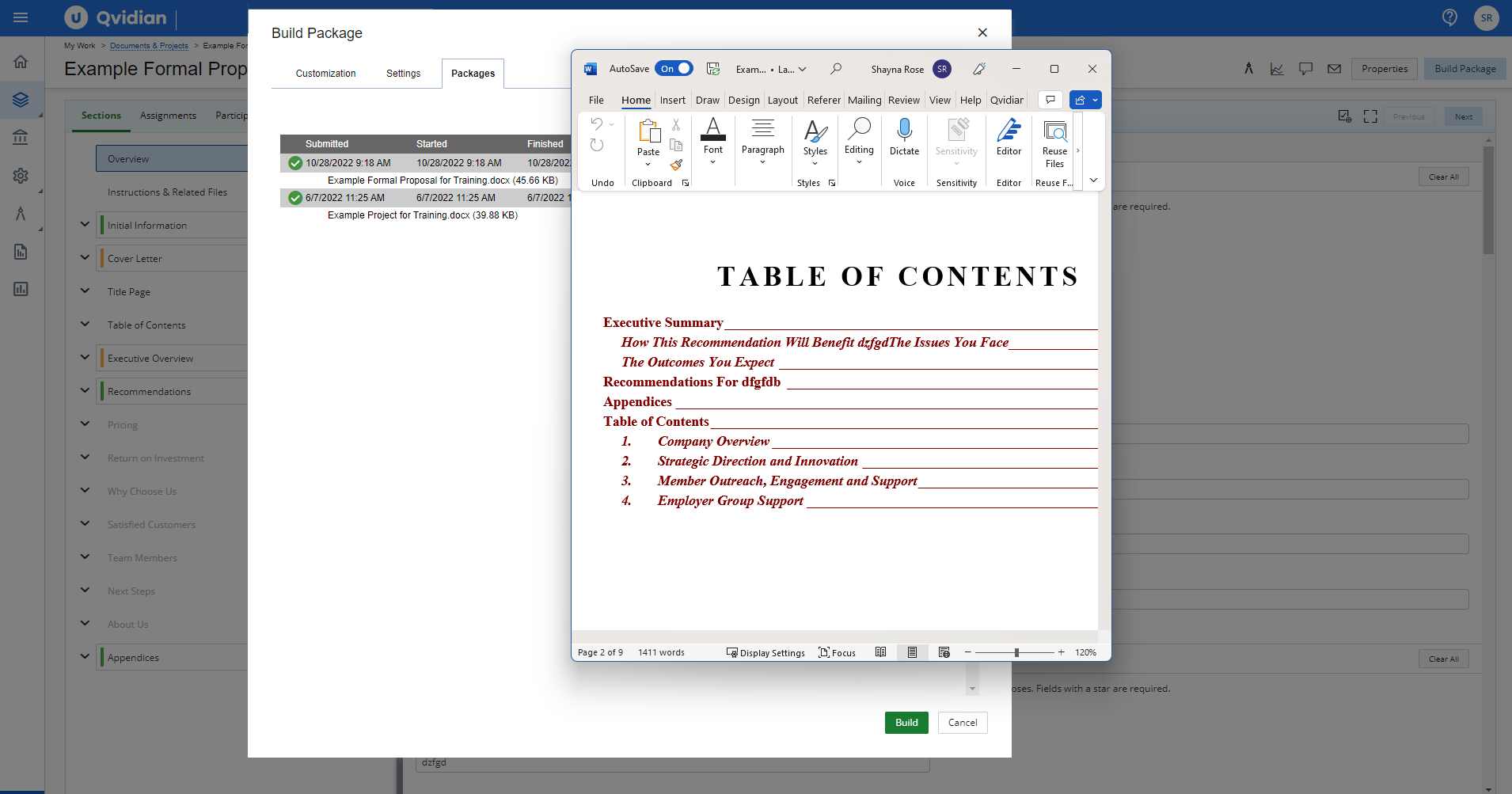
The shift they made in architecting documents from content to outline, is now reversed allowing outline creation first, then content which is more natural. But, due to the fact that we went through a migration of content to get to the new version, it feels less optimized than if we would have re-implemented.
End users having to configure settings more often than desired
Tier1/tier 2 support can only handle native functionality. Customizations have to be escalated to developers which aren’t included in the support program.
I go ahead and copy the people I directly worked with on implementation for assistance. I would rate them an 8 for support assistance.
They are very much in support of great customer service. They respond quickly with emails and in some cases phone calls to resolve any issues and often times user questions in the past when I could not figure something out.
A de minimis incentive was given to thank the reviewer for their time. The incentive was not used to bias or drive a particular response, nor was the incentive contingent on a positive endorsement. More Info
Live instructor training is expensive, though we have had instructors come to our offices for a ‘refresher’ before. The refresher was more of a “let us fix that for you” than a training on how to do it ourselves.
Be iterative. Take the opportunity to build a catalog based on how Apttus works well. Learn the tool yourself or use an SI. Take the time to build a configuration / pricing migration tool with X-Author for Excel or roll your own. Stick with OOTB Apttus as any customization will cost you every time a new version is released
A de minimis incentive was given to thank the reviewer for their time. The incentive was not used to bias or drive a particular response, nor was the incentive contingent on a positive endorsement. More Info
A de minimis incentive was given to thank the reviewer for their time. The incentive was not used to bias or drive a particular response, nor was the incentive contingent on a positive endorsement. More Info
We selected Apttus CPQ over SteelBrick due to the simplicity of SteelBrick's out of the box pricing and ability to customize quoted products. As a global organization with selling a highly configurable products, we felt the ability of Apttus to handle our requirements as standard functionalty rather than a customization was a material difference between the platforms.
We have been using Qvidian for years, when Compass was introduced in our company. Having spent over a year using Compass, I would not recommend it for writing proposals. In all fairness, that is not Compass' strength. Compass is ok for general document sharing for informational purposes. It does have a Presentation Builder function for creating PowerPoint presentations, but it is cumbersome and not very flexible. Specifically, the linkage is awkward and files may have to be re-linked when they are updated. In addition, the architecture only allows you to create a couple of levels of content. The search function is very limited. Compass is a newer project and has not fully matured.
The ability to generate engineered configurations that is right by construction has reduced the cycle time of the customer engagement. The fact that we are able to guide the process and end up with a validated bill of material reduces the iterations with the customers.
As long as the validations rules are correct the generated bill of material is accurate. We are now looking at using Apttus to perform quality checks in our product rules since the tool is able to test different configurations quickly and efficiently.
Configuration that use to take weeks and consumed valuable engineering resources has been transformed to become a customer facing application that is simple enough for customer to self-service.
The positive impact has been to know we have a system that can house legally-approved responses to questionnaires. The good about this is that if we have a simple RFI that does not require a lot of response customization, we can draw upon previously-approved responses and create output MUCH quicker, without the need of laborious and time-consuming legal reviews of RFIs or DDQs we produce for prospective clients. Quicker, easier output with less internal review = efficient RFI process and quicker turnaround time to respond to our client/prospective client base.
The negative impact has only been the time it takes to orient oneself with the program, and REMAIN oriented. As we do not do RFIs on a daily basis, it is easy for us to become rusty, or to take short-cuts because we do not have time to re-train on the program. Those shortcuts and workarounds tend to cause us not to use the program to its full potential and lead to counter-productivity in some cases.