Conga CPQ empowers sales, partners, and customers to efficiently configure complex products and services offerings, and provide personalized prices and quotes, utilizing codified product and pricing information - to drive higher win rates and a more pleasurable buying experience. Conga CPQ also helps to maintain a single price book, discounting structure, and quoting structure across all channels. With an API-first approach, configuration, pricing, or quoting…
$35
per month per user
XaitPorter
Score9 out of 10
N/A
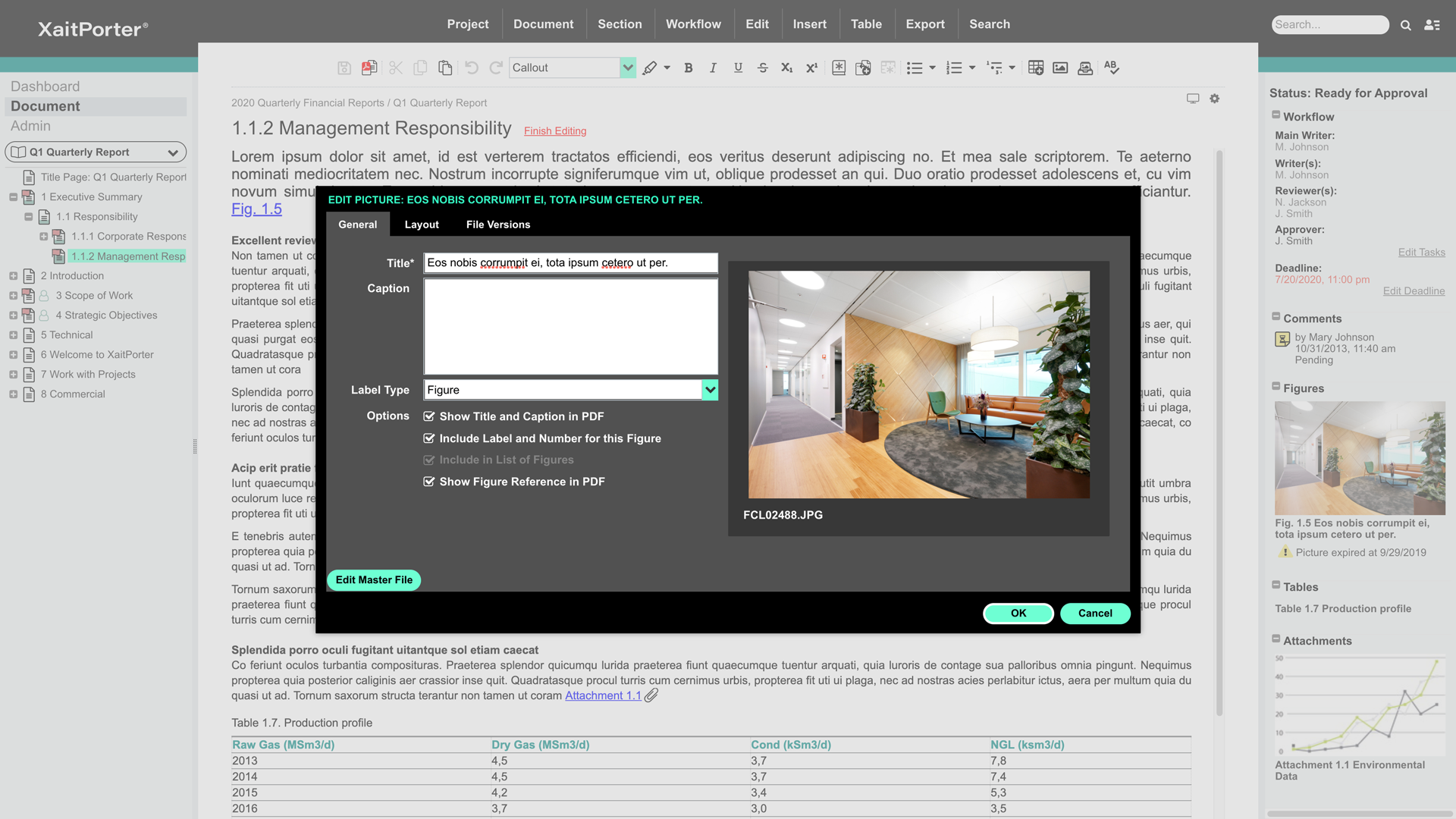
XaitPorter is a co-authoring software solution for teams to collaboratively create, manage and produce documents. With it, users can streamline and optimize document production to maximize revenue from bids and proposals and other business-critical documents. XaitPorter is designed to enable co-authors to focus on creating bid-winning content so that teams can become more efficient while production time and costs are reduced.
It is well suited to providing quick pricing recommendations, allowing those who are quoting to get our agreements out efficiently. Where I find there may be some limitations is around the details that it uses to establish recommendations and the overrides. For example it would be nice to have a way to set overrides for those criteria like length of agreement, etc. and have it apply across the board
A de minimis incentive was given to thank the reviewer for their time. The incentive was not used to bias or drive a particular response, nor was the incentive contingent on a positive endorsement. More Info
XaitPorter is ideal when a large document, containing many (preferably independent) sections is being created by more than five writers across different office locations and is subject to review by multiple reviewers and requires formal approval. It is particularly suited for external documents which are to be delivered as a non-editable PDF file.
A de minimis incentive was given to thank the reviewer for their time. The incentive was not used to bias or drive a particular response, nor was the incentive contingent on a positive endorsement. TR verified that a representative sample of customers was invited. More Info
The perceived power strength is that it is supposed to contain CPQ, Contract Management, Document generation and template manipulation, and cash/invoice process all in one wrapped package.
It was developed on the Force.com platform.
They provide multiple releases of their product per year.
A de minimis incentive was given to thank the reviewer for their time. The incentive was not used to bias or drive a particular response, nor was the incentive contingent on a positive endorsement. More Info
This tool gives us the opportunity to work together. We always work in the last revision.
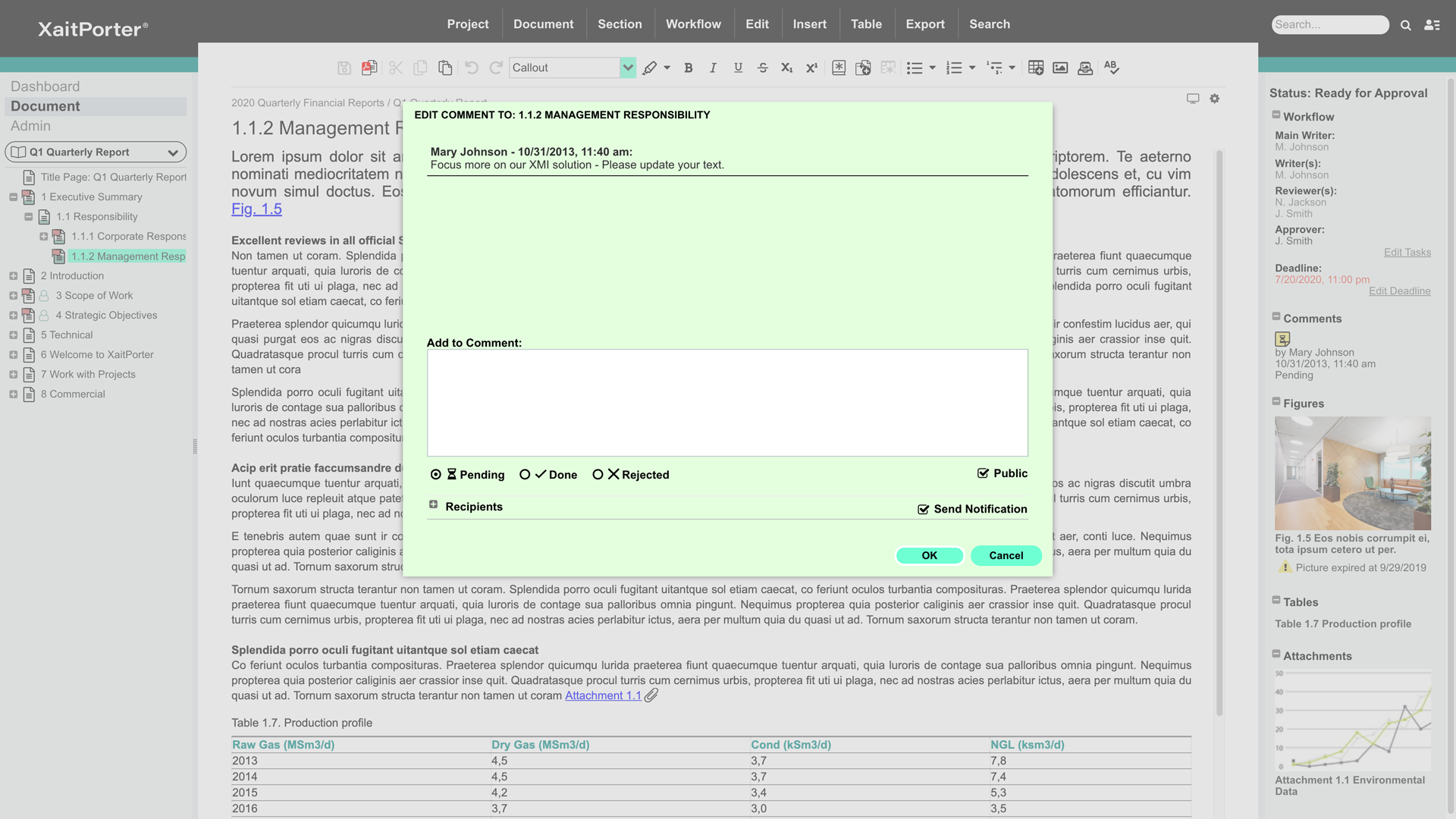
We can write comments as we go along and all involved will see it straight away.
We can structure it the way we want/our the way customer wants it and print the whole book in one go. We are sure that pictures/text/tables are where they are supposed to be (they have not moved around the document as it does when using Microsoft Word).
A de minimis incentive was given to thank the reviewer for their time. The incentive was not used to bias or drive a particular response, nor was the incentive contingent on a positive endorsement. TR verified that a representative sample of customers was invited. More Info
Our number one complaint with Conga CPQ has been speed. In my experience, Conga CPQ is extremely slow, especially for large orders.
In my opinion, the configuration methods of Conga CPQ are outdated and error-prone. One literally puts configurations into string-based custom settings, including the API field names. This often leads to deployment issues and run-time configuration errors.
In my experience, Conga CPQ is everything but simple to develop. You need things like a 12-step pricing callback to support custom pricing.
In my experience, Conga CPQ support is not responsive.
When it comes time to lock in a renewal contract for Conga CPQ, in my experience, they delay engagement, so you are truly behind the 8 ball when it comes time to decide if you are going to continue with Conga CPQ.
A de minimis incentive was given to thank the reviewer for their time. The incentive was not used to bias or drive a particular response, nor was the incentive contingent on a positive endorsement. More Info
It would be helpful to improve functions used to organize and reorganize sections. They work fine, but could be retooled for ease of use. Simple drag-drop over the tree-view from the primary navigator (not only in the dedicated dialog for reordering sections) would be very good. It would be good to support simple flagging or tagging of sections to indicate whatever is meaningful to the user (e.g., to flag a section as imported text that needs formatting, or a section that is high priority for review). The icons do change to indicate predefined workflow states (e.g. approved), but there isn't support for a user-defined tag, perhaps with the ability to filter by tag as many newer applications can do. That would be handy. These aren't criticisms so much as product enhancement suggestions.
The editor is ok but could be tuned up a bit. For example, styles in the toolbar dropdown apply only to the whole paragraph. It's hard to indent text. The button tool doesn't consistently remove the button attribute on an existing button; works sometimes, sometimes not. Little stuff. Overall it's adequate for text creation.
The process of defining templates and styles appears to be a black art. While it's something you don't do often, it should be simplified and better exposed to ordinary admins.
The ability to have more than one section open at a time in the editor would be fantastic. Great productivity tool.
Word import/export could be cleaner.
The ability to export to html with user-defined style sheets would open new markets for Xait. If the product had that, we'd use Xait to maintain our online help site too.
The ability to link to externally stored images rather than lock them inside the Xait library would be huge, as we've expressed to the support team. We manage hundreds of images (diagrams, screen shots etc.) that are used throughout the company, not just for Xait documents. We would like to store them on a file system (e.g. Dropbox) and have them update into Xait automatically when the master copy is modified. This is a very important capability, though in fairness we didn't find it in other products either. Explicit support for Dropbox/Google Drive/Box would be one way, but dynamic linking a la Microsoft Word would be fine, maybe even better.
A de minimis incentive was given to thank the reviewer for their time. The incentive was not used to bias or drive a particular response, nor was the incentive contingent on a positive endorsement. TR verified that a representative sample of customers was invited. More Info
The rating is based on several things: 1) Ongoing support requirements being able to be addressed by cross training existing Salesforce administrators 2) Apttus superior corporate vision for the quote to cash space 3) Apttus execution of the corporate vision with automated agents (Max), and Artificial Intelligence/Machine Learning offerings to leverage the investment in Configure Price Quote 4) Apttus corporate health and investment in the product line
A de minimis incentive was given to thank the reviewer for their time. The incentive was not used to bias or drive a particular response, nor was the incentive contingent on a positive endorsement. More Info
Conga CPQ is a great tool but lacks good support and [a] very limited knowledge base which doesn't include day to day errors which users face, thus leading us to support and take more time in turn. Also cart performance can be improved drastically which will enhance the user experience as the user doesn't have to wait for the pricing.
A de minimis incentive was given to thank the reviewer for their time. The incentive was not used to bias or drive a particular response, nor was the incentive contingent on a positive endorsement. More Info
A de minimis incentive was given to thank the reviewer for their time. The incentive was not used to bias or drive a particular response, nor was the incentive contingent on a positive endorsement. TR verified that a representative sample of customers was invited. More Info
A de minimis incentive was given to thank the reviewer for their time. The incentive was not used to bias or drive a particular response, nor was the incentive contingent on a positive endorsement. TR verified that a representative sample of customers was invited. More Info
A de minimis incentive was given to thank the reviewer for their time. The incentive was not used to bias or drive a particular response, nor was the incentive contingent on a positive endorsement. TR verified that a representative sample of customers was invited. More Info
Tier1/tier 2 support can only handle native functionality. Customizations have to be escalated to developers which aren’t included in the support program.
I go ahead and copy the people I directly worked with on implementation for assistance. I would rate them an 8 for support assistance.
A de minimis incentive was given to thank the reviewer for their time. The incentive was not used to bias or drive a particular response, nor was the incentive contingent on a positive endorsement. TR verified that a representative sample of customers was invited. More Info
He was really good. He came from Xait and trained us for several days. He got all involved and answered the questions asked. He was a professional trainee
A de minimis incentive was given to thank the reviewer for their time. The incentive was not used to bias or drive a particular response, nor was the incentive contingent on a positive endorsement. TR verified that a representative sample of customers was invited. More Info
A de minimis incentive was given to thank the reviewer for their time. The incentive was not used to bias or drive a particular response, nor was the incentive contingent on a positive endorsement. TR verified that a representative sample of customers was invited. More Info
Be iterative. Take the opportunity to build a catalog based on how Apttus works well. Learn the tool yourself or use an SI. Take the time to build a configuration / pricing migration tool with X-Author for Excel or roll your own. Stick with OOTB Apttus as any customization will cost you every time a new version is released
A de minimis incentive was given to thank the reviewer for their time. The incentive was not used to bias or drive a particular response, nor was the incentive contingent on a positive endorsement. More Info
A de minimis incentive was given to thank the reviewer for their time. The incentive was not used to bias or drive a particular response, nor was the incentive contingent on a positive endorsement. TR verified that a representative sample of customers was invited. More Info
We selected Apttus CPQ over SteelBrick due to the simplicity of SteelBrick's out of the box pricing and ability to customize quoted products. As a global organization with selling a highly configurable products, we felt the ability of Apttus to handle our requirements as standard functionalty rather than a customization was a material difference between the platforms.
The standard product for many years has been Microsoft Word. Some have tried to use SharePoint as a collaborative tool, but it is not suited for the purpose and is generally very user un-friendly. It is not intuitive and we have very few persons with any competency in it. Porter is easy to pick up and the new interface is very intuitive, and the way that Porter works removes many of the typical layout and formatting choices that made Microsoft Word so difficult for the average employee. It also greatly simplifies and reduces the amount of corrective work that tender support staff used to have to do. We are not aware of any product in the market that comes close to Porter. It is an ideal product that was purpose built for collaborative writing.
A de minimis incentive was given to thank the reviewer for their time. The incentive was not used to bias or drive a particular response, nor was the incentive contingent on a positive endorsement. TR verified that a representative sample of customers was invited. More Info
A de minimis incentive was given to thank the reviewer for their time. The incentive was not used to bias or drive a particular response, nor was the incentive contingent on a positive endorsement. TR verified that a representative sample of customers was invited. More Info
The ability to generate engineered configurations that is right by construction has reduced the cycle time of the customer engagement. The fact that we are able to guide the process and end up with a validated bill of material reduces the iterations with the customers.
As long as the validations rules are correct the generated bill of material is accurate. We are now looking at using Apttus to perform quality checks in our product rules since the tool is able to test different configurations quickly and efficiently.
Configuration that use to take weeks and consumed valuable engineering resources has been transformed to become a customer facing application that is simple enough for customer to self-service.
Too soon to tell. Right now we're still at the near end of the value chain - it still seems expensive given the outputs to date. But we have a lower proposal volume than some companies, so you need to factor that in.
Also, the named user licensing is restrictive and problematic in a small company where people perform multiple roles and may dip in and out of the proposal development process over a period of weeks or months. A concurrent user model would be much, much better for us, though I understand you'd need to figure out a way to handle email notifications.
A de minimis incentive was given to thank the reviewer for their time. The incentive was not used to bias or drive a particular response, nor was the incentive contingent on a positive endorsement. TR verified that a representative sample of customers was invited. More Info