Culture Amp is an employee engagement software offering with functionalities such as employee pulse survey, onboarding feedback collection, and analysis of employee feedback.
N/A
Stackby
Score8.8 out of 10
N/A
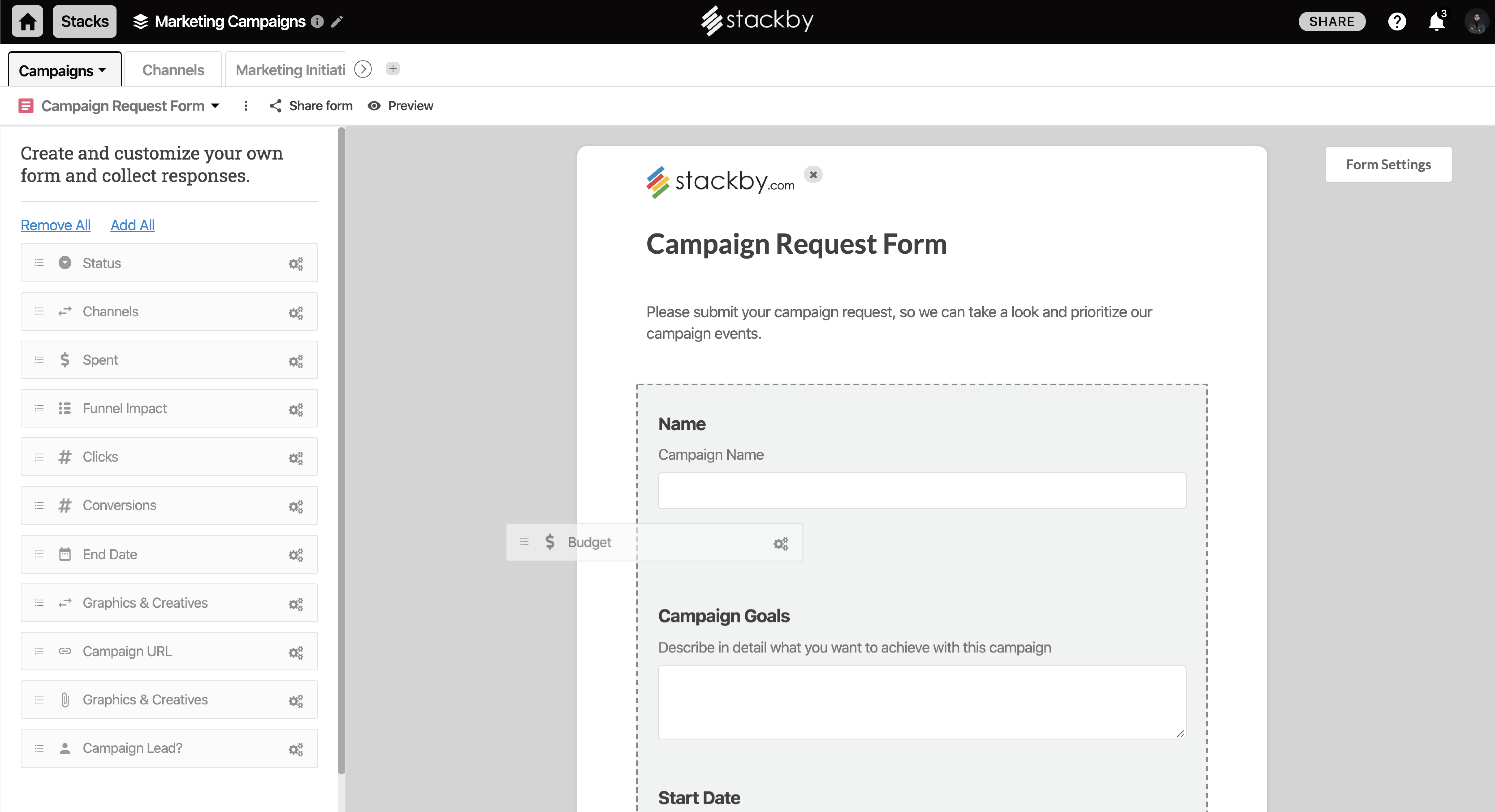
Stackby is designed to bring together the simplicity of spreadsheets, the functionality of databases and integrations with best business APIs to let anyone build their own tools, the way they want. No coding needed. Users can build a database from scratch, import data from pre-existing sources like spreadsheets or Google Sheets, or choose from over 100 pre-built templates across multiple categories. Stackby offers over 25 unique column types like text,…
Culture Amp is a great tool for employee surveys, and has been able to scale with us for 5+ years. It's customizable and helps provide rich data on how employees are feeling so that we can continue to use that feedback to improving our company culture quarter over quarter.
A de minimis incentive was given to thank the reviewer for their time. The incentive was not used to bias or drive a particular response, nor was the incentive contingent on a positive endorsement. More Info
Based on my experience, I can provide specific scenarios where Stackby is well suited and others where it may be less appropriate: Project Management: Stackby is an excellent choice for project management scenarios. Its ability to create custom databases, track tasks, assign responsibilities, and collaborate in real-time makes it highly effective for managing and monitoring project progress. CRM and Sales: Stackby is well suited for managing customer relationships and sales processes. Its customizable database structure allows for organizing customer information, tracking leads, managing deals, and generating reports. The ability to integrate with other tools further enhances its usefulness in CRM and sales workflows. Content Planning: Stackby is a great fit for content planning scenarios. Users can create databases to manage editorial calendars, track content ideas, assign tasks to team members, and monitor content performance. Collaboration features facilitate seamless content collaboration and ensure timely publishing.
The Culture Amp support team is unparalleled. They offer live chat support as well as office hours that you can attend for help on anything from technical issues to the best way to phrase a survey question. They are always willing to help and are experts in their field.
The report pages are very detailed and it's easy to view the data in a lot of different ways. This helps with more insightful analysis.
I love that you can benchmark your survey results to your industry/region; it helps a lot to give context to your results.
A de minimis incentive was given to thank the reviewer for their time. The incentive was not used to bias or drive a particular response, nor was the incentive contingent on a positive endorsement. More Info
They recently launched a text analytics feature but I think it still needs some work. I don't find the attributes of sentiment to comments to make complete sense. Text analytics are also not yet available for export so it makes it very difficult to share with others in presentations and reports outside of the system.
Currently they don't have the ability to set an automated file with and connect with an HRIS (at least not with Ultimate) so every time you want to refresh your users you have to upload a new file feed manually (which is pretty simple, it is just impossible to set the refresh on autopilot).
A de minimis incentive was given to thank the reviewer for their time. The incentive was not used to bias or drive a particular response, nor was the incentive contingent on a positive endorsement. More Info
Implement the same views available on desktop into the mobile app
Internal automations (like Airtable)
Ability to implement and display info as a dashboard (like Airtable)
Polish up the formatting of formulas, inputting them causes user frustration due to the formula input cursor jumping around
Better intelligence and ease of inputting data in bulk i.e have the fields automatically identify what data is being input and format appropriately (like Airtable does)
So I would give it a 10 once it is integrated, but because the integration was a challenge and I found the customer service to not be concierge level enough, I would have to lower it to an 8 for that reason.
A de minimis incentive was given to thank the reviewer for their time. The incentive was not used to bias or drive a particular response, nor was the incentive contingent on a positive endorsement. More Info
Stackby is overall pretty easy to use, especially if you're used to something like Airtable or SmartSuite. Some of the pages seem like near exact clones (though they put their own creative spin on things). I'd prefer a slighty fresher interface (like SmartSuite), but I'm willing to sacrifice that for the better price and great customer service.
Culture Amp is the first such tool I have used. I find it to be very well rounded and useful, especially since culture is one of the trickiest parts of a business to get a hold of as related to the bottom line. The fact that followup on goals and feedback can be done thanks to the platform is a very strong point.
A de minimis incentive was given to thank the reviewer for their time. The incentive was not used to bias or drive a particular response, nor was the incentive contingent on a positive endorsement. More Info
I have also tried Ora.Pm. Infinity has better graphical interface, but nowhere near as many features and the UI isn't as effective (i.e, moving around with keys). Grist has a much more technical interface and it comes from being more of a database/interactive spreadsheet vs Stackby. Grist has much more functionality in terms of formulas, but is much harder to learn to use and less other functionalities. Ora.PM is more of a test at a task management app, and doesn't compare - Stackby is much better.
We use culture amp to measure engagement levels surrounding certain "standard" questions we ask on a recurring basis. this gives us a viable way to measure how we are doing overall in certain areas that are important to us.
The Diversity survey helped us pinpoint some areas were we could work on improving. This came out in comments from several users.
We have to keep in mind that comments are important, but sometimes it is just one person who is upset about one thing that does not affect anyone else. We must keep that in mind and set those aside. It is easy to get caught up in some of those comments.
A de minimis incentive was given to thank the reviewer for their time. The incentive was not used to bias or drive a particular response, nor was the incentive contingent on a positive endorsement. More Info