The DataRobot AI Platform is presented as a solution that accelerates and democratizes data science by automating the end-to-end journey from data to value and allows users to deploy AI applications at scale. DataRobot provides a centrally governed platform that gives users AI to drive business outcomes, that is available on the user's cloud platform-of-choice, on-premise, or as a fully-managed service. The solutions include tools providing data preparation enabling users to explore and…
$0
MATLAB
Score 8.8 out of 10
N/A
MatLab is a predictive analytics and computing platform based on a proprietary programming language. MatLab is used across industry and academia.
$49
per student license
Posit
Score 10.0 out of 10
N/A
Posit, formerly RStudio, is a modular data science platform, combining open source and commercial products.
N/A
Pricing
DataRobot
MATLAB
Posit
Editions & Modules
No answers on this topic
Student
$49
per student license
Home
$149
perpetual license
Education
$250
per year
Education
$500
perpetual license
Standard
$860
per year
Standard
2,150
perpetual license
No answers on this topic
Offerings
Pricing Offerings
DataRobot
MATLAB
Posit
Free Trial
Yes
No
Yes
Free/Freemium Version
Yes
No
Yes
Premium Consulting/Integration Services
Yes
No
No
Entry-level Setup Fee
No setup fee
No setup fee
Optional
Additional Details
—
—
—
More Pricing Information
Community Pulse
DataRobot
MATLAB
Posit
Considered Multiple Products
DataRobot
Verified User
Manager
Chose DataRobot
When we ran the purchase process, two factors were critical: price of course and the customer success service as we were new in this datascience world. H2O and DataRobot were the finalists (Dataiku too expensive for our needs), but we decide to choose DataRobot as they give us …
We selected DataRobot for its "Automated" Machine Learning. Automation allows us to easily and quickly create machine learning models. The deployment process is simple, which was another key decision factor in choosing DataRobot over other platforms. We were pleasantly …
It is very impressive because it helps to contribute to customer acquisition and support. Helps to automate data modeling structures. Ease of integration. Cloud-based. Provides powerful analytics to organizations with more productive and ideal predictive analysis solutions. …
MATLAB's neurophysiological data pre-processing third-party packages are more scientifically validated compared to support for other software platforms. It also allows for writing code with a greater level of functionality and more capabilities than R-Studio, which is instead …
MATLAB has a very large database of embedded functions and it is continually growing. Graphics processing is much easier than other similar product for beginners (such as Jupyter notebook and Python). Although it is not an open-source language, lots of learning materials and …
I like the user interface of MATLAB and find it most intuitive compared to any of the other three programs I listed. However, unlike RStudio and Oracle VM VirtualBox, MATLAB is not open source. I do prefer MATLAB over PyCharm, because I find MATLAB to be a bit more intuitive. I …
MATLAB is very similar to R and Python, but has cleaner syntax than R and more in-built functionality than Python. However, both are free and therefore have that significant advantage over MATLAB.
SQL is simpler but much more limited in use.
RStudio is the free alternative to MATLAB. It works just as well as the other software, and more features can be accessed but to the open-source nature. This software is more commonplace in the research lab setting due to its free cost.
We feel that RStudio Teams is so far one of the best prototyping environments for data scientists. It is much more robust than standard JupyterLab/Jupyter Notebook instances in the cloud and it supports better authentication methods, allows to share your content via RStudio …
Far better integrated and easy to use. The only full-blown Python IDE is PyCharm, and it is a monolith. I used Spyder instead. I was very happy when RStudio added Python support so I can ditch Jupyter Notebooks, which really isn't an IDE but is more like RMarkdown, a small …
While many of these are great, RStudio is the best for R work. There is also native support in the IDE for combining other languages, like Python, into workflows easily so work across languages can be handled in one location.
In our organization RStudio is the main competitor for STATA. STATA has a larger number of users as it is far more user-friendly and has a large number of canned routines that work really well. RStudio is a niche software ideally suited to work with larger datasets.
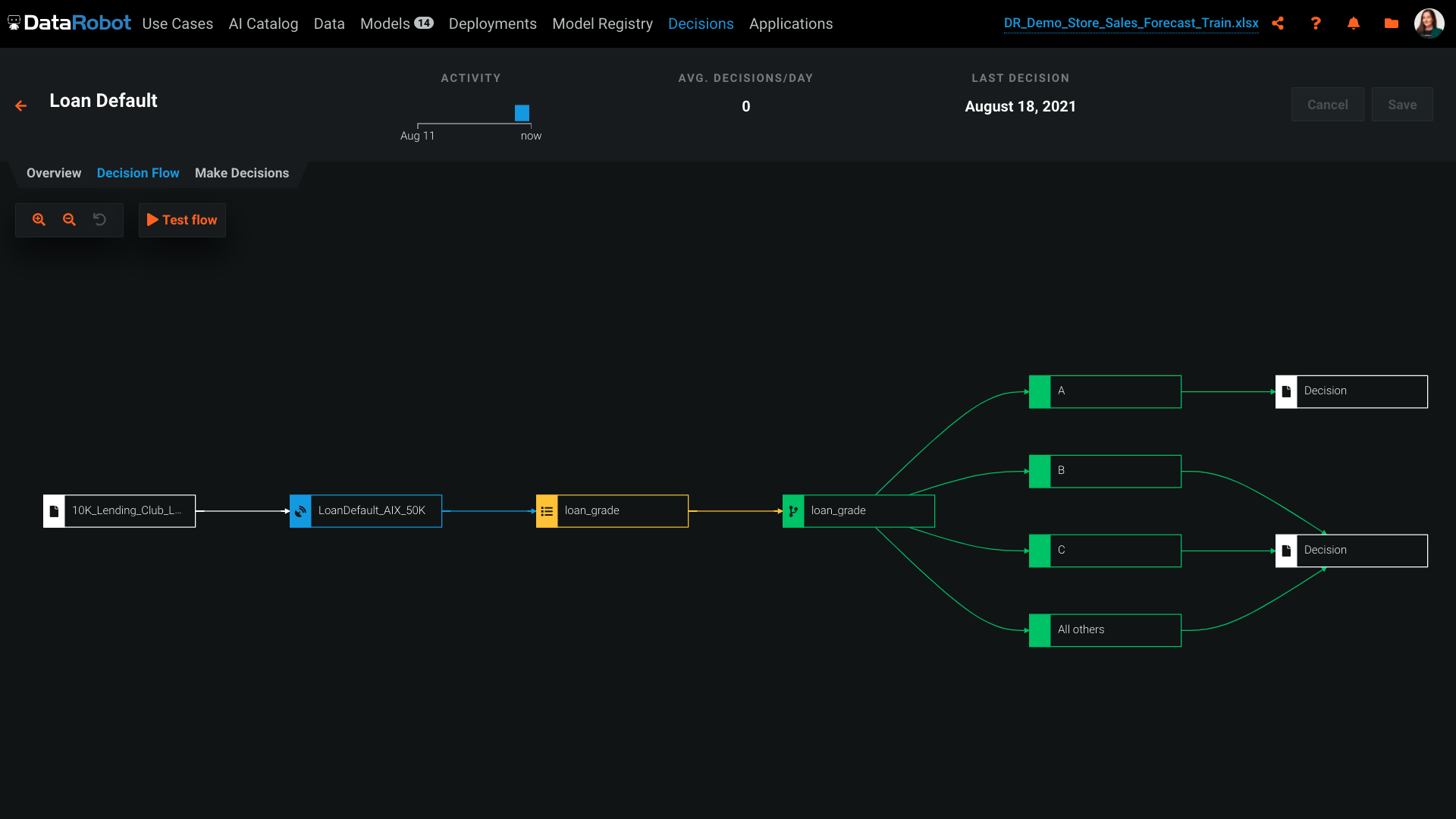
DataRobot can be used for risk assessment, such as predicting the likelihood of loan default. It can handle both classification and regression tasks effectively. It relies on historical data for model training. If you have limited historical data or the data quality is poor, it may not be the best choice as it requires a sufficient amount of high-quality data for accurate model building.
MATLAB really does best for solving computational problems in math and engineering. Especially when you have to use a lot of functions in your solving process, or if you have a nonlinear equation that must be iteratively solved. [MATLAB] can also perform things like integration and derivation on your equations that you put into it.
In my humble opinion, if you are working on something related to Statistics, RStudio is your go-to tool. But if you are looking for something in Machine Learning, look out for Python. The beauty is that there are packages now by which you can write Python/SQL in R. Cross-platform functionality like such makes RStudio way ahead of its competition. A couple of chinks in RStudio armor are very small and can be considered as nagging just for the sake of argument. Other than completely based on programming language, I couldn't find significant drawbacks to using RStudio. It is one of the best free software available in the market at present.
DataRobot helps, with algorithms, to analyze and decipher numerous machine-learning techniques in order to provide models to assist in company-wide decision making.
Our DataRobot program puts on an "even playing field" the strength of auto-machine learning and allows us to make decisions in an extremely timely manner. The speed is consistent without being offset by errors or false-negatives.
It encompasses many desired techniques that help companies in general, to reconfigure in to artificial intelligence driven firms, with little to no inconvenience.
The support is incredibly professional and helpful, and they often go out of their way to help me when something doesn't work.
The one-click publishing from RStudio Connect is absolutely amazing, and I really like the way that it deploys your exact package versions, because otherwise, you can get in a terrible mess.
Python doesn't feel quite as native as R at the moment but I have definitely deployed stuff in R and Python that works beautifully which is really nice indeed.
The platform itself is very complicated. It probably can't function well without being complicated, but there is a big training curve to get over before you can effectively use it. Even I'm not sure if I'm effectively using it now.
The suggested model DataRobot deploys often not the best model for our purposes. We've had to do a lot of testing to make sure what model is the best. For regressive models, DataRobot does give you a MASE score but, for some reason, often doesn't suggest the best MASE score model.
The software will give you errors if output files are not entered correctly but will not exactly tell you how to fix them. Perhaps that is complicated, but being able to download a template with your data for an output file in the correct format would be nice.
Python integration is newer and still can be rough, especially with when using virtual environments.
RStudio Connect pricing feels very department focused, not quite an enterprise perspective.
Some of the RStudio packages don't follow conventional development guidelines (API breaking changes with minor version numbers) which can make supporting larger projects over longer timeframes difficult.
DataRobot presents a machine-learning platform designed by data scientists from an array of backgrounds, to construct and develop precise predictive modeling in a fraction of the time previously taken. The tech invloved addresses the critical shortage of data scientists by changing the speed and economics of predictive analytics. DataRobot utilizes parallel processing to evaluate models in R, Python, Spark MLlib, H2O and other open source databases. It searches for possible permutations and algorithms, features, transformation, processes, steps and tuning to yield the best models for the dataset and predictive goal.
There is no viable alternative right now. The toolset is good and the functionality is increasing with every release. It is backed by regular releases and ongoing development by the RStudio team. There is good engagement with RStudio directly when support is required. Also there's a strong and growing community of developers who provide additional support and sample code.
MATLAB is pretty easy to use. You can extend its capabilities using the programming interface. Very flexible capabilities when it comes to graphical presentation of your data (so many different kinds of options for your plotting needs). Anytime you are working with large data sets, or with matrices, MATLAB is likely to be very helpful.
For someone who learns how to use the software and picks up on the "language" of R, it's very easy to use. For beginners, it can be hard and might require a course, as well as the appropriate statistical training to understand what packages to use and when
RStudio is very available and cheap to use. It needs to be updated every once in a while, but the updates tend to be quick and they do not hinder my ability to make progress. I have not experienced any RStudio outages, and I have used the application quite a bit for a variety of statistical analyses
As I am writing this report I am participating with Datarobot Engineers in an complex environment and we have their whole support. We are in Mexico and is not common to have this commitment from companies without expensive contract services. Installing is on premise and the client does not want us to take control and they, the client, is also limited because of internal IT regulations ,,, soo we are just doing magic and everybody is committed.
The built-in search engine is not as performing as I wish it would be. However, the YouTube channel has a vast library of informative video that can help understanding the software. Also, many other software have a nice bridge into MATLAB, which makes it very versatile. Overall, the support for MATLAB is good.
Since R is trendy among statisticians, you can find lots of help from the data science/ stats communities. If you need help with anything related to RStudio or R, google it or search on StackOverflow, you might easily find the solution that you are looking for.
I've done machine learning through python before, however having to code and test each model individually was very time consuming and required a lot of expertise. The data Robot approach, is an excellent way of getting to a well placed starting point. You can then pick up the model from there and fine tune further if you need.
How MATLAB compares to its competition or similar open access tools like R (programming language) or SciLab is that it's simply more powerful and capable. It embraces a wider spectrum of possibilities for far more fields than any other environment. R, for example, is intended primarily for the area of statistical computing. SciLab, on the other hand, is a similar open access tool that falls very short in its computing capabilities. It's much slower when running larger scripts and isn't documented or supported nearly as well as MATLAB.
RStudio was provided as the most customizable. It was also strictly the most feature-rich as far as enabling our organization to script, run, and make use of R open-source packages in our data analysis workstreams. It also provided some support for python, which was useful when we had R heavy code with some python threaded in. Overall we picked Rstudio for the features it provided for our data analysis needs and the ability to interface with our existing resources.
RStudio is very scalable as a product. The issue I have is that it doesn't necessarily fit in nicely with the mainly Microsoft environment that everybody else is using. Having RStudio for us means dedicated servers and recruiting staff who know how to manage the environment. This isn't a fault of the product at all, it's just part of the data science landscape that we all have to put up with. Having said that RStudio is absolutely great for running on low spec servers and there are loads of options to handle concurrency, memory use, etc.
MATLAB helps us quickly sort through large sets of data because we keep the same script each time we run an analyzation, making it very efficient to run this whole process.
The software makes it super easy for us to create plots that we can then show to investors or clients to display our data.
We are also looking to create an app for our product, and we will not be able to do that on MATLAB, therefore creating a limiting issue and a new learning curve for a programming language.
Using it for data science in a very big and old company, the most positive impact, from my point of view, has been the ability of spreading data culture across the group. Shortening the path from data to value.
Still it's hard to quantify economic benefits, we are struggling and it's a great point of attention, since splitting out the contribution of the single aspects of a project (and getting the RStudio pie) is complicated.
What is sure is that, in the long run, RStudio is boosting productivity and making the process in which is embedded more efficient (cost reduction).