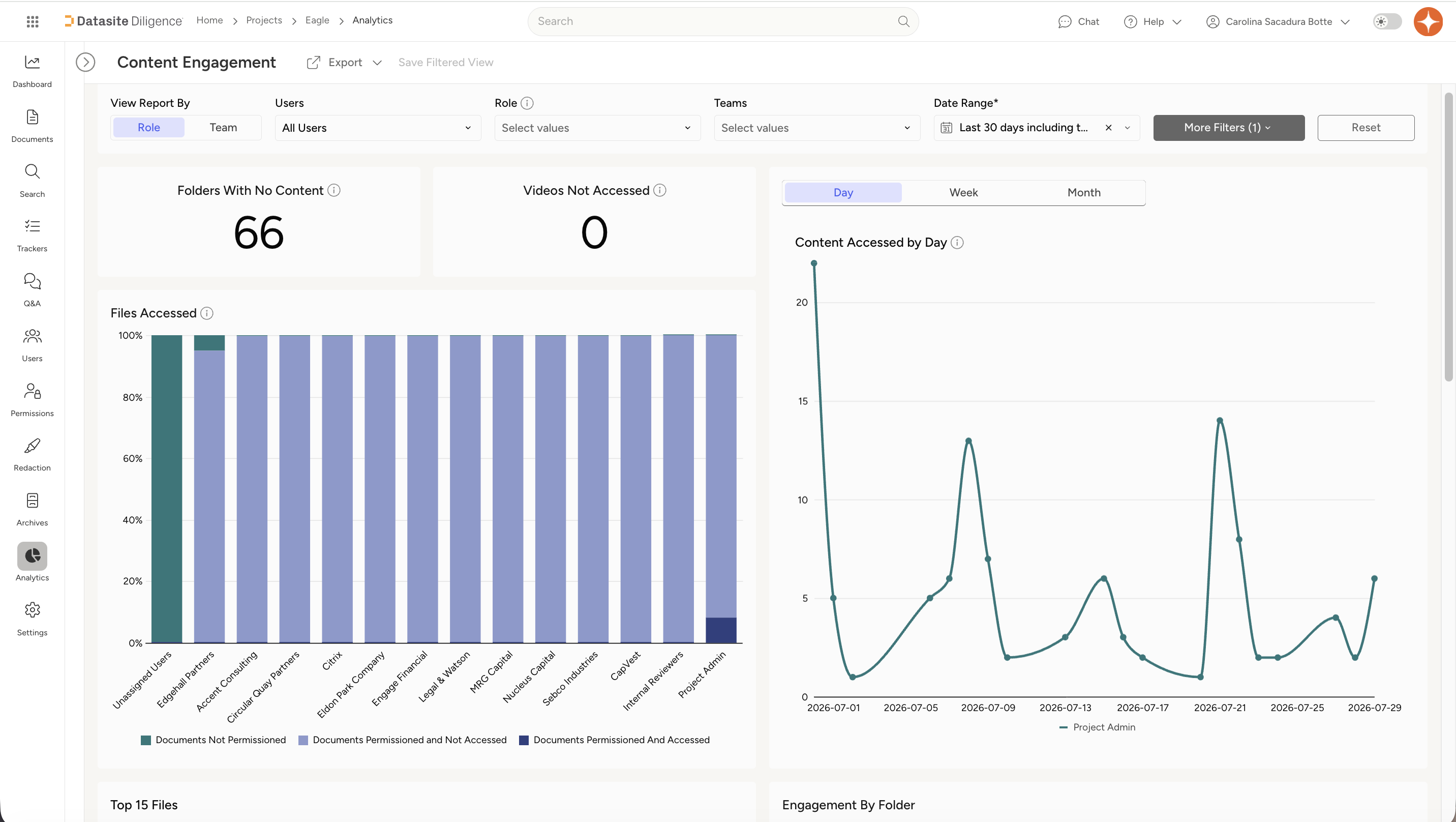
Datasite Diligence is a sell-side virtual data room, a secure online repository for sharing confidential documents during transactions. The platform supports document review, collaboration, and monitoring of deal activity.
N/A
Oracle Autonomous Data Warehouse
Score8.1 out of 10
N/A
Oracle Autonomous Data Warehouse is optimized for analytic workloads, including data marts, data warehouses, data lakes, and data lakehouses. With Autonomous Data Warehouse, data scientists, business analysts, and nonexperts can discover business insights using data of any size and type. The solution is built for the cloud and optimized using Oracle Exadata.
Datasite is well suited for organizing large quantities of a variety of documents into folders. It is not as well suited for Xcel, which generally requires downloading in order to review, but there are quick preview options for Word and PDF items.
A de minimis incentive was given to thank the reviewer for their time. The incentive was not used to bias or drive a particular response, nor was the incentive contingent on a positive endorsement. More Info
II would recommend Oracle Autonomous Data Warehouse to someone looking to fully automate the transferring of data especially in a warehouse scenario though I can see the elasticity of the suite that is offered and can see it is applicable in other scenarios not just warehouses.
A de minimis incentive was given to thank the reviewer for their time. The incentive was not used to bias or drive a particular response, nor was the incentive contingent on a positive endorsement. More Info
User-friendly interface. We download datarooms for a single deal over 30+ times per deal (as the dataroom gets updated), so the interface being easy to access / navigate is extremely important.
Features: Datasite Diligence Virtual Data Room gives great tools beyond just downloading a dataroom. Easy notifications when something gets downloaded, two factor authentication, ability to search data room or filter for recently uploaded files, etc.
Organization: A lot of data rooms do not allow you to keep organized file paths. When you download a dataroom it often looses all the index folder names. Datasite Diligence Virtual Data Room keeps files extremely organized and is always available.
A de minimis incentive was given to thank the reviewer for their time. The incentive was not used to bias or drive a particular response, nor was the incentive contingent on a positive endorsement. More Info
Very easy and fast to load data into the Oracle Autonomous Data Warehouse
Exceptionally fast retrieval of data joining 100 million row table with a billion row table plus the size of the database was reduced by a factor of 10 due to how Oracle store[s] and organise[s] data and indexes.
Flexibility with scaling up and down CPU on the fly when needed, and just stop it when not needed so you don't get charged when it is not running.
It is always patched and always available and you can add storage dynamically as you need it.
Major feature I noticed in other datarooms that's missing in Datasite Diligence Virtual Data Room is bulk download feature. I can select multiple files/folders under a parent folder, however, I would like to be able to download selected files/folders from among multiple folders.
Another feature I'd love to see is a "New*" menu item in Q&A, just like we have in the Documents section correctly. I know I can still use the date to filter the latest answered questions, but having the "New" option makes it a lot easier to do a quick filter. My idea is that this option will show all activity that I haven't looked at since my last login, irrespective of date.
A de minimis incentive was given to thank the reviewer for their time. The incentive was not used to bias or drive a particular response, nor was the incentive contingent on a positive endorsement. More Info
It is very expensive product. But not to mention, there's good reasons why it is expensive.
The product should support more cloud based services. When we made the decision to buy the product (which was 20 years ago,) there was no such thing to consider, but moving to a cloud based data warehouse may promise more scalability, agility, and cost reduction. The new version of Data Warehouse came out on the way, but it looks a bit behind compared to other competitors.
Our healthcare data consists of 30% coded data (such as ICD 10 / SNOMED C,T) but the rests is narrative (such as clinical notes.). Oracle is the best for warehousing standardized data, but not a good choice when considering unstructured data, or a mix of the two.
A de minimis incentive was given to thank the reviewer for their time. The incentive was not used to bias or drive a particular response, nor was the incentive contingent on a positive endorsement. More Info
It is my go to data room provider and I am super comfortable using it. I don't think I would want to use anything else since I can't trust them like I can trust Datasite
A de minimis incentive was given to thank the reviewer for their time. The incentive was not used to bias or drive a particular response, nor was the incentive contingent on a positive endorsement. More Info
Does not require continous attention from the DBA, autonomous features allows the database to perform most of the regular admin tasks without need for human intervention.
Allows to integrate multiple data sources on a central data warehouse, and explode the information stored with different analytic and reporting tools.
A de minimis incentive was given to thank the reviewer for their time. The incentive was not used to bias or drive a particular response, nor was the incentive contingent on a positive endorsement. More Info
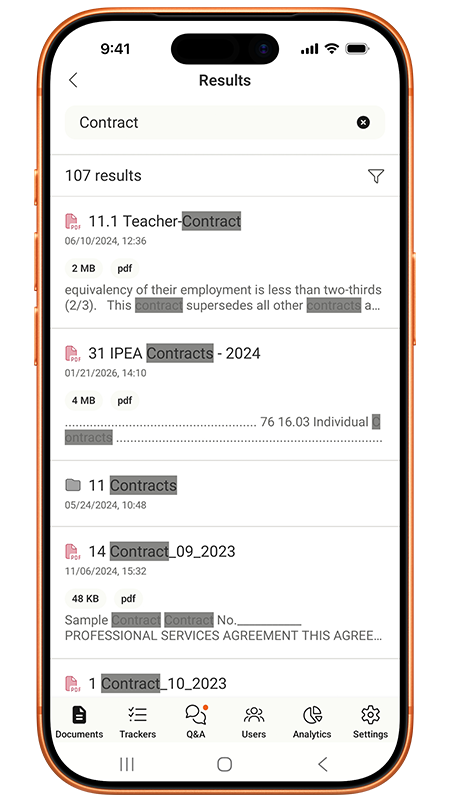
It's easy to manoeuvre across. And you can just use the search bar at the top to find specific files, so you don't have to search through all the folders. Relevant in a big deal with lots of workstreams, such as CDD, FDD, ODD, RDD.
A de minimis incentive was given to thank the reviewer for their time. The incentive was not used to bias or drive a particular response, nor was the incentive contingent on a positive endorsement. More Info
A de minimis incentive was given to thank the reviewer for their time. The incentive was not used to bias or drive a particular response, nor was the incentive contingent on a positive endorsement. More Info
A de minimis incentive was given to thank the reviewer for their time. The incentive was not used to bias or drive a particular response, nor was the incentive contingent on a positive endorsement. More Info
A de minimis incentive was given to thank the reviewer for their time. The incentive was not used to bias or drive a particular response, nor was the incentive contingent on a positive endorsement. More Info
A de minimis incentive was given to thank the reviewer for their time. The incentive was not used to bias or drive a particular response, nor was the incentive contingent on a positive endorsement. More Info
Understanding Oracle Cloud Infrastructure is really simple, and Autonomous databases are even more. Using shared or dedicated infrastructure is one of the few things you need to consider at the moment of starting provisioning your Oracle Autonomous Data Warehouse.
A de minimis incentive was given to thank the reviewer for their time. The incentive was not used to bias or drive a particular response, nor was the incentive contingent on a positive endorsement. More Info
While the other players might offer certain additional features over the Datasite Diligence Virtual Data Room, the cost justification does not exist for any of those features. A secure data room at the cost of offering that is provided and the level of security functions make it at par with the other competitors and hence a go to choice for any organisation's requirements
A de minimis incentive was given to thank the reviewer for their time. The incentive was not used to bias or drive a particular response, nor was the incentive contingent on a positive endorsement. More Info
As I mentioned, I have also worked with Amazon Redshift, but it is not as versatile as Oracle Autonomous Data Warehouse and does not provide a large variety of products. Oracle Autonomous Data Warehouse is also more reliable than Amazon Redshift, hence why I have chosen it
A de minimis incentive was given to thank the reviewer for their time. The incentive was not used to bias or drive a particular response, nor was the incentive contingent on a positive endorsement. More Info
A de minimis incentive was given to thank the reviewer for their time. The incentive was not used to bias or drive a particular response, nor was the incentive contingent on a positive endorsement. More Info
A de minimis incentive was given to thank the reviewer for their time. The incentive was not used to bias or drive a particular response, nor was the incentive contingent on a positive endorsement. More Info
A de minimis incentive was given to thank the reviewer for their time. The incentive was not used to bias or drive a particular response, nor was the incentive contingent on a positive endorsement. More Info
Overall the business objective of all of our clients have been met positively with Oracle Data Warehouse. All of the required analysis the users were able to successfully carry out using the warehouse data.
Using a 3-tier architecture with the Oracle Data Warehouse at the back end the mid-tier has been integrated well. This is big plus in providing the necessary tools for end users of the data warehouse to carry out their analysis.
All of the various BI products (OBIEE, Cognos, etc.) are able to use and exploit the various analytic built-in functionalities of the Oracle Data Warehouse.
A de minimis incentive was given to thank the reviewer for their time. The incentive was not used to bias or drive a particular response, nor was the incentive contingent on a positive endorsement. More Info