
erwin Data Modeler vs. IBM Cognos Analytics vs. IBM Rational System Architect Designer
erwin Data Modeler vs. IBM Cognos Analytics vs. IBM Rational System Architect Designer
| Product | Rating | Most Used By | Product Summary | Starting Price |
|---|---|---|---|---|
 erwin Data Modeler | N/A | erwin Data Modeler by Quest is a data modeling tool used to find, visualize, design, deploy and standardize high-quality enterprise data assets. It can discover and document any data from anywhere for consistency, clarity and artifact reuse across large-scale data integration, master data management, metadata management, Big Data, business intelligence and analytics initiatives, accomplishing this whil esupporting data governance and intelligence efforts. | N/A | |
 IBM Cognos Analytics | N/A | IBM Cognos is a full-featured business intelligence suite by IBM, designed for larger deployments. It comprises Query Studio, Reporting Studio, Analysis Studio and Event Studio, and Cognos Administration along with tools for Microsoft Office integration, full-text search, and dashboards. | $10 per month per user | |
 IBM Rational System Architect Designer | N/A | IBM Rational System Architect is an enterprise architecture management platform, that enables the use of abstraction to preserve design intents and tribal memory, and to provide auditable evidence of conformance to policies. | N/A |
| erwin Data Modeler | IBM Cognos Analytics | IBM Rational System Architect Designer | ||||||||||||||||||||||
|---|---|---|---|---|---|---|---|---|---|---|---|---|---|---|---|---|---|---|---|---|---|---|---|---|
| Editions & Modules | No answers on this topic |
| No answers on this topic | |||||||||||||||||||||
| Offerings |
| |||||||||||||||||||||||
| Entry-level Setup Fee | Optional | Optional | No setup fee | |||||||||||||||||||||
| Additional Details | — | — | — | |||||||||||||||||||||
| More Pricing Information | ||||||||||||||||||||||||
| erwin Data Modeler | IBM Cognos Analytics | IBM Rational System Architect Designer |
|---|
| erwin Data Modeler | IBM Cognos Analytics | IBM Rational System Architect Designer | |||||||||||||||||||||||||||
|---|---|---|---|---|---|---|---|---|---|---|---|---|---|---|---|---|---|---|---|---|---|---|---|---|---|---|---|---|---|
| BI Standard Reporting |
| ||||||||||||||||||||||||||||
| Ad-hoc Reporting |
| ||||||||||||||||||||||||||||
| Report Output and Scheduling |
| ||||||||||||||||||||||||||||
| Data Discovery and Visualization |
| ||||||||||||||||||||||||||||
| Access Control and Security |
| ||||||||||||||||||||||||||||
| Mobile Capabilities |
| ||||||||||||||||||||||||||||
| Application Program Interfaces (APIs) / Embedding |
|
| erwin Data Modeler | IBM Cognos Analytics | IBM Rational System Architect Designer | |
|---|---|---|---|
| Small Businesses |  Egnyte Score 9.5 out of 10 |  Yellowfin Score 8.7 out of 10 |  IBM Blueworks Live Score 8.8 out of 10 |
| Medium-sized Companies |  IBM InfoSphere Information Server Score 8.0 out of 10 |  Reveal Score 10.0 out of 10 | IBM Blueworks Live Score 8.8 out of 10 |
| Enterprises | IBM InfoSphere Information Server Score 8.0 out of 10 |  Kyvos Semantic Layer Score 9.5 out of 10 | IBM Blueworks Live Score 8.8 out of 10 |
| All Alternatives | View all alternatives | View all alternatives | View all alternatives |
| erwin Data Modeler | IBM Cognos Analytics | IBM Rational System Architect Designer | |
|---|---|---|---|
| Likelihood to Recommend | 6.1 (7 ratings) | 7.6 (146 ratings) | 8.0 (1 ratings) |
| Likelihood to Renew | - (0 ratings) | 8.2 (30 ratings) | - (0 ratings) |
| Usability | 9.0 (2 ratings) | 7.3 (9 ratings) | - (0 ratings) |
| Availability | - (0 ratings) | 8.6 (4 ratings) | - (0 ratings) |
| Performance | - (0 ratings) | 9.0 (5 ratings) | - (0 ratings) |
| Support Rating | 9.0 (3 ratings) | 1.0 (9 ratings) | - (0 ratings) |
| In-Person Training | - (0 ratings) | 8.7 (4 ratings) | - (0 ratings) |
| Online Training | - (0 ratings) | 8.0 (4 ratings) | - (0 ratings) |
| Implementation Rating | - (0 ratings) | 7.0 (7 ratings) | - (0 ratings) |
| Configurability | - (0 ratings) | 7.0 (3 ratings) | - (0 ratings) |
| Ease of integration | - (0 ratings) | 5.7 (5 ratings) | - (0 ratings) |
| Product Scalability | - (0 ratings) | 2.7 (4 ratings) | - (0 ratings) |
| Vendor post-sale | - (0 ratings) | 7.0 (1 ratings) | - (0 ratings) |
| Vendor pre-sale | - (0 ratings) | 7.0 (1 ratings) | - (0 ratings) |
| erwin Data Modeler | IBM Cognos Analytics | IBM Rational System Architect Designer | |
|---|---|---|---|
| Likelihood to Recommend |  Quest Software
| IBM
 Nishant Thakkar Senior Analyst |  IBM
 Miguel Angel Merino Vega Analista de Sistemas |
| Pros | Quest Software
 Ravinder Gupta Senior Oracle Database Administrator | IBM
| IBM
Miguel Angel Merino Vega Analista de Sistemas |
| Cons | Quest Software
| IBM
 Josepe Bonfante Social Media Strategist | IBM
Miguel Angel Merino Vega Analista de Sistemas |
| Likelihood to Renew | Quest Software No answers on this topic | IBM
 Sachin Karkun Technical Lead | IBM No answers on this topic |
| Usability | Quest Software
| IBM
 Robert Goodman Director, Business Intelligence & Analytics | IBM No answers on this topic |
| Reliability and Availability | Quest Software No answers on this topic | IBM
 Gerrit Goewey Senior Analytics Consultant | IBM No answers on this topic |
| Performance | Quest Software No answers on this topic | IBM
 Meghdeep Raval, PMP Manager, Data Architecture | IBM No answers on this topic |
| Support Rating | Quest Software
| IBM
 Jonathan Kyrlach Business Intelligence Architect | IBM No answers on this topic |
| In-Person Training | Quest Software No answers on this topic | IBM
Robert Goodman Director, Business Intelligence & Analytics | IBM No answers on this topic |
| Online Training | Quest Software No answers on this topic | IBM
Gerrit Goewey Senior Analytics Consultant | IBM No answers on this topic |
| Implementation Rating | Quest Software No answers on this topic | IBM
 Toni McKee HR Systems Analyst II | IBM No answers on this topic |
| Alternatives Considered | Quest Software
| IBM
| IBM
Miguel Angel Merino Vega Analista de Sistemas |
| Scalability | Quest Software No answers on this topic | IBM
Robert Goodman Director, Business Intelligence & Analytics | IBM No answers on this topic |
| Return on Investment | Quest Software
 Rina Falkovich Data Architect | IBM
| IBM
Miguel Angel Merino Vega Analista de Sistemas |
| ScreenShots | erwin Data Modeler Screenshots  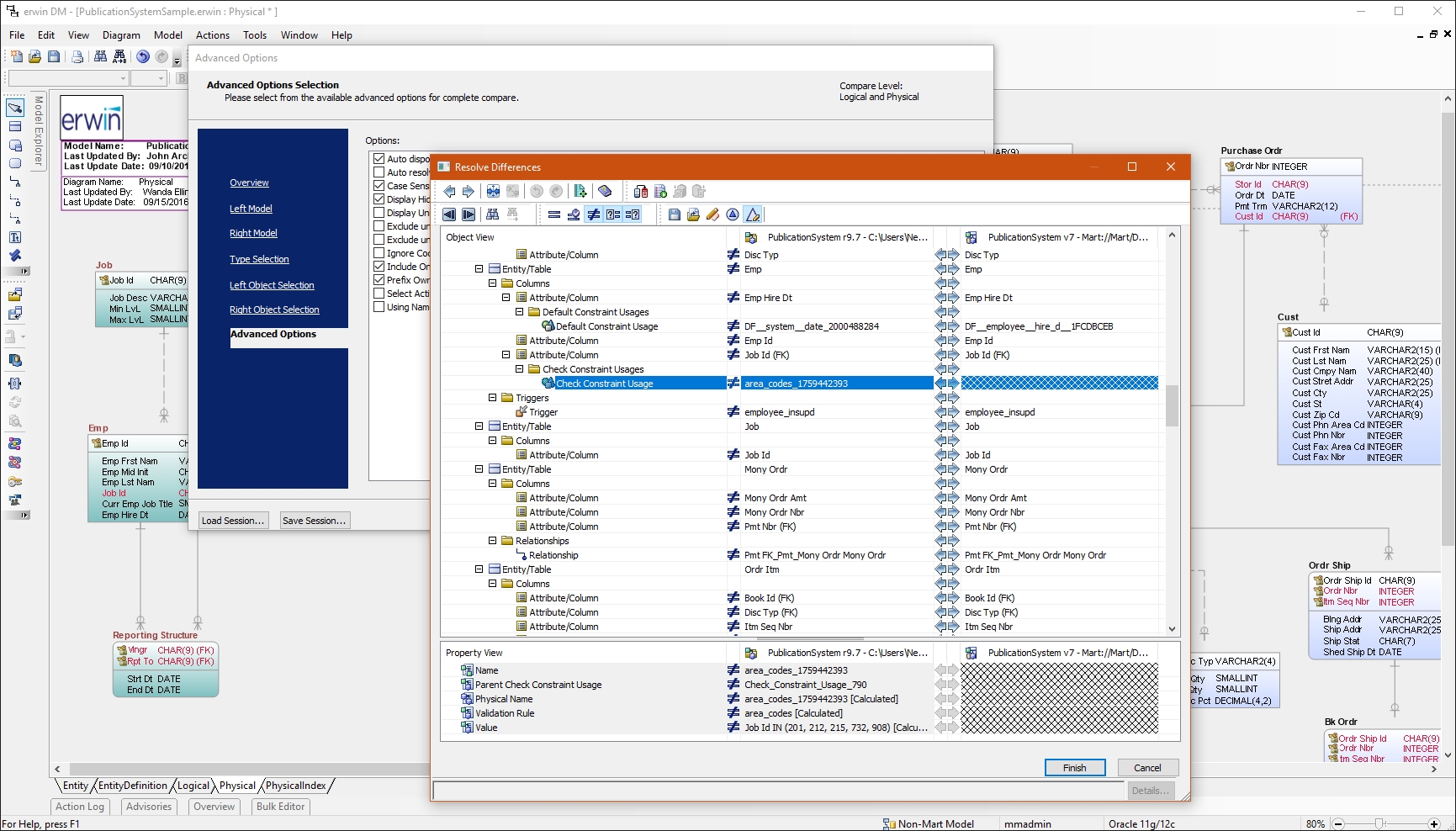 | IBM Cognos Analytics Screenshots      |