Chose Tableau Desktop
Tableau Desktop is better than any of its competitors as it is cost effective and user friendly.

| Product | Rating | Most Used By | Product Summary | Starting Price |
|---|---|---|---|---|
 erwin Data Modeler | N/A | erwin Data Modeler by Quest is a data modeling tool used to find, visualize, design, deploy and standardize high-quality enterprise data assets. It can discover and document any data from anywhere for consistency, clarity and artifact reuse across large-scale data integration, master data management, metadata management, Big Data, business intelligence and analytics initiatives, accomplishing this whil esupporting data governance and intelligence efforts. | N/A | |
 Tableau Desktop | N/A | Tableau Desktop is a data visualization product from Tableau. It connects to a variety of data sources for combining disparate data sources without coding. It provides tools for discovering patterns and insights, data calculations, forecasts, and statistical summaries and visual storytelling. | $1,380 per year (purchased via a Creator license) | |
 Talend Data Fabric | N/A | The Talend Data Fabric helps organizations to achieve and maintain complete, trustworthy, and uncompromised data, so that they can stay in control, mitigate risk, and drive value. | N/A |
| erwin Data Modeler | Tableau Desktop | Talend Data Fabric | ||||||||||||||||||||||
|---|---|---|---|---|---|---|---|---|---|---|---|---|---|---|---|---|---|---|---|---|---|---|---|---|
| Editions & Modules | No answers on this topic |
| No answers on this topic | |||||||||||||||||||||
| Offerings |
| |||||||||||||||||||||||
| Entry-level Setup Fee | Optional | No setup fee | No setup fee | |||||||||||||||||||||
| Additional Details | — | All pricing plans are billed annually. A Creator license includes Tableau Desktop, Tableau Prep Builder, and Tableau Pulse. Discounts sometimes available for volume. | — | |||||||||||||||||||||
| More Pricing Information | ||||||||||||||||||||||||
| erwin Data Modeler | Tableau Desktop | Talend Data Fabric | |
|---|---|---|---|
| Considered Multiple Products |  erwin Data Modeler No answer on this topic |  Tableau Desktop |  Talend Data Fabric No answer on this topic |
| erwin Data Modeler | Tableau Desktop | Talend Data Fabric | |||||||||||||||||||||||||||
|---|---|---|---|---|---|---|---|---|---|---|---|---|---|---|---|---|---|---|---|---|---|---|---|---|---|---|---|---|---|
| BI Standard Reporting |
| ||||||||||||||||||||||||||||
| Ad-hoc Reporting |
| ||||||||||||||||||||||||||||
| Report Output and Scheduling |
| ||||||||||||||||||||||||||||
| Data Discovery and Visualization |
| ||||||||||||||||||||||||||||
| Access Control and Security |
| ||||||||||||||||||||||||||||
| Mobile Capabilities |
| ||||||||||||||||||||||||||||
| Application Program Interfaces (APIs) / Embedding |
|
| erwin Data Modeler | Tableau Desktop | Talend Data Fabric | |
|---|---|---|---|
| Small Businesses |  Egnyte Score 9.4 out of 10 |  Yellowfin Score 8.7 out of 10 | No answers on this topic |
| Medium-sized Companies |  IBM InfoSphere Information Server Score 8.0 out of 10 |  Reveal Score 10.0 out of 10 | No answers on this topic |
| Enterprises | IBM InfoSphere Information Server Score 8.0 out of 10 |  Kyvos Semantic Layer Score 9.5 out of 10 |  Oracle GoldenGate Score 8.7 out of 10 |
| All Alternatives | View all alternatives | View all alternatives | View all alternatives |
| erwin Data Modeler | Tableau Desktop | Talend Data Fabric | |
|---|---|---|---|
| Likelihood to Recommend | 6.1 (7 ratings) | 8.8 (203 ratings) | 9.6 (7 ratings) |
| Likelihood to Renew | - (0 ratings) | 7.5 (41 ratings) | 8.0 (1 ratings) |
| Usability | 9.0 (2 ratings) | 8.3 (73 ratings) | 7.0 (1 ratings) |
| Availability | - (0 ratings) | 10.0 (11 ratings) | - (0 ratings) |
| Performance | - (0 ratings) | 8.0 (10 ratings) | - (0 ratings) |
| Support Rating | 9.0 (3 ratings) | 1.0 (57 ratings) | 10.0 (1 ratings) |
| In-Person Training | - (0 ratings) | 9.4 (4 ratings) | - (0 ratings) |
| Online Training | - (0 ratings) | 8.0 (5 ratings) | - (0 ratings) |
| Implementation Rating | - (0 ratings) | 8.0 (34 ratings) | - (0 ratings) |
| Configurability | - (0 ratings) | 7.0 (3 ratings) | - (0 ratings) |
| Ease of integration | - (0 ratings) | 10.0 (1 ratings) | - (0 ratings) |
| Product Scalability | - (0 ratings) | 9.0 (4 ratings) | - (0 ratings) |
| Vendor post-sale | - (0 ratings) | 10.0 (1 ratings) | - (0 ratings) |
| Vendor pre-sale | - (0 ratings) | 10.0 (1 ratings) | - (0 ratings) |
| erwin Data Modeler | Tableau Desktop | Talend Data Fabric | |
|---|---|---|---|
| Likelihood to Recommend | Quest Software
| Tableau
 Karol Kozłowski Project manager | Qlik
|
| Pros | Quest Software
 Ravinder Gupta Senior Oracle Database Administrator | Tableau
 Afia Tamanna Information Technology Business Consultant | Qlik
 Ankit Goyal Technical Consultant |
| Cons | Quest Software
| Tableau
| Qlik
 Majd Izadian (majd.izadian@zendeux.com) Managing Partner & CEO - Big Data, MDM, Data Quality |
| Likelihood to Renew | Quest Software No answers on this topic | Tableau
| Qlik
Majd Izadian (majd.izadian@zendeux.com) Managing Partner & CEO - Big Data, MDM, Data Quality |
| Usability | Quest Software
| Tableau
 Al Mubassir Muin Software Engineer | Qlik
 Charlotte Byrne Brown Robotic Process Automation Manager |
| Reliability and Availability | Quest Software No answers on this topic | Tableau
 Brad Llewellyn Associate Data Analytics Consultant | Qlik No answers on this topic |
| Performance | Quest Software No answers on this topic | Tableau
| Qlik No answers on this topic |
| Support Rating | Quest Software
| Tableau
| Qlik
Charlotte Byrne Brown Robotic Process Automation Manager |
| In-Person Training | Quest Software No answers on this topic | Tableau
 Jon Boeckenstedt Associate Vice President | Qlik No answers on this topic |
| Online Training | Quest Software No answers on this topic | Tableau
| Qlik No answers on this topic |
| Implementation Rating | Quest Software No answers on this topic | Tableau
 David Fickes Decision Sciences - Modeling, Simulation & Analysis | Qlik No answers on this topic |
| Alternatives Considered | Quest Software
| Tableau
| Qlik
 Victor Cáceres Database Administrator (DBA) |
| Scalability | Quest Software No answers on this topic | Tableau
| Qlik No answers on this topic |
| Return on Investment | Quest Software
 Rina Falkovich Data Architect | Tableau
| Qlik
|
| ScreenShots | erwin Data Modeler Screenshots  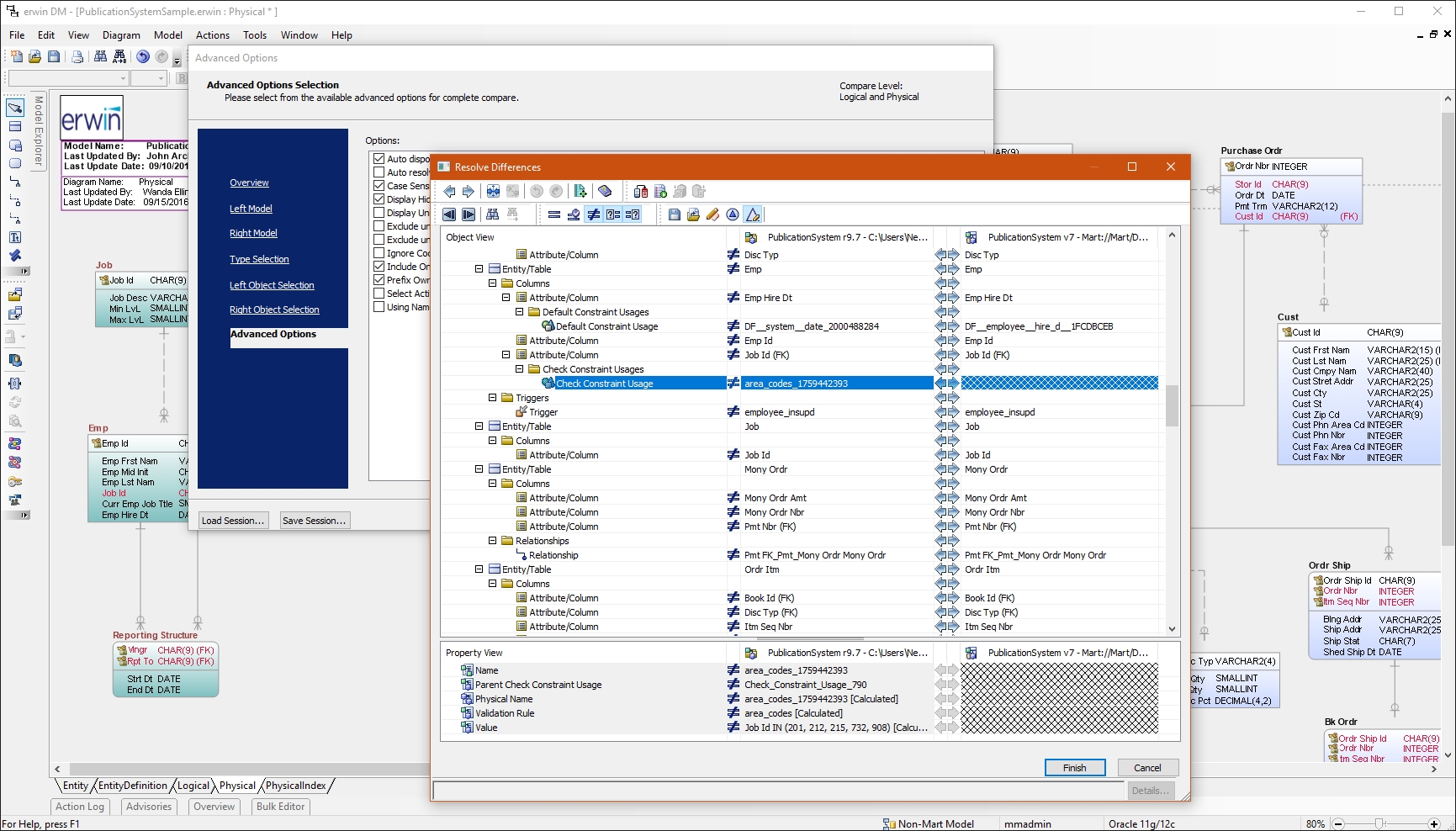 |