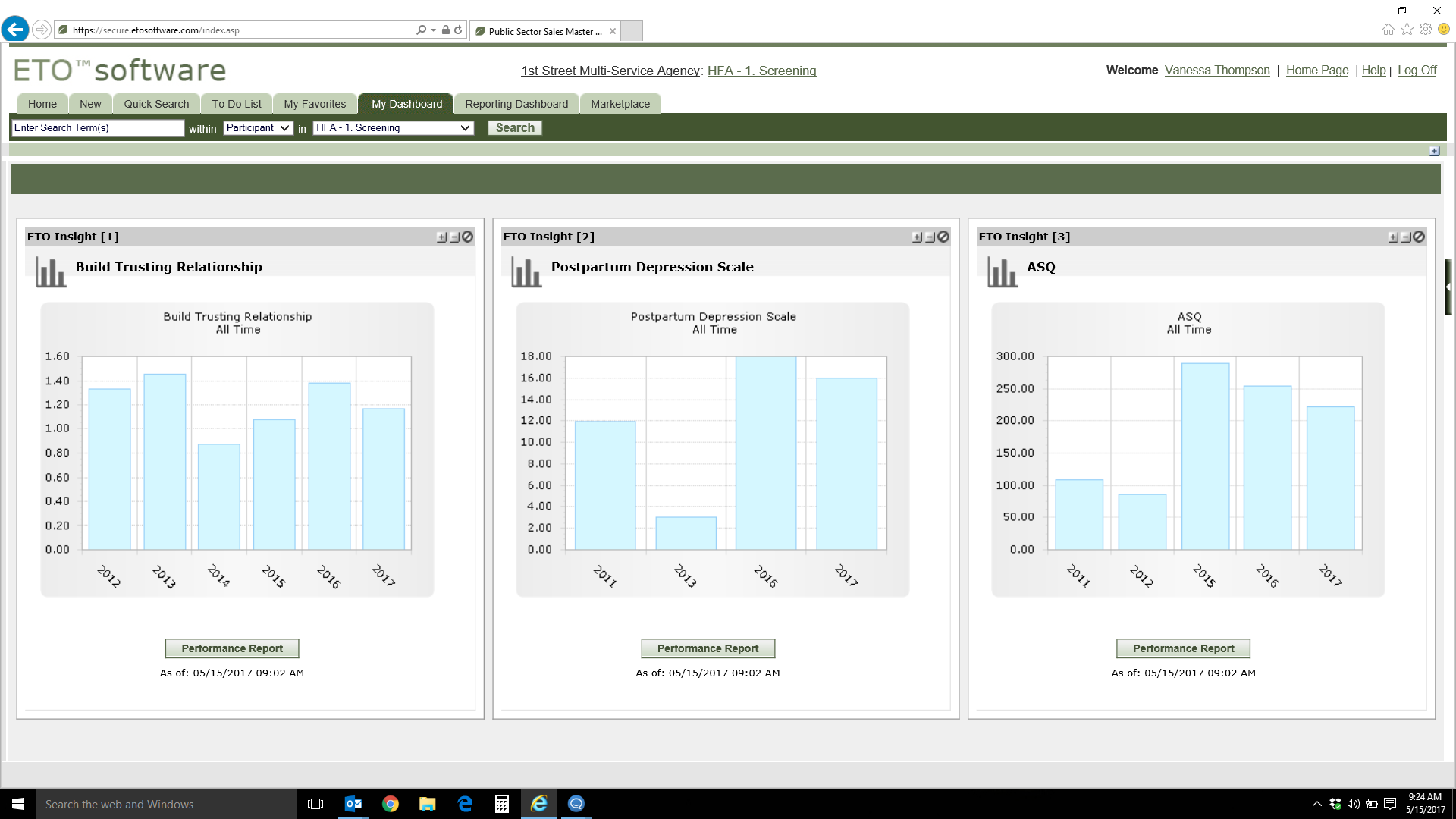
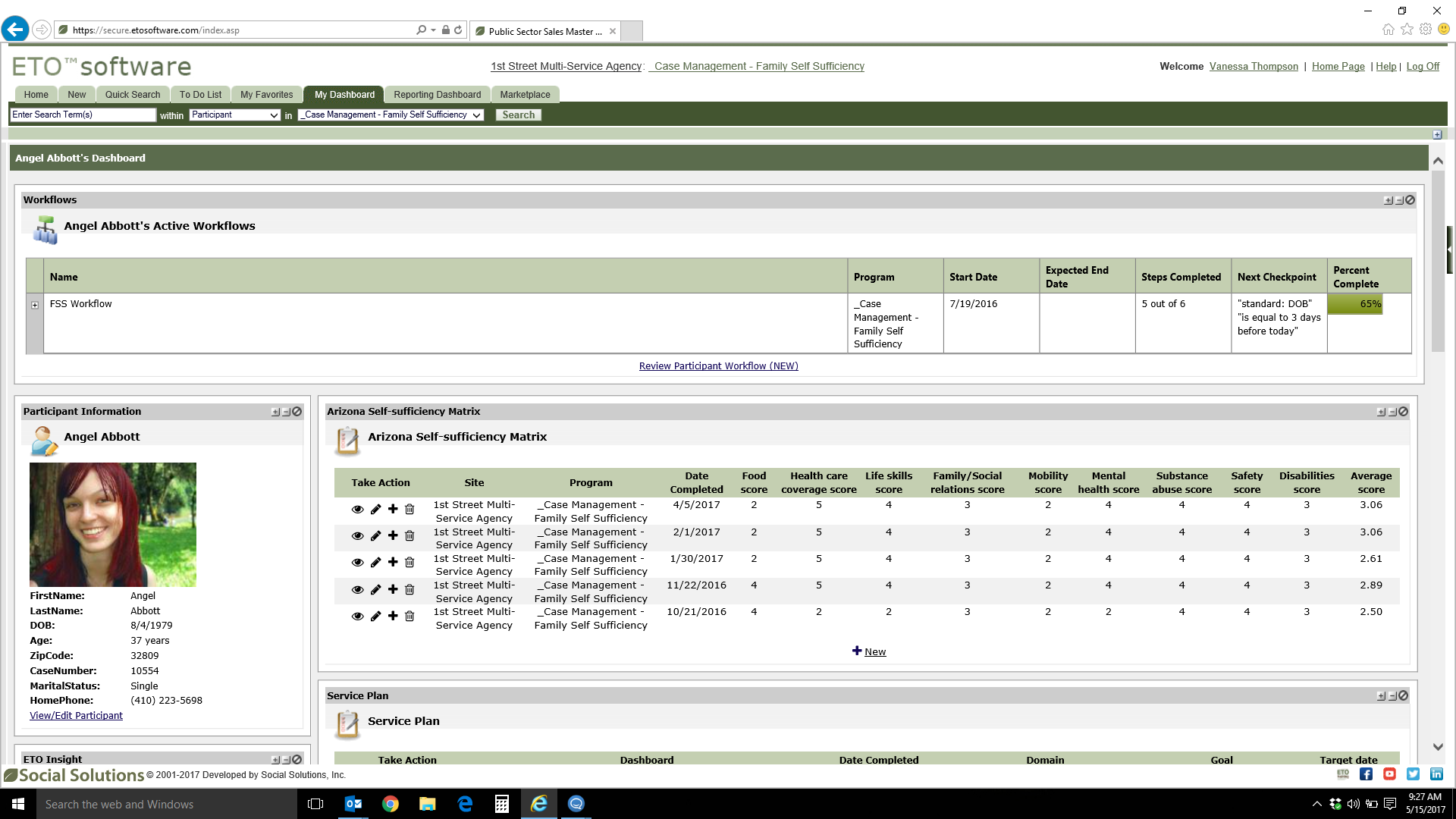
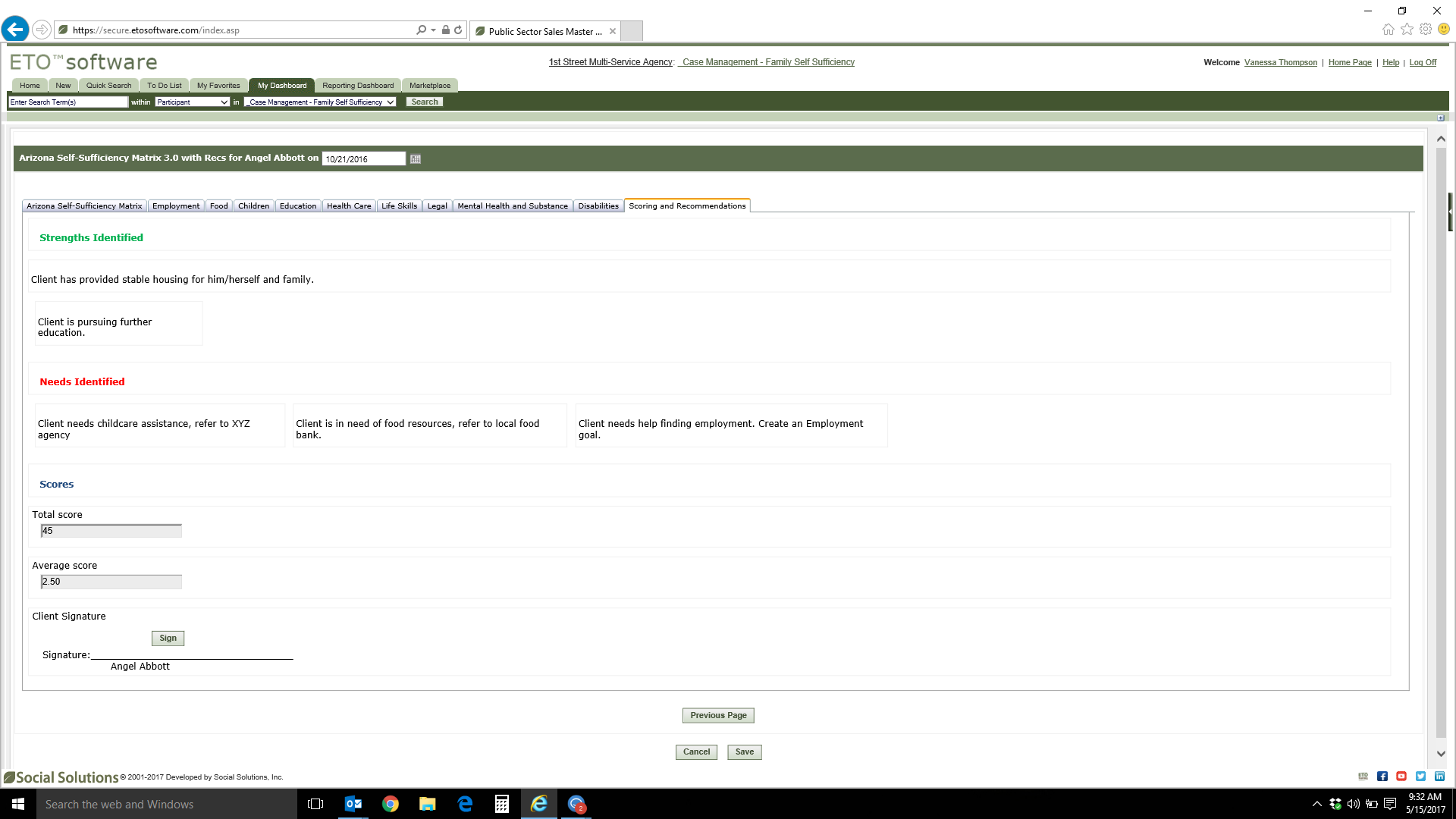
ETO Software is a legacy case management solution supported by Social Solutions, acquired by Bonterra, and later sold as Bonterra ETO. The application is not the company's current case management solution.
N/A
Pega Platform
Score 8.5 out of 10
N/A
Pega Platform is a combined business process management and robotic process automation (RPA) platform with advanced workforce analytics from Pegasystems.
$0.45
one-time fee per case**
Pricing
ETO Software (legacy)
Pega Platform
Editions & Modules
No answers on this topic
Low-code Factory Edition
$0.45
one-time fee per case**
Standard Edition
$0.80
one-time fee per case**
Enterprise Edition
Custom Quote
Offerings
Pricing Offerings
ETO Software (legacy)
Pega Platform
Free Trial
No
Yes
Free/Freemium Version
No
No
Premium Consulting/Integration Services
Yes
No
Entry-level Setup Fee
Required
No setup fee
Additional Details
—
**350,000 cases / year minimum. Additional cases available in blocks of 150,000.
More Pricing Information
Community Pulse
ETO Software (legacy)
Pega Platform
Features
ETO Software (legacy)
Pega Platform
Reporting & Analytics
Comparison of Reporting & Analytics features of Product A and Product B
ETO Software (legacy)
-
Ratings
Pega Platform
5.3
63 Ratings
37% below category average
Dashboards
00 Ratings
4.062 Ratings
Standard reports
00 Ratings
6.062 Ratings
Custom reports
00 Ratings
6.061 Ratings
Process Engine
Comparison of Process Engine features of Product A and Product B
ETO Software (legacy)
-
Ratings
Pega Platform
8.0
66 Ratings
4% below category average
Process designer
00 Ratings
9.065 Ratings
Process simulation
00 Ratings
7.957 Ratings
Business rules engine
00 Ratings
10.065 Ratings
SOA support
00 Ratings
7.151 Ratings
Process player
00 Ratings
7.048 Ratings
Support for modeling languages
00 Ratings
5.46 Ratings
Form builder
00 Ratings
9.059 Ratings
Model execution
00 Ratings
8.956 Ratings
Collaboration
Comparison of Collaboration features of Product A and Product B
ETO Software (legacy)
-
Ratings
Pega Platform
9.0
50 Ratings
8% above category average
Social collaboration tools
00 Ratings
9.050 Ratings
Content Management Capabilties
Comparison of Content Management Capabilties features of Product A and Product B
ETO Social Solutions should be avoided until they start caring about the problems generated by their software. In regards specifically to the ARMS suite utilized by the entire state of California, until the ETO software learns how to speak with SOMS, and unless it can be customized by knowledgeable people who consult with front-line users. It is not appropriate to provide the state legislature with bad data. I have 6 years of experience with it and I have multiple sources of agreement from fellow users throughout the state.
Pega Platform has introduced the low code feature, using app studio seasonal and professional developer can develop application easily and quickly. The initial application can be build by Business analyst and product owner who has less knowledge of Pega Platform, further application can be enhanced/extended by professional developer. We can develop end to end application and promote to higher environment. Easily we can perform parallel development using branch.
ETO's customization allows for the use of so many different and unique applications.
The ability to build extremely customized reports also allows us to get very detail oriented results or very broad building wide stats.
The additional added features such as workflow, referrals, and ETO Engage are useful in their own way and add more ways to better track and record data while simplifying some end-user processes.
Quick development time. Much of the Pega "rules" are easy to configure and implement.
Visually friendly and modern. Much of the UI/UX elements in the system are continuously supported and updated, giving a nice feel to the apps.
Many of the configurations and rules Pega gives to the developers can also be delegated to business users. The organization and structure of the client's business can easily be adapted in the Pega platform.
The user interface is not intuitive and exceptionally difficult for non-tech savvy people to learn.
The system is not as customizable as we were led to believe at the initial purchase.
The system does not interface well with other systems. Organizationally we are moving towards data integration, and we will likely replace ETO because of this limitation.
Considering the limitations of the system, the cost is quite high. We've seen only marginal benefits of this system over pen and paper, and the ROI is not promising.
The initial build process was very frustrating. We didn't understand what the developer was billing us for. Something like simple touchpoint forms was billed for more hours than it would seem to require.
A system like this should be both fully mobile compatible and have offline functionality.
We would benefit from more nuanced security settings.
Social Solutions has been great for our organization. It has allowed us to not only report on data, but to dive into it to see trends and give snapshots of the current status of our neighbors. Social Solutions has been helpful in getting us to see additional ways we can use our data and ways that it is easier for front line staff to use this tool
Pegasystems has continued to demonstrate a strong partnership with our organization and investment in their product that aligns with our overall vision and need. Pegasystems has engaged us at every level, with the assistance of minor defects to the overall roadmap planning and alignment of our goals
As a technically savvy person with experience learning new database software systems I find ETO relatively straightforward now that I've been trained in it's use. However, many of our staff are less technically savvy and the learning curve for ETO can be grueling for many, who require frequent troubleshooting and support from me. Additionally, there are small quality of life improvements that would increase usability even for me - such as allowing multiple tabs to be open simultaneously or being able to use the browser's "back" and "forward" buttons.
Pega Platform is enhancing its product and launching new features day by day which help to achieve customers needs. If I talk about the earlier version of Pega Platform (i.e. pega v5 and 6.3) there were many numbers of limitations in Pega Platform and if we need to do some customization then needed to write custom java and jave scripts to achieve the functionally. Now I can say Pega Platform is running with market trends and demand. Pega Platform is giving all the options which support the current technologies like decisioning capabilities, real time processing, mashup, process fabrics etc..
Routine maintenance is announced with plenty of lead time, and the few times I've been unable to log in to the system properly a simple refresh was all that was required to fix.
Mostly really strong now, although I understand that for some years before switching their hosting service to AWS performance was a real issue with ETO and we had frequent problems with pages timing out or other glitches stemming from performance issues. With AWS that is mostly a thing of the past, although it is still a major issue with the reporting tool which is unable to run reports on the entire database due to performance limitations, instead requiring admins to define universes prior to running queries.
We love the first tier customer support folks! They're friendly, helpful, and knowledgeable within the scope of their position. The experiences we've had with their supervisors have also been mostly good and again they seem to be doing what they can within the scope of their positions. This is what prevents me from selecting 1. Unfortunately, none of these wonderful folks can offer real solutions when things are actually broken. They verify there's a problem and send it to the black hole called "the developers". After that, we don't hear anything useful and we figure out how to live with/work around the problem ourselves. (Requests for updates typically get "still with the developer" responses.) This is highly frustrating given that most of our issues are basic system issues (functionality that worked then broke after an update by Social Solutions, servers not syncing, report universes not flattening automatically, etc.). All we want is for the system to work as designed and to be fixed in a timely fashion when it doesn't. Apparently, that's too much to ask. (And no, we don't expect it to happen instantly, programming and quality control checks obviously take time.)
It’s very slow sometimes, but that may be our servers. Also the Knowledge Library needs some work - again, not sure if it’s our setup or what- but I’m unable to search the body of an article for content, so I have to be very intentional with tagging, but it’s not ideal.
Really good trainer and exhaustive curriculum covered, but ETO is a complex enough system that you don't *really* know how to use it until you've been in the trenches for a few weeks. For instance, I took a Report Writing training and emerged with some fluency in the reports interface and a vague understanding of the process, but immediately encountered a legion of instance-specific idiosyncrasies that would have been totally impossible to address in a webinar training for a dozen folks from different orgs working in different instances.
Hard to say, as I was not with the agency at the time. However, based on our use of the software ~5years later I can say that there were no catastrophic design choices made during implementation that have become unduly burdensome as we've scaled up.
When we made our decision several years ago Social Solutions had just acquired Apricot. At that time it was recommended to use ETO based off our revenue stream. However, it seems like Social Solutions has put in a lot more time and effort into Apricot over ETO and it seems more modern and user friendly. I think it is worth a second look once our contract expires
We did evaluate multiple products offerings with Pega Platform capabilities and observed that Pega PRPC rules engine and case management capabilities are better over so many BPM Tools. We also conducted a detailed study with developers to identify the best products out of Suite of BPM products. It's observed that Rules engines integration is very streamlined with forms in Pega whereas other tools multiple have powerful data model capabilities but lacks the ease of creating business rules.
The core product scales well, and we've grown quite a bit as an agency during our use of ETO. However, there are some real pain points particularly around creating new programs and managing report universes that require extensive offline checklist resources and a full-spectrum understanding of how changing settings in one part of ETO can have downstream impact in other areas. This can introduce a "chilling" effect on proposed changes to the system, where there is strong incentive to leave things as-is to avoid unforeseen consequences.
I would say that at this point the overall ROI has been negative as we aren't getting much more out of our data by the switch we made to ETO, but the cost is much higher. I anticipate that will change as we get better at using ETO.
Most users that have switched to ETO in our organization prefer it to what they were using before and some are more appreciative of the value they can get from the data.
For one of the applications we worked on, we were able to reduce the processing time on a case from 2 days to 20 minutes by utilizing Pega
We were able to resolve the issue of the routing of cases to users based on a specific algorithm by use of Pega
Pega case management feature was extensively used in one of the application to establish a parent-child relationship which was very helpful for all the business users