Figma, headquartered in San Francisco, offers their collaborative design and prototyping application to support digital product and UI development.
$15
per month per editor
Frontify
Score7 out of 10
Mid-Size Companies (51-1,000 employees)
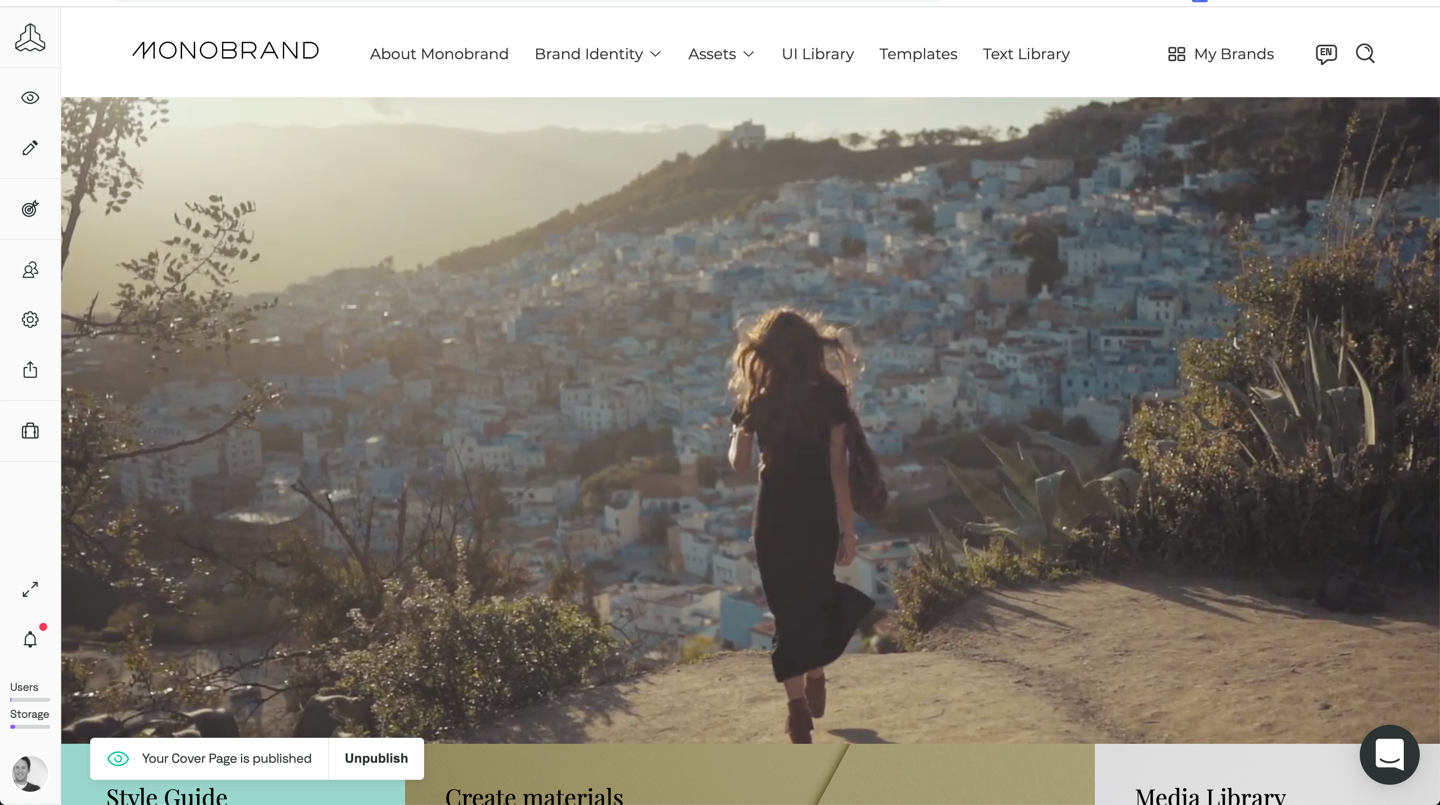
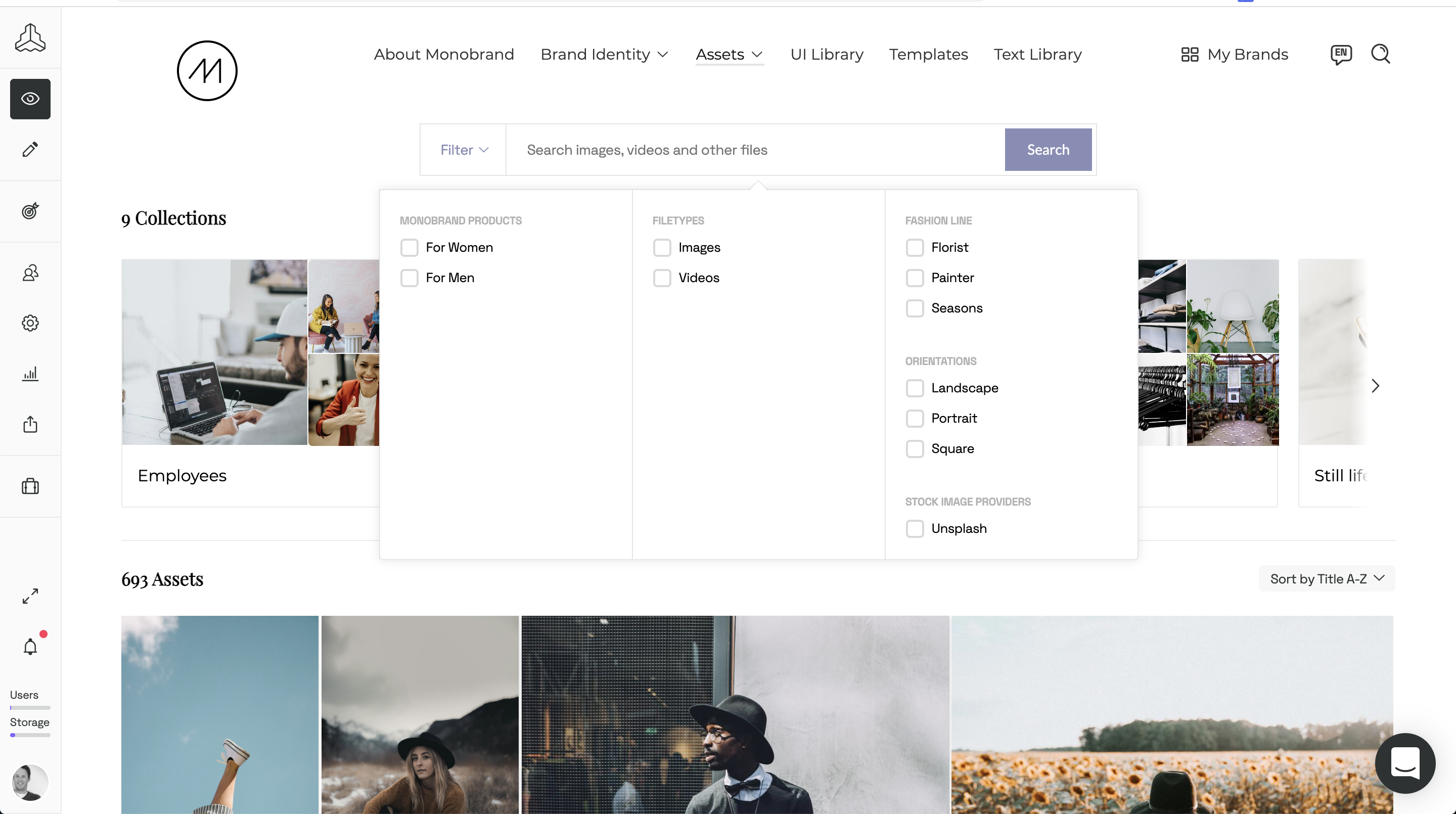
Frontify aims to simplify brand management with a platform that connects everything (and everyone) important to the growth of a brand. Offering plans for all company sizes, the vendor states Frontify is used by 4,000 brands globally. Frontify features: Cloud-based brand guidelines to ensure consistency across every touchpoint Digital asset management for centralizing all brand assets and essentials Creative collaboration to accelerate project…
N/A
Pricing
Figma
Frontify
Editions & Modules
Professional
$144
per year
Organization
$540
per year
Starter
Free
No answers on this topic
Offerings
Pricing Offerings
Figma
Frontify
Free Trial
No
Yes
Free/Freemium Version
Yes
No
Premium Consulting/Integration Services
No
No
Entry-level Setup Fee
No setup fee
Optional
Additional Details
—
—
More Pricing Information
Community Pulse
Figma
Frontify
Considered Both Products
Figma
No answer on this topic
Frontify AG
Verified User
Chose Frontify
We've invested time building our own hosted interface, and recently begun exploring Figma for design system management too. The benefit of Frontify is it's easy public access. The downfall is integration with other systems required in the UX, Design, Product Management, and …
A de minimis incentive was given to thank the reviewer for their time. The incentive was not used to bias or drive a particular response, nor was the incentive contingent on a positive endorsement. More Info
A de minimis incentive was given to thank the reviewer for their time. The incentive was not used to bias or drive a particular response, nor was the incentive contingent on a positive endorsement. More Info
I would recommend if you need to start from scratch a product UI or any customer journey that you need to implement that requires designing and visualizing different steps to complete a process. I would recommend that any design/UI/UX team brainstorm and make proposals that they can compare and discuss in a visual way.
A de minimis incentive was given to thank the reviewer for their time. The incentive was not used to bias or drive a particular response, nor was the incentive contingent on a positive endorsement. More Info
Well suited to organization starting their journey of design system creation. It provides a ready to go foundation that requires minimum effort to set up and get going. It may be limited if scaling into thousands of design elements and multiple users - we have not tried at scale of more that 10's of users.
Figma allows us to create universal content. This means that if multiple designers want to re-use a piece of content, and if everyone's content should be dynamically updated from time to time, we can easily accomplish this by turning design elements into a universal instance. Then, if an update is needed, we can push the change out to all assets at once. It's very efficient and ensures we're all updating content accordingly.
Figma also allows us to set parameters for the company's brand guide and share them across various designers. This way, we can easily pull from approved brand fonts, colors, and more, which allows our assets to remain unified across multiple touchpoints.
Figma also allowed us to create and install our own plugin, which we use to export every slide we have in a frame at one time, versus the default export feature, which limits you to one slice at a time. This is particularly useful for us when we're working on email templates, since we tend to have a ton of slices in any given series.
A de minimis incentive was given to thank the reviewer for their time. The incentive was not used to bias or drive a particular response, nor was the incentive contingent on a positive endorsement. More Info
A de minimis incentive was given to thank the reviewer for their time. The incentive was not used to bias or drive a particular response, nor was the incentive contingent on a positive endorsement. More Info
It will be great if Figma will consider having the Pages where interactions can be stitched together among the Pages and not just one page with so many Frames to create the stand-alone clickable prototype that can be used to simulate the intended UX
Bring back the Inspect Mode tab right on the right-side panel of the main workspace instead of hiding behind the Dev Mode.
Figma Slides feature could be improved quite a bit more in order to be easier to assemble slides into a presentation deck and having pre-built templates for slides can be useful too.
A de minimis incentive was given to thank the reviewer for their time. The incentive was not used to bias or drive a particular response, nor was the incentive contingent on a positive endorsement. More Info
A de minimis incentive was given to thank the reviewer for their time. The incentive was not used to bias or drive a particular response, nor was the incentive contingent on a positive endorsement. More Info
Figma is a pretty cool tool in many areas. My team almost uses it on daily basis, such as, brainstorming on product/design topics, discussing prototypes created by designers. We even use it for retrospectives, which is super convenient and naturally keeps records of what the team discusses every month. Furthermore, I do see the potential of the product - currently we mainly use it for design topics, but it seems it is also a good fit for tech diagrams, which we probably will explore further in the future.
A de minimis incentive was given to thank the reviewer for their time. The incentive was not used to bias or drive a particular response, nor was the incentive contingent on a positive endorsement. More Info
Frontify is very easy to use and makes updating information a breeze. Frontify acts a central location to house assets and information for easy sharing. You can plug and play information and even white label the guide if desired
A de minimis incentive was given to thank the reviewer for their time. The incentive was not used to bias or drive a particular response, nor was the incentive contingent on a positive endorsement. More Info
There's a bit of a learning curve, but generally I think it's both more powerful and intuitive that other UX design tools. Most of what I need to do as a designer can be done in this platform, from basic wireframes to creating a design system, to creating pixel perfect designs, to prototyping to dev handoff.
A de minimis incentive was given to thank the reviewer for their time. The incentive was not used to bias or drive a particular response, nor was the incentive contingent on a positive endorsement. More Info
A de minimis incentive was given to thank the reviewer for their time. The incentive was not used to bias or drive a particular response, nor was the incentive contingent on a positive endorsement. More Info
A de minimis incentive was given to thank the reviewer for their time. The incentive was not used to bias or drive a particular response, nor was the incentive contingent on a positive endorsement. More Info
I haven't used their support lately but in the past, they had a chat that I used often. They often responded in a few hours and were able to give a satisfactory solution. I would imagine it's less personal now but the community has expanded drastically so there are more resources out there to self serve with a bit of Google magic.
A de minimis incentive was given to thank the reviewer for their time. The incentive was not used to bias or drive a particular response, nor was the incentive contingent on a positive endorsement. More Info
In-person training has its own benefits - 1. It helps in resolving queries then and there during the training. 2. I find classroom or in-person training more interactive. 3. Classroom or in-person training could be more practical in nature where participants can have an hands on experience with tools and clarify their doubts with the trainer.
A de minimis incentive was given to thank the reviewer for their time. The incentive was not used to bias or drive a particular response, nor was the incentive contingent on a positive endorsement. More Info
Online training has its own merits and demerits - 1. Sometimes we may face issues with connectivity or the training content 2. The way training is being delivered becomes very important because not everyone is comfortable taking online training and learning by themselves. 3. With the advancement of technology online training has become popular but there is a segment of people who still prefer class-room training over online one.
A de minimis incentive was given to thank the reviewer for their time. The incentive was not used to bias or drive a particular response, nor was the incentive contingent on a positive endorsement. More Info
Miro is more user-friendly than Figma, but is less robust in terms of web prototyping and graphic design. While Figma isn't made to be used as a design tool, our team has taken to using it as such because it's richer in functions and personalizations compared to Miro and Figma.
A de minimis incentive was given to thank the reviewer for their time. The incentive was not used to bias or drive a particular response, nor was the incentive contingent on a positive endorsement. More Info
We've invested time building our own hosted interface, and recently begun exploring Figma for design system management too. The benefit of Frontify is it's easy public access. The downfall is integration with other systems required in the UX, Design, Product Management, and Development processes - something Figma supports well.
A de minimis incentive was given to thank the reviewer for their time. The incentive was not used to bias or drive a particular response, nor was the incentive contingent on a positive endorsement. More Info
A de minimis incentive was given to thank the reviewer for their time. The incentive was not used to bias or drive a particular response, nor was the incentive contingent on a positive endorsement. TR verified that a representative sample of customers was invited. More Info