Chose Figma
Not many other products, still very new in the product space.

| Product | Rating | Most Used By | Product Summary | Starting Price |
|---|---|---|---|---|
 Figma | N/A | Figma, headquartered in San Francisco, offers their collaborative design and prototyping application to support digital product and UI development. | $144 per year | |
 MockFlow | N/A | MockFlow is an online wireframe and UI toolset, from Indian company Produle. | N/A |
| Figma | MockFlow | |||||||||||||||
|---|---|---|---|---|---|---|---|---|---|---|---|---|---|---|---|---|
| Editions & Modules |
| No answers on this topic | ||||||||||||||
| Offerings |
| |||||||||||||||
| Entry-level Setup Fee | No setup fee | No setup fee | ||||||||||||||
| Additional Details | — | — | ||||||||||||||
| More Pricing Information | ||||||||||||||||
| Figma | MockFlow | |
|---|---|---|
| Considered Both Products | Figma  Ashley Nowak UX designer Chose Figma Figma integrates more and has more features.  Federico Romano UX Lead Designer Chose Figma Adobe XD is an absurd copycat that never got to have even 10% of Figma's features. It's hyper fast because it's native, but that's the only good thing it has. Axure RP is an excellent prototyping software, with Local Variables and complex interactions. But it's also extremely …  Suélen Maiara dos Reis Nascimento Product Designer Chose Figma Compared to Adobe XD, the Figma tool is much easier to use, offers more features, and has a much lower cost. Its features are less complex, making it very easy to teach beginners how to use it. The navigable prototype is also easier and more efficient to share in Figma compared … Chose Figma Figma definitely has better UX than Adobe XD and also is light-weight compared to XD. The eco-system is stronger with Figma if you are tech company.  Raymond Weilacher Principal UX Designer Chose Figma Figma is the only tool that was build from the ground up for enterprise level distributed teams. If I were a one man shop or even a small team, I would consider sketch or other cheaper alternatives. For a large enterprise team, the only winner is Figma.  Maria Halse Duloquin Innovation Consultant Chose Figma Figma is the go-to design tool that can be pushed to production very easily with developer tools. In my opinion it's the most complete design tool that considers the entire design process including the creation of solid design systems, high-fidelity prototyping, user testing, … |  MockFlow |
| Figma | MockFlow | |
|---|---|---|
| Small Businesses |  OmniGraffle Score 9.8 out of 10 | OmniGraffle Score 9.8 out of 10 |
| Medium-sized Companies | OmniGraffle Score 9.8 out of 10 | OmniGraffle Score 9.8 out of 10 |
| Enterprises | OmniGraffle Score 9.8 out of 10 | OmniGraffle Score 9.8 out of 10 |
| All Alternatives | View all alternatives | View all alternatives |
| Figma | MockFlow | |
|---|---|---|
| Likelihood to Recommend | 8.7 (0 ratings) | 9.0 (0 ratings) |
| Likelihood to Renew | 10.0 (0 ratings) | 8.0 (0 ratings) |
| Usability | 8.0 (0 ratings) | 8.0 (0 ratings) |
| Availability | 5.5 (0 ratings) | - (0 ratings) |
| Performance | 8.2 (0 ratings) | - (0 ratings) |
| Support Rating | 5.1 (0 ratings) | - (0 ratings) |
| In-Person Training | 9.1 (0 ratings) | - (0 ratings) |
| Online Training | 6.4 (0 ratings) | - (0 ratings) |
| Configurability | 6.4 (0 ratings) | - (0 ratings) |
| Ease of integration | 6.4 (0 ratings) | - (0 ratings) |
| Product Scalability | 7.3 (0 ratings) | - (0 ratings) |
| Vendor post-sale | 7.3 (0 ratings) | - (0 ratings) |
| Vendor pre-sale | 7.3 (0 ratings) | - (0 ratings) |
| Figma | MockFlow | |
|---|---|---|
| Likelihood to Recommend |
|
|
| Pros |
|
|
| Cons |
|
|
| Likelihood to Renew |
| No answers on this topic |
| Usability |
|
|
| Reliability and Availability |
 Abhimanyu Tiwari UX Research Lead | No answers on this topic |
| Performance |
Abhimanyu Tiwari UX Research Lead | No answers on this topic |
| Support Rating |
 Andrew Richardson UX Designer | No answers on this topic |
| In-Person Training |
Abhimanyu Tiwari UX Research Lead | No answers on this topic |
| Online Training |
Abhimanyu Tiwari UX Research Lead | No answers on this topic |
| Alternatives Considered |
|
|
| Scalability |
Abhimanyu Tiwari UX Research Lead | No answers on this topic |
| Return on Investment |
|
|
| ScreenShots | MockFlow Screenshots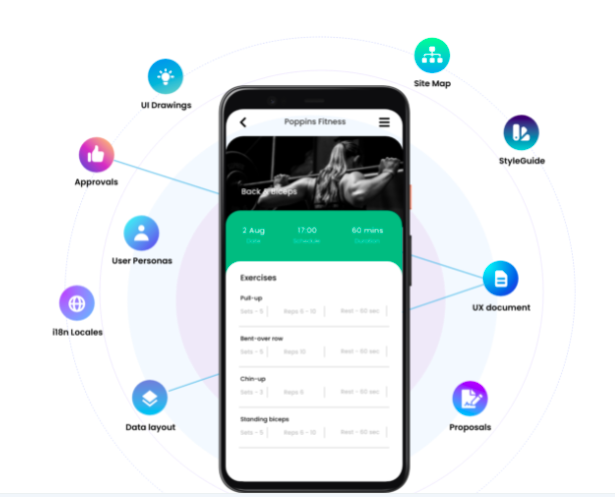 |
