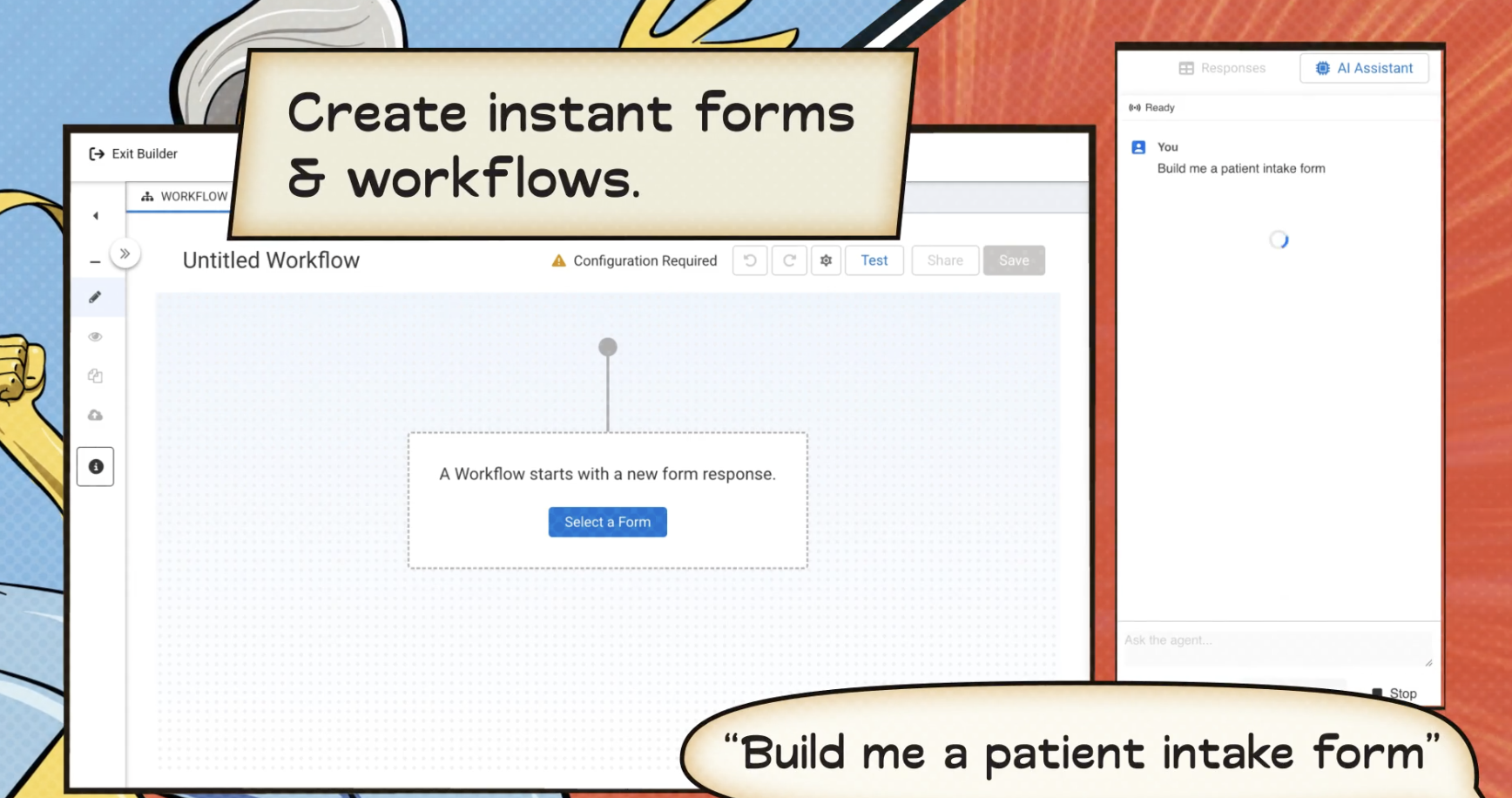
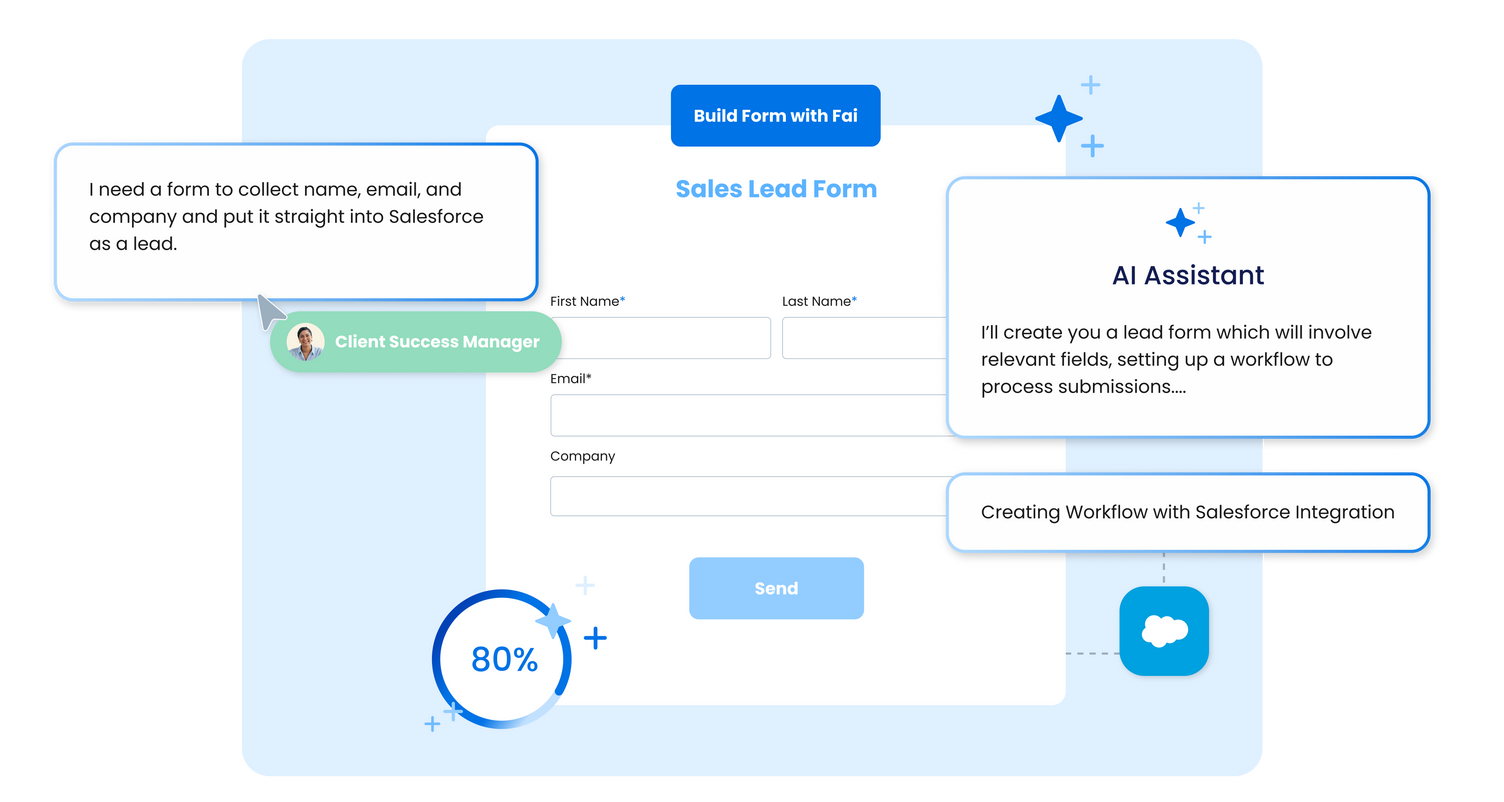
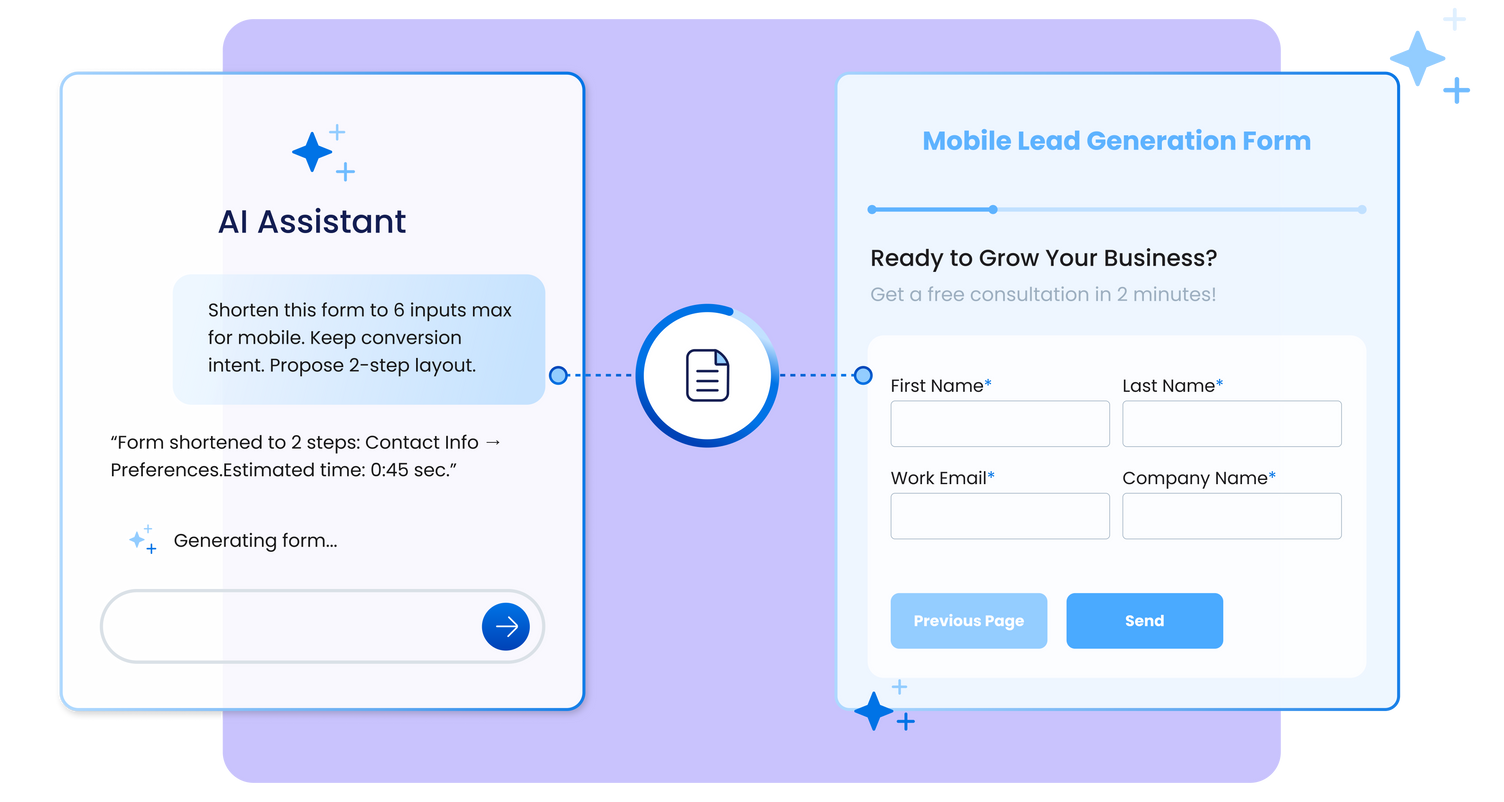
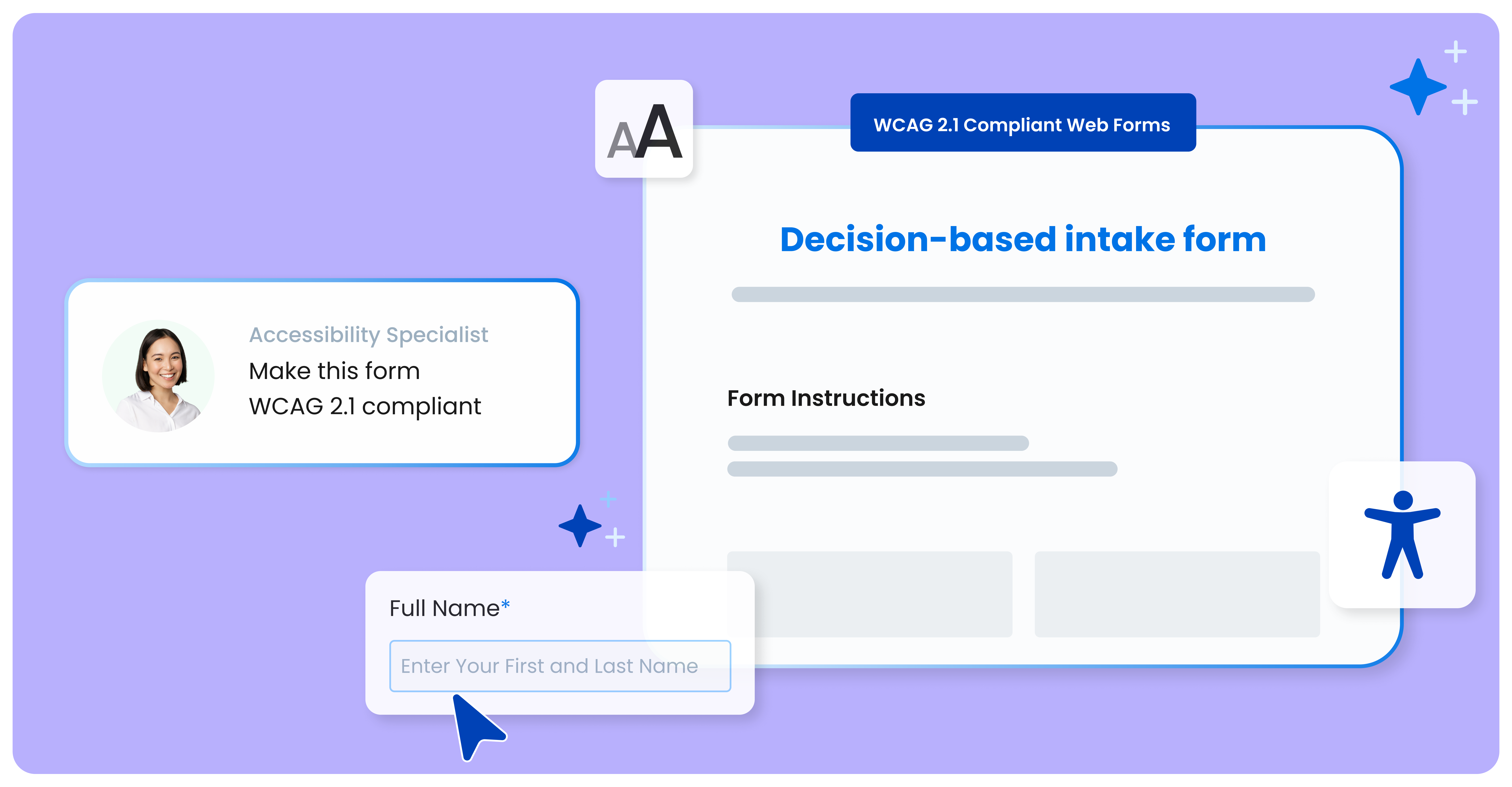
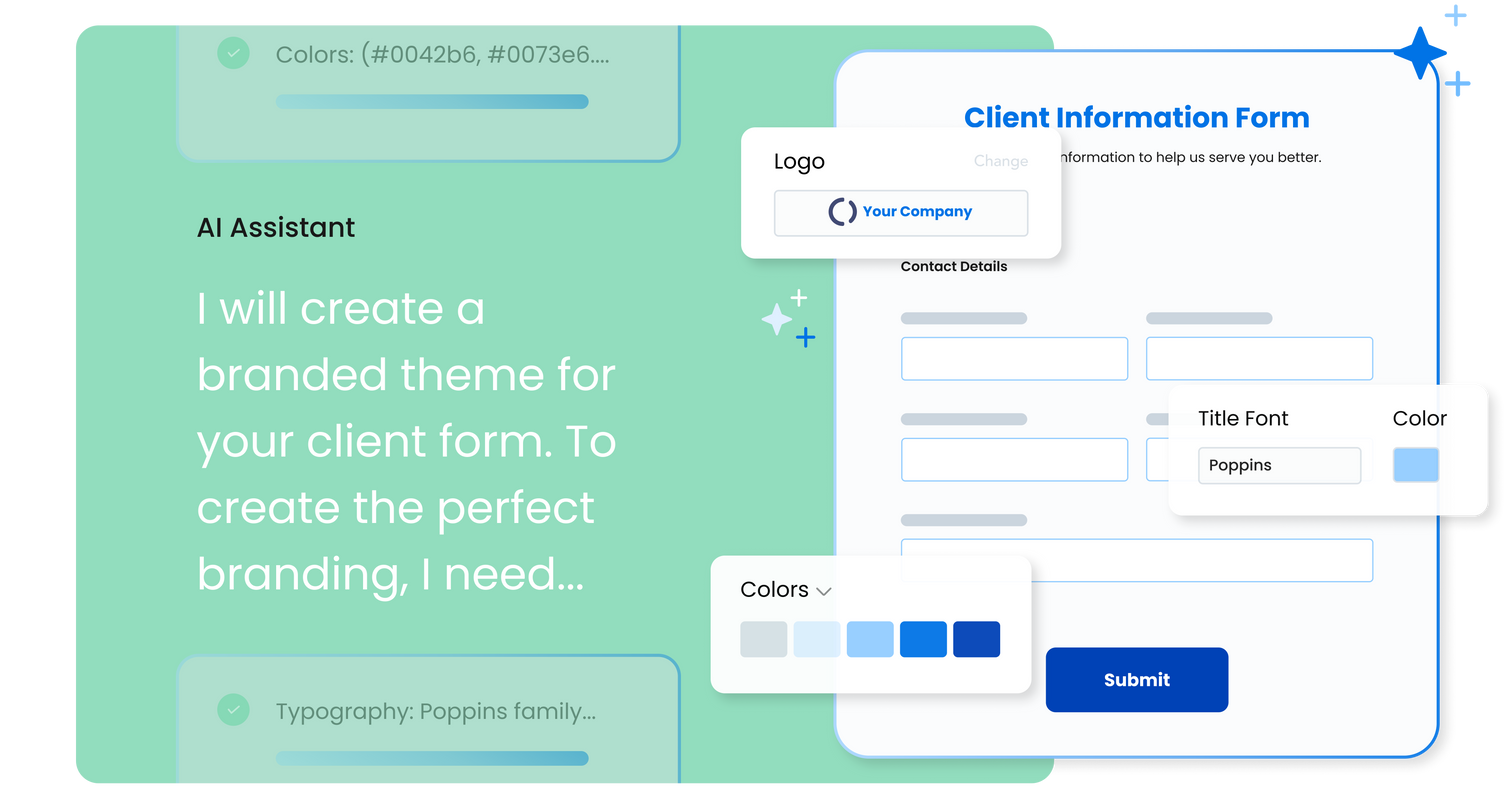
FormAssembly is an enterprise data collection and automation platform designed to enable organizations to capture clean, compliant data from the start. With the latest edition of the platform, FormAssembly Atlas, and its built-in AI assistant, Fai, forms and workflows build themselves, connect to Salesforce and other systems in just a few clicks, and ensure every record is structured, secure, and ready for automation or AI. In short, FormAssembly is designed to…
N/A
Integrify
Score8 out of 10
Mid-Size Companies (51-1,000 employees)
Integrify provides low-code workflow management software for automating business processes and supporting digital transformation. Integrify also offers consulting and development services to help companies implement and expand their use of workflow automation.
$35
per month per user
Pricing
FormAssembly
Integrify
Editions & Modules
Atlas Explorer
Contact Sales
per month
Atlas Team
Contact sales
Gov Cloud
Contact sales
Atlas Enterprise
Contact Sales
Integrify On-Premise
$35
per month per user
Integrify Cloud
$35
per month per user
Integrify Enhanced Cloud
$35
per month per user
Offerings
Pricing Offerings
FormAssembly
Integrify
Free Trial
Yes
Yes
Free/Freemium Version
No
No
Premium Consulting/Integration Services
Yes
Yes
Entry-level Setup Fee
Optional
Optional
Additional Details
—
Pricing is based on the number of named or concurrent users.
Well suited to get information into Salesforce. For the pricepoint you have to pay and the workflow you have to set up it is less appropriate when using Microsoft 365. The Google connector is very simple and you can use it with forms, it hinders us that is not an option unless a workflow is used.
A de minimis incentive was given to thank the reviewer for their time. The incentive was not used to bias or drive a particular response, nor was the incentive contingent on a positive endorsement. More Info
If you know workflow programs, and if you are tech-savvy, then this program will help you with nearly everything. If you need a workflow made better or just need one period, then this will help. You can use it for nearly anything where there is a process. Unfortunately, in any of these scenarios, if you are not tech-savvy, then you do not want to use this program. It will be frustrating. Same can be said if you are handing the program off to someone. It can be too complex for some people. That said, if they are willing to learn the program, then you may be OK. But ultimately, you will lose time and effort. For us, Integrify was used in Admissions - the workflow had to be very specific, and was very complex when it came to the re-enrollment process; however, I would not have suggested it to HR. While it could have helped them, it would have resulted in many hours lost because of the complexity of the program if I were to have left. I'm not saying I was the be-all, end-all for it in HR! I am saying that they had never worked with a workflow program before, and it was going to cost her more time than she could spare.
A de minimis incentive was given to thank the reviewer for their time. The incentive was not used to bias or drive a particular response, nor was the incentive contingent on a positive endorsement. More Info
Integrating with Salesforce - mapping fields is straightforward, and custom formulas allow for some increased complexity in processing.
Scalability - we leverage the URL pre-fill and dynamic picklist features to use a single form for multiple different programs.
Simple form building via point-and-click is relatively easy. Hidden fields, conditionals, and repeat sections are useful features for more complex form needs.
Custom CSS option is useful - has allowed us to visually integrate FormAssembly forms onto our website via iframe.
A de minimis incentive was given to thank the reviewer for their time. The incentive was not used to bias or drive a particular response, nor was the incentive contingent on a positive endorsement. More Info
A de minimis incentive was given to thank the reviewer for their time. The incentive was not used to bias or drive a particular response, nor was the incentive contingent on a positive endorsement. More Info
FormAssembly could do a much better job supporting customers. As I mentioned, FormAssembly is critical to our day-to-day operations, so it is very important to us that support is prompt and reliable when we reach out. Unfortunately, this has not been our experience. For example, on more than one occasion, I had a support case open for months without hearing back, despite repeatedly following up.
FormAssembly could make troubleshooting and configuration updates easier by improving their user interface. Salesforce, for example, has a feature called "Where is this used?" for fields, which makes it easy to address bugs and make changes efficiently and effectively.
FormAssembly could benefit from improving training and support resources.
A de minimis incentive was given to thank the reviewer for their time. The incentive was not used to bias or drive a particular response, nor was the incentive contingent on a positive endorsement. TR verified that a representative sample of customers was invited. More Info
It's complicated. No, really. When you log in, you won't know much about what you're doing and you may only get about 10% of what the program is capable of. This is not a good thing as some will just give up before delving further into the program. If it is too complicated at the outset for someone who doesn't understand forms or how these kinds of programs work, you will not gain new clients unless you are there the moment they create an account. You can have someone reach out, but - in my experience - the decision to continue with a program or write it off is in the first ten minutes.
When I first looked at it, printing larger flows was an issue. They have since addressed this, so the point of mentioning this is that (while they eventually looked back at the bigger picture) looking at large and small views would have been helpful.
The people I consulted had issues with Javascript. There were ways to get around it, but these people did not have the time to spend on that and asked me to find another solution.
A de minimis incentive was given to thank the reviewer for their time. The incentive was not used to bias or drive a particular response, nor was the incentive contingent on a positive endorsement. More Info
FormAssembly continues to meet our needs, and the product functionality continues to grow, providing us with new opportunities to utilize the software. We've built many forms and associated processes on FormAssembly. It would require a large effort to migrate to another platform. We have invested a lot of time in learning FormAssembly.
A de minimis incentive was given to thank the reviewer for their time. The incentive was not used to bias or drive a particular response, nor was the incentive contingent on a positive endorsement. More Info
The UI is very intuitive and easy to use, even if you've never used a form building platform before. There is plenty of easy-to-find documentation so if you're unsure on anything, you can sense-check it. I also love the drag-and-drop form building. It is a breeze to use, especially compared to other form builders which are quite clunky, or where the functionality takes a lot of clicks to reach. Everything is easily accessible and ready to use with FormAssembly.
A de minimis incentive was given to thank the reviewer for their time. The incentive was not used to bias or drive a particular response, nor was the incentive contingent on a positive endorsement. More Info
While it's not a true development package and misses some features like ingestion of external data for lists, etc... the product is fast, stable, easy to use, and will suit the needs of anyone needing online form functionality with SalesForce and other connectors available for your marketing needs.
A de minimis incentive was given to thank the reviewer for their time. The incentive was not used to bias or drive a particular response, nor was the incentive contingent on a positive endorsement. More Info
A de minimis incentive was given to thank the reviewer for their time. The incentive was not used to bias or drive a particular response, nor was the incentive contingent on a positive endorsement. More Info
FormAssembly's features were more expansive than SurveyMonkey, in my opinion. When doing a comparison, we really liked that we could set up formulas to calculate expenses for us and that they would be easy to update as needed for rates that change from year to year.
A de minimis incentive was given to thank the reviewer for their time. The incentive was not used to bias or drive a particular response, nor was the incentive contingent on a positive endorsement. More Info
I think Integrify was a good product for its cost. The only thing it really lacked was project management capabilities. It was difficult for our manager to go into the dashboard and see what work his employees were working on, who has what, and how long they have had certain tasks. It is doable, but just not very quick and simple.
A de minimis incentive was given to thank the reviewer for their time. The incentive was not used to bias or drive a particular response, nor was the incentive contingent on a positive endorsement. More Info
A de minimis incentive was given to thank the reviewer for their time. The incentive was not used to bias or drive a particular response, nor was the incentive contingent on a positive endorsement. More Info
For the people I consulted - it helped them put more into the personal aspects of the business. While certain processes ran, they could keep an eye on the data, but were otherwise free to focus on the important aspects of the business. They were a marketing group. Their copywriter was able to be a copywriter instead of just filling out forms all day!
It's adaptable. You can cross-pollinate any department with it, provided you know what you are doing. So, you are not getting a program for HR, and another for Marketing. Integrify can span the whole business. You can cut costs in focusing on one workflow product rather than a handful.
It did have one negative impact on the place I consulted. Their tech-savvy person left in early 2019, and nobody else was able to use the program. Nor did they want to try when opening it up and trying to understand it. I was able to help out, but ultimately they were discouraged. I would recommend training multiple people if you use this product, and emphasize their support team!
A de minimis incentive was given to thank the reviewer for their time. The incentive was not used to bias or drive a particular response, nor was the incentive contingent on a positive endorsement. More Info